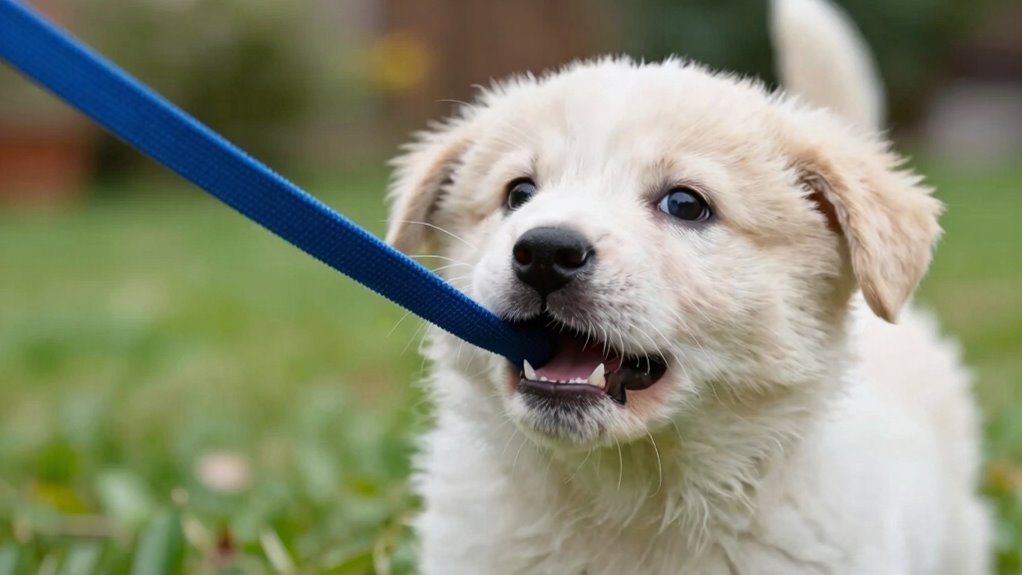

Leash chewing in puppies happens because they’re curious, exploring with their mouths, or teething, which causes discomfort. Boredom or frustration can also lead to this behavior. To stop it fast, provide appropriate chew toys, keep walks short and positive, and use redirection and commands like “leave it.” Consistent training and engaging distractions help. If you want to learn more about effective strategies, there’s plenty more to explore.
Key Takeaways
- Puppies chew on leashes due to curiosity, teething discomfort, boredom, or stress, especially during developmental stages.
- Providing appropriate chew toys redirects chewing behavior and soothes teething pain.
- Consistent training with positive reinforcement and commands like “leave it” help curb leash chewing.
- Short, positive walks with engaging activities build confidence and reduce anxiety-related chewing.
- Managing the environment by removing leash accessories and ensuring mental stimulation minimizes triggers for leash chewing.
Why Do Puppies Chew on Leashes? Understanding the Causes
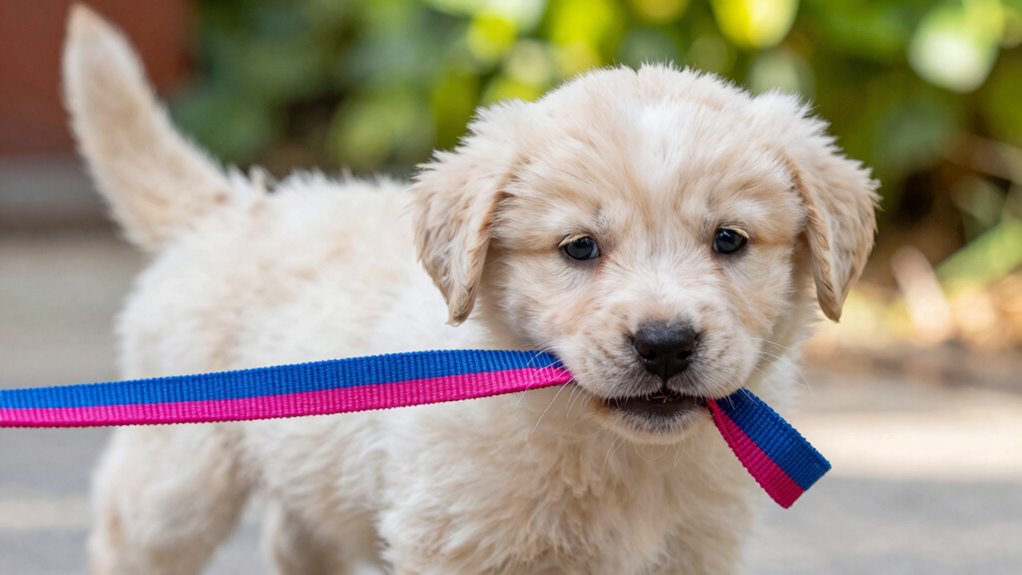
Puppies often chew on their leashes because they’re exploring and trying to understand their environment. This behavior stems from puppy curiosity, as they use their mouths to investigate new objects around them. Leash biting is a natural part of this exploration, especially when puppies are still learning what’s safe and what’s not. They may find the texture or movement of the leash interesting, prompting them to chew or nip at it. Sometimes, puppies chew on leashes out of boredom or frustration, especially if they’re excited or anxious during walks. Recognizing that leash chewing is driven by curiosity helps you understand it’s a normal developmental stage. Addressing this early can prevent it from becoming a persistent habit or causing damage. Additionally, understanding the behavioral motivations behind leash biting can help you develop more effective training strategies. Providing appropriate chew toys can also redirect their attention and satisfy their natural urge to chew.
How to Recognize If Your Puppy Is Chewing Due to Teething or Curiosity

Since puppies often explore their environment by chewing, it’s important to determine whether their behavior is due to puppy curiosity or teething signals. If your puppy is chewing on objects like the leash, observe their behavior: curiosity-driven chews are usually spontaneous, happen when they’re alert, and are accompanied by sniffing or exploring new items. Teething signals, however, often include more frequent chewing, drooling, pawing at the mouth, and discomfort. Teething tends to occur at specific ages, like around 3 to 6 months, and may cause your puppy to chew more persistently. Recognizing these signs helps you understand whether they’re exploring out of curiosity or discomfort, guiding you toward the right response to stop leash chewing effectively. Additionally, understanding the role of teething in puppy behavior can help you better manage and redirect their chewing habits, while providing appropriate chewing toys can satisfy their natural urge to chew and protect your belongings.
How Teething and Exploration Lead to Leash Chewing

Your puppy chews on the leash because teething causes discomfort, and chewing helps soothe sore gums. They’re also naturally curious and explore the world by mouthing objects around them. Sometimes, leash chewing becomes a calming habit that eases their anxiety or frustration. Additionally, understanding behavioral triggers can help you address and redirect this habit effectively. Recognizing developmental stages such as teething can further aid in managing this behavior during critical growth periods. Being aware of bite inhibition development can also guide your training and responses to encourage gentle interactions. Monitoring puppy behavior trends can provide insights into their evolving needs and help you tailor your training approach.
Teething Discomfort Triggers
Teething discomfort often prompts puppies to gnaw on anything within reach, including their leash. This natural response helps soothe sore gums but can lead to unwanted leash chewing. During this phase, your puppy might also explore with their mouth, increasing the likelihood of chewing on leash accessories. To reduce this behavior, consider these triggers:
- Teething pain – Puppy’s gums are sore, so they chew to relieve discomfort.
- Exploration – Puppies use their mouths to learn about new objects.
- Lack of proper puppy grooming routines – Neglecting this can make gums more sensitive, prompting biting on anything nearby.
- Incorporating attention to detail in your training can help identify specific triggers and address them effectively. Ensuring a comfortable environment and providing appropriate chew toys can redirect your puppy’s chewing habits away from the leash.
Providing appropriate teething toys and ensuring your puppy’s grooming includes gum soothing can help. Avoid leaving leash accessories within reach during teething to prevent bad habits.
Natural Exploration Instincts
Puppies have a natural instinct to explore their environment using their mouths, which often leads them to chew on objects like their leash. This behavior is part of their desire for puppy independence, as they learn about the world around them. During leash training, they may see the leash as an extension of their environment, prompting them to chew it out of curiosity. Teething also amplifies this urge, making chewing a way to soothe discomfort. Understanding that this is normal helps you stay patient. Providing appropriate chew toys and consistent training can redirect their natural exploration instincts away from the leash. Recognizing these instincts and high-quality products can help you better manage leash chewing and support your puppy’s development into a well-behaved companion.
Chewing as Soothing Technique
As puppies explore their surroundings through their mouths, chewing becomes a natural way for them to find comfort and relief. This behavior helps soothe puppy anxiety and reduces leash frustration during walks. When your pup chews on the leash, it’s often a self-soothing technique linked to teething or curiosity. To better understand this behavior, consider these points:
- Teething discomfort prompts puppies to chew to ease gum pain and discomfort.
- Exploration through chewing helps puppies learn about their environment and satisfy their curiosity.
- Chewing provides a calming effect, helping to reduce puppy anxiety during stressful situations like leash walking.
- Incorporating essential oils for calming into your puppy’s environment may help further reduce anxiety and discourage leash chewing behaviors.
- Recognizing puppy development stages can help you understand why certain behaviors, like leash chewing, emerge at specific times. Additionally, understanding behavioral triggers can assist in addressing and managing this common issue more effectively.
- Understanding exploratory behaviors in puppies can enable owners to provide appropriate outlets for their natural curiosity, reducing unwanted chewing.
Why Early Action Prevents Bad Leash Chewing Habits
Addressing leash chewing early on is essential because it helps prevent the development of bad habits that can persist into adulthood. When you start socializing your puppy early, they become more comfortable and confident around people and other animals, reducing anxiety that may lead to destructive behaviors like leash chewing. Incorporate effective leash training techniques from the beginning to teach your puppy proper manners and boundaries. By establishing these routines early, you create a foundation of good behavior that can prevent bad habits from forming. Consistent, positive reinforcement during socialization and training helps your puppy understand acceptable behaviors. Early intervention is also beneficial in managing dog behavior trends, which can be influenced by early experiences and training. Understanding behavior modification techniques can further support your efforts in curbing leash chewing. Acting early guarantees that leash chewing doesn’t become a fixture in your dog’s routine, making future training easier and more successful. Additionally, being aware of puppy development stages allows you to tailor your training approach to their growth and emotional needs. Recognizing socialization windows is crucial for effective behavior shaping and confidence building.
Simple Training Tips to Stop Puppy Leash Chewing Fast
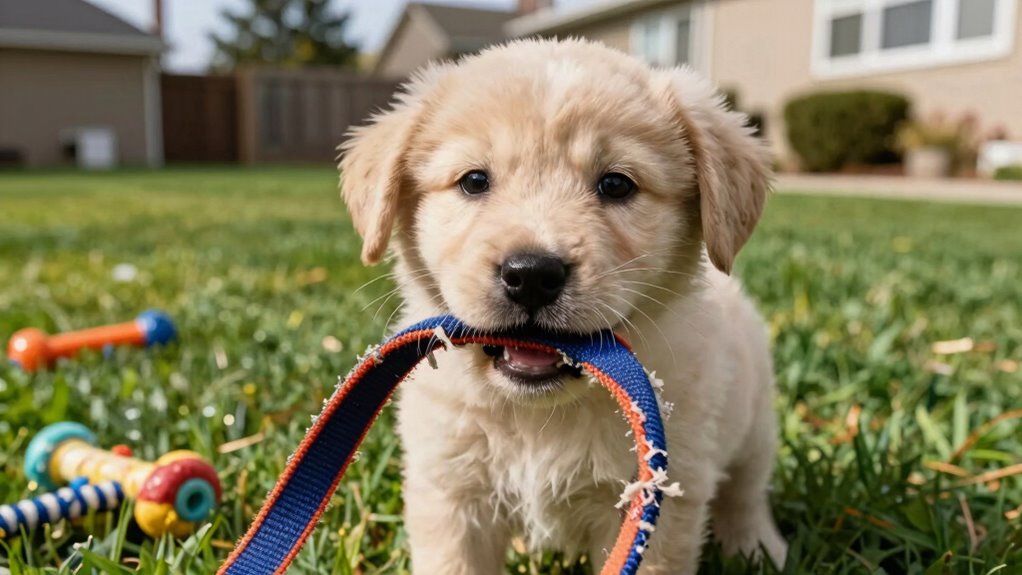
To stop your puppy from chewing the leash quickly, start by giving them appropriate chew toys they can enjoy. Use consistent commands to teach them what’s acceptable, and reward calm behavior to reinforce good habits. These simple steps can make a big difference in curbing leash chewing fast. Additionally, ensuring your puppy receives enough physical activity and mental stimulation can reduce boredom and the urge to chew destructively. Providing safe outlets for natural behaviors like chewing can help satisfy their instincts and minimize unwanted habits. Understanding your puppy’s natural tendencies, such as bite inhibition, can also help in guiding their behavior positively. Incorporating positive reinforcement techniques into training can further accelerate behavioral improvements and foster a trusting bond.
Provide Appropriate Chew Toys
Providing your puppy with appropriate chew toys is one of the most effective ways to curb leash chewing quickly. When your pup has engaging toys, they’re less likely to chew on the leash during walks or playtime. This not only redirects their focus but also promotes healthy puppy play. Here are some tips:
- Choose durable toys designed for puppy teeth to withstand their chewing energy.
- Offer a variety of textures and shapes to keep your puppy interested and satisfied.
- Use toys during walks to reinforce leash safety, helping your pup associate leash time with positive chew play.
- Selecting toys with durable materials can further ensure they last through your puppy’s energetic chewing sessions.
Use Consistent Commands
Using consistent commands is key to stopping your puppy from chewing on the leash quickly. When you use clear, uniform commands during leash training, your puppy learns what behaviors are expected, reducing confusion. Incorporate commands like “leave it” or “no” consistently to address leash chewing. Proper puppy socialization plays a role here, as exposed puppies tend to be calmer and more responsive. Stick to the same commands across different training sessions and environments to reinforce learning. This consistency helps your puppy associate specific words with desired behaviors, making leash training techniques more effective. Over time, your puppy will understand what’s acceptable, and leash chewing will decrease. Remember, patience and repetition are crucial for instilling good habits and speeding up the training process.
Reward Calm Behavior
Reinforcing calm behavior can markedly reduce leash chewing in your puppy. When your pup remains relaxed during walks, you encourage positive associations with leash handling and socialization. To do this effectively, use these simple steps:
- Reward calmness immediately with treats or praise when your puppy stays relaxed, reinforcing desirable behavior.
- Incorporate puppy socialization by exposing your pup to different environments and people calmly, helping them associate new experiences with calmness.
- Apply consistent leash training techniques by rewarding quiet walking and discouraging pulling or biting, which reduces the urge to chew the leash out of frustration or excitement.
How to Distract and Redirect Your Puppy During Walks

When your puppy starts to chew on the leash during walks, it’s important to intervene quickly to redirect their attention. Use engaging puppy play, like offering a treat or a favorite toy, to shift their focus away from the leash. Keep your walks interesting by changing routes or introducing new sights and smells, which helps maintain their curiosity and attention. Consistently practicing good leash etiquette reinforces proper behavior and discourages unwanted chewing. If your puppy begins to chew, gently and firmly say “no” and guide them toward a more appropriate activity. Remember, distraction is key—by actively redirecting their energy, you help them learn that walks are fun and engaging without leash chewing.
Best Chew Toys to Soothe Teething Puppies and Save Your Leash
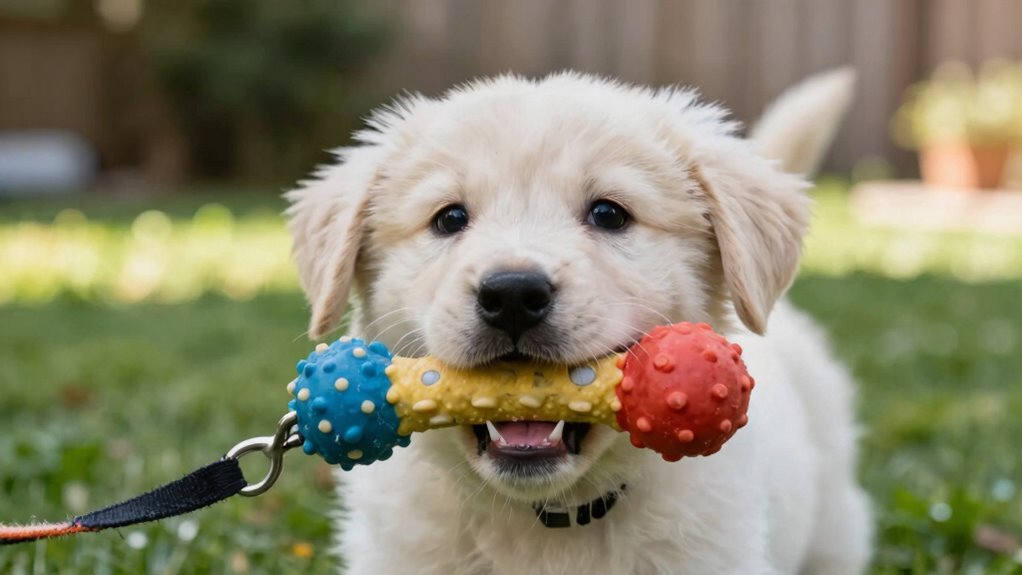
Teething puppies often turn to chewing on everything they can find, including your leash, which can lead to frustration and damage. To protect your gear and support puppy socialization, invest in the right chew toys. These toys can satisfy their urge to chew and reinforce leash training techniques. Here are three top choices:
- Rubber Kong toys – durable and perfect for teething.
- Nylabones – help clean teeth and soothe discomfort.
- Frozen plush toys – provide a calming, cold surface for sore gums.
Using these toys consistently encourages your puppy to chew appropriately. When they chew on their toys instead of your leash, it’s easier to teach proper leash manners. This approach makes socialization smoother and reduces leash chewing frustration.
Creating a Calm and Happy Walk Environment for Your Puppy

To create a calm and happy walk for your puppy, start by choosing quiet routes that reduce distractions and stress. Use comfortable, calming equipment like a well-fitting harness and leash to keep your pup relaxed. Keep walks short and positive, ending on a good note to encourage pleasant experiences every time.
Choose Quiet Walking Routes
Choosing quiet walking routes is essential for creating a calm and positive environment for your puppy. By selecting less busy areas, you reduce overstimulation, making socialization and leash training more effective. A peaceful route helps your pup stay relaxed, encouraging better behavior and reducing leash chewing. To optimize your walks, consider these tips:
- Pick routes with minimal traffic and noise to prevent overstimulation.
- Gradually introduce your puppy to busier spots, building confidence through positive puppy socialization.
- Use calm, consistent leash training techniques that reinforce relaxed walking and focus.
Use Comforting Equipment
Using comforting equipment can considerably help create a calm and happy environment for your puppy during walks. Proper gear supports positive puppy socialization and reinforces leash training routines. Consider using a harness instead of a collar to reduce pressure and increase control. A calming vest can also help soothe anxious pups. The following table illustrates different equipment options:
| Equipment | Benefits | Ideal Use |
|---|---|---|
| Harness | Prevents choking, promotes control | During socialization walks |
| Calming vest | Reduces anxiety | During busy or new environments |
| Soft leash | Gentle on neck, easy handling | Regular leash training routines |
| Chew-resistant collar | Stops leash chewing behavior | During initial leash training |
| Distraction toys | Keeps puppy occupied | Calm walks or transitional phases |
Choosing the right comforting equipment makes each walk a positive experience.
Keep Walks Short and Positive
Starting with short, manageable walks helps your puppy stay calm and enjoy the experience. Keep walks brief at first to prevent overwhelm and build positive associations with leash training techniques. This approach also encourages puppy socialization in a controlled environment. To make walks successful, consider these tips:
- Limit walk duration to prevent fatigue and frustration.
- Use positive reinforcement to reward calm behavior.
- Gradually increase walk length as your puppy becomes more confident.
Short, positive walks help your puppy feel safe and enthusiastic to explore. They also create a calm atmosphere that reduces leash chewing and promotes good leash manners. Consistency and patience are key—your puppy will learn to enjoy walks and develop proper leash habits over time.
When to Seek Help for Persistent Leash Chewing
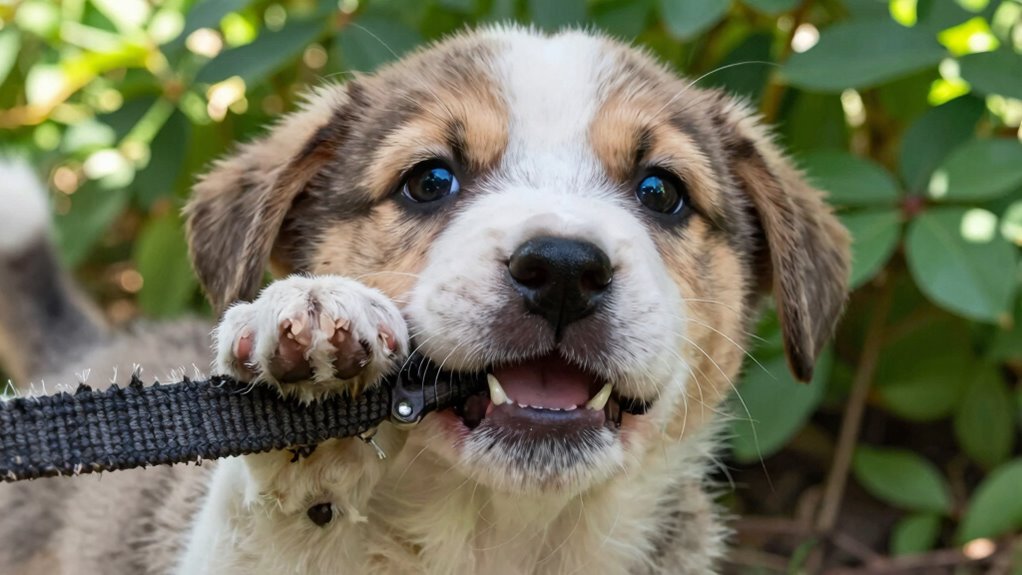
Persistent leash chewing can become a serious issue if it continues despite consistent training efforts. If your puppy’s behavior persists, it’s time to seek professional help. A trainer or behaviorist can evaluate whether your puppy’s leash chewing stems from inadequate socialization or ineffective leash training techniques. Recognizing when your puppy’s chewing is beyond typical teething or curiosity is key. If your puppy shows signs of anxiety, aggression, or excessive frustration during walks, don’t hesitate to get expert guidance. They can tailor a plan to address underlying issues and help you develop effective strategies for socialization and leash training that work.
| When to Seek Help | Why It Matters |
|---|---|
| Persistent chewing | Indicates deeper behavioral issues |
| Signs of stress | May require professional assessment |
| Lack of progress | Need for specialized training |
| Anxiety during walks | Could hinder socialization goals |
| Aggression or frustration | Needs expert intervention |
Making Walks Fun and Stress-Free for You and Your Puppy
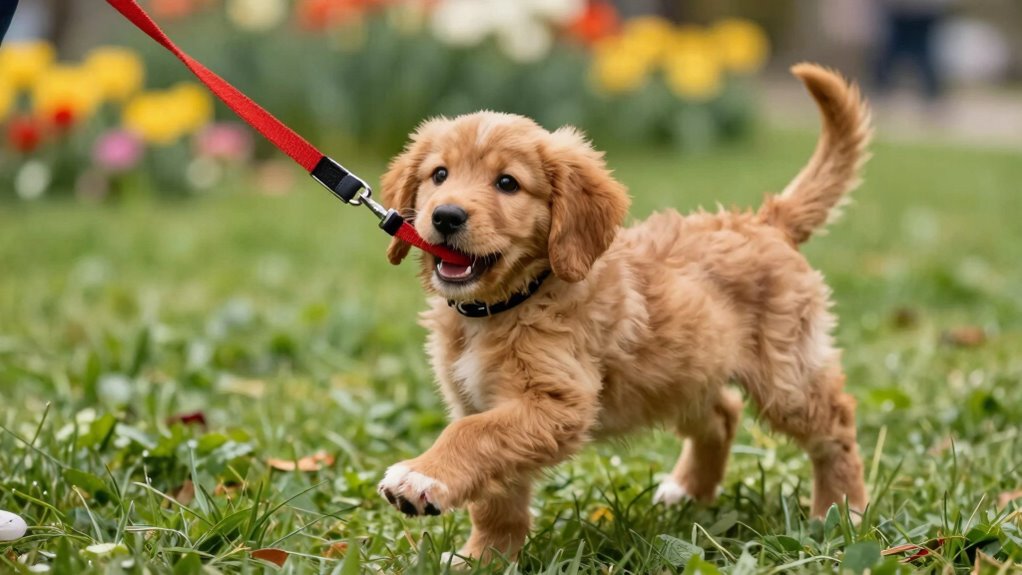
When your puppy’s leash chewing becomes a concern, turning walks into enjoyable experiences can make a big difference. To keep walks stress-free, focus on engaging activities that promote positive puppy socialization and reinforce leash training techniques. Here are three ways to make walks fun for both of you:
Turn walks into fun, stress-free adventures with positive reinforcement and varied routes.
- Use treats and praise to reward good leash behavior, helping your puppy associate walks with positive experiences.
- Incorporate short, controlled socialization sessions with other dogs or people to build confidence and reduce anxiety.
- Vary your route and pace to keep your puppy interested and prevent boredom, making leash training more effective and enjoyable.
Frequently Asked Questions
Can Leash Chewing Indicate Separation Anxiety in Puppies?
Yes, leash chewing can indicate separation anxiety in puppies. If your pup chews the leash excessively when alone or shows other behavioral issues like barking or destructive behavior, separation anxiety might be the cause. You can help by gradually easing their anxiety through desensitization and positive reinforcement. Addressing these signs early can prevent more serious behavioral issues and help your puppy feel more secure and comfortable when you’re apart.
Are There Specific Breeds More Prone to Leash Chewing?
Some breeds are more prone to leash chewing due to breed tendencies toward high energy and chewing behavior. For instance, retrievers and terriers often chew on leashes more than calmer breeds like bulldogs or pugs. If you notice your puppy from a breed with strong chewing tendencies, you can prevent damage by providing plenty of appropriate toys and training. Understanding your breed’s tendencies helps you manage leash chewing effectively.
How Long Does It Typically Take to Correct Leash Chewing Habits?
It usually takes several weeks of training patience and consistency strategies to correct leash chewing habits. You’ll see progress when you regularly reinforce good behavior and redirect your puppy’s attention. Stay persistent, use positive reinforcement, and avoid punishing. Every puppy learns at different speeds, so remain patient and consistent. With time and effort, your puppy will develop better leash manners, making walks more enjoyable for both of you.
What Are Signs of Discomfort or Pain From Leash Chewing?
If your puppy chews the leash and seems uncomfortable, look for signs like paw irritation or jaw tension. For example, a puppy might whimper when you touch its mouth or scratch its paws, indicating pain. You might also notice excessive paw licking or reluctance to walk. These signs show discomfort or pain from leash chewing, so stop and check for injuries or irritation to keep your pup happy and healthy.
Should I Consult a Professional Trainer for Persistent Leash Chewing?
Yes, you should consult a professional trainer if your puppy’s leash chewing persists. A trainer can perform a behavioral assessment to identify underlying causes and develop effective training techniques tailored to your pup. They can guide you through positive reinforcement methods and help address any frustration or anxiety that might be contributing to the behavior. This personalized approach guarantees you’re equipped to stop leash chewing and promote better leash manners.
Conclusion
Think of your puppy’s leash as a bridge between you and their world. When they chew it, they’re exploring, learning, and perhaps feeling anxious. By guiding them gently and providing the right tools, you help them cross that bridge confidently, leaving the chewing behind. With patience and understanding, you’ll build a bond strong enough to withstand any storm, turning these moments into opportunities for trust and growth. Together, you’ll create a journey that’s safe, happy, and full of discovery.