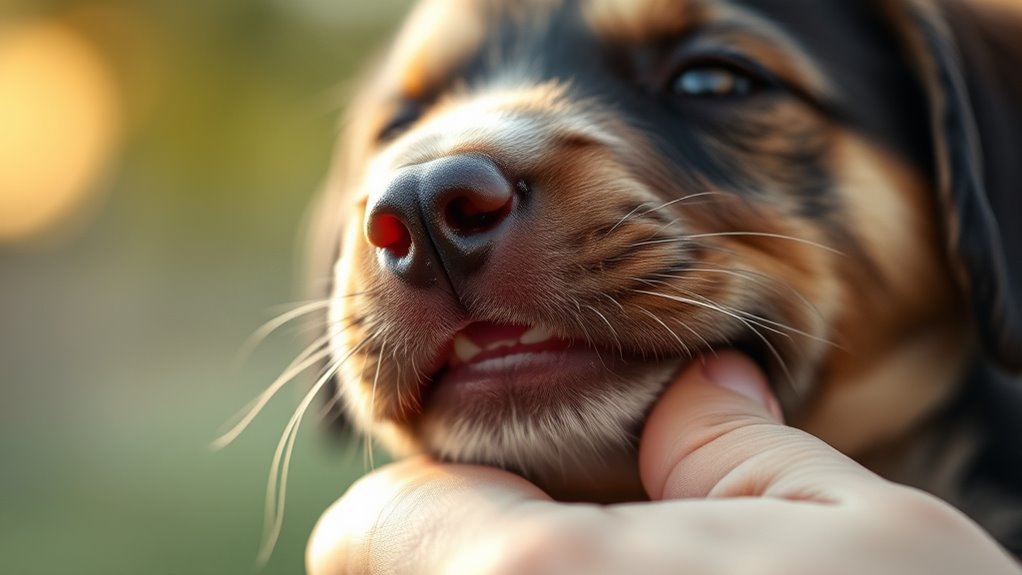

To encourage gentle mouths, start by recognizing normal puppy nibbling and responding consistently—say “ouch” or yelp when biting too hard to mimic their littermate’s reaction. Praise soft bites and ignore rough ones to reinforce gentleness. Redirect biting impulses to appropriate chew toys and reward your puppy when they use them. Patience and consistency are key, and if you keep guiding them, you’ll set the foundation for a respectful, well-mannered companion. Keep going to learn more about effective bite inhibition techniques.

Get pet supplies delivered free with Prime
- Fast, free delivery on millions of items
- Prime Video, Amazon Music and more included
- Member-only deals all year
Key Takeaways
- Teach puppies to recognize their bite strength by responding immediately to hard bites with a yelp or “ouch.”
- Reinforce gentle mouth contact through praise and calm petting, rewarding soft bites consistently.
- Redirect biting urges to appropriate chew toys to satisfy natural instincts and prevent rough biting.
- Use consistent, clear responses to teach limits and appropriate biting behavior during play.
- Patience and repetition help puppies learn bite inhibition, ensuring safe, respectful interactions as they grow.

Bite inhibition is an essential behavior that helps puppies and young dogs learn how to control their biting during interactions. When you’re playing with your puppy or handling them, it’s important to understand that biting is instinctive, but unregulated biting can lead to problems later on. By teaching your dog bite inhibition early, you’re setting the foundation for gentle, safe interactions with people and other animals. This skill is crucial because it helps prevent accidental injuries and guarantees your dog can be a well-mannered companion.
You might notice your puppy nibbling on your fingers or clothes during play. This is normal, but it’s your job to guide them toward gentler behavior. When they bite too hard, immediately stop the play and say “ouch” or use a high-pitched yelp. This mimics what another puppy would do if bitten too roughly during play. The goal is to communicate that biting too hard causes the fun to stop. If your puppy backs off or seems surprised, praise them softly and resume play gently. Consistency is key; every time they bite too hard, you need to respond in the same way to teach them the limits.
As your puppy matures, you want to reinforce soft mouth contact during all interactions. When they lick your hand or gently nibble, praise them with a calm voice and gentle petting. If they bite hard, withdraw attention and ignore them for a moment. This teaches them that gentle play gets positive reinforcement, while rough biting results in losing your company. Over time, your puppy will learn that gentle contact is more rewarding than rough biting. Remember, patience and consistency matter a lot here.
It’s also helpful to provide appropriate chew toys for your puppy. Redirect their biting instinct toward these toys instead of your hands or clothes. When they start biting, offer a chew toy and praise them when they bite it instead. This not only teaches bite inhibition but also helps satisfy their natural urge to chew. Keep toys handy during playtime, and frequently remind them to use these toys rather than your body parts. Additionally, using appropriate training tools can enhance the learning process and reinforce good behavior.
In the end, teaching bite inhibition is about clear communication and consistent responses. You act as your puppy’s guide, showing them what’s acceptable and what isn’t. With patience and positive reinforcement, you help your puppy develop a gentle mouth, making every interaction safe and enjoyable for both of you. This early lesson shapes your dog into a well-mannered, respectful companion for many years to come.
puppy bite inhibition training toys
As an affiliate, we earn on qualifying purchases.
As an affiliate, we earn on qualifying purchases.
Frequently Asked Questions
When Should I Start Teaching My Puppy Bite Inhibition?
You should start teaching your puppy bite inhibition as soon as you bring them home, ideally around 8 weeks old. During play and daily interactions, gently redirect their biting by offering toys and stopping play if they bite too hard. Consistent responses teach them that gentle biting is acceptable, while rough biting ends play. Early training helps your puppy develop good habits and prevents future biting issues.
How Can I Tell if My Dog Is Struggling With Bite Inhibition?
Like a fragile glass, your dog’s bite might show signs of struggle if they snap or nip unexpectedly, even during play. You’ll notice if they become overly defensive, hard to redirect, or if their bites increasingly hurt. If they resist gentle correction or seem anxious when told to stop, it indicates they’re having trouble with bite inhibition. Address these signs early to help your dog develop a gentle, controlled mouth.
Are There Specific Breeds That Need More Bite Inhibition Training?
Yes, some breeds like Rottweilers, German Shepherds, and Pit Bulls often require more focused bite inhibition training due to their strength and natural guarding instincts. You should start early, socialize them well, and use gentle, consistent training methods to teach them appropriate bite pressure. Keep sessions positive, and always supervise interactions to make certain they learn to control their bite, especially in high-energy or protective breeds.
What Are Common Mistakes to Avoid During Bite Inhibition Training?
Think of training as guiding a young artist with a delicate brush. Avoid harsh corrections or yelling, as they can cause fear rather than trust. Don’t rush the process; patience is your palette. Never use physical punishment or encourage rough play, which can reinforce bad habits. Instead, reward gentle mouthing and be consistent. Remember, your calm, gentle approach shapes your puppy’s future ability to interact safely and kindly.
How Long Does It Typically Take to See Progress?
You can usually see progress within a few weeks, but it varies based on your puppy’s temperament and consistency. If you’re patient and practice daily, you’ll notice a gentle reduction in biting intensity. Keep reinforcing gentle mouth handling, and don’t get discouraged if it takes longer. Consistent, positive reinforcement helps your pup learn faster, so stay committed and celebrate small improvements along the way.
Conclusion
Remember, teaching bite inhibition creates a safer, happier bond with your puppy. Did you know that puppies that learn bite inhibition are 60% less likely to bite aggressively later on? By consistently using gentle guidance, you set the foundation for a well-behaved dog. Keep patient and positive—your efforts will pay off as your pup grows into a confident, gentle companion. Start early, stay consistent, and enjoy the journey of shaping a loving, well-mannered furry friend.
Fall Picks
fall essentials
As an affiliate, we earn on qualifying purchases.