To help your puppy love being touched without endless bribing, start gradually by handling them in a calm, familiar space, using gentle, consistent motions. Reinforce positive feelings with praise, treats, or toys during each gentle touch, making it a fun and bonding experience. Pay close attention to body language, respecting their cues, and keep sessions short and positive. With patience and regular practice, touching will become a natural, enjoyable part of your puppy’s routine—more helpful tips await as you continue.
Key Takeaways
- Start handling sessions in quiet, familiar spaces with short durations to build comfort gradually.
- Use gentle, consistent touch combined with positive reinforcement like treats and praise.
- Incorporate playful activities and favorite toys to make touch feel enjoyable and bonding-focused.
- Observe body language carefully; back off immediately if signs of stress or discomfort appear.
- Integrate handling into daily routines with patience, making it a natural, positive part of your puppy’s life.

Blue Buffalo Baby BLUE Savory Chicken Puppy Training Treats, 4 oz
- Main Ingredient: Real chicken first ingredient
- Cognitive Support: Includes DHA for brain development
- Treat Type: Meaty, bite-sized training treats
As an affiliate, we earn on qualifying purchases.
As an affiliate, we earn on qualifying purchases.
Why Do Puppies Resist Being Touched, and How Can You Help?

Puppies often resist being touched because they may feel unsure or overwhelmed, especially if they haven’t been gently handled during their early weeks. Their developing puppy independence makes them cautious about unfamiliar contact. Sensory overload can also play a role; too much noise, bright lights, or rough handling can scare them. When puppies experience too many new sensations at once, they might pull away or freeze. This reaction isn’t about dislike but about feeling safe. To help, give your puppy time to acclimate to gentle touches gradually. Keep initial interactions calm and quiet, allowing them to build confidence at their own pace. Understanding that their resistance stems from feeling overwhelmed helps you approach touch with patience and care. Additionally, early socialization with gentle handling can significantly improve their comfort level over time. Recognizing that puppies need positive experiences during handling can foster trust and reduce fear, especially when you incorporate trust-building techniques that promote comfort and security.
Build Trust With Gentle, Consistent Handling Techniques
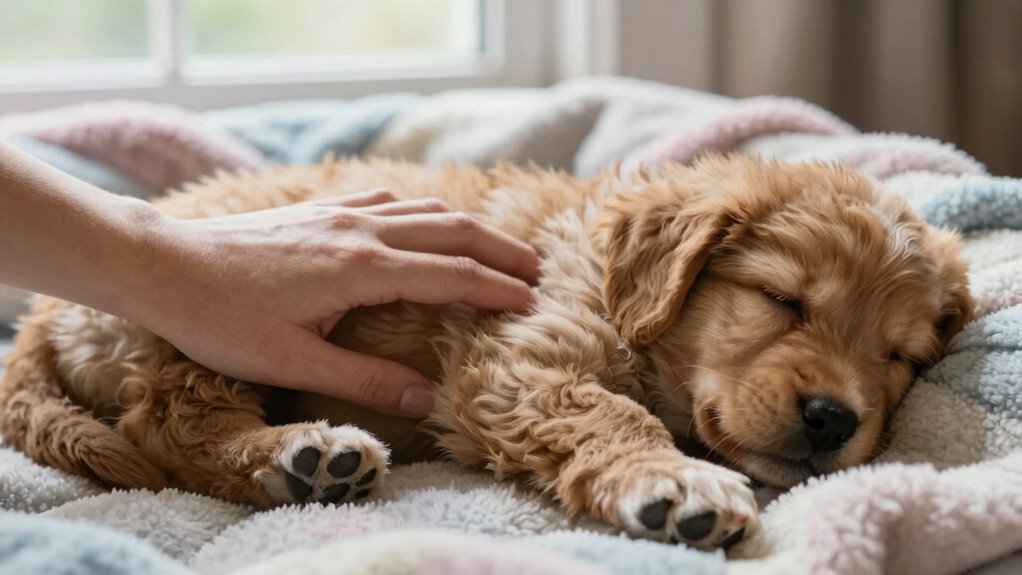
Building trust through gentle, consistent handling is key to helping your puppy become comfortable with touch. Start by offering calm, gentle massages, focusing on areas like the shoulders, neck, and back. Keep your movements slow and gentle to promote stress reduction and create a soothing experience. Handle your puppy at regular intervals so they become familiar with your touch, reinforcing that it’s safe and positive. Use a soft voice and light touch to avoid overwhelming them. Consistency is essential—always handle your puppy in the same gentle manner, which helps build confidence and trust. Regular, mindful handling can also support dog wellness by reducing stress and fostering a positive association with touch. Incorporating gentle handling techniques can also help reduce stress and foster a positive association with touch. Being mindful of body language during handling allows you to better gauge your puppy’s comfort level and adapt your approach accordingly. By observing your puppy’s reactions and adjusting your approach accordingly, you can ensure they feel comfortable and secure during interactions.
Use Positive Reinforcement to Make Touching a Happy Experience
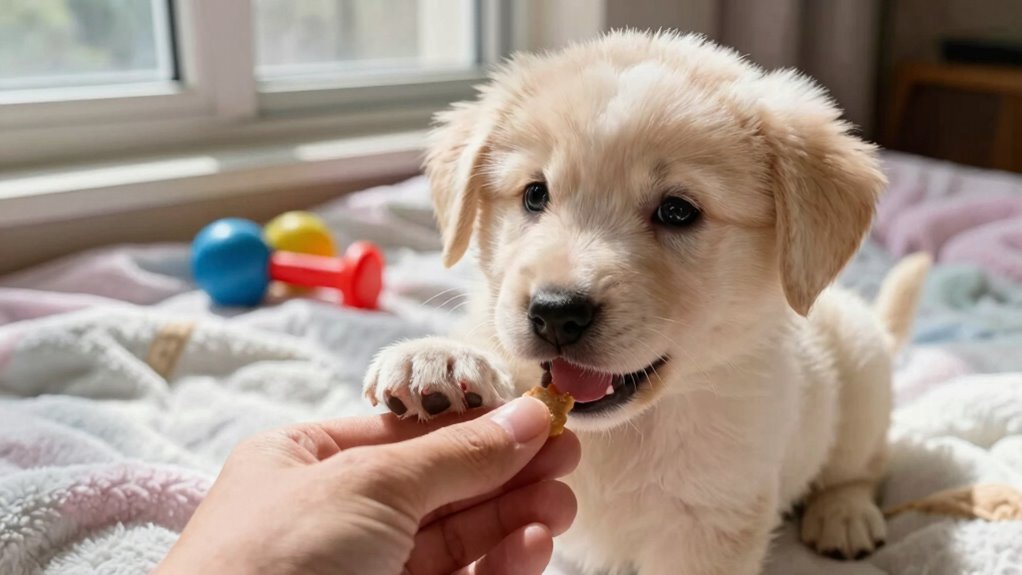
To help your puppy enjoy being touched, start by gradually increasing their comfort level with gentle contact. Use tasty rewards to reinforce positive feelings during each interaction, making the experience enjoyable. Over time, your puppy will associate touching with treats and become more relaxed and happy. Incorporating positive reinforcement techniques can significantly improve your puppy’s overall experience with touch. Additionally, understanding Animal behavior can help you interpret your puppy’s responses and adjust your training approach accordingly. Recognizing proper handling methods can also boost your puppy’s confidence and trust during these interactions.
Gradually Increase Comfort
By gradually increasing the amount of touch your puppy tolerates, you help build their confidence and comfort. Start with short, gentle massages, gently stroking your puppy in areas they’re more comfortable with. Use playful petting to keep the experience positive, making it fun rather than stressful. As your puppy becomes more relaxed, slowly extend the duration and include different body parts, always observing their reactions. Reinforce calm behavior with praise and gentle reassurance. Remember, patience is key—don’t rush the process. If your puppy shows signs of discomfort, back off to a previous step and proceed more slowly. Incorporating gentle handling techniques can further promote positive associations with being touched. Utilizing positive reinforcement methods like treats and praise will encourage your puppy to associate touch with rewards. Consistent, positive interactions help your puppy develop trust and reduce anxiety around being handled. Over time, these small, positive steps will help your puppy associate touching with comfort and happiness, making future handling easier for both of you.
Use Tasty Rewards
Using tasty rewards is a powerful way to make your puppy enjoy being touched. When you combine treats with gentle handling, praise consistency helps your puppy associate touch with positive outcomes. Be patient and keep your timing precise; immediately reward after each touch to reinforce good feelings. Consistent praise shows your puppy that being touched is safe and enjoyable. Avoid rushing; instead, reward small successes to build confidence. Remember, patience and clear timing are key—if your puppy pulls away, pause and try again later. Over time, your puppy will learn that touch leads to tasty treats and positive attention. Incorporating Free Floating techniques can help your puppy become more comfortable with handling. This approach fosters trust and makes future handling easier and more pleasant for both of you.
Start in Safe, Comfortable Zones to Ease Your Puppy’s Anxiety

Starting in a familiar and calm environment helps your puppy feel safe and reduces anxiety when you introduce touch. Begin by handling your puppy in a quiet space where they feel secure, avoiding noisy or busy areas. This setting promotes positive associations with puppy grooming and handling safety. Keep sessions short and gentle, focusing on areas your puppy is comfortable with initially. Use soft words and calm movements to build trust. As your puppy becomes more relaxed, gradually extend the duration and include different body parts. Creating a safe zone guarantees your puppy doesn’t feel overwhelmed, making future handling and grooming easier. Remember, patience and consistency help your puppy associate touch with comfort rather than stress. Incorporating positive reinforcement techniques can also strengthen your puppy’s trust and willingness to be touched.
Read Your Puppy’s Body Language and Respect Their Cues

Paying close attention to your puppy’s body language helps you understand how they’re feeling during handling and grooming. Watch for signs like relaxed posture, wagging tail, or leaning in, which indicate confidence and comfort. Conversely, pinned-back ears, tensed muscles, or a tucked tail suggest discomfort or fear. Respect these cues by giving your puppy space or pausing if they seem overwhelmed. Building puppy confidence takes time, so your handling patience is key. If your puppy shows signs of stress, don’t rush; instead, gently back off and try again later. Recognizing and responding to body language helps your puppy feel safe and respected, fostering trust and making future handling sessions smoother. Incorporating energy-efficient cloud servers into your training tools can also help you stay organized and consistent. Additionally, understanding animal behavior cues allows you to tailor your approach to your puppy’s individual needs and comfort level. Understanding positive reinforcement techniques can further promote a calm and trusting attitude towards touch, encouraging a positive association with handling and grooming. This mindful approach encourages a positive association with touch.
Incorporate Play and Bonding to Make Handling Fun

You can make handling enjoyable by using playful touch techniques that make your puppy feel comfortable. Incorporate their favorite toys to turn training sessions into fun bonding moments. Celebrate small touches to build positive associations and encourage your puppy to enjoy being touched. Additionally, incorporating interactive experiences into your training can enhance engagement and reinforce positive feelings toward handling. Engaging in gentle handling exercises can also help desensitize your puppy to touch and reduce future anxiety. Incorporating breed-specific traits into your approach ensures that your training aligns with your puppy’s natural tendencies and needs. Recognizing behavioral traits common to your puppy’s breed can further tailor your handling techniques for better comfort and trust.
Use Playful Touch Techniques
Incorporating playful touches into handling sessions can turn what might feel like a chore into a fun bonding experience for your puppy. Use gentle massage techniques to introduce touch gradually, making it soothing rather than overwhelming. Combine this with playful petting, where you pet your puppy in a lively, upbeat manner that makes the experience enjoyable. Keep sessions short and fun, praising your puppy for relaxed behavior. Incorporate light, rhythmic touches that mimic play, helping your puppy associate handling with positive feelings. Avoid firm or uncomfortable pressure, instead focusing on making touch a gentle, happy activity. Using positive reinforcement during these sessions encourages your puppy to enjoy being handled. Consistent training schedules reinforce positive associations and help your puppy understand that handling is a normal part of life. Over time, these playful touch techniques will help your puppy see handling as a natural, pleasant part of life.
Incorporate Favorite Toys
Using your puppy’s favorite toys during handling sessions can transform the experience into a fun game that fosters trust and positive associations. When you incorporate play, you tap into puppy psychology, making touch feel less like a task and more like bonding time. Toys act as a reward and distraction, helping your pup associate gentle handling with enjoyable moments. This approach turns touch therapy into a playful activity, reducing stress and encouraging your puppy to stay calm. By consistently pairing handling with toys, you create a positive feedback loop that builds confidence and comfort. Over time, your puppy will learn that being touched isn’t scary but part of a fun, interactive experience you both enjoy.
Celebrate Small Touches
Celebrating small touches by turning them into playful moments helps your puppy enjoy handling sessions. Incorporate gentle massage and sensory exploration through fun activities that encourage positive associations. Use a variety of touches, like softly petting or gentle ear strokes, and pair them with play or praise. This makes handling feel less like a chore and more like bonding time. To keep things engaging, alternate between different touches and activities:
| Touch Type | Activity Idea |
|---|---|
| Gentle massage | Use a soft brush or hands |
| Ear handling | Gently pet and praise |
| Paw touches | Play with a favorite toy |
| Body strokes | Incorporate a quick game |
| Sensory exploration | Introduce new textures gently |
Troubleshoot Common Challenges in Puppy Touch Training

Many puppies resist being touched because they feel unsure or overwhelmed, which can make training challenging. To address this, focus on creating licking comfort and easing into grooming routines gradually. Here are four tips:
- Start with brief, gentle touches, rewarding your puppy immediately afterward.
- Use high-value treats to encourage positive associations with touch.
- Break grooming routines into small steps, like touching paws or ears separately.
- Observe your puppy’s body language to identify signs of stress, pausing if needed.
If your puppy pulls away or shows discomfort, don’t force it. Instead, go back a step, build trust, and keep sessions short. Consistency and patience help your pup learn that being touched is safe and even comforting.
Maintain Progress and Make Touching a Natural Part of Daily Life

Once your puppy is comfortable with being touched, the key to lasting progress is integrating these interactions seamlessly into daily routines. Consistent puppy socialization helps your pup see handling as normal, reducing handling anxiety over time. Incorporate gentle touching during everyday activities like grooming, playtime, or cuddling, making it part of your routine. Praise and reward your puppy during and after these moments to reinforce positive associations. Regular exposure to different people and environments further boosts confidence and ease with touch. Over time, touching becomes a natural, relaxed part of life, not a special event. This ongoing practice solidifies your puppy’s comfort, making handling effortless and enjoyable for both of you.
Frequently Asked Questions
How Long Does It Typically Take for a Puppy to Enjoy Being Touched?
You can expect a puppy to start enjoying being touched around 8 to 12 weeks, but it varies with age milestones and temperament traits. Some puppies are naturally more relaxed, while others need more time. Consistent, gentle handling helps build trust. With patience, most puppies learn to enjoy touch within a few weeks, especially if you use positive reinforcement and respect their comfort levels.
Can I Use Treats for Every Touch to Make My Puppy Comfortable?
Yes, you can use treats for every touch during treat-based training to help your puppy feel comfortable. This positive reinforcement strengthens their association with being touched and builds trust. However, it’s best to gradually reduce treats over time so your puppy learns to enjoy being touched without always expecting a reward. Consistent, gentle handling combined with treats creates a positive experience that encourages your puppy to love being touched.
What Are Signs My Puppy Is Overwhelmed During Handling?
Your puppy shows signs of being overwhelmed through body language and stress signals, like avoiding eye contact, tense muscles, or trying to wiggle away. You might notice yawning, lip licking, or trembling as clear signals. If these occur, gently stop handling, give your pup space, and use calm voices. Recognizing these stress signals helps you adjust your approach, ensuring your puppy feels safe and reduces anxiety during handling.
How Do I Handle a Puppy That Bites or Nips When Touched?
Like a knight of old, you must approach your puppy gently. When it bites or nips during handling, pause, and give a firm, calm “no.” Redirect their attention to a toy to teach bite inhibition, and always reward gentle handling. Consistent, patient training helps your puppy learn that calm, gentle contact is preferred, making future handling easier and strengthening your bond.
Is It Okay to Force Touch if My Puppy Resists Initially?
It’s best to avoid forcing your puppy to tolerate touch if they resist. Instead, focus on consent vs coercion by observing their signals and respecting their comfort. Use gentle handling techniques, like soft petting and short sessions, to build trust gradually. This approach encourages positive associations with touch, helping your puppy love being handled over time. Always prioritize their feelings to foster a healthy, trusting relationship.
Conclusion
Think of building your puppy’s trust like watering a delicate plant—you need patience, consistency, and gentle care. As you gradually introduce touch and read their cues, you’ll create a bond that feels natural and safe. Over time, touching becomes as effortless as a breeze, no longer something to brace for but a moment to share happily. Keep nurturing that trust, and soon, your puppy will love being touched just as much as cuddling in the sun.