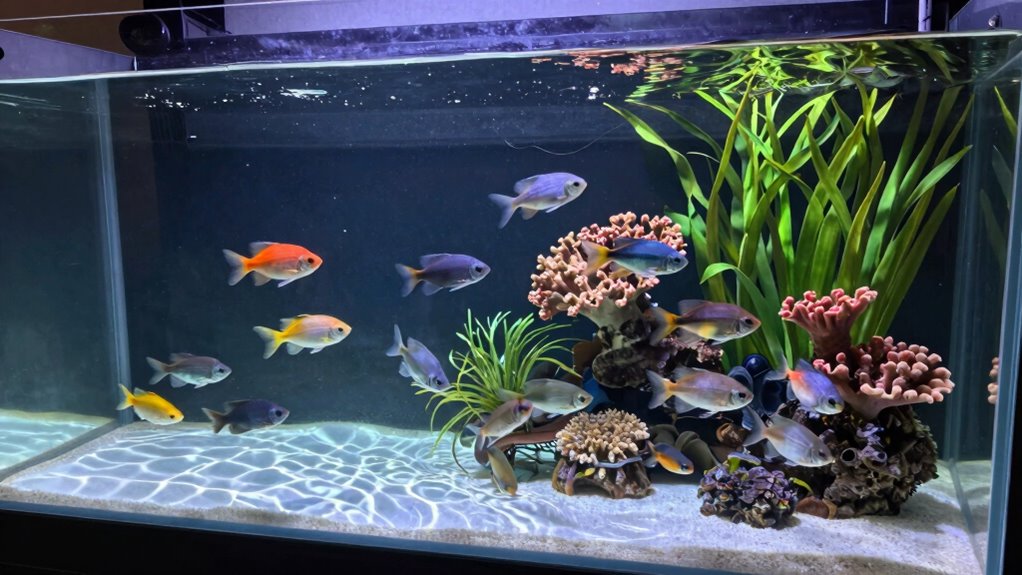

To improve water flow and keep your fish happy, position your wavemaker in the middle or slightly off-center at an angle for a circular current. Avoid placing it too close to the glass or behind decorations, which can create turbulence or stagnant zones. Adjust the speed to suit your fish species, ensuring even flow throughout the tank. Proper placement prevents waste buildup and promotes a healthy environment, and there’s more to optimize this for your tank’s success.

Get pet supplies delivered free with Prime
- Fast, free delivery on millions of items
- Prime Video, Amazon Music and more included
- Member-only deals all year
Key Takeaways
- Position the wavemaker toward the middle of the tank at an angle to promote circular water movement.
- Avoid placing the device near glass or decorations to prevent localized turbulence.
- Aim the current across different tank areas to ensure comprehensive water flow.
- Adjust the wavemaker speed to match the needs of specific fish species and tank conditions.
- Regularly fine-tune placement to prevent dead zones and promote a healthy, well-oxygenated environment.
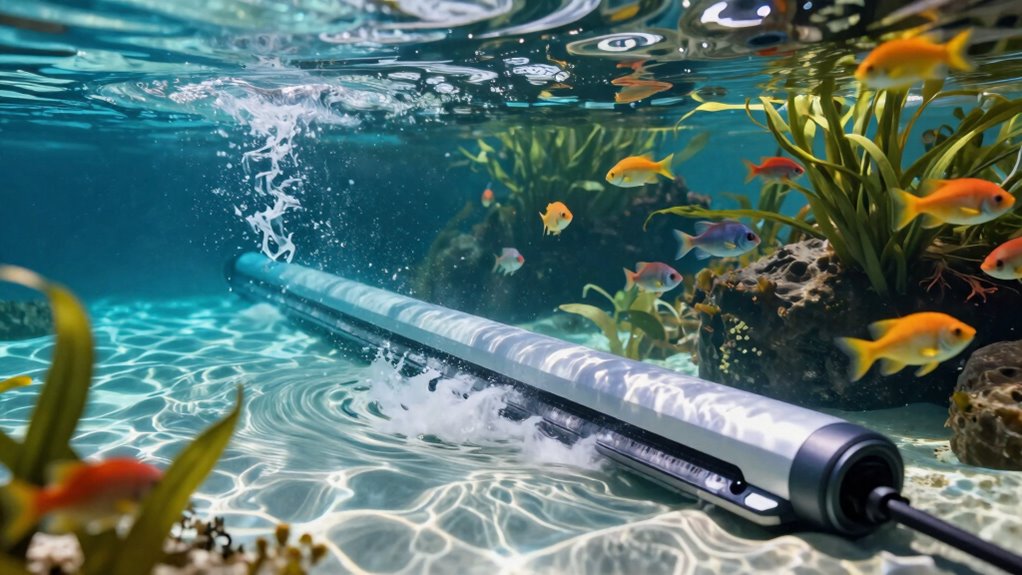
Proper wavemaker placement is vital for creating a healthy and balanced aquarium environment. When you position your wavemaker correctly, you not only improve water circulation but also enhance the overall aquarium aesthetics. A well-placed wavemaker ensures that the water moves smoothly across the tank, mimicking natural currents that fish are accustomed to. This movement keeps debris suspended, prevents dead zones, and distributes nutrients evenly, promoting a healthier habitat for your aquatic life.
Proper wavemaker placement promotes healthy water flow, prevents dead zones, and enhances your aquarium’s natural beauty.
You should consider the size and shape of your tank when placing your wavemaker. If you set it too close to the glass, you risk creating strong, localized currents that can stress your fish or even cause physical damage. Conversely, placing it too far from the main swimming areas might result in inadequate flow, leading to stagnant zones where waste and detritus can accumulate. Aim for a middle ground where the current gently sweeps across the entire tank, guaranteeing all areas receive proper water movement.
Positioning your wavemaker also influences water chemistry. Proper flow prevents the buildup of harmful substances like nitrates and phosphates in specific zones, maintaining your water parameters stable. When water moves consistently, it helps sustain proper oxygen levels and prevents the formation of anaerobic spots where harmful bacteria might thrive. This circulation supports your filtration system’s efficiency and reduces the need for frequent water changes, simplifying tank maintenance.
To optimize flow, consider mounting the wavemaker at an angle or slightly off-center, directing the current toward the opposite side of the tank. This setup encourages a circular motion, creating a more natural environment that promotes fish activity and reduces stress. Avoid placing the wavemaker directly behind decorations or plants, as this can cause turbulence that disrupts the visual harmony of your aquarium and may disturb shy or easily stressed fish. Proper water circulation plays a crucial role in maintaining a balanced aquarium environment, ensuring all inhabitants thrive. Additionally, adjusting the wavemaker speed can help fine-tune water movement to suit different species’ needs. Understanding how to position equipment correctly can significantly improve your tank’s overall health. Proper placement also helps prevent uneven flow, which could otherwise lead to poor water quality in certain areas.
As an affiliate, we earn on qualifying purchases.
Frequently Asked Questions
How Often Should I Adjust the Wavemaker Settings?
You should adjust your wavemaker settings during regular aquarium maintenance, ideally every few weeks, to guarantee ideal flow. Observe your fish behavior closely; if they seem stressed or prefer certain areas, tweak the flow accordingly. Regular adjustments help maintain healthy water movement and reduce dead spots. Keep monitoring their behavior and water conditions, and make small changes as needed to keep your fish comfortable and your tank balanced.
Can Wavemakers Be Used in Saltwater Aquariums?
Yes, wavemakers can be used in saltwater aquariums. Imagine a reef tank where proper water circulation boosts coral health and mimics natural ocean currents. A well-placed wavemaker guarantees consistent flow, preventing dead spots and promoting oxygen exchange. Just ensure the device is designed for saltwater, as materials and corrosion resistance are essential. This setup helps maintain a thriving environment, supporting colorful corals and lively marine life.
What Is the Best Type of Wavemaker for Small Tanks?
For small tanks, a controllable, compact wavemaker works best. You want one that creates a gentle, adjustable flow pattern to prevent stress and mimic natural currents. Look for models designed specifically for small tanks, usually with adjustable speeds and flow settings. This guarantees you won’t disturb your fish or plants, while maintaining proper water circulation. Choosing the right size and flow pattern helps keep your tank healthy and your fish happy.
Are There Any Safety Concerns With Wavemakers?
You should be aware that about 20% of aquarium accidents involve wavemakers, mainly due to improper placement. They can cause disturbances in fish behavior if placed incorrectly or if the flow is too strong. Regular equipment maintenance is essential to prevent electrical issues and guarantee safe operation. Always secure the wavemaker firmly, avoid over-strong currents, and monitor your fish’s behavior to maintain a safe, healthy environment.
How Do I Prevent Fish From Getting Caught in the Wavemaker?
To prevent fish from getting caught in the wavemaker, observe their behavior and guarantee the flow isn’t too strong in areas they frequent. Use safety measures like installing a protective grid or cover over the wavemaker to keep fish away from moving parts. Regularly check the equipment for any signs of entrapment or damage, promoting wavemaker safety and ensuring your fish stay safe and stress-free in their environment.
Conclusion
By placing your wavemaker thoughtfully, you create a vibrant, natural flow that keeps your aquatic friends happy and healthy. Think of it as a modern-day fountain, bringing life and movement to your tank—without the need for a time machine. When you optimize placement, you’re not just improving water circulation; you’re crafting a thriving underwater world where fish can dart and play with joy. Your tank becomes a lively, harmonious oasis—truly a sight for sore eyes.
Fall Picks
fall essentials
As an affiliate, we earn on qualifying purchases.