

Deworming is vital to protect your pet from common parasites like roundworms, hookworms, tapeworms, heartworms, fleas, and ticks, which can cause serious health issues and even infect your family. Parasites spread through contaminated soil, infected animals, or shared items, so regular prevention is essential. Watch for signs like vomiting, diarrhea, weight loss, or itching. Sticking to a consistent deworming schedule and choosing the right treatment will keep your pet healthy—learn more to keep them safe.

Get pet supplies delivered free — and shop member deals
- Fast, free delivery on millions of items
- Access to Prime Big Deal Days deals on October 6–7
- Prime Video, Amazon Music and more included
Key Takeaways
- Common internal parasites include roundworms, hookworms, tapeworms, and heartworms, each with distinct transmission routes and health risks.
- External parasites like fleas and ticks can transmit diseases and cause discomfort; regular prevention is essential.
- Parasites often spread through contaminated soil, infected animals, fecal-oral contact, and shared household items.
- Signs of infestation include diarrhea, weight loss, visible worms, itching, and lethargy; early detection improves treatment success.
- Consistent deworming schedules, vet guidance, and environmental hygiene are vital for effective parasite prevention and pet health.
As an affiliate, we earn on qualifying purchases.
Why Parasites Are a Threat to Your Pet’s Health
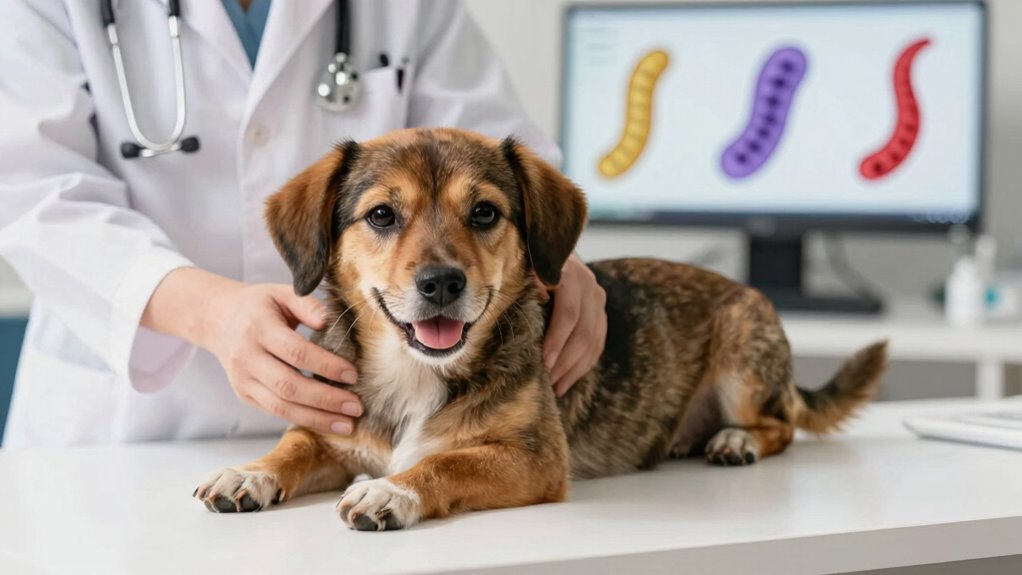
Parasites pose a serious threat to your pet’s health because they can cause a range of health problems, from mild discomfort to life-threatening conditions. Without proper pet parasite prevention, your pet is vulnerable to infections that can weaken their immune system and lead to other health issues. Parasite health risks include anemia, diarrhea, weight loss, and even organ damage. Some parasites can also transmit diseases to humans, increasing the risk for your entire household. Regular deworming and preventive measures are essential to keep these risks at bay. By staying proactive about parasite prevention, you protect your pet’s well-being and reduce the chances of complications from infestations. Ignoring parasite risks can result in costly treatments and serious health consequences down the line. Implementing comprehensive parasite prevention methods can significantly reduce these dangers and promote overall pet wellness. Ensuring that your pet receives appropriate preventive care is crucial for maintaining their long-term health. Additionally, understanding the lifecycle of common parasites can help in designing effective treatment strategies to eliminate them thoroughly. Being aware of the signs of infestation can also help you catch issues early before they cause severe health problems.
What Are the Common Parasites That Can Infect Your Pet?
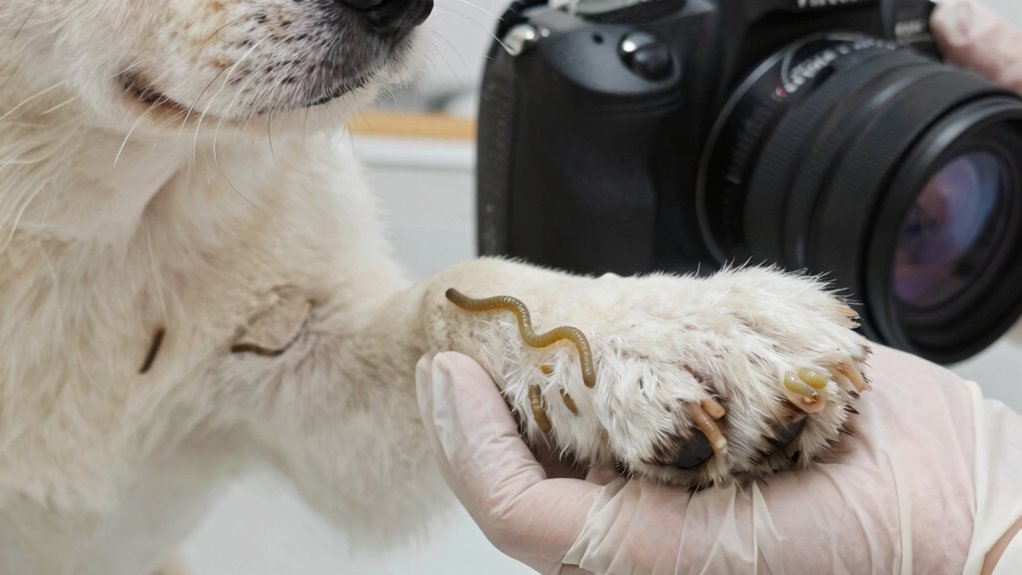
Several common parasites can infect your pet, posing health risks that range from mild discomfort to serious illness. These parasites have distinct lifecycle stages, which help them survive and spread within your pet’s body. For example, roundworms and hookworms can cause anemia and digestive issues. Tapeworms often come from fleas and can be seen in your pet’s stool. Heartworms are transmitted through mosquito bites and can cause severe lung and heart problems. Additionally, many of these parasites carry zoonotic risks, meaning they can infect humans, especially children. Recognizing these common parasites and understanding their lifecycle helps you take effective preventative measures. Regular deworming and veterinary checkups are essential to break the parasite lifecycle and protect both your pet and your family from potential infections.
How Do Parasites Spread to Pets and People?

Parasites can spread to your pets and family through contaminated soil, direct contact with infected animals, or by ingesting fecal matter. You might unknowingly bring parasites into your home if your pet plays outside or interacts with other animals. Staying aware of these transmission points helps you protect everyone’s health. Using preventive measures such as regular deworming and cleaning can further reduce the risk of parasite transmission. Recognizing the importance of mental wellbeing can also support your overall approach to pet health and responsible care. Additionally, understanding the types of common parasites can help you identify symptoms early and seek appropriate treatment. Proper hygiene practices are essential in minimizing the spread of parasites within your household.
Contaminated Soil Exposure
Contaminated soil is one of the primary ways parasites spread to both pets and people. Soil contamination occurs when parasite eggs or larvae are present in the ground, often from previous infected animals. Pets can pick up these parasites when they dig, sniff, or lick contaminated soil during outdoor activities. Outdoor hazards like parks, gardens, or sandy areas increase the risk, especially if these areas are frequented by stray animals or haven’t been regularly cleaned. People, especially children, can accidentally ingest infective eggs from contaminated soil or touch contaminated surfaces and then put their hands in their mouths. To reduce exposure, avoid letting pets roam freely in unverified outdoor areas and always practice good hygiene after outdoor play. Regular deworming can further protect both your pet and your family. Soil contamination is a common mode of parasite transmission that emphasizes the importance of environmental hygiene.
Infected Animal Contact
Most parasites are transmitted directly through contact with infected animals. When you socialize your pet or engage in outdoor activities, they risk exposure to parasites like worms and fleas. To keep your pet safe, be aware of these common transmission points:
- Playing with or close contact to infected animals during pet socialization.
- Sharing water bowls or toys with animals that carry parasites.
- Encountering infected animals during outdoor activities, like walks or parks.
- Licking or biting infected animals, which can transfer parasites directly.
Practicing outdoor activity safety and monitoring pet interactions reduce the risk of transmission. Regular vet check-ups and parasite prevention measures help protect both your pet and your family from parasites spread through infected animal contact.
Fecal-Oral Transmission
Fecal-oral transmission occurs when pets or people ingest parasite eggs or larvae present in contaminated feces. Poor pet hygiene increases the risk, especially if your pet licks or eats feces during walks or play. Environmental sanitation plays a vital role in breaking the chain of infection; regularly cleaning up feces and disinfecting outdoor areas reduces parasite presence. Children are particularly vulnerable because they often put their hands in their mouths after playing outside. To prevent spread, wash your hands thoroughly after handling pets or cleaning up feces. Ensuring your pet’s living environment stays clean and practicing good hygiene habits are essential steps to minimize fecal-oral transmission and protect both your pet and your family from parasitic infections.
Effective Preventative Measures Against Parasites
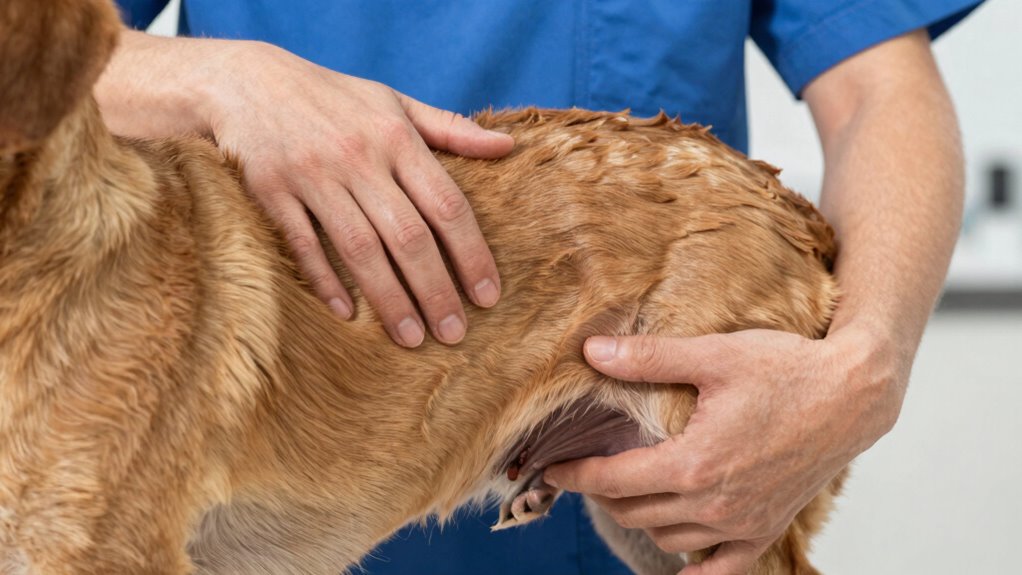
Implementing effective preventative measures is essential to protect your pets from parasitic infections. Regular parasite testing helps catch issues early and guarantees your pet stays healthy. Here are four key steps you should take:
- Maintain a consistent deworming schedule recommended by your veterinarian.
- Use natural remedies like garlic or pumpkin seeds as supplementary prevention, but never replace vet-approved treatments.
- Keep your pet’s environment clean by regularly washing bedding and disinfecting living areas.
- Limit outdoor access in contaminated areas and prevent your pet from hunting or eating wild animals.
- Incorporate holistic SEO strategies into your pet care information to ensure your content reaches more pet owners seeking trustworthy advice.
- Educating yourself about parasitic life cycles can help you better understand how to break the infection process and protect your pet effectively. Understanding parasitic transmission routes enables pet owners to implement targeted prevention measures. Additionally, being aware of common parasites can help you recognize symptoms early and seek prompt treatment.
These steps, combined with routine parasite testing, markedly reduce infection risks. Staying proactive ensures your pet remains healthy, happy, and free from parasites.
How Do You Recognize When Your Pet Needs Deworming?

Even with a regular deworming schedule and good environmental hygiene, your pet may still show signs that it needs treatment. Recognizing when deworming is necessary involves understanding the parasite life cycle and symptom identification. Common signs include diarrhea, vomiting, weight loss, a dull coat, or visible worms in stool or around the anus. You might notice your pet scratching or biting at their fur, indicating itching caused by parasites. Some worms can cause anemia or lethargy, so watch for decreased activity or pale gums. Being familiar with how parasites develop and their typical symptoms helps you catch infestations early. Regular monitoring and prompt response to any unusual signs ensure your pet stays healthy and free of harmful parasites. Additionally, understanding the parasite development cycle can help you time deworming treatments more effectively. Recognizing early warning signs can significantly improve treatment outcomes and protect your pet’s health.
What Are the Best Deworming Medications and How Do They Work?
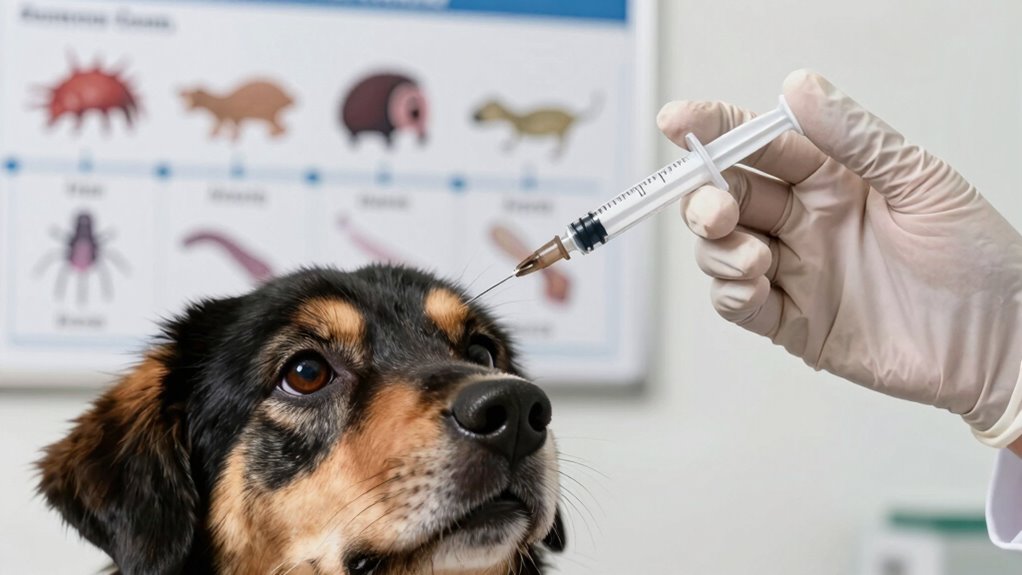
Choosing the right deworming medication is essential for effectively eliminating parasites from your pet. The best medications work through specific mechanisms to target different types of worms, ensuring high drug efficacy. Here are key options to consider:
- Praziquantel – disrupts parasite cell membranes, effective against tapeworms.
- Fenbendazole – inhibits glucose uptake, killing roundworms and hookworms.
- Pyrantel pamoate – causes nerve paralysis in worms, expelling them from the intestine.
- Milbemycin oxime – interferes with nerve transmission, targeting various worms and heartworms.
Understanding medication mechanisms helps you choose treatments that are both safe and effective. Always consult your veterinarian to ensure the best deworming plan tailored to your pet’s needs.
How Often Should You Deworm Your Pet?
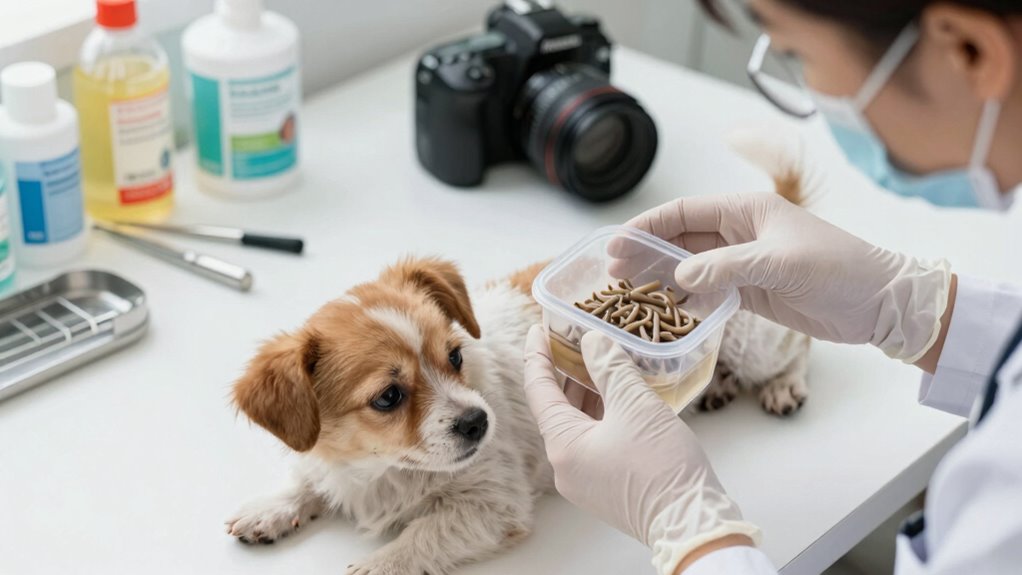
The frequency of deworming your pet depends on their age, lifestyle, and risk of exposure to parasites. Regular monthly check-ups help identify any issues early and guide deworming schedules. Puppies and kittens often need deworming every 2-3 weeks until they’re a few months old, then switch to a monthly routine. Adult pets with minimal outdoor activity might only require deworming twice a year, while those with outdoor access or in high-risk environments need more frequent treatments. Dietary considerations also matter; a well-balanced diet supports your pet’s immune system, making deworming more effective. Always follow your veterinarian’s recommendations, and consider periodic stool tests to determine if additional deworming is necessary. Proper owner awareness about parasite prevention can significantly reduce the chances of infestation and promote overall health. Additionally, understanding parasite lifecycles helps in timing treatments effectively and preventing reinfection. Staying informed about common parasites common in your region can further improve deworming strategies and protect your pet’s health. Regular use of preventive measures like topical treatments or oral medications can further reduce the risk of parasite transmission.
Tips for Choosing the Right Dewormer for Your Pet
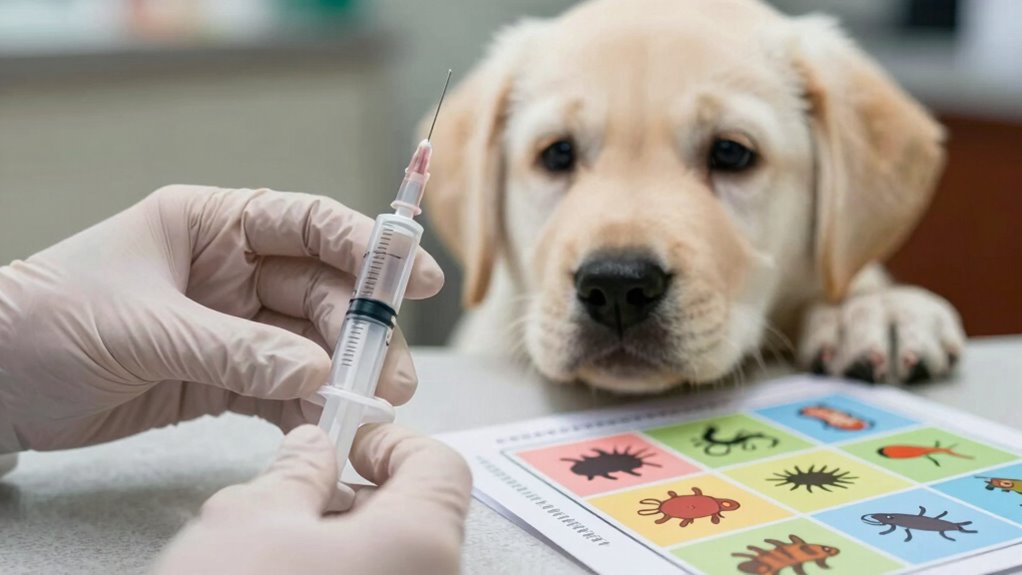
Selecting the right dewormer for your pet involves understanding their specific needs and the types of parasites they’re at risk for. To make an informed choice, consider these tips:
Choosing the right dewormer depends on your pet’s needs and parasite risks.
- Consult your veterinarian to identify which parasites are common in your area.
- Use parasite testing to confirm what your pet needs treatment for.
- Check if your pet insurance covers deworming medication to reduce costs.
- Choose a dewormer suitable for your pet’s age, weight, and health status.
- Be aware of the seasonal variations that can influence parasite exposure and risk. Additionally, understanding the life cycle of parasites can help in timing treatments effectively.
- Recognizing the signs of infestation can help you catch problems early and seek prompt treatment. Monitoring your pet’s environment for parasite hotspots can also aid in preventing reinfection.
Always follow the veterinarian’s recommendations and instructions. Remember, a proper deworming plan helps prevent reinfection and ensures your pet’s health. Being proactive with parasite testing and selecting the correct medication can save you time and money in the long run.
Common Deworming Mistakes and How to Avoid Them
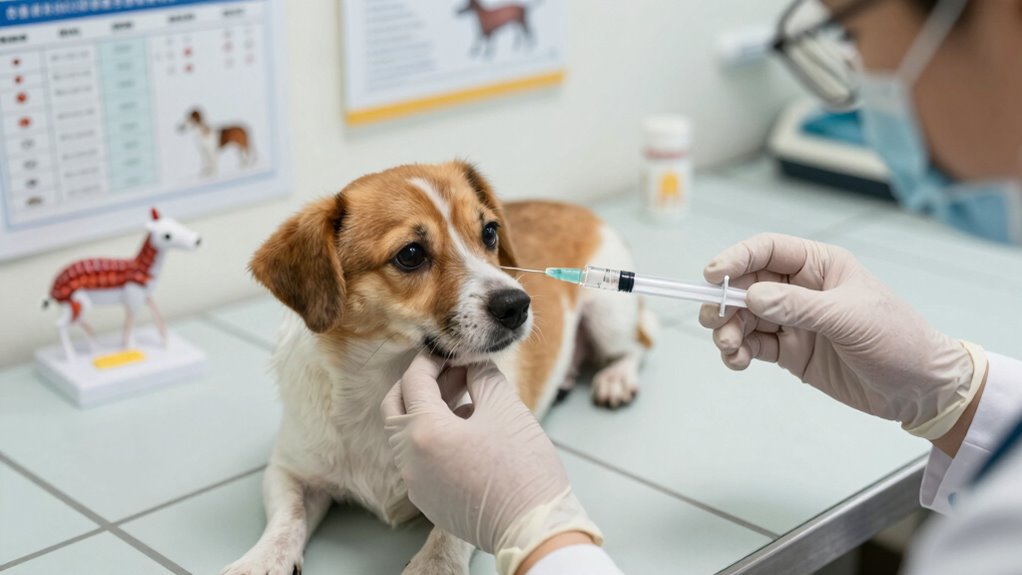
One common mistake is not sticking to a consistent deworming schedule, which can leave your pet vulnerable. Using the wrong medication or administering it incorrectly can also reduce effectiveness and cause side effects. To keep your pet healthy, make sure to follow the recommended schedule and instructions carefully. Additionally, understanding the importance of originality in your approach can help ensure you select the most effective treatment options tailored to your pet’s needs.
Inconsistent Deworming Schedule
Inconsistent deworming schedules can substantially undermine your pet’s health by allowing parasites to survive and reproduce. Skipping or delaying treatments creates gaps in parasite prevention, increasing infection risks. To stay on track, consider these points:
- Follow your veterinarian’s recommended deworming schedule persistently.
- Mark treatment dates on your calendar to avoid missed doses.
- Adjust the schedule as your pet ages or if they’re exposed to new environments.
- Understand that irregular deworming can lead to resistant parasites, making future prevention harder.
Maintaining a reliable deworming schedule is crucial for effective parasite prevention. It ensures your pet stays healthy and reduces the risk of transmitting parasites to family members. Consistency is key to long-term health and well-being.
Incorrect Medication Usage
Are you sure you’re administering deworming medication correctly? Incorrect medication usage can compromise medication safety and reduce treatment effectiveness. Always follow the veterinarian’s instructions carefully to guarantee dosage accuracy. Giving too little may not eliminate all parasites, while too much can cause harm or adverse reactions. Use the correct measurement tools, like syringes or scales, to ensure precise dosing. Avoid guessing or estimating doses, and never administer expired or unapproved products. Remember, improper administration can lead to parasite resistance or illness. Regularly review the instructions with your vet and ask questions if you’re unsure. Proper medication safety and accurate dosing are essential for protecting your pet’s health and preventing future infestations.
What Should You Do If Your Pet Shows Signs of Parasite Infection?
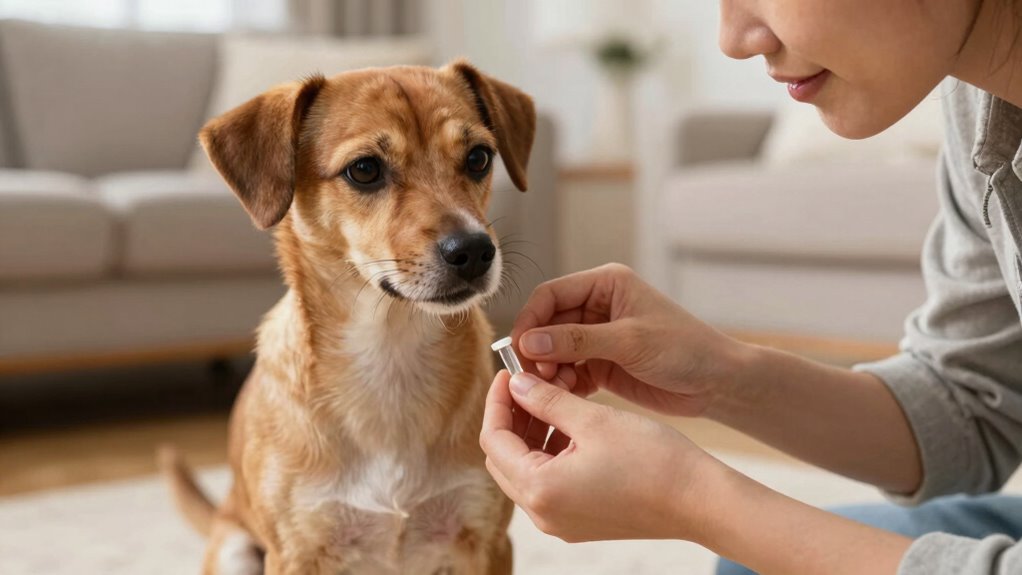
If you notice your pet scratching excessively, vomiting, or experiencing diarrhea, it could be a sign of a parasite infection. Prompt action is essential to protect your pet’s health. Here’s what you should do:
- Schedule a visit to your veterinarian for proper diagnosis and treatment.
- Follow your vet’s advice on deworming medication, ensuring you understand the parasite lifecycle to prevent reinfection.
- Maintain regular pet grooming to remove parasites like fleas and ticks.
- Clean your home thoroughly, including bedding and carpets, to eliminate eggs and larvae.
Early detection and treatment break the parasite lifecycle, reducing risks for your pet and family. Stay vigilant and consult your vet promptly if symptoms appear.
Frequently Asked Questions
Are There Natural or Home Remedies for Pet Deworming?
You might consider herbal remedies and home treatments for pet deworming, but always consult your veterinarian first. Some natural options include pumpkin seeds, garlic, and fennel, which may help support your pet’s health. However, these remedies aren’t guaranteed to eliminate all parasites effectively. Relying solely on home treatments can be risky, so professional guidance guarantees your pet gets safe, proper deworming care.
Can Deworming Medications Have Side Effects on Pets?
Deworming medications can have side effects, but they’re usually mild and manageable. You should pay attention to dosing considerations, ensuring your pet gets the correct amount to avoid adverse reactions. Be aware of medication interactions, especially if your pet is on other treatments. Side effects like vomiting, diarrhea, or lethargy can occur, but consulting your vet beforehand helps minimize risks and keeps your pet safe and healthy.
How Does Age Affect a Pet’s Deworming Schedule?
Your pet’s age influences its deworming schedule considerably. For puppies, an age-specific deworming plan is essential, typically starting around 2-3 weeks old and continuing every few weeks until they’re mature. Adult pets usually follow a less frequent schedule, often every 3-6 months. Regular veterinary check-ups help you adjust the puppy deworming schedule as your pet grows, ensuring they stay protected against common parasites at every life stage.
Are There Specific Signs of Parasite Infection in Puppies and Kittens?
You should watch for symptoms of infestation like diarrhea, vomiting, and a bloated abdomen in puppies and kittens. Behavioral changes such as increased irritability, lethargy, or loss of appetite can also indicate a parasite problem. Keep in mind that some infections may be subtle, so regular check-ups and stool tests are essential. If you notice any of these signs, consult your vet promptly to ensure proper treatment.
What Precautions Should Be Taken When Administering Dewormers?
When administering dewormers, you should always follow the proper dosage based on your pet’s weight and age. Check for any medication interactions, especially if your pet is on other treatments. Keep an eye out for side effects like vomiting or lethargy, and consult your vet if anything seems unusual. Always read the label thoroughly and never give more than the recommended dose to guarantee your pet’s safety.
Conclusion
Remember, ignoring parasites is like ignoring that suspicious burr in your sock—eventually, it’ll cause trouble. Regular deworming isn’t just a good idea; it’s your pet’s ticket to a parasite-free life (and yours too). Don’t wait until you’re knee-deep in worms or the vet’s bill—stay vigilant, follow the tips, and keep those pesky invaders at bay. After all, who needs unwanted houseguests? Not you, and definitely not your pet.
Fall Picks
fall essentials
As an affiliate, we earn on qualifying purchases.