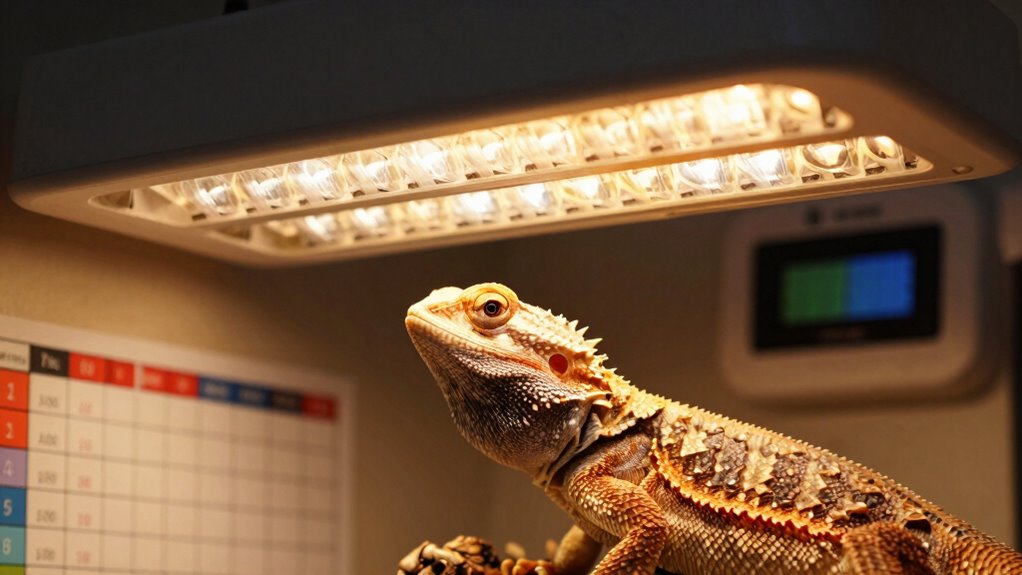
To guarantee your reptile gets enough UVB, keep the bulb at the correct distance as recommended by the manufacturer, usually 12-18 inches for fluorescent bulbs or closer for mercury vapor bulbs, but always measure UVB levels to be safe. Replace UVB bulbs every 6 to 12 months to maintain effective output, as bulbs lose intensity over time. Proper setup and regular checks are key — if you want to learn more about optimizing UVB for your reptile’s health, keep reading.

Get pet supplies delivered free with Prime
- Fast, free delivery on millions of items
- Prime Video, Amazon Music and more included
- Member-only deals all year
Key Takeaways
- Keep UVB bulbs at manufacturer-recommended distances to ensure effective exposure without causing burns.
- Measure UVB output regularly with a UV meter to confirm proper levels at the basking spot.
- Maintain a UV index of 3-6 for most reptiles; adjust bulb distance accordingly based on readings.
- Replace UVB bulbs every 6 to 12 months to prevent decreased UVB output and health risks.
- Regularly inspect bulbs for signs of deterioration, such as discoloration or reduced brightness, to determine replacement timing.
As an affiliate, we earn on qualifying purchases.
Why Proper UVB Lighting Is Essential for Reptile Health
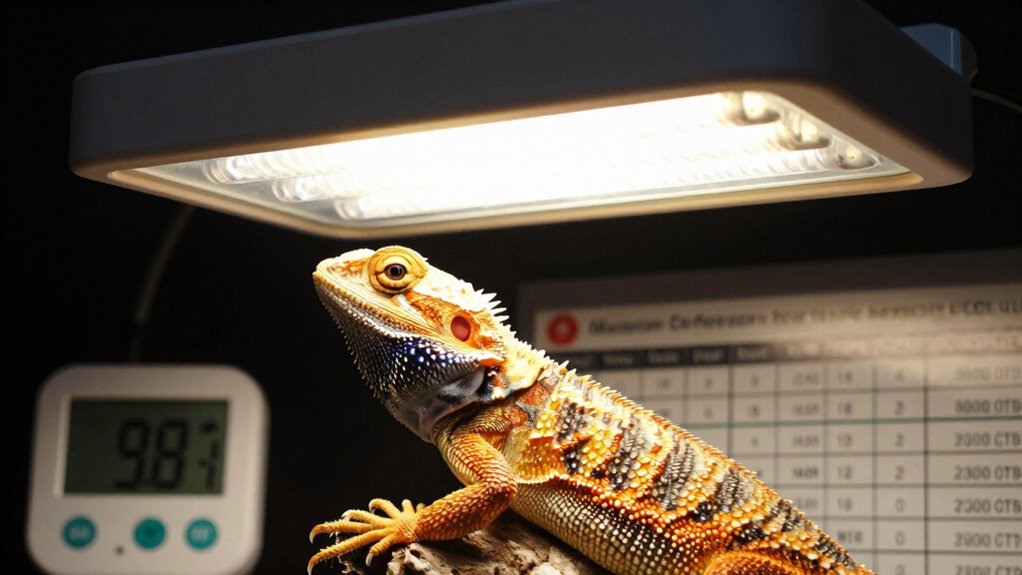
Proper UVB lighting is crucial because reptiles rely on it to synthesize vitamin D3, which is essential for calcium absorption and bone health. Without enough UVB exposure, your reptile can develop metabolic bone disease and other health issues. When considering UVB, you should also pay attention to diet considerations; a balanced diet ensures your reptile gets necessary nutrients. Additionally, habitat humidity influences how effectively UVB penetrates the environment and impacts your reptile’s overall health. High or low humidity levels can affect how your reptile absorbs calcium, making proper lighting and habitat conditions critical. Ensuring your reptile has the right UVB exposure, along with a suitable diet and humidity, helps maintain strong bones and overall wellness. Proper lighting creates a healthy environment for your reptile to thrive, and understanding UVB effectiveness can help optimize your setup for better health outcomes. Understanding UVB penetration can help you adjust your habitat to improve UVB delivery and support your reptile’s health. Moreover, selecting the appropriate UVB source with the right distance and output is vital to ensure your reptile receives adequate exposure without risking UVB burns. It’s also important to regularly monitor UVB levels to ensure consistent and safe exposure for your reptile, preventing potential health issues. Being aware of UVB emission levels helps prevent under- or overexposure, ensuring your reptile remains healthy and active.
Which UVB Bulb Types Are Best for Your Reptile?
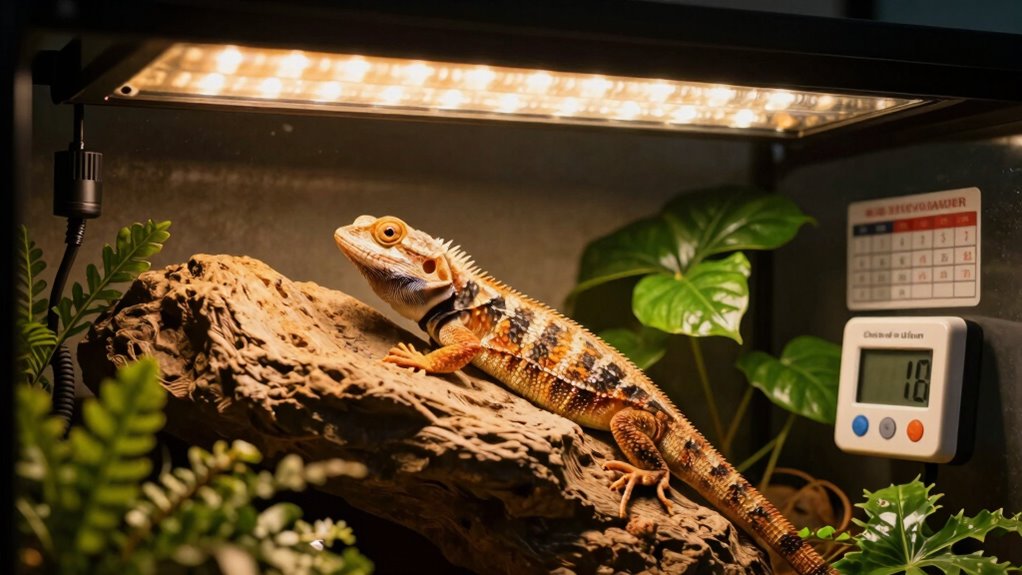
Choosing the right UVB bulb is essential for your reptile’s health because different types offer varying levels of UVB output, coverage, and durability. The most common UVB bulb types include linear fluorescent tubes, compact bulbs, and mercury vapor bulbs. Each provides a different UVB spectrum, affecting how well your reptile absorbs UVB. Here’s a quick comparison:
| Bulb Type | UVB Spectrum | Coverage |
|---|---|---|
| Linear Fluorescent | Broad, even coverage | Large enclosures |
| Compact Bulbs | Focused, moderate coverage | Small enclosures |
| Mercury Vapor | Intense, full spectrum | Both UVB and heat |
Choose based on your reptile’s size and needs to guarantee ideal UVB exposure. Additionally, selecting the appropriate UVB output is crucial to ensure your reptile receives sufficient exposure for healthy calcium metabolism.
How Close Should UVB Bulbs Be to Your Reptile?
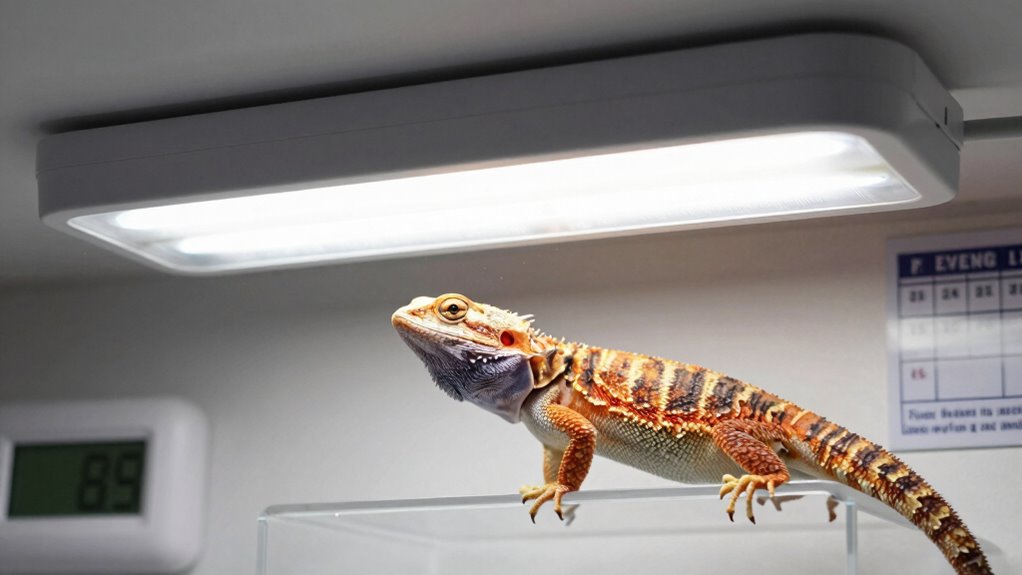
The distance between your UVB bulb and your reptile considerably impacts their health and the effectiveness of UVB exposure. Placing the bulb too close risks UVB safety issues, like burns, while too far reduces UVB levels, hindering proper health and behavior. To optimize habitat enrichment and ensure safe UVB exposure, follow these guidelines:
- Keep the UVB bulb at the recommended distance specified by the manufacturer.
- Regularly check UVB output with a reliable meter.
- Adjust the bulb distance as your reptile grows or changes habitat.
- Use fixtures that allow easy height adjustments.
- Avoid placing UVB bulbs directly on or too close to the enclosure’s surface.
- Monitoring UVB levels regularly ensures your reptile receives adequate exposure for optimal health.
- Proper UVB distance is essential for preventing potential health issues and supporting natural behaviors.
- Ensuring the correct UVB output helps maintain your reptile’s overall well-being and prevents deficiencies.
- Additionally, understanding the UVB intensity needed for different reptiles can help tailor their care routines effectively.
- Remember that UVB exposure varies depending on species, age, and environmental factors, so tailoring the setup accordingly is crucial.
Maintaining proper distance guarantees your reptile benefits from effective UVB, supporting their health and natural behaviors.
How to Measure and Adjust UVB Distance Effectively
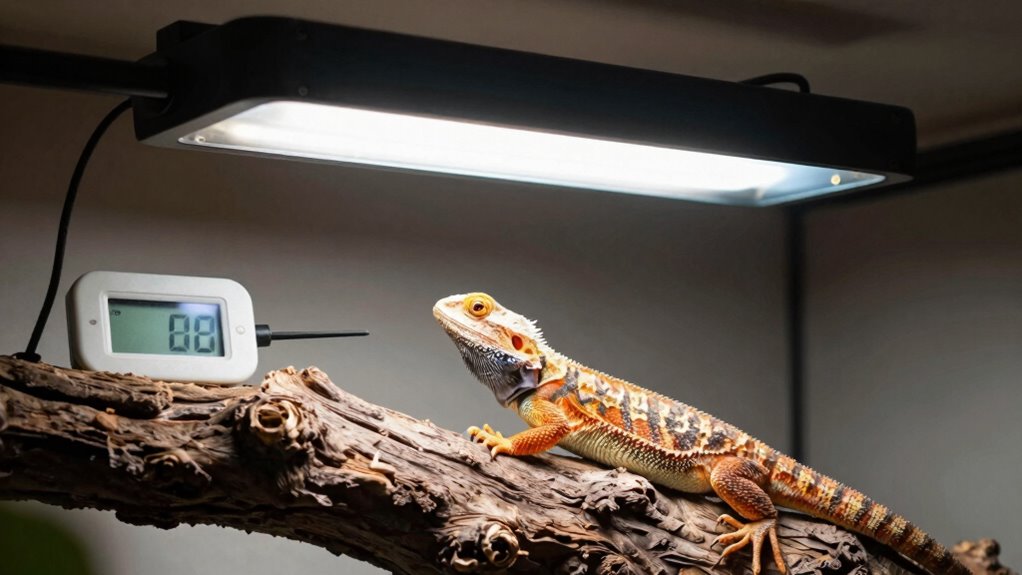
To guarantee your reptile gets the right UVB exposure, you need to measure and adjust the distance accurately. Use a UV meter to verify the correct levels and follow ideal distance guidelines for your specific setup. Remember to take into account your reptile’s size and adjust the distance as needed to keep their environment safe and effective. Understanding UVB spectrum and its impact on reptile health can help you make informed adjustments to their lighting setup. Additionally, regularly monitoring the UVB output ensures consistent exposure over time, especially since bulbs can diminish in strength with use, which is a critical aspect of Gold IRA markets to consider for long-term investment planning.
Optimal Distance Guidelines
Measuring and adjusting the distance between your reptile and the UVB light is essential for providing ideal exposure. Proper lighting placement ensures your pet gets enough UVB without risking burns or insufficient exposure. To maximize bulb positioning, keep these tips in mind:
- Use a ruler or tape measure for accurate distance checks.
- Maintain recommended distances specified on your bulb’s packaging.
- Adjust the fixture height to keep the UVB source within the optimal range.
- Avoid placing the bulb too close, which can cause burns.
- Regularly check and modify lighting placement as your reptile grows or habitat changes.
Using a UV Meter
Using a UV meter helps you accurately determine if your reptile’s UVB exposure is within the right range. First, verify your UV meter is properly calibrated to provide accurate readings. Regular calibration checks are essential, especially if the device has been stored for a while. When measuring, position the meter at the reptile’s basking spot, directly underneath the UVB source, to get an accurate UV index reading. Learn to interpret the UV index on your meter; a reading of 3-6 generally indicates suitable UVB exposure for most reptiles. Adjust the distance if the UV index is too high or too low. Consistent measurement and understanding of UV index interpretation help maintain ideal UVB levels, supporting your reptile’s health and preventing UV-related issues. Additionally, understanding the regulatory environment surrounding UVB lighting ensures compliance with safety and import standards. Regularly monitoring UVB exposure using a UV meter aligns with best practices in sound health management for reptiles, ensuring they receive appropriate lighting for their wellbeing. Properly maintaining your UVB setup also involves checking the manufacturer guidelines to ensure the bulb’s output remains effective over time. Being aware of the natural habitat of your reptile can also help you optimize UVB exposure for their specific needs.
Adjusting for Reptile Size
Since reptiles vary greatly in size and basking behavior, adjusting the UVB distance accordingly is vital for their health. As your reptile grows, its UVB needs change, especially considering cage size and growth stages. To ensure proper exposure:
- Measure your reptile’s maximum basking height regularly
- Adjust UVB fixture height as your reptile grows
- Monitor basking behavior for signs of too much or too little UVB
- Keep the UVB source close enough for effective exposure without risking burns
- Consider cage size when setting the distance to ensure even coverage
How to Choose the Right UVB Output for Your Reptile
Choosing the right UVB output for your reptile is essential for their health and well-being. Start by considering the UVB wavelength, as different species need specific ranges to mimic natural sunlight. For example, desert reptiles often require higher UVB levels compared to forest-dwelling species. Observe your reptile’s behavior; if they’re basking frequently and actively, they likely need more UVB. If they hide or show signs of lethargy, their UVB output might be too high or too low. Always select bulbs designed for reptiles, and match the UVB strength to your animal’s natural habitat. Proper UVB output supports healthy calcium absorption and prevents metabolic bone disease. By understanding your reptile’s behavior and their specific needs, you can choose the ideal UVB wavelength and output.
When and How to Replace UVB Bulbs
You should regularly check your UVB bulbs for signs of deterioration, like reduced light output or discoloration. Most bulbs need replacement every 6 to 12 months, depending on their type and usage. Keeping track of these intervals guarantees your reptile continues to receive proper UVB exposure. Additionally, understanding the light output of your bulbs can help determine when they are no longer effective. Regularly monitoring UVB effectiveness is essential for maintaining your reptile’s health and preventing deficiencies. To ensure consistent UVB delivery, consider using UVB meters to accurately measure the light output over time. Being aware of UVB bulb lifespan can also help you plan timely replacements and maintain optimal reptile health. Moreover, environmental factors like temperature and humidity can influence the performance of UVB bulbs, making regular checks even more important.
Signs of Bulb Deterioration
Over time, UVB bulbs naturally lose their effectiveness, which can compromise your reptile’s health. Recognizing the signs of bulb deterioration is essential for proper maintenance. Common indicators include:
- Reduced UVB output, even if the bulb appears bright
- Discoloration signs, such as a cloudy or darkened glass
- Bulb lifespan exceeding manufacturer recommendations
- Visible cracks or damage on the bulb surface
- Noticeable decrease in reptile activity or basking behavior
If you see any of these signs, it’s a clear cue to replace the bulb. Discoloration signs and a bulb’s age are reliable clues that the UVB output has diminished, making the bulb less effective and potentially harmful. Regular inspection ensures your reptile continues to receive proper UVB exposure. Understanding bulb lifespan helps in planning timely replacements and maintaining optimal health conditions for your reptiles. To ensure consistent UVB levels, consider using UVB meters to measure output and avoid relying solely on time-based replacements. Additionally, keeping track of the bulb’s installation date can aid in timely replacement and prevent UVB deficiency.
Recommended Replacement Intervals
Replacing UVB bulbs at appropriate intervals guarantees your reptile continues to receive the necessary ultraviolet light for ideal health. UVB longevity varies depending on the bulb type, but most bulbs have a defined bulb lifespan, typically around 6 to 12 months. After this period, UVB output diminishes considerably, even if the bulb still emits visible light. To ensure your reptile’s well-being, mark the replacement date on your calendar and follow manufacturer guidelines. Regular replacement prevents UVB deficiency, which can cause health issues. Keep in mind that factors like brand quality and usage conditions affect UVB longevity. By adhering to recommended replacement intervals, you maintain maximum UVB exposure and support your reptile’s overall health and vitality.
Signs Your Reptile Isn’t Getting Enough UVB?
When your reptile isn’t receiving enough UVB, it often shows signs of health issues that shouldn’t be ignored. You might notice changes like lethargy or a dull appearance. Poor appetite and weight loss can also occur, indicating insufficient UVB exposure. Additionally, you may see soft or deformed bones, which relate to diet considerations and calcium absorption. Skin problems like shedding issues or dryness are common. Keep an eye on habitat humidity, as low levels can compound UVB deficiency effects. Signs also include abnormal behavior such as hiding more than usual or reluctance to bask. These indicators suggest your reptile isn’t getting enough UVB, and prompt action is necessary to improve lighting, diet, and habitat conditions for better health.
Common Mistakes When Setting Up UVB Lighting
Setting up UVB lighting correctly is vital for your reptile’s health, but many pet owners make simple mistakes that can undermine its effectiveness. One common mistake is a type mismatch, where the wrong bulb type is used, such as a UVB bulb not compatible with the fixture. This can lead to inadequate UVB output or damage to the bulb. Another issue is bulb flickering, which often indicates poor electrical connections or incompatible fixtures. Flickering can reduce UVB exposure and stress your reptile. Additionally, placing the bulb too close or too far from the basking spot can diminish its benefits. Always verify you’re using the correct bulb type, check connections regularly, and maintain the recommended distance to promote ideal UVB exposure.
Step-by-Step: Setting Up Your Reptile’s UVB Lighting System
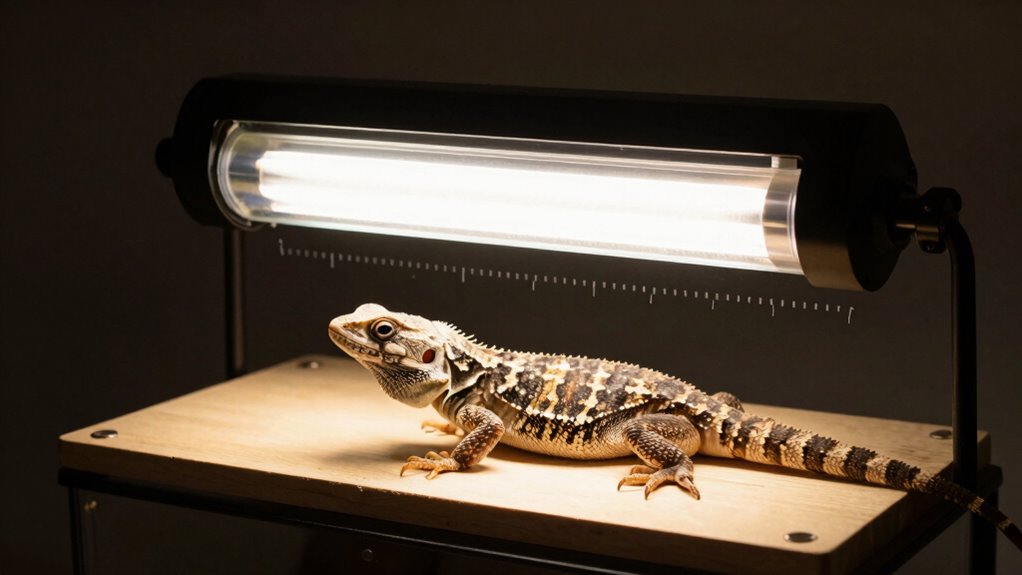
To guarantee your reptile receives proper UVB exposure, start by choosing the right fixture and bulb. Ensure the fixture supports your bulb type and maintains lighting safety standards. Check bulb compatibility carefully to avoid using incompatible bulbs that could emit harmful UV or overheat. Mount the fixture securely at the correct distance from your reptile’s enclosure, following the manufacturer’s instructions. Use a timer to regulate lighting schedules and prevent overexposure. Regularly inspect the setup for signs of wear or damage. Remember, safe installation is key to providing effective UVB without risking your pet’s health.
Ensure proper UVB exposure by selecting the right fixture, mounting at the correct distance, and regularly inspecting for safety and effectiveness.
Consider these steps:
- Select a fixture rated for UVB bulbs
- Confirm bulb compatibility
- Mount at the proper distance
- Use a timer for consistent schedules
- Regularly check for damage
FAQs About UVB Lighting and Maintenance
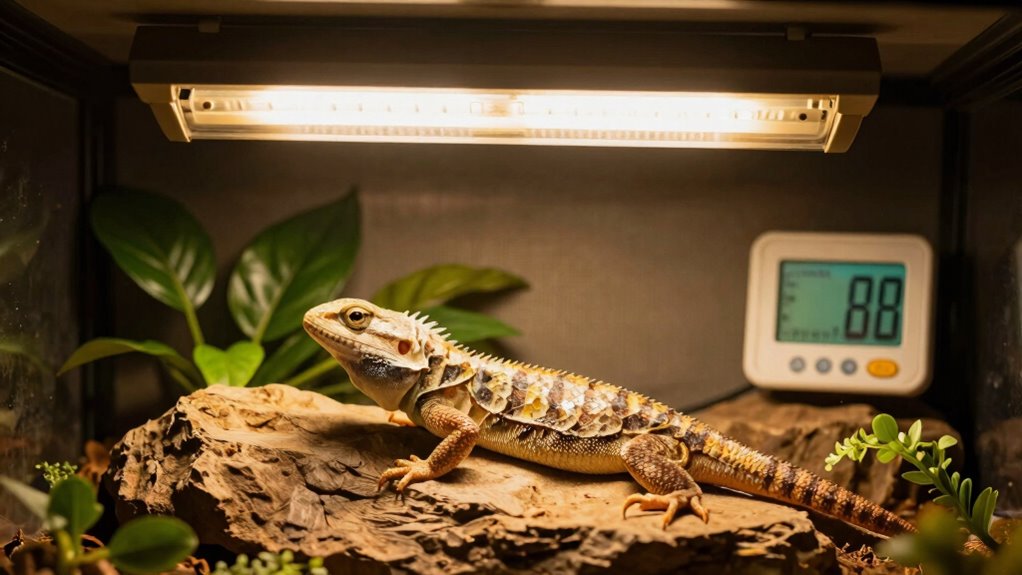
Are you wondering how often you should replace your reptile’s UVB bulb or what signs indicate it’s time for a new one? Typically, UVB bulbs lose their effectiveness over time, even if they still emit visible light. You should replace the bulb based on its lifespan and UVB intensity, not just appearance. Signs include reduced activity, dull coloration, or lack of basking behavior. Most bulbs need replacement every 6-12 months, depending on the type. To help, here’s a quick guide:
| Question | Answer |
|---|---|
| How often should I replace my UVB bulb? | Every 6-12 months, depending on bulb type. |
| How do I know if UVB is still effective? | Check for consistent basking and color vibrancy. |
| Why is UVB intensity important? | It ensures your reptile gets enough UVB for health. |
| What happens if I don’t replace it? | Reduced UVB exposure, risking health issues. |
Frequently Asked Questions
How Often Should I Change My Reptile’s UVB Bulb?
You should replace your reptile’s UVB bulb every 6 to 12 months, as the bulb’s lifespan decreases and its output diminishes over time. Regular replacement guarantees your pet gets the right UVB levels for healthy growth and activity. Keep an eye on the manufacturer’s recommended replacement schedule, and don’t wait until the bulb burns out completely, since reduced UVB can harm your reptile’s health.
Can I Use Regular Indoor Lighting Instead of UVB?
Imagine you’re trying to grow a plant without sunlight—you wouldn’t expect it to thrive. The same goes for your reptile; indoor lighting alone can’t provide the UVB necessary for their health. Regular indoor lights lack the UVB spectrum, so relying on them instead of UVB bulbs can lead to deficiencies and health issues. Always use a proper UVB light source to keep your reptile healthy and active.
Does UVB Lighting Affect My Reptile’s Behavior?
Yes, UVB lighting can influence your reptile’s behavior by affecting their activity levels and overall well-being. Proper lighting influence helps regulate circadian rhythms, encouraging natural behaviors like basking and exploration. Without adequate UVB, your reptile might become lethargic or less active. Providing the right UVB setup guarantees your pet remains healthy, active, and displays natural behaviors, making their environment more comfortable and stimulating.
Are There Specific UVB Bulbs for Different Reptile Species?
Yes, there are species-specific bulbs for reptile lighting. Different reptiles have unique UVB needs, so choosing the right species-specific bulb guarantees they get the proper UVB spectrum and intensity. For example, desert species may require higher UVB output, while forest dwellers need lower levels. Always select a bulb designed for your reptile’s specific species to promote healthy behavior, proper metabolism, and overall well-being.
How Does Temperature Influence UVB Effectiveness?
Think of temperature as the silent conductor of your reptile’s UVB symphony. When it’s too hot, heat impact can reduce your bulb’s effectiveness, making UVB less potent. Conversely, cooler temps can slow the production of UVB. Maintaining proper heat ensures maximum UVB output and prolongs bulb longevity. You’ll want to monitor both closely, so your reptile gets the right amount of UVB for healthy growth.
Conclusion
Proper UVB lighting is your reptile’s sunshine, essential for their health and happiness. By understanding the right distance, output, and replacement schedule, you can create a thriving, sunlit paradise for your reptile. Think of your setup as a carefully tuned orchestra—each piece must work together perfectly. Keep a close eye on signs of UVB deficiency, and don’t forget to replace bulbs on schedule. With the right care, your reptile will flourish under your watchful eye.
Evergreen bestsellers Picks
bestsellers
As an affiliate, we earn on qualifying purchases.