To protect your dog’s paws from cracks, salt burns, and heat injuries, regularly inspect their paws for cuts, redness, or swelling. Use protective booties during walks on hot pavement or salted sidewalks, and apply paw wax or balms afterward to create a barrier. Keep paws moisturized and trimmed, and avoid walking during peak heat. Proper care keeps paws healthy and resilient — learn more tips to keep them safe outdoors.
Key Takeaways
- Regularly inspect and clean paws to identify early signs of cracks, cuts, or irritation.
- Use protective booties and paw wax to shield paws from hot surfaces, salt, and harsh weather conditions.
- Keep paws moisturized with pet-safe balms to prevent dryness, cracking, and damage from environmental stressors.
- Limit outdoor activity during extreme heat or cold, especially on hot pavement or icy surfaces.
- Provide shade, cool surfaces, and avoid salted or chemical-treated areas to reduce the risk of burns and injuries.

Dimicoo Breathable Dog Boots for Medium Large Dogs,Non-Slip Dog Shoes for Summer Hot Pavement,Lightweight Paw Protector Dog Booties for Outdoor & Indoor Hardwood Floors
- All-Season Paw Protection: Protects against hot pavement, snow, ice, debris
- Suitable for Medium and Large Dogs: Ideal for outdoor and indoor activities
- Breathable Air Mesh Fabric: Keeps paws dry, comfortable, and ventilated
As an affiliate, we earn on qualifying purchases.
As an affiliate, we earn on qualifying purchases.
Why Protecting Your Dog’s Paws Matters for Their Health
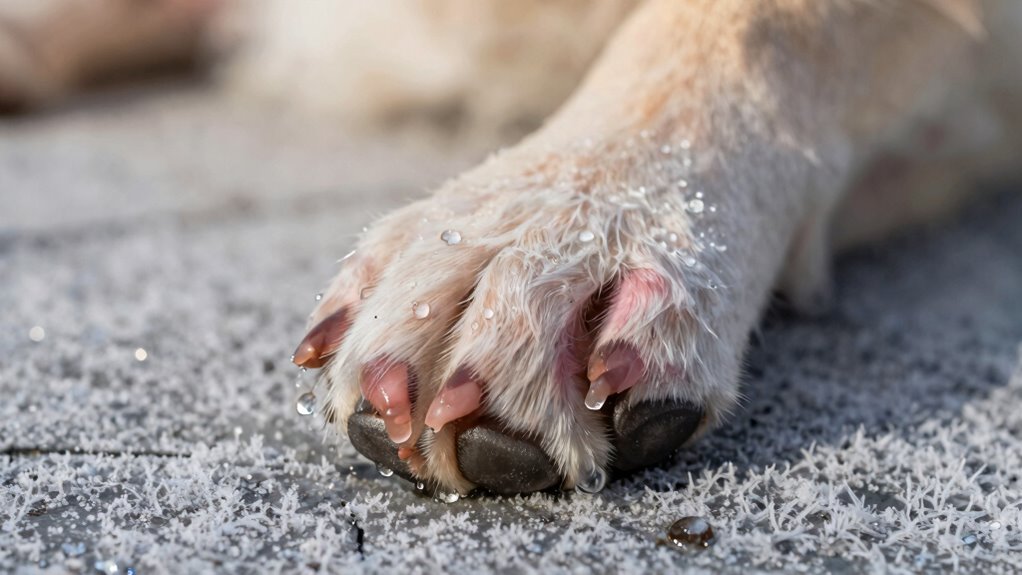
Your dog’s paws are essential for mobility and overall well-being, yet they often go unnoticed until problems arise. Understanding paw pad anatomy helps you appreciate their importance. The paw pads act like shock absorbers, protecting bones and joints from rough surfaces. They also contain sweat glands that influence dog paw scents, which can reveal health or stress issues. Protecting these pads prevents cracks, cuts, and infections that can cause discomfort or mobility problems. When your dog walks on hot pavement, icy salt, or rough terrain, unprotected paws are vulnerable to burns, frostbite, or injuries. Regular inspection and care keep the paw pads healthy, ensuring your dog remains comfortable and active. Additionally, paw pad protection can help prevent long-term damage caused by environmental hazards. Natural terrain can also assist in strengthening paw pads naturally. Proper protection supports their overall health and helps avoid costly vet visits later, especially when considering the benefits of natural paw conditioning. Incorporating environmental hazards into your care routine is crucial for maintaining optimal paw health.
How to Recognize Common Paw Injuries and What They Mean
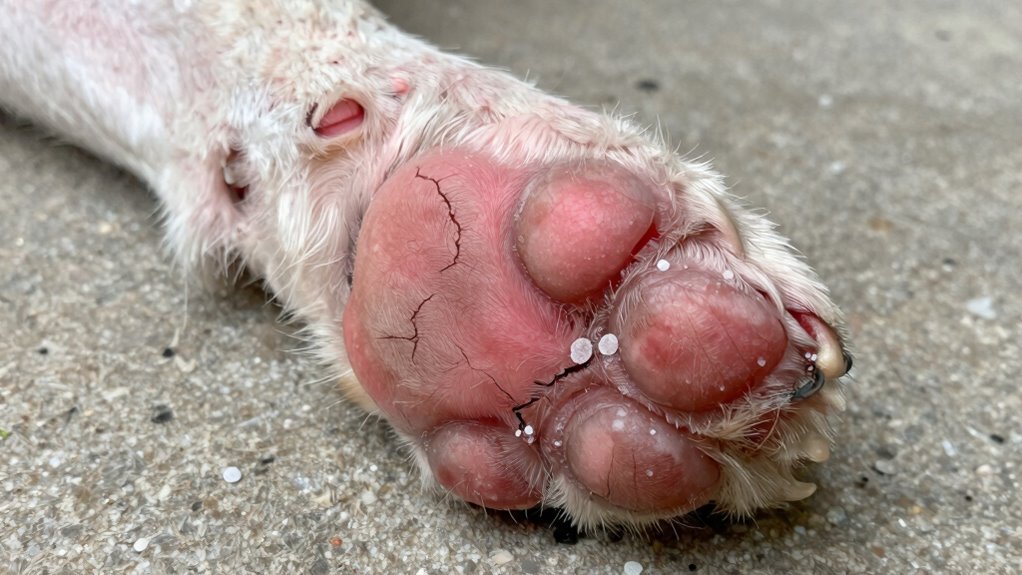
Recognizing common paw injuries early is essential to preventing further damage and keeping your dog comfortable. Pay attention to changes in paw pad color, swelling, or bleeding. If nails are overgrown, they can cause pain or tearing, signaling the need for nail trimming. Watch for cracks, blisters, or sores on the paw pads, which may indicate cuts or irritation. Sometimes, paw pad color changes, like redness or darkening, reveal inflammation or bruising. Use this table to identify injuries:
| Injury Type | Symptoms | Possible Cause |
|---|---|---|
| Cracks or cuts | Visible splits or bleeding | Dryness, rough surfaces |
| Swelling or redness | Warmth, discomfort | Allergies, infection |
| Discoloration | Darkening or redness of pads | Bruising, inflammation |
| Nail issues | Overgrowth, tears | Lack of nail trimming |
Additionally, proper paw care including regular inspections and trimming can help prevent many of these issues.
Protecting Paws From Winter Salt, De-Icers, and Cold Hazards
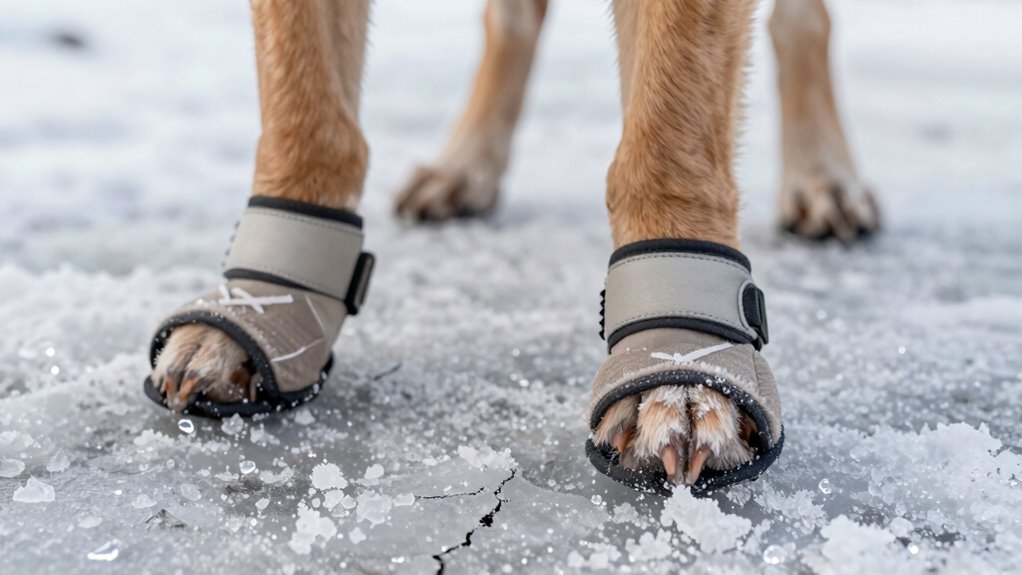
Winter salt and de-icers can harm your dog’s paws, so try to avoid walking on treated surfaces whenever possible. Using protective booties can provide a barrier against harsh chemicals and cold, but be sure to rinse and dry your dog’s paws afterward. Applying a moisturizing balm helps keep their pads healthy and resilient through winter’s challenges.
Avoid Salt and Chemicals
When walking your dog during icy months, it’s crucial to steer clear of salt and chemical de-icers, as they can cause irritation and damage to sensitive paw pads. These chemical hazards often lead to painful salt burns and increased risk of infection. Salt damage can result in cracked, raw skin that’s vulnerable to further injury. To protect your pup, avoid walking on salted sidewalks whenever possible. If you must go out, wipe your dog’s paws immediately afterward with a damp cloth to remove any residual chemicals. Using pawsafe products or natural alternatives can also help create a barrier against harmful substances. Being vigilant about avoiding these chemicals keeps your dog’s paws healthy and prevents unnecessary pain and injury during winter walks.
Use Protective Booties
Protective booties are an effective way to shield your dog’s paws from harsh winter conditions, including salt, de-icers, and freezing temperatures. Dog booties provide essential paw protection, preventing chemical burns and frostbite during walks in icy environments. When choosing paw protection, look for well-fitting, durable booties that stay secure without causing discomfort. Properly fitted dog booties allow your dog to walk naturally while keeping their paws insulated from harmful substances and cold surfaces. Using booties also helps reduce the risk of cracks, cuts, and irritation caused by ice and salt. Remember to introduce the booties gradually, ensuring your dog gets comfortable wearing them. Proper fitting is crucial for comfort and effectiveness. With consistent use, protective booties become a reliable safeguard against winter hazards, keeping your dog’s paws healthy and safe.
Rinse and Moisturize
After fitting your dog with protective booties, it’s important to clean and care for their paws regularly. Rinsing their paws with lukewarm water removes salt, de-icers, and debris that can cause irritation or cracks. Be gentle to maintain good paw pad hygiene and prevent buildup of harmful substances. Once clean, dry their paws thoroughly, especially between the toes. Applying a paw pad moisturizer helps lock in moisture and protects against harsh winter elements. Moisturization also aids in healing minor cracks and prevents new ones from forming. Regular rinsing and moisturizing keep your dog’s paws healthy, soft, and resilient during winter walks. Consistent care reduces discomfort and minimizes the risk of injuries caused by cold, salt, or chemicals. Incorporating media literacy into your routine can help you recognize and avoid harmful products or substances that may damage your dog’s paws.
Tips for Safely Walking Your Dog on Hot Pavement
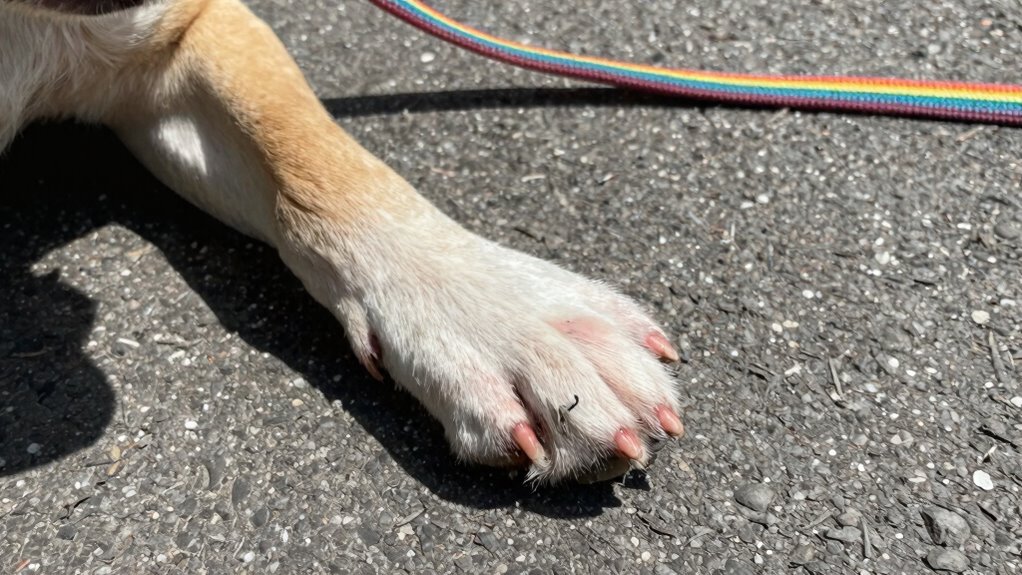
To keep your dog safe on hot pavement, consider walking during cooler times of the day, like early morning or late evening. Using protective footwear can also help shield their paws from burns and damage. Keep these tips in mind to make every walk safer and more comfortable for your furry friend. Additionally, regularly inspecting your dog’s paws for signs of pavement-related injuries can help catch problems early and prevent more serious issues. Being aware of energy-efficient solutions in your dog’s care can also contribute to overall safety and well-being.
Timing Your Walks
Walking your dog during the hottest parts of the day can be risky, so timing is essential for their safety. Early mornings or late evenings are ideal, as pavement is cooler and reduces the risk of paw burns and heat injuries. When planning walks, consider dog park etiquette—ensuring your dog is well leash trained so they stay close and avoid hot surfaces or busy streets. Avoid peak heat hours, typically between 10 a.m. and 4 p.m., when asphalt can reach dangerous temperatures. Shorter, more frequent walks during cooler times also help prevent paw pad damage. Additionally, pavement temperature can affect how well you see your surroundings, ensuring safer walks during low-light conditions. Being aware of timing your walks helps you better judge when it’s safe for outdoor activities. Properly timing outdoor activities also minimizes the risk of heat injuries and keeps your dog comfortable. By timing your outings wisely, you safeguard your dog’s paws and ensure a safe, enjoyable experience for both of you.
Protective Footwear Options
When the pavement is too hot for your bare hand, protective footwear can be a smart solution to keep your dog’s paws safe. Understanding dog paw anatomy helps you choose the right footwear, as it reveals sensitive pads and delicate tissues prone to burns. Footwear material options like silicone, rubber, or breathable fabrics provide different levels of protection and comfort. Silicone boots offer flexibility and waterproofing, while rubber ones are durable and slip-resistant. Breathable fabrics prevent overheating and moisture buildup. Always make certain the footwear fits well without restricting circulation or movement. Using protective shoes during hot weather reduces the risk of burns, cracks, and heat injuries, making walks safer and more enjoyable for your furry friend. Proper protection is essential for maintaining your dog’s paw health when navigating hot surfaces. Additionally, choosing paw-safe footwear with appropriate features can further enhance your dog’s safety and comfort during outdoor activities. Recognizing the importance of water-resistant materials can also help keep your dog’s paws dry and protected from moisture-related issues.
The Best Products to Keep Your Dog’s Paws Healthy and Protected
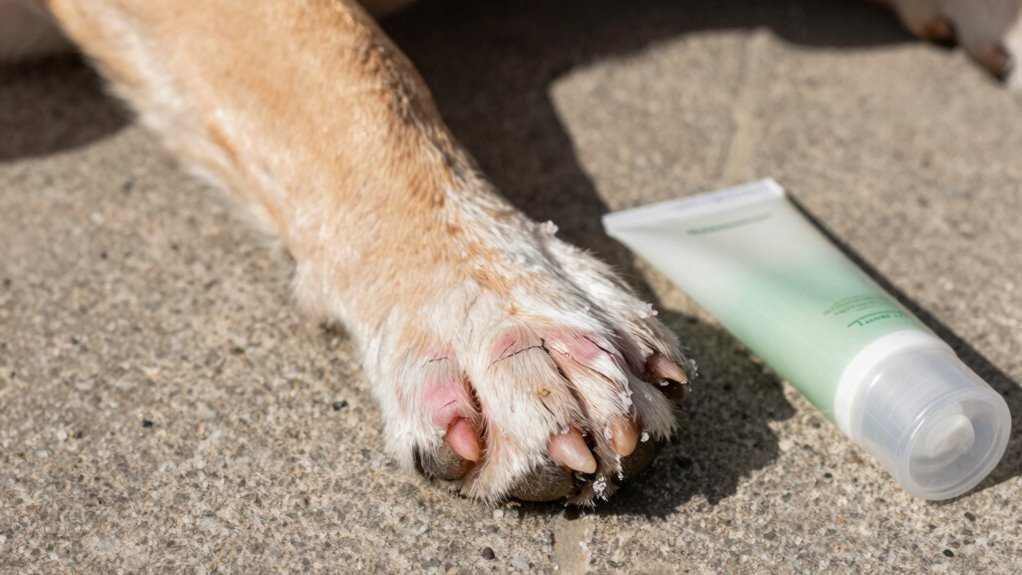
Keeping your dog’s paws healthy and protected is essential for their comfort and safety, especially during outdoor adventures or harsh weather conditions. One of the best products to keep paws moisturized and crack-free is paw wax, which creates a protective barrier against salt, ice, and hot pavement. Paw wax is easy to apply and provides long-lasting hydration, preventing painful cracks. Additionally, paw socks are a convenient option for added protection, especially in winter or on rough terrain. They shield paws from salt burns, ice, and abrasions while offering warmth and comfort. Combining paw wax with paw socks ensures your dog’s paws stay healthy, soft, and shielded from environmental hazards. These products are simple, effective tools to maintain paw health during any season. environmental hazards can cause damage to your dog’s paws if not properly protected. Using paw protection products tailored to seasonal needs can significantly improve your dog’s comfort and safety while outdoors. Regular application of paw wax can also help maintain the natural moisture balance in your dog’s paw pads, preventing dryness and cracking. Incorporating seasonal paw care routines can further enhance your dog’s paw health and resilience.
How and When to Apply Paw Balms, Barrier Sprays, and Booties
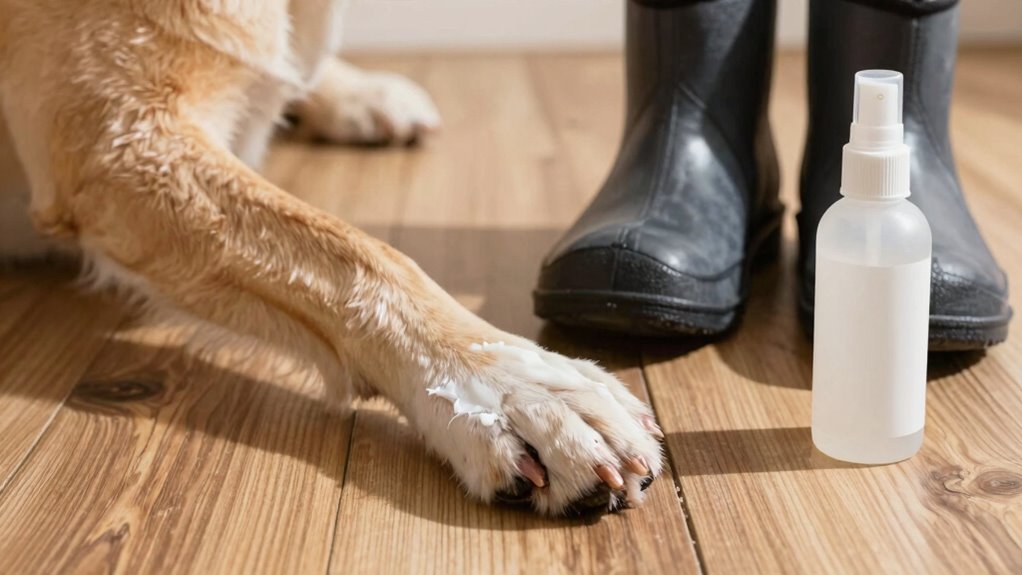
To guarantee your dog’s paws stay healthy and protected, it’s important to know the right times and ways to apply paw balms, barrier sprays, and booties. Understanding dog paw anatomy helps you target application areas effectively, especially the paw pad materials that may become cracked or sore. Apply paw balms after walks or when your dog’s paws are clean and dry, ensuring the product penetrates deeply without trapping dirt. Barrier sprays can be used before outdoor activities to create a protective layer, especially on sensitive paw pad materials. Booties should be fitted snugly before walks on rough or hot surfaces, providing a physical shield. Regularly check your dog’s paws to determine the best times for these protections, keeping their paws safe and healthy. Additionally, utilizing cleaning techniques can help maintain paw hygiene and prevent issues caused by dirt or irritants, much like air purifier maintenance ensures optimal performance. Incorporating specialized protective gear can further enhance paw safety during extreme weather conditions.
Creating a Safe Outdoor Space to Prevent Paw Injuries
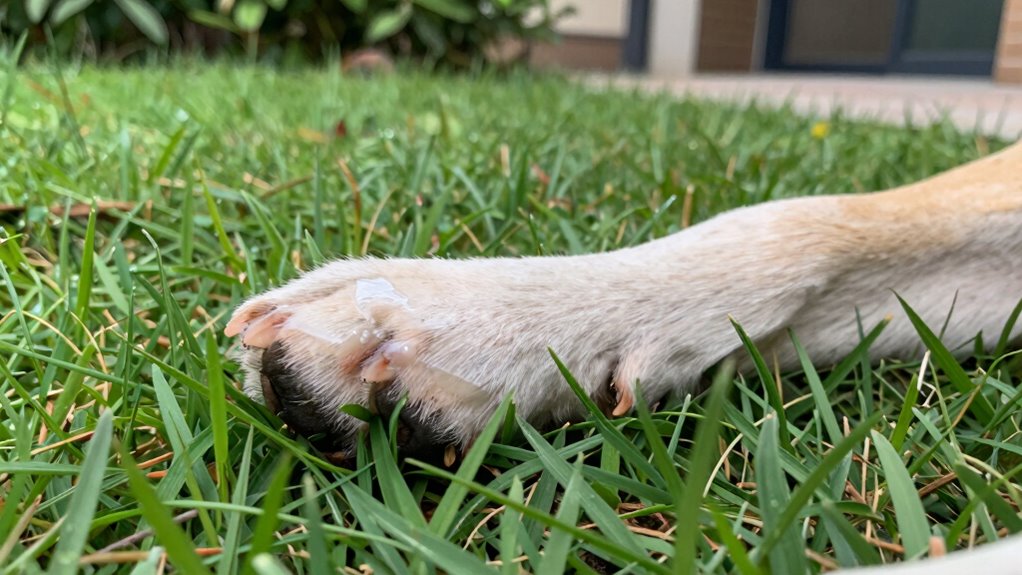
Creating a safe outdoor space for your dog involves proactively managing the environment to prevent paw injuries. Start by removing hazards like sharp objects, broken glass, and rough surfaces that can cause cuts or cracks. Incorporate pest prevention measures to keep fleas, ticks, and other pests at bay, reducing the risk of bites or infections. Guarantee outdoor plant safety by avoiding toxic plants that could harm your dog’s paws or health if chewed or stepped on. Regularly inspect the yard for debris or anything that could injure or irritate your dog’s paws. Providing shaded areas and cool, even surfaces helps prevent heat injuries. A well-maintained, hazard-free space minimizes risks, allowing your dog to enjoy outdoor time safely and comfortably. Ensuring proper maintenance is essential for long-term paw health and injury prevention.
Signs Your Dog’s Paws Are Injured and When to See the Vet
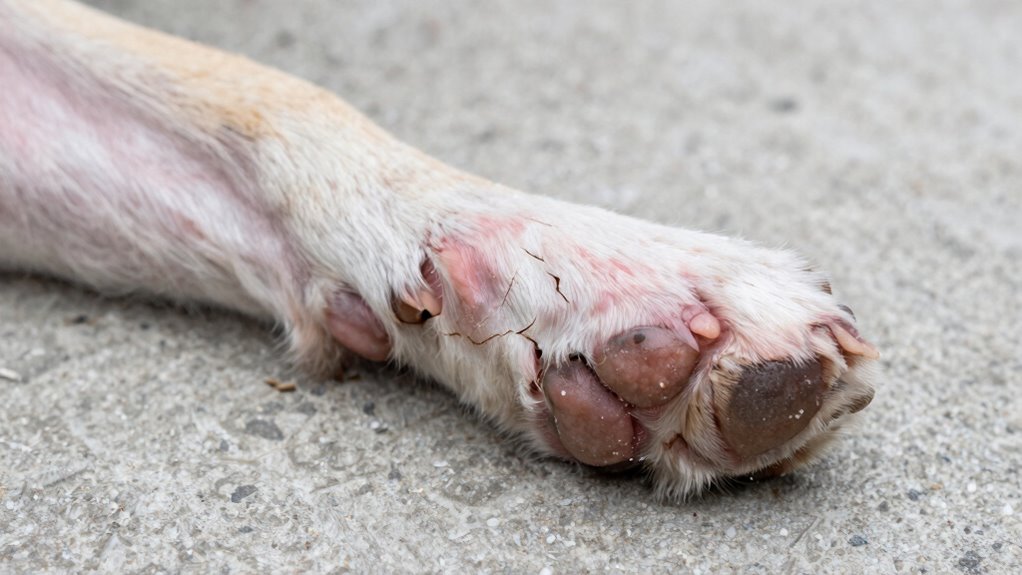
If your dog shows signs of discomfort or limping, it’s important to closely examine their paws for injuries. Look for redness, swelling, cuts, or bleeding—these are clear signs your dog’s paw print may be affected. Also, watch for excessive licking or chewing their paws, which indicates pain.
| Symptom | Possible Cause |
|---|---|
| Limping or favoring paw | Injury or soreness |
| Paw licking or chewing | Irritation or pain |
| Redness or swelling | Infection or inflammation |
If you notice any of these signs, especially persistent limping or bleeding, it’s time to see the vet. Prompt attention guarantees your dog’s paws stay healthy and pain-free.
DIY Home Remedies for Minor Paw Injuries and Care Tips
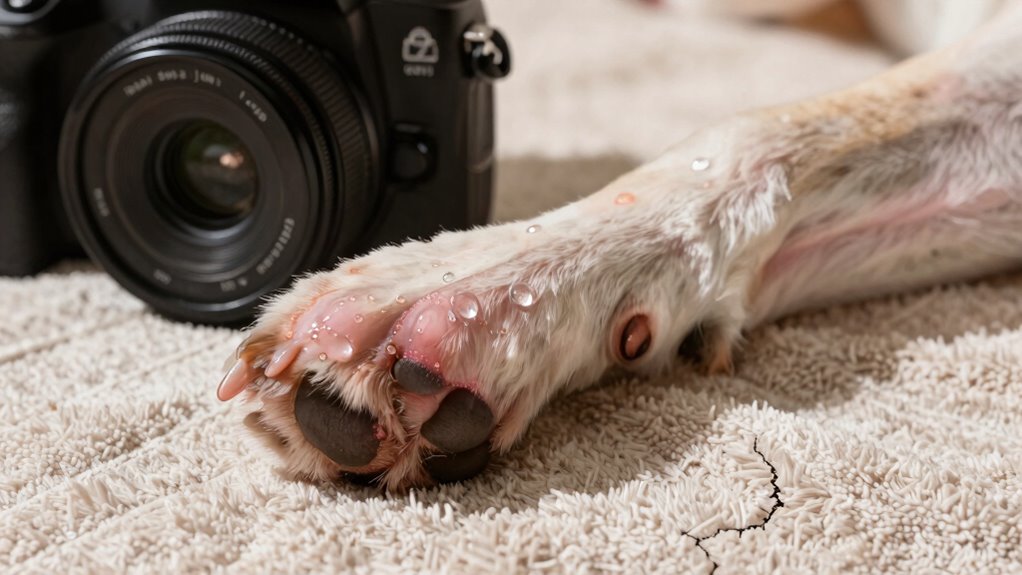
When your dog has a minor paw injury, quick and gentle home care can make a big difference in their recovery. Start by inspecting their paw carefully, keeping paw pad hygiene in mind. Clean the affected area with warm water and mild, dog-safe antiseptic to remove dirt and debris. Understanding canine paw anatomy helps you identify how deep the injury might be; most minor cuts are superficial. Apply a soothing, pet-safe ointment like coconut oil or a specialized paw balm to promote healing and prevent cracking. Limit your dog’s activity to avoid aggravating the injury. Remember, if swelling, bleeding, or discomfort persists, consult your veterinarian. Regularly inspecting and caring for your dog’s paws helps maintain healthy, resilient paw pads and prevents future issues.
Long-Term Strategies for Healthy, Crack-Free Paw Pads
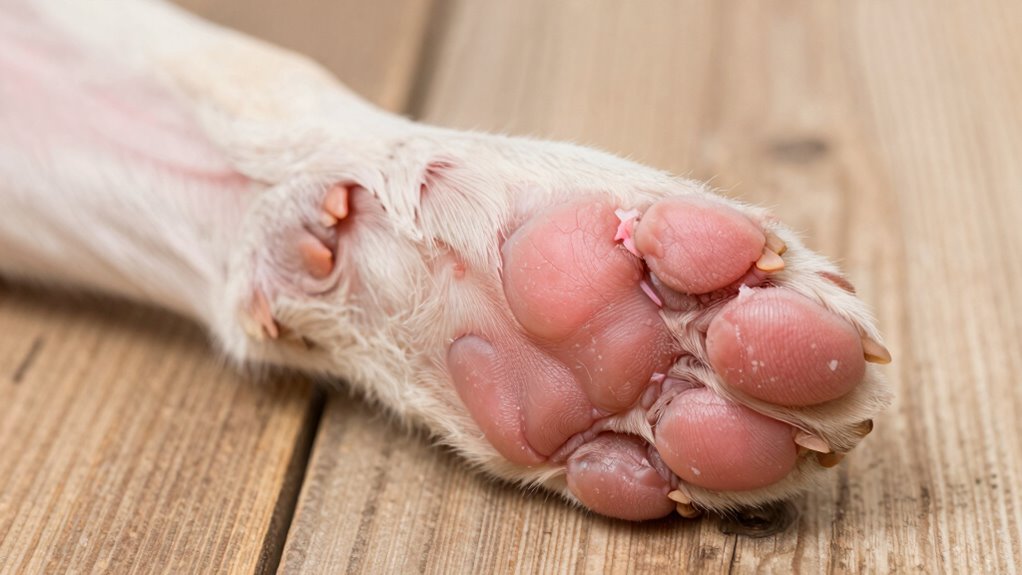
To keep your pet’s paw pads healthy and crack-free, make regular inspections part of your routine. Moisturize and hydrate their paw pads to prevent dryness and splits, especially in harsh weather. Using protective footwear can also shield their paws from rough surfaces and extreme conditions.
Regular Paw Inspections
Ever wonder how maintaining your dog’s paw health can prevent cracks and injuries? Regular paw inspections are key. You should routinely check your dog’s paws, especially after outdoor walks, to monitor paw pad hygiene and catch issues early. During outdoor paw checks, look for cuts, cracks, or foreign objects lodged in the pads. Keep an eye out for redness, swelling, or signs of irritation that could indicate burns or infections. Gently feel each paw pad for any abnormal dryness or rough patches. These inspections help you spot problems before they worsen, ensuring your dog’s paws stay healthy and crack-free. Make paw checks a consistent part of your routine, especially during extreme weather or after long walks, to maintain long-term paw health.
Moisturize and Hydrate
Keeping your dog’s paw pads moisturized and well-hydrated is essential for preventing cracks and maintaining long-term health. Proper paw pad moisturization helps keep the skin supple, reducing the risk of dryness and splits. To boost hydration, consider these hydration techniques:
- Use a pet-safe paw balm or moisturizer regularly
- Offer fresh water frequently to support overall hydration
- Limit walks on hot, dry surfaces during peak heat
- Use humidifiers indoors if air is very dry
- Gently massage paw pads to improve blood flow and absorption
Consistent paw pad moisturization combined with effective hydration techniques keeps your dog’s paws resilient and healthy. Maintaining this routine helps prevent cracks and other long-term issues, ensuring your dog stays comfortable and protected.
Protective Footwear Use
Using protective footwear is a practical way to support your dog’s paw health long-term. Understanding dog paw anatomy and paw pad anatomy helps you choose the right gear. The paw pads act as natural shock absorbers, but exposure to rough surfaces, salt, and heat can cause cracks and injuries. Protective boots shield paw pads from harsh conditions, reducing the risk of cracks, salt burns, and heat injuries. When selecting footwear, guarantee a proper fit to avoid discomfort or restricted circulation. Consistent use during walks on hot pavement, snow, or icy roads keeps paw pads safe and healthy. Remember, well-fitted protective footwear enhances your dog’s comfort and minimizes damage, promoting long-term paw pad integrity and overall paw health.
Frequently Asked Questions
Can Certain Dog Breeds Be More Prone to Paw Pad Injuries?
Yes, certain dog breeds are more prone to paw pad injuries due to breed susceptibility and injury predisposition. Breeds with thick or sensitive paw pads, like Bulldogs or Siberian Huskies, may experience more cracks or burns. You should regularly check and protect their paws, especially during extreme weather conditions. Being aware of these breed differences helps you prevent injuries and keep your dog comfortable and safe outdoors.
How Often Should I Inspect My Dog’s Paws During Outdoor Walks?
Think of your dog’s paws as tiny, sensitive barometers for injury; you should inspect their paws every 10 to 15 minutes during outdoor walks. Regular paw pad inspection helps catch early signs of injury prevention, like cracks or burns, before they worsen. Keep a close eye on their paw health, especially on hot, icy, or rough terrains, to make certain your pup stays safe and comfortable on every adventure.
Are There Natural Alternatives to Commercial Paw Protection Products?
Yes, you can try natural alternatives like DIY remedies and herbal salves to protect your dog’s paws. Coconut oil, shea butter, and beeswax make great homemade salves that soothe and shield paws from cracks, salt burns, and heat injuries. Apply these herbal salves regularly, especially before walks, to keep your dog’s paws healthy and protected without relying on commercial products.
What Environmental Factors Cause Paw Pad Cracks Besides Salt and Heat?
Environmental factors like moisture exposure and abrasive surfaces can cause paw pad cracks beyond salt and heat. When your dog walks on rough, rocky, or gritty surfaces, their pads can become worn down or injured. Excess moisture, from rain or puddles, can soften the pads and lead to cracking if not properly dried. Regularly inspecting and protecting your dog’s paws helps prevent these issues and keeps their pads healthy.
How Does Diet Influence Paw Pad Health and Resilience?
Did you know that nutrient deficiency affects 1 in 4 pets? Your diet plays a vital role in your paw pad health and resilience. A balanced diet rich in essential fatty acids, vitamins, and minerals helps maintain healthy, flexible pads. If you’re concerned, consider dietary supplements to fill nutritional gaps. Proper nutrition supports skin hydration, reduces cracking, and boosts your paws’ ability to withstand environmental stressors.
Conclusion
By protecting your dog’s paws, you create a safe haven where their tiny pads can thrive—shielded from icy salts, scorching pavements, and cracks that threaten their comfort. When you stay vigilant and proactive, you’re nurturing a bond built on trust and care, allowing your furry friend to explore sun-dappled streets and frosty winter trails with confidence. Your attentive touch turns every walk into a gentle dance across a well-guarded, paw-friendly world.