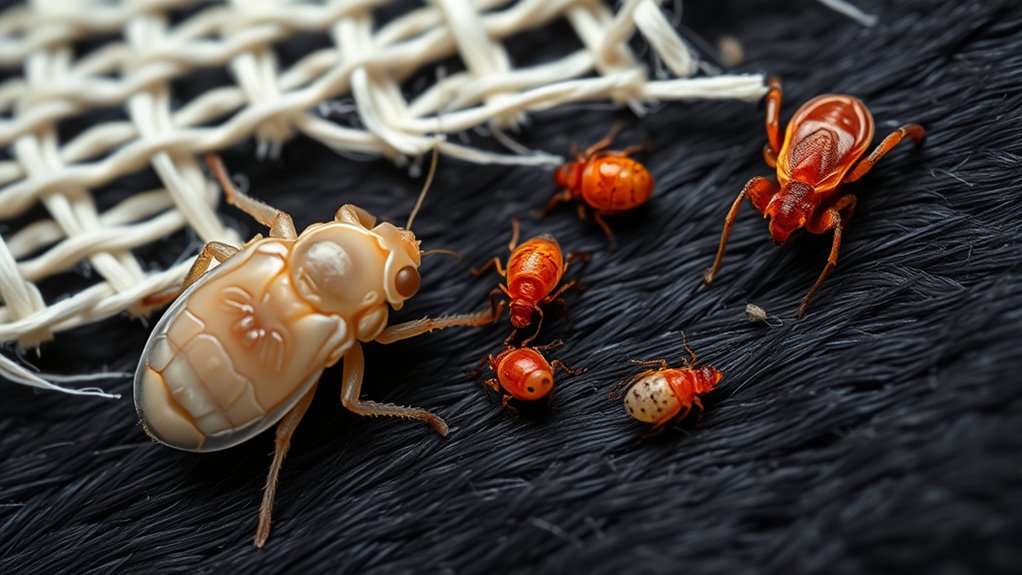

Understanding seasonal trends helps you stay ahead of fleas, ticks, and mites. As temperatures rise in spring and summer, fleas and ticks become more active outdoors and on pets, increasing the risk of bites and disease transmission. Mites thrive in warm, humid conditions, causing skin issues. Maintaining yard cleanliness, treating pets regularly, and inspecting your body and environment are essential. Continue exploring to discover effective strategies to protect your home and loved ones year-round.
Key Takeaways
- Fleas and ticks are most active during spring and summer, increasing risks for pets and humans.
- Ticks often attach in grassy or wooded outdoor areas, transmitting diseases like Lyme disease.
- Mites thrive in humid, warm environments, causing skin irritation and infestations indoors.
- Preventive measures include yard cleanliness, regular pet treatments, and environmental sanitation.
- Wearing protective clothing and performing thorough outdoor body checks help reduce parasite exposure.
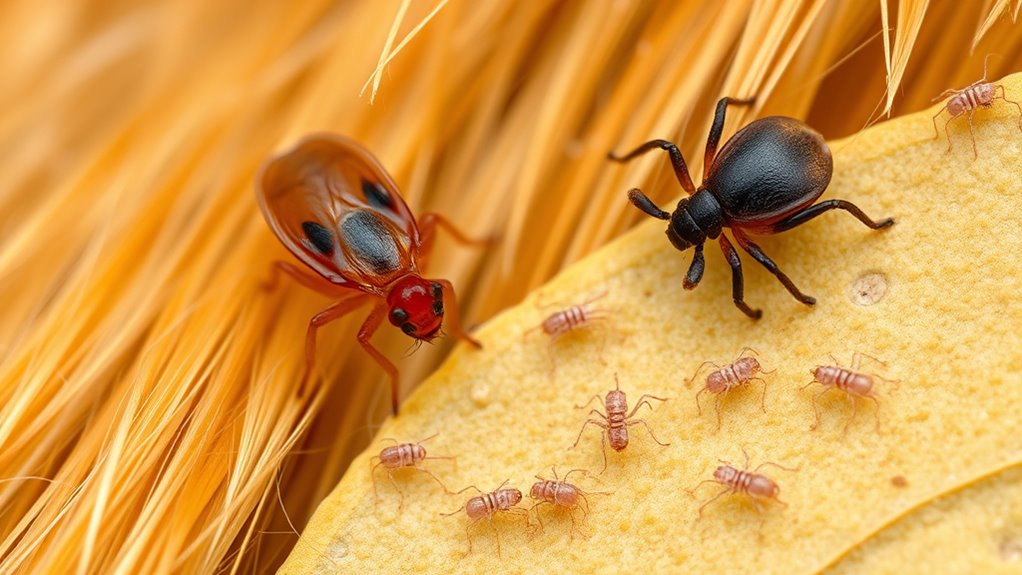
Have you ever wondered how parasites infect their hosts and what you can do to protect yourself? Parasites like fleas, ticks, and mites are especially active during certain seasons, making it essential to stay vigilant. These tiny creatures are experts at sneaking into your environment, often hiding in places you least expect. Fleas, for instance, are notorious for jumping onto pets and humans alike, especially when the weather warms up. Ticks latch onto skin when you’re outdoors in grassy or wooded areas, waiting patiently for the right moment to feed. Mites, though smaller and less obvious, can cause irritation and transmit diseases, often thriving in humid, warm conditions.
During spring and summer, the risk of flea infestations increases as these pests become more active. Warm weather accelerates their breeding cycle, leading to higher populations in your home and yard. If you have pets, they’re more likely to pick up fleas when they spend time outside or come into contact with other animals. Fleas can jump long distances relative to their size, so keeping your yard tidy and your pets treated is vital. Regularly vacuuming your home, washing bedding, and using veterinarian-recommended flea preventatives can considerably reduce the chances of infestation.
Spring and summer boost flea activity; keep yard clean and pets treated to prevent infestations.
Ticks are equally problematic in warmer months, especially if you enjoy outdoor activities like hiking, camping, or gardening. They often attach themselves to clothing or skin, particularly around the ankles, groin, or armpits. Once attached, they can transmit serious diseases like Lyme disease or Rocky Mountain spotted fever. To minimize your risk, wear long sleeves and pants when in wooded or grassy areas, and always check your body thoroughly afterward. Showering soon after outdoor activities helps wash away unattached ticks and makes it easier to find and remove those that are attached.
Mites tend to be more seasonal in certain regions, thriving in humid, warm environments during late spring and summer. They can cause skin irritation or allergic reactions, especially if you have sensitive skin. In some cases, mites infest bedding, upholstery, or clothing, making it essential to keep these items clean and dry. Proper sanitation and moisture control are key to preventing mite infestations. If you notice persistent itching or skin issues, inspect your environment and consult a professional if necessary. Using proper sanitation, maintaining dry indoor spaces, and avoiding excessive humidity can help prevent mite infestations.
Frequently Asked Questions
How Can I Prevent Parasites During Off-Peak Seasons?
To prevent parasites during off-peak seasons, you should maintain regular grooming and check your pet for signs of fleas, ticks, or mites. Keep your home and yard clean, vacuum often, and wash bedding regularly. Use veterinarian-approved preventive treatments year-round, even if you haven’t seen pests recently. Limiting your pet’s outdoor exposure and keeping their living area tidy also helps reduce the risk of infestations during slower seasons.
Are There Natural Remedies for Seasonal Parasite Control?
Yes, you can use natural remedies to control seasonal parasites. Regularly apply cedar oil or neem oil to your pet’s coat, which repels fleas, ticks, and mites safely. You might also add diatomaceous earth to your pet’s environment or sprinkle it on carpets and bedding. Maintaining a clean environment, frequent grooming, and offering a balanced diet boost your pet’s natural defenses, reducing the risk of parasite infestations naturally.
What Are the Signs of Parasite Infestation in Pets?
You might notice your pet scratching excessively, biting at their skin, or licking their paws. Look for visible fleas or ticks on their coat, along with red or irritated skin, hair loss, or scabs. You may also see tiny mites crawling or causing crusty patches. If your pet shows these signs, it’s a good idea to visit your vet promptly to confirm the infestation and start treatment.
How Effective Are Seasonal Treatments for Long-Term Prevention?
Seasonal treatments are quite effective for long-term prevention if you stick to the recommended schedule. They reduce the risk of infestations by targeting parasites when they’re most active, especially during peak seasons. Consistent application helps protect your pet year-round, but it’s important to follow your vet’s advice and use the right products. Regular check-ups and environmental control also boost overall effectiveness, keeping your pet healthier and parasite-free longer.
Can Environmental Factors Influence Parasite Activity Year-Round?
Yes, environmental factors can influence parasite activity all year. Warmer temperatures, high humidity, and mild winters create ideal conditions for fleas, ticks, and mites to thrive. You should stay vigilant in different seasons, especially during warm or humid periods, as parasites become more active. Regularly check your pets and surroundings, and adjust your preventive measures accordingly to keep these pests at bay year-round.
Conclusion
Understanding seasonal parasites like fleas, ticks, and mites helps you protect your pets and home effectively. Did you know that ticks are most active during warmer months, with some species capable of transmitting over 15 diseases? Staying vigilant and following preventative measures can markedly reduce your pet’s risk. By staying informed, you’ll enjoy healthier, happier moments with your furry friends all year round. Keep up the good work—your proactive approach makes all the difference!