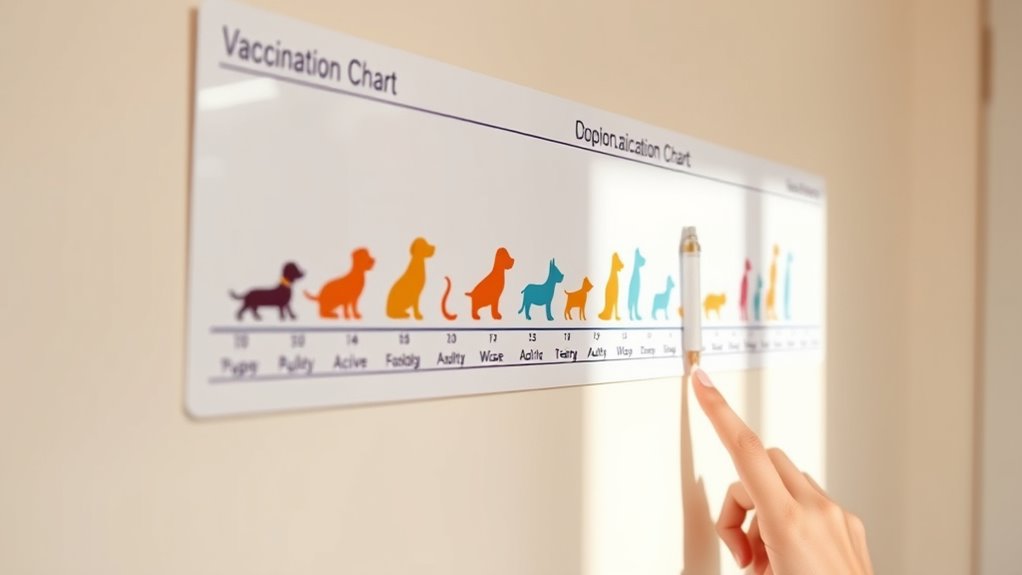

Starting your dog’s vaccination journey at 6-8 weeks, you’ll give core vaccines like distemper, parvovirus, and adenovirus, with booster shots every 3-4 weeks until about 16 weeks old. As your dog grows, annual or triennial boosters keep coverage strong, and special vaccines may be added based on lifestyle and location. Age influences scheduling, especially for senior dogs. Keep up with appointments to protect your dog’s health at every stage—more details await.
Key Takeaways
- Puppies receive initial core vaccines at 6-8 weeks, with boosters every 3-4 weeks until 16 weeks old.
- Adult dogs need regular booster shots, typically annually or triennially, to maintain immunity.
- Optional vaccines, like leptospirosis, depend on lifestyle and geographic location, and may be recommended throughout life.
- Senior dogs (over 7 years) may require adjusted vaccination schedules based on health and age-related immune changes.
- Consistent vaccination throughout a dog’s life ensures ongoing protection against preventable diseases.

Are you aware of the recommended vaccination schedule for your puppy? Just like children need a series of immunizations to stay protected, puppies require specific vaccines at key developmental stages. Starting early is essential because their immune systems are still developing and they’re more vulnerable to certain diseases. Typically, your puppy will receive their first round of vaccines around six to eight weeks of age. This initial shot usually includes core vaccines like distemper, parvovirus, and adenovirus. These are critical because they protect against highly contagious and potentially deadly diseases. After the first dose, you’ll need to bring your puppy back for booster shots every three to four weeks until they’re about 16 weeks old. This schedule guarantees that their immune system builds a solid defense, as maternal antibodies wane over time, which can temporarily interfere with vaccine effectiveness. It’s also beneficial to understand that some breeds may have different susceptibilities, which your veterinarian can help address.
As your puppy grows, it’s essential to follow the recommended timeline for the second round of vaccinations, which often includes not only core vaccines but also optional ones based on your lifestyle and geographic location. For example, your vet might recommend leptospirosis or bordetella vaccines if your dog will be exposed to other animals or outdoor environments. It’s important to keep track of these appointments so your pup remains protected during their most vulnerable months. Once they complete their initial series, annual or triennial boosters are usually sufficient to maintain immunity. These booster shots help reinforce their defenses, especially for diseases that can be prevalent in your area or that they might encounter during walks or visits to the park.
As your dog transitions into adulthood, ongoing vaccination is essential for their health and your peace of mind. Puppies with incomplete vaccination histories are at greater risk, so staying consistent with the schedule is vital. Senior dogs, typically over seven years old, might need adjusted vaccination plans based on their health status. Your veterinarian can recommend which vaccines are still necessary and whether any adjustments are needed for their age or medical conditions. Remember, vaccination isn’t a one-time event but a continuous process that adapts as your dog ages. Keeping their shots up to date helps prevent preventable diseases and contributes to their overall well-being. Staying informed and diligent about their vaccination schedule ensures your furry friend remains healthy, happy, and protected throughout their entire life. Additionally, understanding the importance of breed-specific health considerations can aid in customizing their vaccination and care plan.

Puppy Whelping Supplies Kit Include 12 Puppy Shot Record Booklets 6 Record Keeping Charts 12 Coloured Soft Nylon Puppy Id Collars Newborn Adjustable Breakaway with 2 ID Sticker Identification Pets
- Complete Puppy Whelping Kit: Includes record books, charts, collars, and ID stickers
- Portable and Practical Design: Compact record cards and adjustable collars for easy use
- High-Quality Materials: Durable nylon collars and laminated record covers
As an affiliate, we earn on qualifying purchases.
As an affiliate, we earn on qualifying purchases.
Frequently Asked Questions
Are There Alternative Vaccines Available for My Pet?
Yes, there are alternative vaccines available for your pet, especially if they have specific health needs or allergies. Your vet can recommend options like recombinant or non-adjuvanted vaccines, which may be better suited for sensitive animals. Always discuss your pet’s medical history and concerns with your veterinarian to determine the most appropriate and effective vaccination plan tailored to your pet’s individual needs.
How Do Vaccination Schedules Differ for Small vs. Large Breeds?
Small and large breeds follow different vaccination schedules because their growth rates and immune responses vary. You’ll find small breeds often need vaccinations more frequently early on, while large breeds might have extended intervals due to slower development. You’ll want to take into account their size, health, and veterinarian recommendations. You’ll also need to monitor their responses and adjust schedules accordingly, ensuring each breed gets ideal protection at the right time.
Can I Delay Vaccinations Without Health Risks?
You shouldn’t delay vaccinations without discussing it with your vet. Delaying can put your dog at risk of serious diseases, especially if exposure happens unexpectedly. Vaccines are timed to build immunity when your dog is most vulnerable, so skipping or postponing them may leave gaps in their protection. Always consult your veterinarian before making any changes to the vaccination schedule to make certain your pet stays healthy and safe.
What Are the Signs of Vaccine Allergies in Pets?
You might notice your pet scratching endlessly, swelling like a balloon, or struggling to breathe—these are signs of vaccine allergies that shouldn’t be ignored. Vomiting, diarrhea, or sudden lethargy can also indicate a severe reaction. If you see any of these, rush your pet to the vet immediately. Catching allergic reactions early can save their life and keep them happy and healthy for years to come.
Are There Any New Vaccines Being Developed for Older Dogs?
Yes, new vaccines are being developed for older dogs. Researchers focus on creating vaccines that target age-related health issues, like arthritis and certain cancers, to improve their quality of life. Some experimental vaccines aim to boost immune response or protect against diseases common in senior dogs. You should stay in touch with your vet, who can advise you on the latest options suitable for your dog’s specific health needs.
Conclusion
By sticking to this vaccination schedule, you’re giving your pet the best chance at a healthy life. Some believe vaccines can cause harm, but extensive research shows they’re safe and essential for prevention. Think of vaccines as your puppy’s armor, protecting them from serious diseases. So, trust the science behind these shots, stay consistent, and watch your furry friend thrive from puppyhood to senior years. Your care truly makes all the difference!