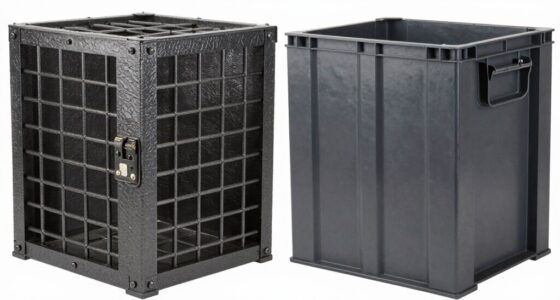
To create an ideal indoor tortoise table, prioritize ample space to let your tortoise move naturally, providing hiding spots and basking areas. Make sure you set up proper lighting, including UVB, and a heat source to maintain 85-90°F for active digestion and comfort. Regularly check humidity and cleanliness for health and hygiene. Keeping these essentials in balance supports your tortoise’s well-being, and understanding more about each step will help you build the perfect habitat.

Get pet supplies delivered free — and shop member deals
- Fast, free delivery on millions of items
- Access to Prime Big Deal Days deals on October 6–7
- Prime Video, Amazon Music and more included
Key Takeaways
- Ensure the enclosure provides ample space for hiding, basking, and water, promoting natural behaviors and reducing stress.
- Position UVB and heat lamps correctly to create a temperature gradient of 85-90°F in the basking area.
- Maintain appropriate humidity levels to support respiratory health and overall comfort.
- Regularly clean and disinfect the enclosure to prevent bacteria and mold buildup.
- Monitor the tortoise’s behavior and health, adjusting lighting, heating, or space as needed.

If you’re considering keeping a tortoise indoors, creating a dedicated table can make all the difference in providing a safe and comfortable environment. A well-designed tortoise table not only gives your pet enough space but also helps you manage essential factors like lighting, heat, and cleanliness. One of the first things to consider is how to set up a reliable feeding schedule. Consistency in feeding helps your tortoise stay healthy and ensures you’re monitoring their eating habits closely. Place food in specific spots within the enclosure to avoid messes spreading everywhere, and remove uneaten food promptly to maintain enclosure cleanliness. This keeps the environment hygienic, reducing the risk of bacteria buildup or mold, which can harm your tortoise. Incorporating biodiversity principles into your setup can also promote a more natural environment for your pet. Lighting and heat are critical for mimicking your tortoise’s natural habitat and promoting proper digestion and activity levels. Incorporate UVB lighting in your setup, ensuring it’s positioned correctly to provide adequate exposure for your tortoise. A basking spot with a heat lamp should be available during the day, keeping the temperature between 85-90°F (29-32°C). At night, lower the temperature slightly, but avoid letting it drop too much. Proper heat and light not only support digestion but also influence your tortoise’s behavior and overall health. Make sure the enclosure has a temperature gradient, with warmer and cooler zones, so your tortoise can regulate its body temperature comfortably. Space is another vital priority. Tortoises need enough room to roam and explore, which helps prevent stress and promotes natural behaviors. Your table should be large enough to accommodate hiding spots, basking areas, and a shallow water dish, all while allowing your tortoise to move freely. Using a substrate that’s easy to clean and safe for your pet, like coconut fiber or reptile carpet, which aids in enclosure cleanliness and simplifies maintenance, is essential for a healthy habitat. Regularly cleaning and disinfecting the table prevents the buildup of waste and bacteria, keeping your tortoise healthy and happy. Additionally, proper lighting and heat are crucial for maintaining your tortoise’s health and activity levels. Monitoring and maintaining enclosure humidity levels is also vital, as it helps prevent respiratory issues and keeps your tortoise comfortable. Creating a comfortable environment by paying attention to temperature, humidity, and substrate quality can significantly enhance your tortoise’s well-being. Paying attention to habitat conditions can further enhance your tortoise’s well-being. Finally, keep a close eye on your tortoise’s habits and physical condition. Adjust the setup as needed to improve lighting, heating, or space. Consistent feeding schedules, meticulous enclosure cleanliness, and attentive temperature management work together to create an environment where your tortoise can thrive indoors. By prioritizing these elements, you’ll foster a safe, stimulating space that encourages your tortoise’s natural instincts and well-being.
indoor tortoise habitat enclosure
As an affiliate, we earn on qualifying purchases.
As an affiliate, we earn on qualifying purchases.
Frequently Asked Questions
How Often Should I Clean the Tortoise Table Setup?
You should clean your tortoise table setup weekly to guarantee proper diet maintenance and avoid bacteria buildup. Regular cleaning helps keep food and water dishes sanitized, reducing health risks. During cleaning, check and adjust lighting to match your tortoise’s needs, ensuring they get adequate UVB exposure. Consistent upkeep keeps your tortoise comfortable and healthy, and it’s a simple way to promote a long, happy life for your pet.
What Are the Best Substrate Options for Indoor Tortoise Tables?
You should choose substrate types that mimic your tortoise’s natural environment, like coconut fiber, cypress mulch, or play sand. Aim for a substrate depth of 2-4 inches to allow for burrowing and comfort. While newspaper or paper towels are easy, they lack natural benefits. Prioritize options that retain moisture without becoming moldy, ensuring your tortoise stays healthy and comfortable in its indoor habitat.
How Can I Prevent Mold and Bacteria Growth Inside the Enclosure?
To prevent mold and bacteria growth inside your tortoise enclosure, focus on good ventilation strategies and humidity control. Guarantee proper airflow by adding vents or fans, which helps reduce excess moisture. Keep humidity levels consistent—avoid overly damp substrates—and clean the enclosure regularly. Removing waste promptly and using breathable substrates also helps minimize mold buildup, creating a healthier environment for your tortoise.
What Are Common Signs of Stress in Indoor Tortoises?
You’ll notice signs of stress in your indoor tortoise like decreased appetite, excessive hiding, or lethargy. To help, manage their diet carefully and guarantee they get proper nutrients, avoiding overfeeding. Incorporate enrichment activities like new toys or varied terrain to stimulate their mind and body. Keep an eye on their behavior, and if stress persists, adjust their environment, light, and temperature to create a comfortable, engaging space.
How Do I Introduce New Plants Safely Into the Habitat?
To guarantee a safe introduction, you’ll want to pick plants compatible with your tortoise’s needs, avoiding toxic varieties. Gently introduce new plants by placing them in a separate container first, allowing your tortoise to investigate without stress. Observe their reactions closely, and once they seem comfortable, gradually integrate the plants into their habitat. Remember, a cautious, well-planned approach keeps your tortoise healthy and the plants thriving.
Conclusion
Creating the perfect indoor tortoise table isn’t just about meeting their needs; it’s about crafting a cozy, welcoming space where your tortoise can thrive and feel at home. By thoughtfully balancing light, warmth, and space, you gently nurture their happiness and health. Remember, a well-designed habitat isn’t just functional—it’s a quiet, loving gesture that makes your pet’s world a little brighter every day. Your care truly makes their little world special.
Fall Picks
fall essentials
As an affiliate, we earn on qualifying purchases.