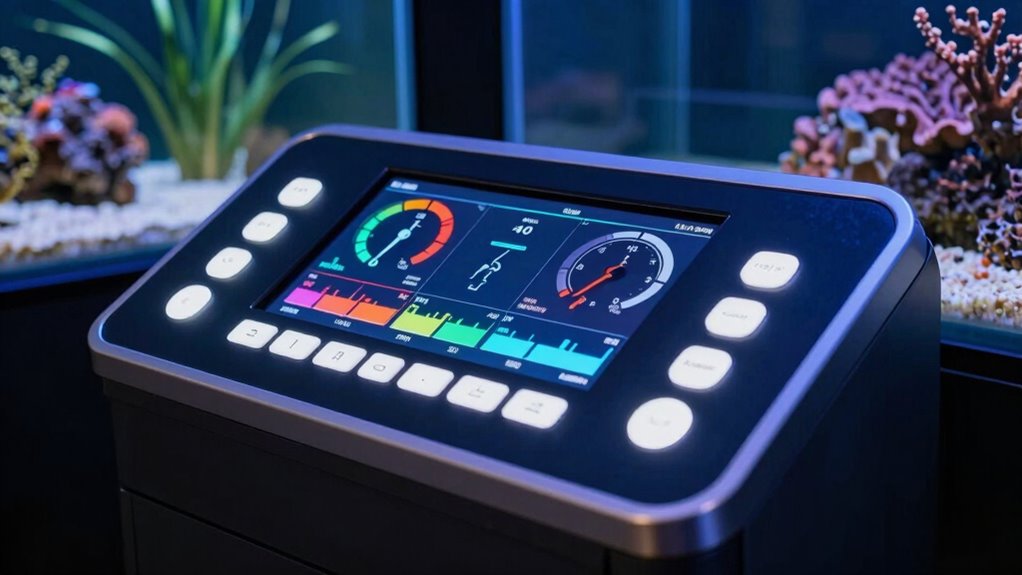

Aquarium controllers can be incredibly helpful, giving you a dashboard to automate and monitor key parameters like temperature, pH, and lighting, which saves time and prevents disasters. However, they can also feel overwhelming, especially if you’re new to technology or have a small setup. While advanced models offer great benefits, simpler systems might suit beginners better. Want to discover how to balance automation with ease of use? Keep exploring to find the right fit for your aquarium.

Get pet supplies delivered free with Prime
- Fast, free delivery on millions of items
- Prime Video, Amazon Music and more included
- Member-only deals all year
Key Takeaways
- Aquarium controllers automate essential parameters, improving stability and reducing manual monitoring efforts.
- They provide real-time data and alerts, enhancing early issue detection and prevention.
- Advanced models connect remotely via smartphones or computers, offering convenience but adding complexity.
- Overly complex systems may overwhelm beginners, making manual control preferable for simple setups.
- Cost and familiarity influence whether a dashboard is viewed as helpful or an unnecessary complication.
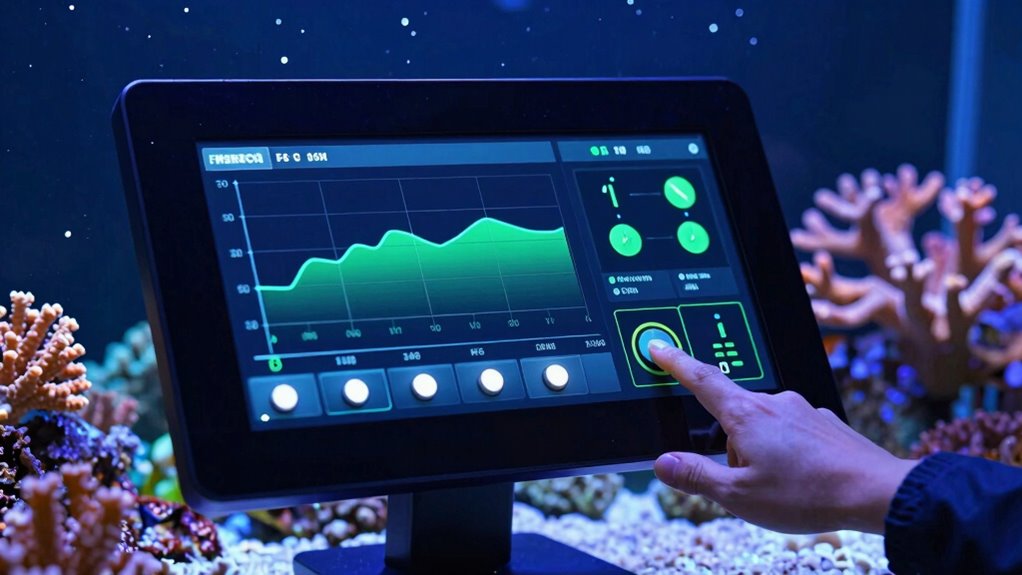
Aquarium controllers have become essential tools for maintaining healthy and stable aquatic environments. They allow you to automate and oversee critical parameters like temperature, pH levels, salinity, and lighting, which are crucial for your aquatic life’s well-being. With remote monitoring capabilities, you can keep an eye on your aquarium’s conditions from anywhere, whether you’re at work or on vacation. This feature gives you peace of mind, knowing that you can quickly respond to any issues without being physically present. Many controllers now connect to your smartphone or computer, providing real-time data and alerts that help you stay ahead of potential problems.
However, while remote monitoring offers convenience, it also prompts you to think about the cost analysis involved. Purchasing an advanced aquarium controller with these features can be an initial investment, and you might wonder if it’s worth the expense. You should compare the costs of different models and evaluate whether the benefits justify the price. For some hobbyists, the peace of mind that comes with remote alerts and automatic adjustments outweighs the costs. For others, it may seem like overkill, especially if your aquarium is small or simple, and manual monitoring works fine. The key is to assess your specific needs and budget carefully.
You should also reflect on the long-term savings when contemplating a controller. Automated systems help prevent disasters like overheating, equipment failure, or dangerous fluctuations in water chemistry, which are critical for aquatic environments and can be costly if they happen unexpectedly. By catching issues early through remote monitoring, you might avoid expensive repairs or the loss of your aquatic creatures. Over time, this can make the initial expense more justifiable. Additionally, considering automation technology can help you better understand how these systems integrate with other tools and systems for comprehensive management. As technology advances, understanding automation benefits can also help you stay current with industry standards and innovations. Recognizing the importance of reliable sensors can further improve your setup’s accuracy and performance, ensuring that the system responds appropriately to any changes. Understanding the benefits of automation can guide you in choosing the right system for your needs.
But don’t forget the possibility that some controllers could overcomplicate your setup. If you’re new to the hobby, a complex system might seem intimidating or unnecessary. You might find yourself overwhelmed by the settings and configurations, leading to frustration instead of convenience. In such cases, a simpler, more straightforward controller or manual monitoring may be better suited to your experience level.
In the end, whether an aquarium controller becomes a helpful dashboard or an overcomplication depends on your priorities, budget, and familiarity with technology. Remote monitoring can greatly enhance your ability to maintain stability, but it’s essential to weigh the costs against the benefits. If you’re comfortable with technology and want the extra layer of security, investing in a good controller can be a wise choice. Conversely, if you prefer simplicity and hands-on management, sticking with basic tools might serve you just as well.
aquarium controller with temperature and pH monitoring
As an affiliate, we earn on qualifying purchases.
As an affiliate, we earn on qualifying purchases.
Frequently Asked Questions
Can Aquarium Controllers Be Used in Freshwater Tanks?
Yes, you can definitely use aquarium controllers in freshwater tanks. They help you monitor water quality and maintain ideal conditions, which directly impacts fish health. By automating tasks like temperature control, pH, and filtration, controllers make managing your freshwater environment easier. This way, you guarantee your fish stay healthy and your water quality remains stable, reducing stress and preventing potential issues before they arise.
What Is the Average Lifespan of an Aquarium Controller?
An aquarium controller typically lasts around 5 to 10 years, acting like a reliable ship steering your aquatic world. The lifespan depends on factors like automation complexity and equipment integration. If you choose a sturdy model and perform regular maintenance, you can extend its life. Keep in mind, cheaper controllers may need replacing sooner, while high-end units with advanced features tend to endure longer, sailing smoothly through your tank’s needs.
Are Aquarium Controllers Compatible With All Types of Equipment?
Aquarium controllers aren’t compatible with all types of equipment out there. You need to check automation integration and compatibility concerns before purchasing. Some controllers work well with specific brands or systems, while others may require additional adapters or modules. Always verify compatibility with your equipment to avoid issues. This way, you guarantee smooth operation and seamless integration, making your aquarium maintenance more efficient and less frustrating.
How Much Do Advanced Aquarium Controllers Typically Cost?
Advanced aquarium controllers usually cost between $200 and $1,000, depending on the feature variety. Think of it as shopping for a Swiss Army knife—some models are simple tools, while others are multi-functional marvels. The cost comparison shows that a higher price often means more automation, monitoring options, and customization. If you want all-encompassing control, be prepared to invest accordingly, but there’s a range to suit different budgets and needs.
Do Aquarium Controllers Require Professional Installation?
Aquarium controllers usually don’t require professional installation, especially for basic models. You can often set up automation integration and manage the user interface yourself with some guidance. However, if you have a complex setup or advanced features, professional help might guarantee everything functions correctly. Overall, most controllers are designed for user-friendly installation, making it easy to customize automation without needing expert assistance.
Conclusion
In the end, aquarium controllers are like a double-edged sword—you might find them a lifesaver or just another piece of clutter. They can make managing your tank a breeze, turning chaos into calm. But if you overdo it, you risk turning simplicity into a tangled web. So, weigh your needs carefully; after all, a well-chosen controller can be your tank’s best friend—without turning your setup into a high-tech maze.
Fall Picks
fall essentials
As an affiliate, we earn on qualifying purchases.