Pets often hide signs of stress during grooming to seem calm, but they may still be panicking underneath. Look for signs like trembling, lip licking, stiff body language, or trying to escape, even if they appear relaxed on the surface. Vocalizations such as whimpering or growling also indicate distress. Recognizing these hidden signals can help you respond appropriately. Keep in mind, understanding how to spot these cues can make grooming safer and less stressful—discover how to do this effectively.

Get pet supplies delivered free — and shop member deals
- Fast, free delivery on millions of items
- Access to Prime Big Deal Days deals on October 6–7
- Prime Video, Amazon Music and more included
Key Takeaways
- Pets often hide stress signals like trembling, lip licking, or wide eyes to avoid appearing vulnerable during grooming.
- Behavioral signs such as attempts to escape, growling, or yawning indicate underlying anxiety even if the pet appears calm.
- Physical cues like tense muscles, tucked tails, flattened ears, or stiff posture reveal hidden stress.
- Vocalizations such as whining, yelping, or subdued sounds can signal pets are overwhelmed or anxious.
- Recognizing these subtle signals allows for timely calming interventions to prevent grooming from becoming a panic trigger.
As an affiliate, we earn on qualifying purchases.
Why Do Pets Hide Stress During Grooming?
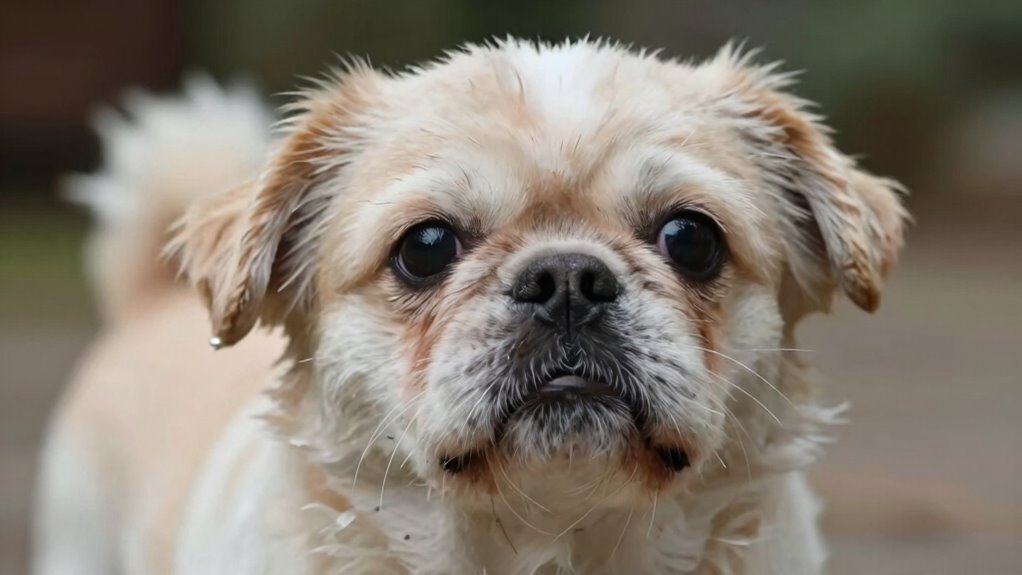
Pets often hide their stress during grooming because they instinctively try to avoid showing vulnerability to potential threats. This natural behavior is especially common in animals experiencing pet anxiety, which can make grooming routines intimidating. Your pet might suppress signs of discomfort to protect itself from perceived danger, even if grooming feels safe to you. They may not want to appear weak or vulnerable in front of humans or other animals. As a result, they mask their true feelings, making it harder for you to recognize their stress. Recognizing this instinct helps you realize that even calm-looking pets could be experiencing animal anxiety during grooming. Understanding stress signals early can help you take steps to make grooming a more comfortable experience for your pet. This hidden stress emphasizes the importance of gentle handling and creating a calm environment to help ease their anxiety. Being aware of these behavioral cues allows pet owners to better support their animals through stressful situations. Additionally, understanding common grooming stress responses can help you identify when your pet might need a break or additional reassurance.
Recognizing Behavioral Signs of Stress in Pets
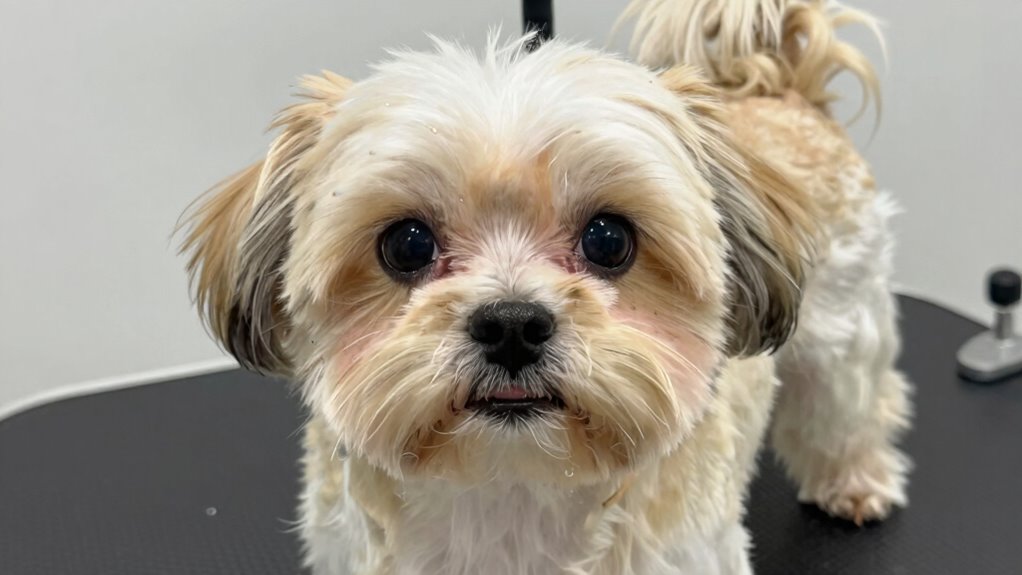
You can spot stress in your pet through specific behaviors like trembling, lip licking, or yawning. Pay attention to body language cues such as flattened ears or a tucked tail. Vocalizations like whining or growling also signal that your pet feels uneasy during grooming. Recognizing stress signals early can help you respond appropriately and ensure a more comfortable grooming experience for your pet. Additionally, understanding behavioral cues can facilitate better communication between you and your animal, reducing their anxiety during grooming sessions. Being aware of your pet’s natural instincts can also help you tailor your approach to make grooming less stressful. Incorporating positive reinforcement techniques can further help your pet associate grooming with a calm and safe experience.
Common Stress Behaviors
Stress in animals often manifests through distinct behaviors that signal discomfort or anxiety. When you notice your pet acting unusually during grooming, it’s a sign to observe common stress behaviors. These include excessive panting, trembling, lip licking, yawning, or trying to escape. Some pets may growl, hiss, or show flattened ears and a tucked tail. Recognizing these signs allows you to implement pet calming techniques, like gentle reassurance or short breaks. Adjusting your grooming routine, such as reducing session length or using softer tools, can help ease their stress. Staying aware of stress signals helps you identify when your pet is overwhelmed, so you can adapt your approach and create a safer, more positive grooming experience for your furry friend. Incorporating calming ingredients like Glycolic Acid in pet skincare routines can also contribute to reducing skin irritation and promoting comfort during grooming. Being attentive to behavioral cues can further help in preventing escalated stress responses and ensuring your pet’s well-being. Additionally, understanding the importance of proper grooming techniques can make a significant difference in reducing their anxiety.
Body Language Clues
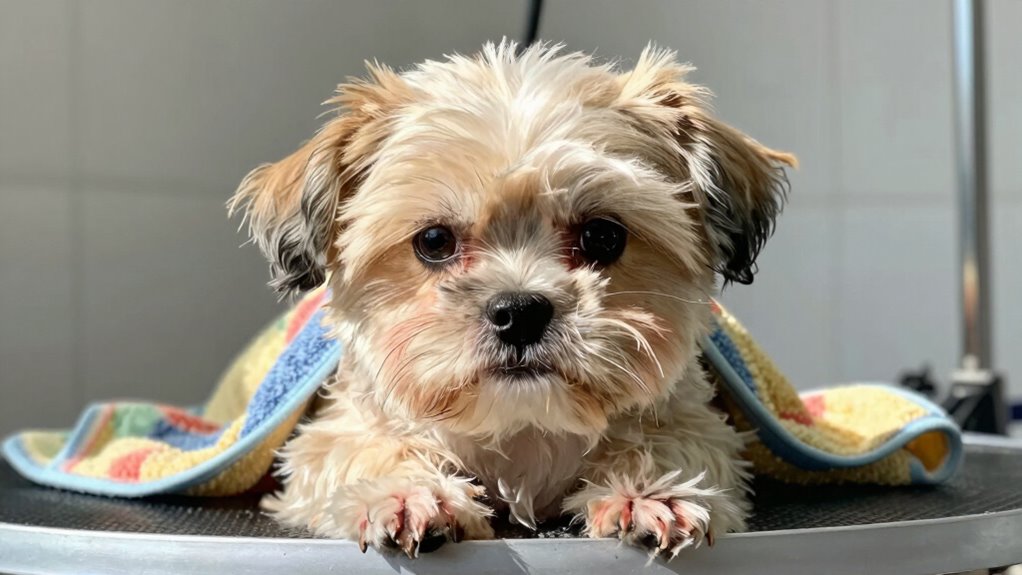
Body language offers essential clues to understanding when your animal is feeling stressed during grooming. Recognizing pet body language helps you spot grooming anxiety early. Signs include pinned-back ears, wide eyes, or a tense posture, indicating discomfort. If your pet starts to tremble, lip lick excessively, or attempts to move away, these are clear signals of stress. Some pets may stiffen or flatten against the surface, showing they’re overwhelmed. Watch for paw lifting or tail tucking, which suggest unease. By paying close attention to these body language cues, you can intervene before stress escalates. Respond promptly with gentle reassurance or a break, ensuring grooming remains a safer, less frightening experience for your pet. Understanding these signs keeps grooming stress manageable and promotes your pet’s well-being. Additionally, being aware of digital literacy can help owners access helpful resources and tutorials to improve their grooming techniques. Developing emotional intelligence around your pet’s behavior can further enhance your ability to interpret subtle stress signals and respond appropriately. Recognizing the importance of body language in pet behavior can also lead to more compassionate and effective interactions during grooming sessions. Being familiar with stress signals specific to different breeds or individual pets can further customize your approach, making grooming a positive experience.
Vocalization Signs
Vocalizations are often clear indicators that your pet is feeling uneasy during grooming. Pay attention to their vocal cues, such as whimpering, growling, or yelping, which serve as sound signals of stress. These sounds can reveal discomfort or fear even if their body language seems calm. A sudden increase in barking or persistent whining may indicate your pet is overwhelmed. Conversely, silence or subdued sounds might also suggest anxiety, as pets sometimes freeze or suppress noise when distressed. Recognizing these vocal cues helps you understand their emotional state and intervene early. Respond promptly to these sound signals by easing the grooming process or offering reassurance, ensuring your pet feels safe and reducing their stress during grooming sessions. Additionally, understanding behavioral indicators can further enhance your ability to identify stress signals before they escalate.
Physical Cues That Show Your Pet Is Overwhelmed
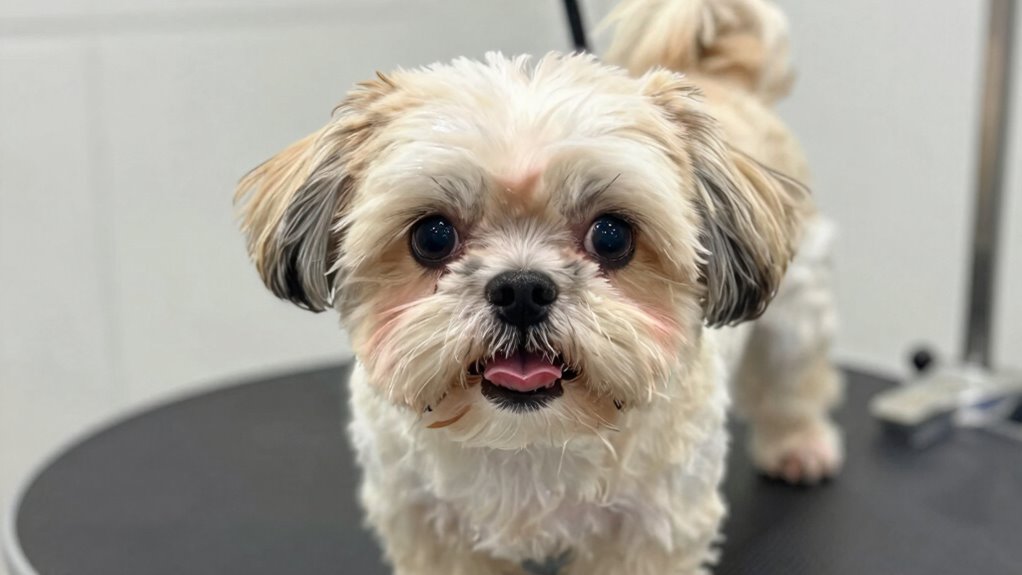
You can often tell your pet is overwhelmed by their tense body language or rapid movements. Watch for excessive panting or yawning, which are clear signs they’re stressed. Recognizing these physical cues helps you respond promptly and ease their discomfort.
Tense Body Language
When a pet feels overwhelmed, their body often reacts with visible tension that signals distress. You might notice stiff muscles, a rigid stance, or a tucked tail indicating they’re uncomfortable. These tense body language cues suggest your pet is overwhelmed during grooming. To help, use pet relaxation techniques like gentle strokes or calm conversations to ease their anxiety. Adjusting the grooming schedule can also prevent buildup of stress; shorter sessions or more frequent breaks can make the experience less overwhelming. Watch for signs like tense limbs or stiff posture, and respond by creating a calmer environment. Recognizing these physical cues early allows you to intervene before stress escalates, ensuring grooming remains a safe, less intimidating experience for your pet. Additionally, understanding stress signals can help you better interpret your pet’s emotional state during grooming. Incorporating bioluminescent organisms as a calming visual aid has been explored as a novel method to soothe anxious pets. Furthermore, paying attention to body language helps prevent stress from reaching a critical level, and being aware of behavioral cues can guide timely intervention, promoting a positive grooming experience.
Excessive Panting or Yawning
Excessive panting or yawning during grooming are clear physical signs that your pet is overwhelmed. These behaviors often indicate stress or discomfort, especially if they happen repeatedly. Pay attention to your pet’s breath; a rapid, heavy breath during grooming can be a sign to pause. Pet breath analysis can help you gauge their stress level, revealing if they’re nearing their limit. Additionally, watch the grooming session timing—long sessions can increase anxiety, leading to more panting or yawning. If you notice these signs, it’s best to give your pet a break, provide a calm environment, and monitor their breathing carefully. Recognizing these cues early can prevent further stress and ensure grooming remains a positive experience for your pet. Using appropriate calming techniques and products can also help reduce stress during grooming sessions.
How to Read Your Pet’s Body Language During Grooming
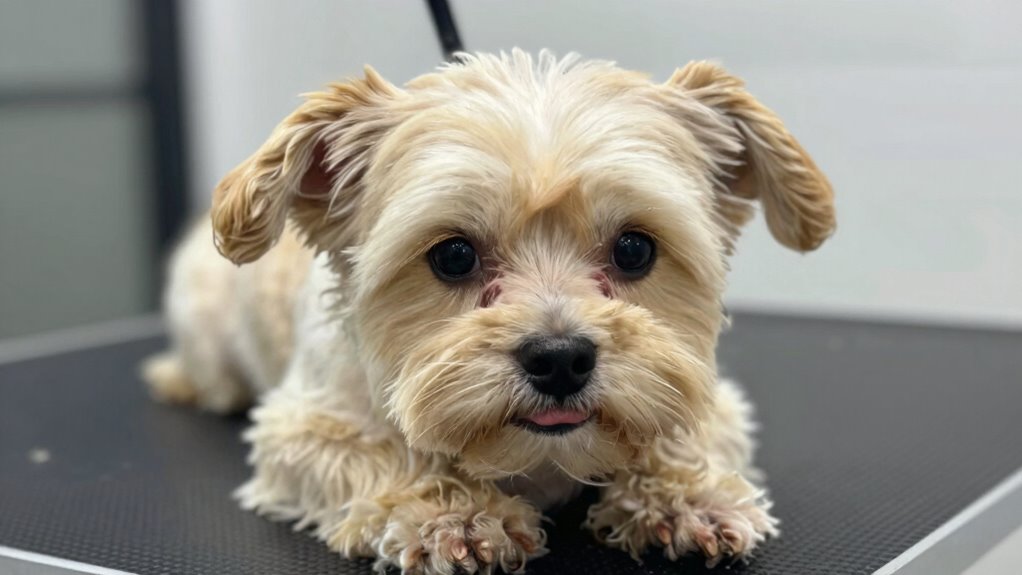
Paying close attention to your pet’s body language during grooming can help you recognize signs of discomfort or stress early on. Understanding these cues guarantees your pet stays safe and comfortable during pet grooming routines. Watch for subtle signals like tense muscles, tucked tail, flattened ears, wide eyes, or avoiding eye contact. These signs indicate your pet may be overwhelmed or anxious. To improve grooming safety tips and make the experience positive, observe these behaviors actively:
Pay attention to your pet’s body language to ensure safe, stress-free grooming sessions.
- Restless shifting or attempting to escape
- Lip licking or yawning
- Frozen posture or stiff stance
- Excessive scratching or pawing
- Whimpering or vocalizations
Being attentive to these signals allows you to pause, reassure your pet, and adjust your approach accordingly, making grooming less stressful and more effective. Additionally, incorporating cultural artifacts like Indonesian masks in your home decor can create a calming environment that reduces pet anxiety. Recognizing stress signals early can help prevent escalation and ensure a more positive grooming experience.
Tips to Create a Calm Environment for Grooming
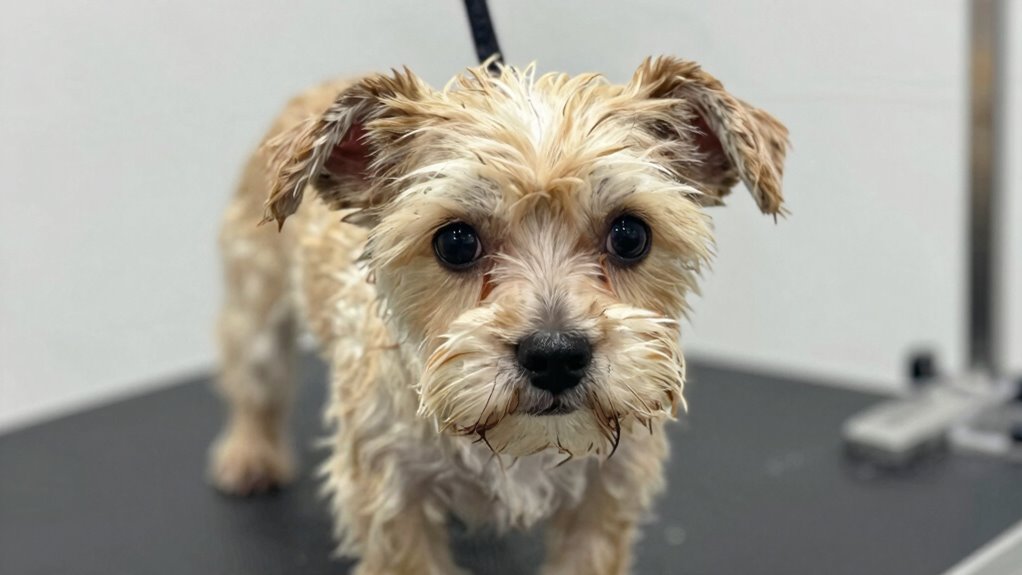
Creating a calm environment for grooming starts with minimizing distractions and ensuring your pet feels secure. Use pet relaxation techniques like gentle voice tones, soft petting, or calming music to soothe them. Make sure the grooming space is quiet, clutter-free, and comfortable, so your pet isn’t overwhelmed by sights or sounds. Adjust your grooming routine if needed, breaking it into shorter sessions to prevent stress buildup. Incorporate grooming routine adjustments such as taking frequent breaks or using treats to create positive associations. Keep tools within reach beforehand to avoid sudden movements that might startle your pet. Consistency and patience are key—over time, these small changes help your pet associate grooming with calmness, making future sessions less stressful for both of you.
How to Calm an Overwhelmed or Panicked Pet
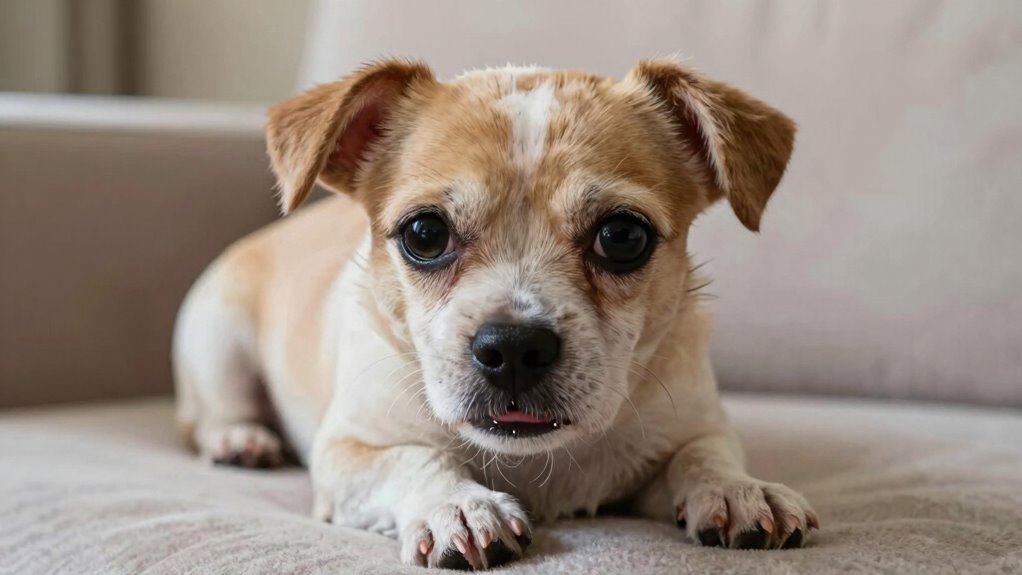
When your pet becomes overwhelmed or panicked during grooming, staying calm yourself is essential. Your composed demeanor helps reduce their anxiety and creates a more relaxed environment. Use pet relaxation techniques like gentle petting, soft voices, or calming music to soothe them. Practice grooming desensitization gradually by introducing grooming tools and routines in short, positive sessions. This builds familiarity and trust over time. Remember, patience is key—never force your pet into uncomfortable situations. Keep sessions brief and rewarding to reinforce calm behavior. Consider these strategies:
- Use soothing voice commands
- Offer treats for cooperation
- Incorporate gentle handling exercises
- Keep grooming sessions short
- Maintain a quiet, comfortable environment
Signs It’s Time to Seek Professional Help for Grooming Stress
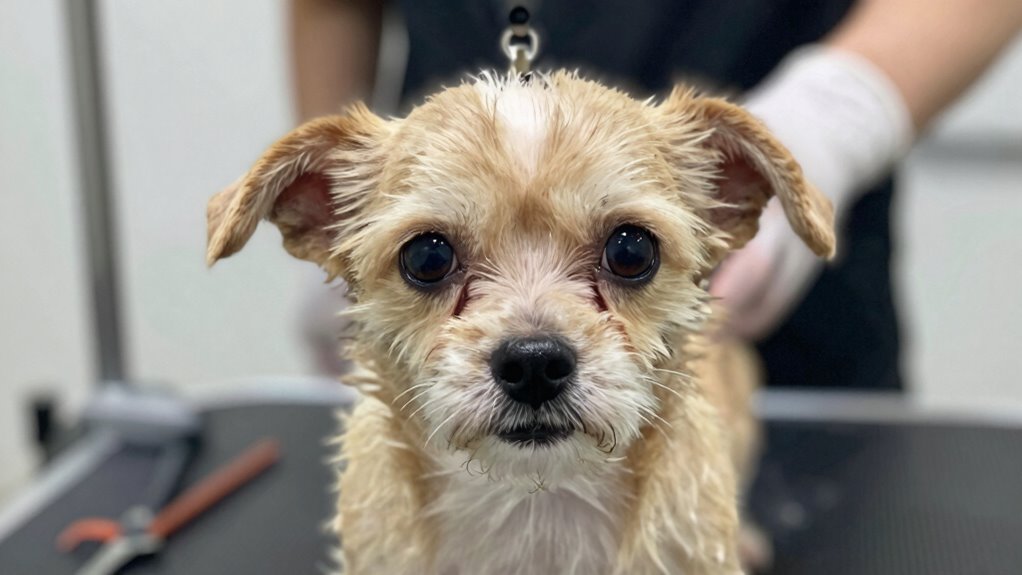
Recognizing when your pet’s grooming stress becomes unmanageable is essential to ensuring their well-being. If signs of pet anxiety persist despite your efforts to comfort them, it’s time to seek professional help. During grooming routines, watch for extreme agitation, trembling, growling, or attempts to escape. If your pet shows consistent fear or frustration, these are clear indicators that their stress levels are too high. Ignoring these signs can worsen their anxiety or cause behavioral issues. A professional groomer or veterinarian can assess your pet’s specific needs and recommend strategies or therapies to reduce grooming-related stress. Seeking help early guarantees your pet feels safe and minimizes the emotional toll grooming can take on them.
When and How to Help Your Pet Feel Safe During Grooming
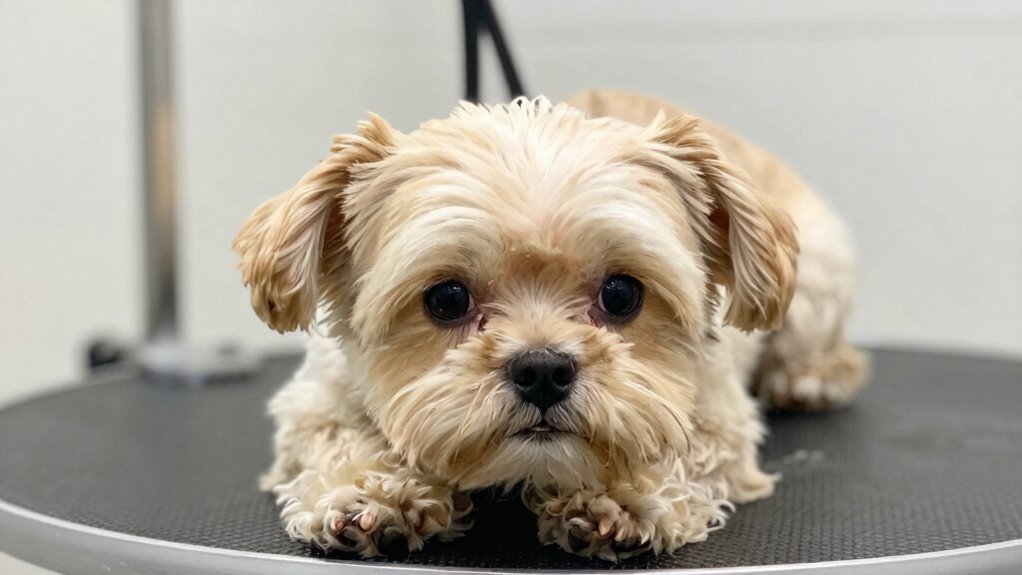
Helping your pet feel safe during grooming starts with understanding their comfort cues and establishing a calm environment. Recognize signs like relaxed body language, gentle breathing, and soft eyes to gauge their stress levels. Use familiar grooming equipment to reduce anxiety and tailor your approach to your pet’s personality—whether they’re shy, energetic, or wary. During grooming, create a soothing atmosphere with a quiet space, soft voice, and gentle handling. Keep sessions short and positive, offering treats or praise when they remain calm. Avoid rushing or forcing, which can heighten stress. Remember, patience is key. With consistent gentle care, you help your pet associate grooming with safety and comfort, making future sessions smoother for both of you.
Frequently Asked Questions
How Can I Prevent Grooming Stress Before It Starts?
To prevent grooming stress before it starts, establish gentle grooming routines that your pet gradually gets used to. Identify and minimize pet anxiety triggers, like loud noises or unfamiliar surroundings, and keep sessions short and positive. Use treats and praise to reward calm behavior, and make sure your pet feels safe and comfortable throughout. Consistent, patient approaches help your pet associate grooming with positive experiences, reducing stress over time.
Are Certain Breeds More Prone to Grooming Anxiety?
Yes, certain breeds are more prone to grooming anxiety due to breed tendencies and grooming triggers. For example, breeds with thick coats like Poodles or Yorkies may experience more stress during grooming, especially if they’re sensitive or have had negative past experiences. Understanding each breed’s unique tendencies helps you recognize their grooming triggers and implement calming techniques, making grooming less stressful and more comfortable for your pet.
What Are Quick Ways to Soothe Grooming-Related Panic?
Did you know almost 70% of pets show signs of grooming stress? To soothe grooming-related panic quickly, use calming techniques like gentle petting, soft voice, and soothing music. Incorporate positive reinforcement by praising calm behavior and offering treats. Keep sessions short and gradually increase duration. These methods help your pet feel safe, reduce anxiety, and turn grooming into a positive, less stressful experience for both of you.
Can Grooming Stress Lead to Long-Term Behavioral Issues?
Grooming stress can indeed lead to long-term behavioral issues if not addressed promptly. Stress indicators like trembling, hiding, or growling signal ongoing anxiety. You should use calming techniques such as gentle handling, positive reinforcement, and a quiet environment to ease their nerves. Ignoring these signs may cause your pet to develop fear or aggression around grooming, so staying attentive and responsive helps prevent future behavioral problems.
How Do I Differentiate Between Normal Discomfort and Panic?
Imagine your pet’s panic as a hurricane, wild and overwhelming, versus normal discomfort as a gentle breeze. To tell the difference, focus on recognizing signs like trembling, excessive panting, or trying to escape. Use calming techniques like soothing voice and gentle touches to help them relax, and watch carefully. If panic persists, it’s time to pause and consider additional calming strategies or seek professional help.
Conclusion
Remember, a calm pet makes grooming a positive experience for both of you. By paying attention to their signals and creating a soothing environment, you help your furry friend feel safe and secure. Don’t ignore subtle signs of stress—sometimes, they’re your pet’s way of saying they need a break. As the saying goes, “A gentle hand and patient heart go a long way,” turning grooming into a bonding moment rather than a battle.
Fall Picks
fall essentials
As an affiliate, we earn on qualifying purchases.