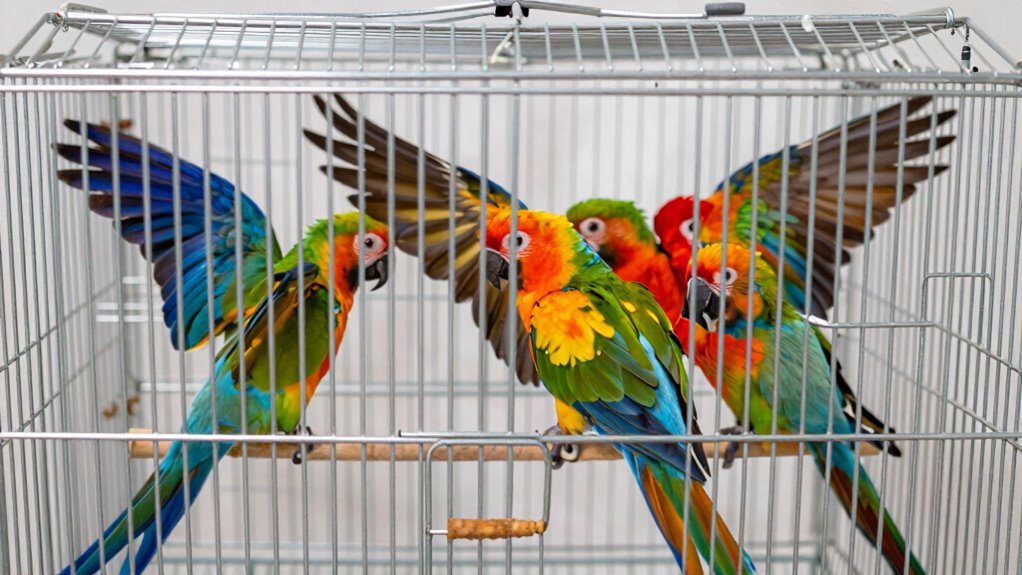

Choosing the right cage size for your parrot involves picking proper bar spacing, sufficient width, and ample wing clearance. Most parrots do well with ½ to ¾ inch bar spacing, but larger species may need wider gaps to prevent escape or injury. The cage should be roomy enough to allow full wing extension, stretching, and movement, promoting health and happiness. To learn more about measuring and adjusting cage size for your bird, keep exploring the essentials of ideal cage planning.

Get pet supplies delivered free — and shop member deals
- Fast, free delivery on millions of items
- Access to Prime Big Deal Days deals on October 6–7
- Prime Video, Amazon Music and more included
Key Takeaways
- Match bar spacing to bird size, typically ½ to ¾ inch for most parrots, narrower for smaller species.
- Ensure cage width and depth allow full wing stretching and natural flight movements.
- Provide enough wing clearance—at least the wingspan plus extra space—for safe flying and maneuvering.
- Regularly reassess and adjust bar spacing as your bird grows to prevent escapes and injuries.
- Choose a cage size that supports enrichment, activity, and easy access for maintenance and veterinary care.
parrot cage with adjustable bar spacing
As an affiliate, we earn on qualifying purchases.
As an affiliate, we earn on qualifying purchases.
Why Choosing the Right Cage Size Matters for Your Parrot’s Safety and Happiness
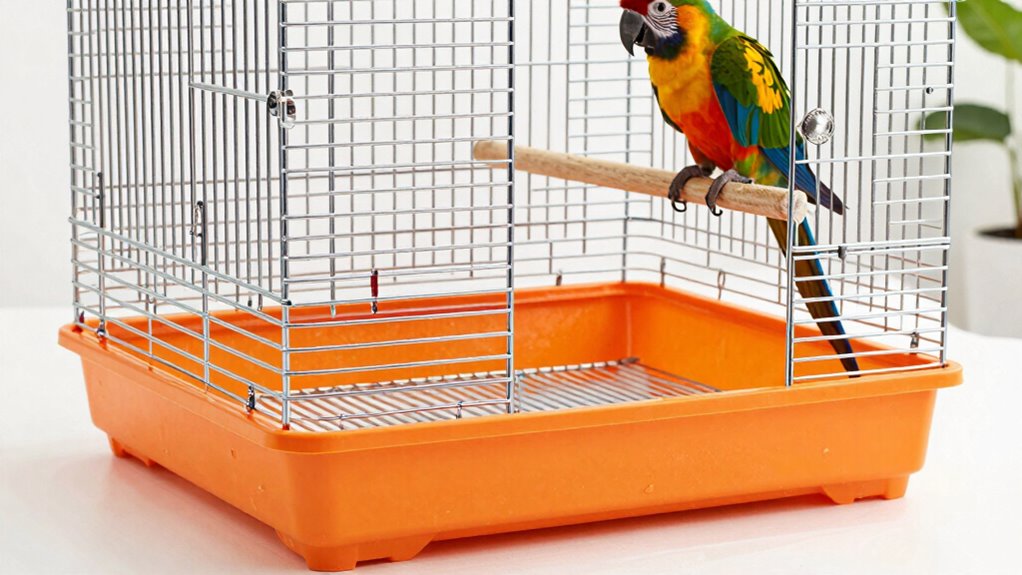
Choosing the right cage size is essential because a too-small cage can restrict your parrot’s movement, leading to stress and health issues. When selecting a cage, consider your parrot’s size and activity level to guarantee they have enough space to stretch their wings and move freely. Proper cage size also supports healthy diet planning, making it easier to provide a balanced diet with appropriate perches and feeding stations. Additionally, a spacious cage allows for easier access during veterinary care, reducing stress during checkups. An appropriately sized cage promotes mental stimulation and physical activity, which are crucial for your parrot’s happiness and well-being. Furthermore, selecting a cage that accommodates parrot-safe accessories can significantly enhance their environment. Proper cage dimensions can also facilitate proper ventilation, ensuring your bird remains comfortable and healthy. Considering cage security features is also important to prevent accidental escapes and safeguard your pet. Investing in the right size can also help prevent health problems and make caring for your feathered friend more manageable. Providing ample space can also enhance your parrot’s comfort and overall quality of life. Additionally, choosing a cage with adequate bar spacing ensures your parrot’s safety by preventing escapes or injuries.
What Is the Correct Bar Spacing for Parrot Cages?
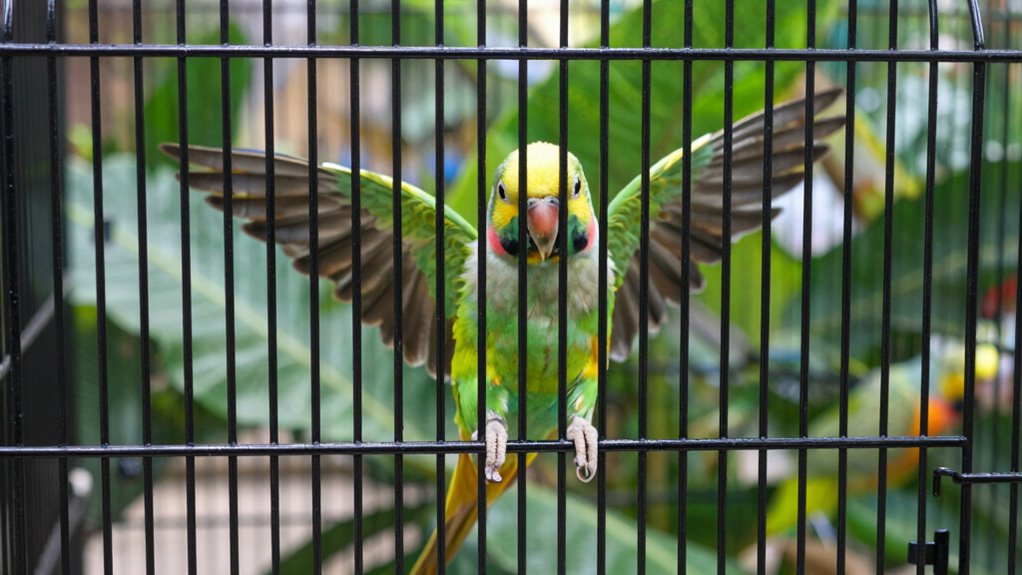
Selecting the correct bar spacing is crucial to prevent your parrot from escaping or getting stuck, which can cause injury or stress. For most parrots, a bar spacing of ½ to ¾ inch works well, guaranteeing feather health by preventing toes or feathers from getting caught. Smaller birds like conures need narrower spacing, while larger parrots require wider gaps. Proper spacing also makes cage cleaning easier and reduces debris buildup. Consider this table:
| Parrot Size | Ideal Bar Spacing | Feather Health Impact | Cleaning Ease | Safety Level |
|---|---|---|---|---|
| Small | ¼ – ½ inch | Prevents feather damage | Easier | High |
| Medium | ½ inch | Protects toes and feathers | Moderate | Very high |
| Large | ¾ inch | Ensures safety from sticking | Slightly harder | Highest |
| Very Large | 1 inch | Max safety, easy cleaning | Moderate | Maximum |
| Extra Large | 1½ inches | Best for large parrots | Challenging | Optimal |
How to Determine the Ideal Cage Width for Free Movement
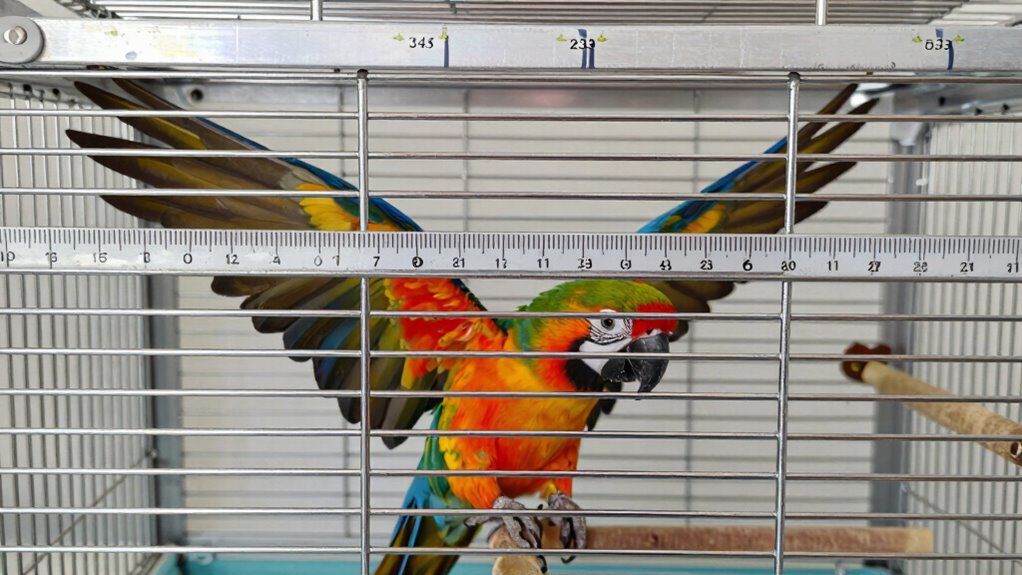
Ensuring your parrot has enough space to move freely inside its cage is just as important as proper bar spacing. The ideal cage width allows your bird to stretch its wings and engage in bird flight without feeling cramped. A spacious cage also promotes natural movement and helps prevent stress. When choosing the right width, consider your parrot’s size and activity level. A wide cage encourages healthy activity, which is vital for your bird’s physical and mental well-being. A spacious cage also improves cage ventilation, reducing the buildup of odors and maintaining fresh air circulation. Adequate width encourages healthy activity and keeps your bird happy. Remember, a cage that’s too narrow limits movement, affecting both bird flight and overall well-being. Prioritize width to create a comfortable environment that supports your parrot’s physical needs and promotes natural behaviors. Proper cage dimensions are essential for supporting your bird’s health and happiness, including cage ventilation and airflow. Additionally, selecting a cage with appropriate bar spacing prevents potential injuries and escapes, ensuring your bird’s safety and comfort. Ensuring proper cage design can further enhance your bird’s overall well-being by promoting better airflow and ease of cleaning.
How Much Wing Room Does Your Parrot Need? Ensuring Adequate Clearance
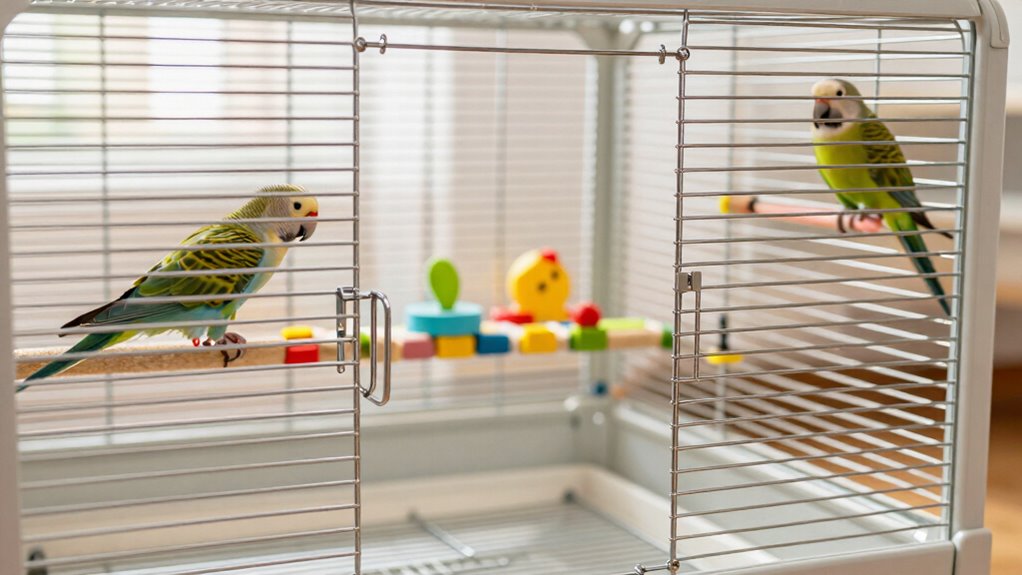
To keep your parrot comfortable and healthy, providing enough wing room is essential. Adequate wing clearance guarantees your bird has enough flight space to stretch and move naturally without feeling restricted. Insufficient flight space can lead to stress, boredom, and health issues. A good rule of thumb is to allow at least the wingspan plus a little extra room for maneuverability. This extra space helps prevent injuries and encourages natural flight behaviors. Remember, every species has different needs; larger parrots require more wing room to stay active and happy. Ensuring proper wave and wind conditions can also enhance your bird’s flying experience and overall well-being. Additionally, providing an environment with suitable airflow can improve your parrot’s comfort during flight. Proper enclosure design plays a vital role in maintaining safe and comfortable flight space for your bird. By prioritizing proper wing clearance, you promote a healthier, more vibrant bird that can stretch its wings freely and maintain good physical condition. Proper enclosure size is crucial for supporting your parrot’s natural behaviors and preventing potential injuries. Moreover, selecting appropriate materials for your cage can contribute to a safer and more comfortable environment for your pet.
Step-by-Step: How to Measure Your Parrot and Select the Right Cage Dimensions

To choose the right cage, you first need to measure your parrot accurately. Focus on their height, wingspan, and overall length to determine the minimum cage size. Once you have these measurements, you can select a cage that provides ample space for your bird to move comfortably. Additionally, considering air quality is essential to ensure a healthy environment for your parrot, especially if the cage is kept indoors for extended periods. Ensuring proper fiber intake within the cage environment can also promote your parrot’s digestive health and overall well-being. Proper ventilation helps prevent respiratory issues and maintains a fresh atmosphere inside the cage. Incorporating appropriate cage materials can further enhance safety and durability for your bird. Regularly monitoring your cage’s environment and adjusting it as needed is crucial for maintaining optimal bird health.
Measuring Your Bird
Before choosing a cage, you need to accurately measure your bird to make certain it has enough space to move comfortably. Proper measurement supports feather health and enhances cage aesthetics. To do this:
- Measure your bird’s height from the top of the head to the base of the tail while standing naturally.
- Record the wingspan by gently extending the wings without forcing them, from tip to tip.
- Note the bird’s weight using a small scale to ensure the cage accommodates their overall size and activity level.
These measurements help you select a cage that provides ample space for movement and comfort. Accurate sizing promotes feather health and creates a visually appealing environment for your bird.
Determining Cage Size
Choosing the right cage size begins with accurate measurements of your parrot. To determine the proper dimensions, consider your bird’s length, wingspan, and height while perched. A larger cage promotes better bird nutrition by allowing space for toys and foraging activities, supporting overall health. Measure the cage’s width, depth, and height, ensuring there’s enough room for your parrot to stretch and move freely. Remember, a bigger cage makes cage cleaning easier, reducing mess buildup and keeping your bird healthier. Avoid cages that are too small, which can cause stress and health issues. Proper sizing guarantees your parrot has ample space for activity, while also making maintenance straightforward. Accurate measurements help you select a cage that balances comfort, health, and ease of cleaning.
Common Mistakes to Avoid When Picking a Parrot Cage
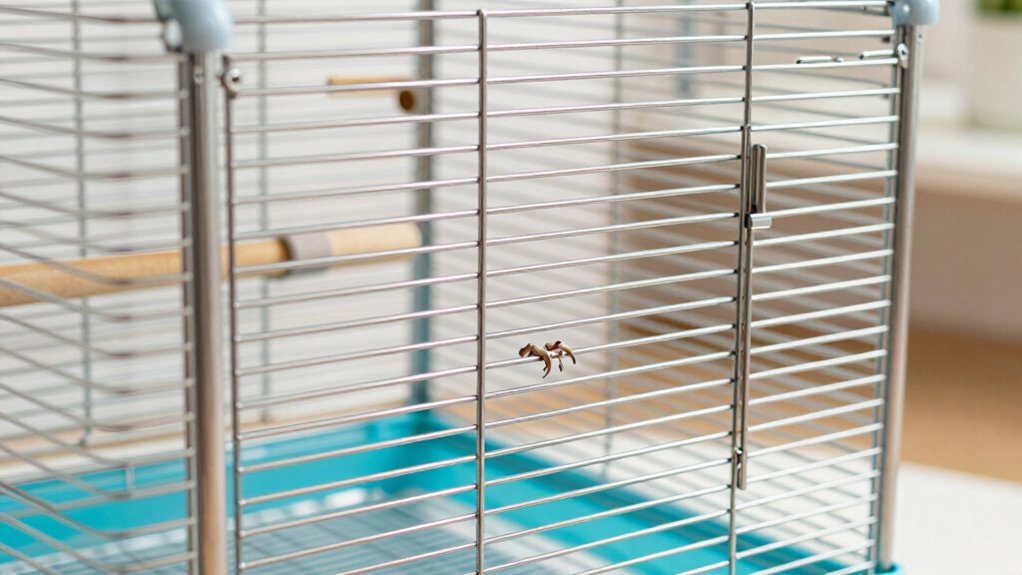
Many pet owners overlook the importance of space requirements and parrot comfort when choosing a cage. Selecting a cage that’s too small or cramped can stress your bird and limit its movement. To guarantee your parrot’s well-being, avoid these common mistakes and prioritize proper sizing and comfort.
Ignoring Space Requirements
Have you considered how much space your parrot truly needs to thrive? Ignoring space requirements can lead to space neglect, impacting your bird’s health and happiness. A cramped cage may look aesthetically pleasing but can cause stress and restrict movement. When selecting a cage, avoid these common mistakes:
- Choosing a cage that’s too small, limiting flight and exercise.
- Overlooking the importance of horizontal space for wing expansion.
- Prioritizing cage aesthetic over functional space, risking your parrot’s well-being.
Overlooking Parrot Comfort
When selecting a cage, it’s easy to focus on size and forget about your parrot’s comfort inside it. Overlooking their comfort can lead to issues like feather health problems, since cramped or poorly designed cages can cause feathers to become damaged or unkempt. A cage that’s too small or awkwardly arranged may restrict movement, stressing your bird and impacting their overall well-being. Additionally, cage aesthetics matter—an unattractive or cluttered cage can make your space less inviting, discouraging regular interaction. Prioritize a cage that provides ample room for stretching and flying, with a design that promotes feather health and blends well into your home. Comfortable, well-thought-out cages keep your parrot happy, healthy, and visually appealing. Recognizing the importance of quality assessment can help ensure you’re choosing a cage that supports your parrot’s well-being.
How to Adjust Cage Size as Your Parrot Grows and Becomes More Active
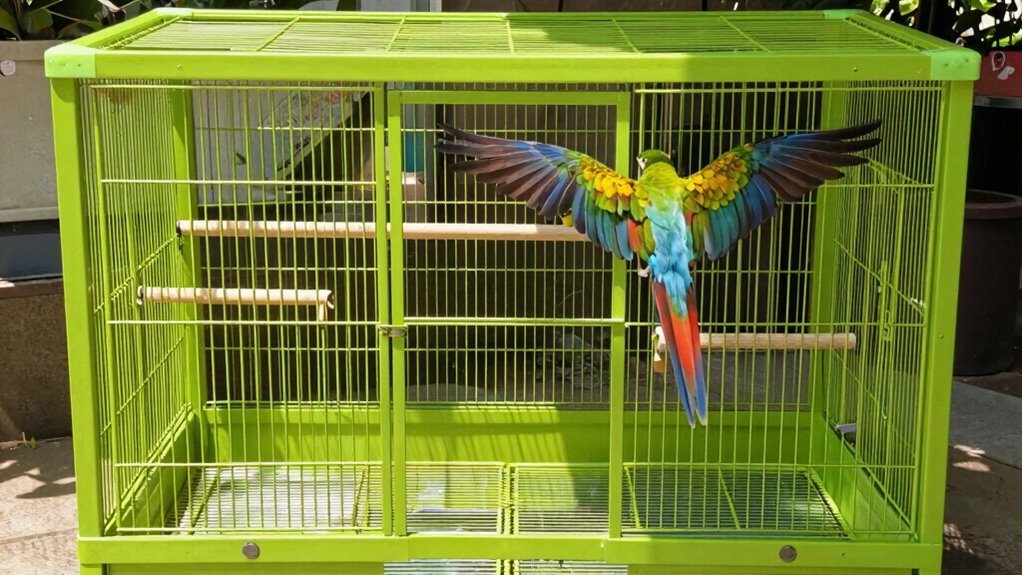
- Upgrade to a bigger cage with ample width and height for flight and stretching, providing adequate space for your bird’s natural movements. Additionally, selecting a cage with proper ventilation can help maintain healthy air quality.
- Add or rearrange cage accessories like perches, swings, and toys to encourage movement.
- Make sure the cage’s bar spacing is appropriate for your bird’s size, preventing escapes or injury.
- Consider smart home automation solutions to monitor and improve your parrot’s environment, ensuring optimal conditions for health and activity.
Regularly reassessing and enlarging the cage as your bird matures helps promote natural behaviors and keeps your parrot healthy and happy.
How Cage Size Affects Your Parrot’s Behavior and Overall Wellbeing
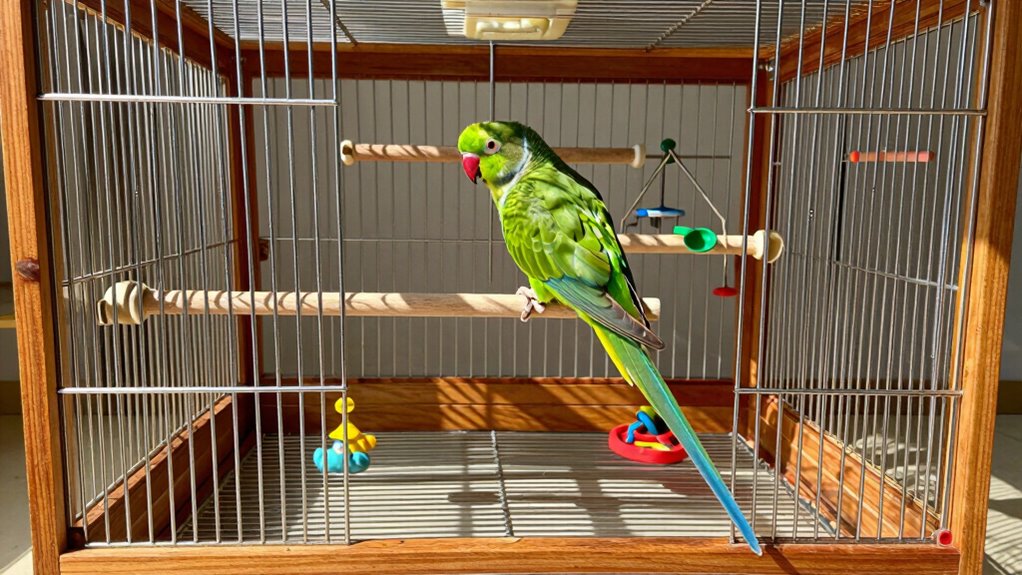
A larger cage gives your parrot more space to move and stretch, which keeps them active and happy. When the cage is roomy enough, your bird experiences less stress and feels more secure. This space also supports healthy behavioral development, encouraging natural habits like flying and exploring. Additionally, proper cage ventilation ensures fresh air circulation, contributing to your bird’s overall health and comfort. Ensuring the right cage size is crucial for promoting your parrot’s physical activity and mental wellbeing.
Space and Movement Freedom
The size of your parrot’s cage directly influences their ability to move freely and stay healthy. When your bird has ample space, they can stretch their wings, hop around, and engage in natural behaviors that support their wellbeing. To maximize their space and movement freedom, consider these factors:
- Ensure the cage is large enough for your bird to spread their wings fully without touching the sides.
- Provide varied perches and toys to encourage activity and mental stimulation.
- Regularly clean the cage to prevent the buildup of waste, which can impact bird nutrition and overall health.
A spacious cage promotes better bird nutrition by reducing stress and enabling natural foraging behaviors, while proper cage cleaning maintains a healthy environment.
Stress Reduction Benefits
Choosing a cage that provides enough space can considerably reduce your parrot’s stress levels. A well-sized parrot enclosure allows your bird to move freely, stretch, and engage in natural behaviors, which helps prevent anxiety and boredom. When selecting a cage, guarantee it has proper cage ventilation to promote fresh air circulation, reducing the risk of respiratory issues and discomfort. Adequate ventilation also helps maintain a stable environment, minimizing stress caused by drafts or stale air. A spacious cage combined with good airflow creates a comfortable habitat, making your parrot feel secure and less anxious. Ultimately, providing a thoughtfully sized cage with proper ventilation supports your bird’s mental wellbeing, promoting a calmer, healthier, and more content companion.
Behavioral Development Support
Since a spacious cage allows your parrot to move freely, it directly influences its behavioral development and overall wellbeing. A large cage promotes healthy feather grooming by giving your bird space to stretch and preen without restrictions. It also helps manage noise levels, as a bigger environment can reduce stress-induced loudness. To support behavioral growth:
- Provide ample space for wing-flapping and exploring, preventing boredom.
- Ensure there’s enough room for perches and toys to stimulate mental activity.
- Allow for natural feather grooming movements, reducing feather plucking or over-preening.
A well-sized cage encourages positive behaviors, minimizes stress, and nurtures your parrot’s social and physical health. Proper space is key to fostering a happy, well-adjusted companion.
Tips for Combining the Right Cage Size With Enrichment and Perches
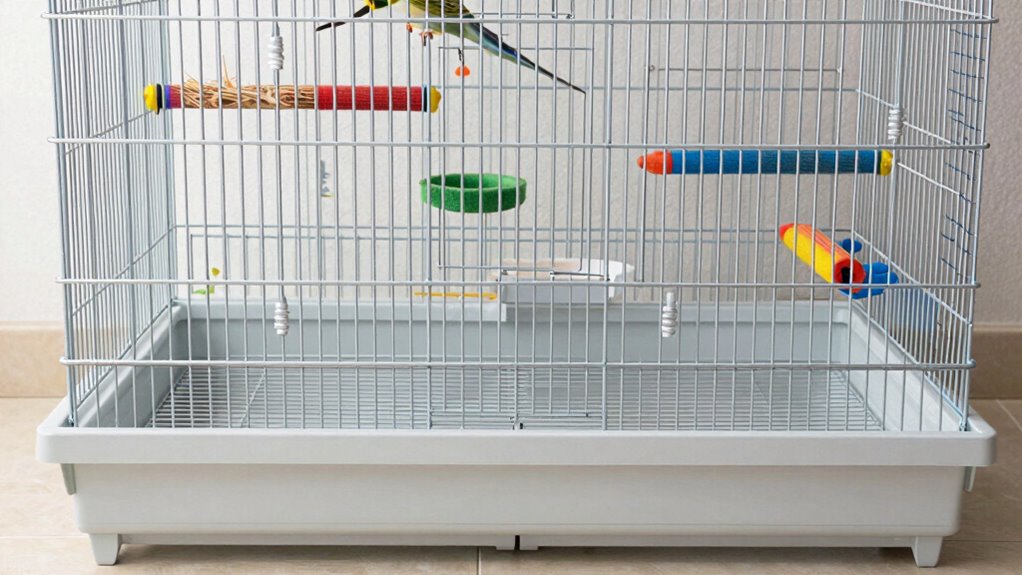
To create a stimulating environment for your parrot, it’s essential to match the cage size with appropriate enrichment and perches. Start by choosing cage accessories that provide variety, such as different perch thicknesses, swing toys, and foraging items, to keep your bird mentally and physically active. Ascertain perches are placed at varying heights and distances to promote movement and comfort. When adding new accessories, follow cleaning tips to prevent buildup of droppings and bacteria, maintaining a healthy space. Larger cages allow for more diverse enrichment options, so select toys and perches that fit comfortably without overcrowding. Regularly rotate accessories to keep your parrot engaged and prevent boredom, making the cage a stimulating yet safe environment.
When and How to Upgrade Your Parrot’s Cage for Better Sizing and Comfort
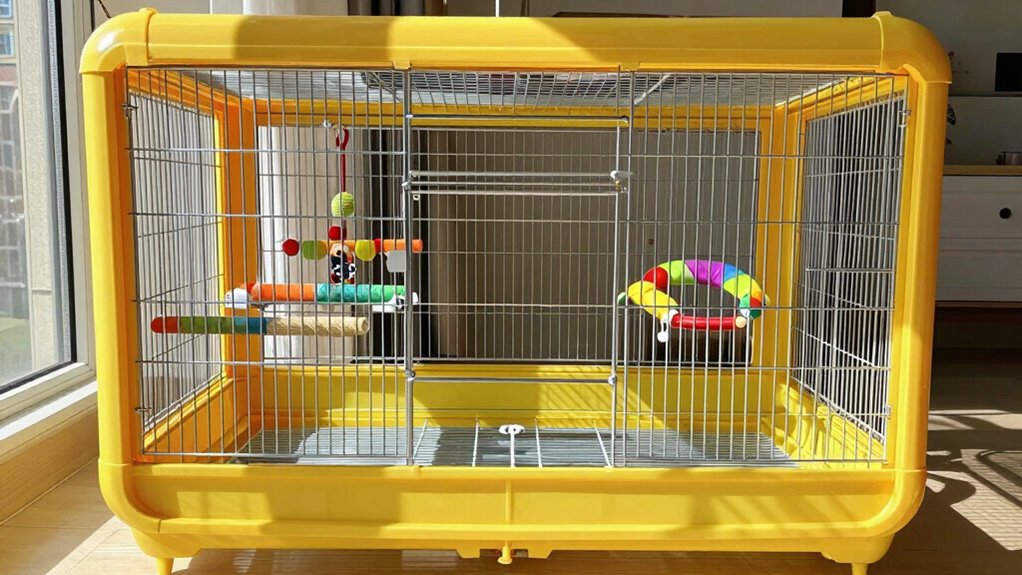
As your parrot’s needs and activity levels change, it’s important to recognize when an upgrade to a larger, more comfortable cage is in order. Signs include excessive boredom, destructive behavior, or difficulty fitting cage decor and toys. When upgrading, consider these steps:
- Choose a cage with enough space for new toys and perches, ensuring wing clearance and bar spacing are appropriate.
- Transition gradually by introducing the new cage alongside the current one, minimizing stress.
- Adjust your cleaning routines to accommodate the larger space, making maintenance easier and more effective.
A bigger cage not only improves your bird’s comfort but also allows for better placement of cage decor. Regular cleaning ensures your parrot’s environment remains healthy and inviting.
Frequently Asked Questions
How Does Cage Size Influence a Parrot’s Lifespan?
A larger cage positively impacts your parrot’s lifespan by providing enough space for proper exercise, which supports healthy muscles and bones. It also helps meet their nutrition requirements by allowing room for varied toys and food items. Plus, a spacious cage encourages social interaction, reducing stress and boredom. When your parrot feels comfortable and stimulated, it stays healthier longer, increasing its overall lifespan.
Can a Too-Large Cage Cause Bird Stress?
Imagine a spacious yet cozy nest where your bird feels secure, not overwhelmed. A cage that’s too large can make your parrot feel lost or anxious, leading to stress. To prevent this, prioritize proper cage placement and include enriching activities that mimic natural behaviors. By striking the right balance, you create a safe environment where your parrot feels comfortable, engaged, and happy without feeling overwhelmed by excessive space.
What Materials Are Best for Safe, Spacious Cages?
You should choose cages made from safe, parrot-proof materials like powder-coated metal or stainless steel, which are durable and non-toxic. Avoid cages with painted or coated surfaces that may chip and harm your bird. Guarantee cage material safety by selecting sturdy, non-porous materials that are easy to clean and resistant to chewing. These options keep your parrot safe, healthy, and comfortable in a spacious environment.
How Often Should I Clean and Inspect Cage Dimensions?
You should clean your cage at least once a week to keep it hygienic and free of bacteria. Inspect the cage dimensions regularly, ideally every month, to guarantee bars, doors, and perches remain secure and properly spaced. Maintaining a consistent cleaning schedule and inspection frequency helps prevent accidents and keeps your parrot healthy and comfortable. Remember, attentive care ensures a safe, spacious environment for your bird.
Are Travel Cages Suitable as Permanent Parrot Homes?
Travel cages aren’t suitable as permanent habitats—they’re like a suitcase, meant for short trips, not everyday living. They lack the space, stability, and enrichment your parrot needs to thrive. If you try to make a travel cage their permanent home, you risk stress and health issues. Instead, invest in a spacious, well-designed cage that provides enough room for your bird to stretch, play, and feel truly at home.
Conclusion
Choosing the right cage size is like finding the perfect fit for your parrot’s happiness and safety. When you pay attention to bar spacing, width, and wing clearance, you create a cozy, secure home where your bird can thrive. Keep measuring and adjusting as your parrot grows, and watch how their behavior blossoms like a beautiful song. A well-sized cage is the foundation for a joyful, healthy feathered friend.
Fall Picks
fall essentials
As an affiliate, we earn on qualifying purchases.