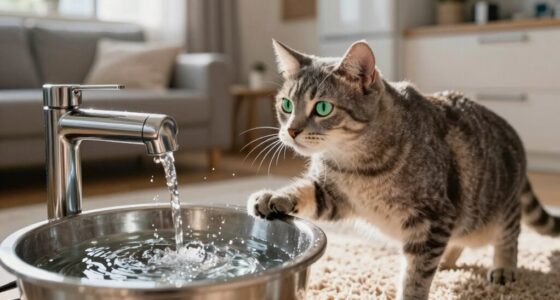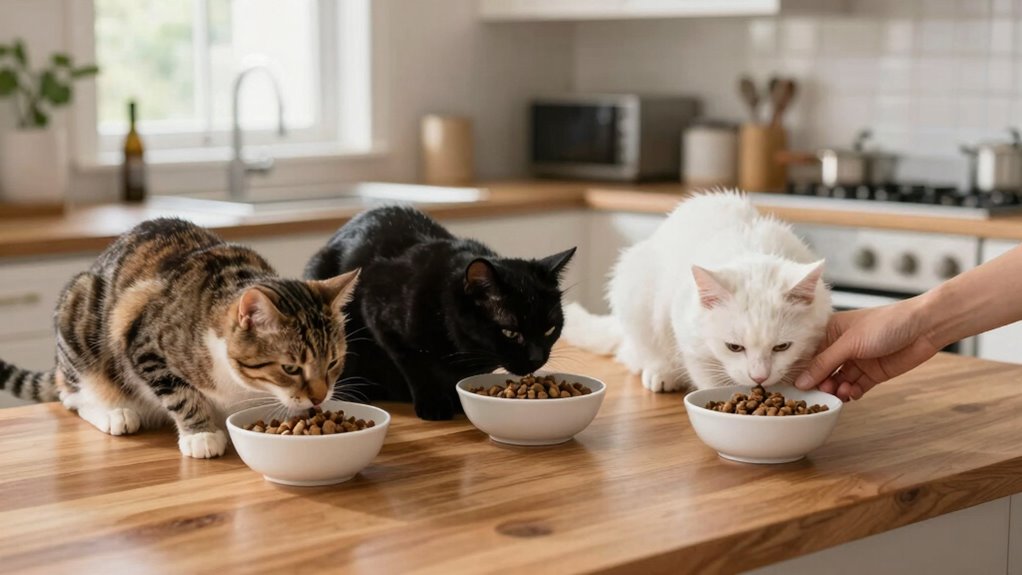

To reduce tension among your pets during mealtime, establish consistent feeding schedules and create separate feeding areas. Measure portions carefully, tailoring servings to each pet’s needs to avoid food disputes. Keep the environment calm by avoiding sudden disruptions and praising calm behavior. Physical separation helps monitor individual nutrition and prevents competition. By maintaining routine and understanding your pets’ behaviors, you can foster harmony at mealtime and strengthen their trust—discover more tips to improve your pets’ feeding harmony below.

Get pet supplies delivered free with Prime
- Fast, free delivery on millions of items
- Prime Video, Amazon Music and more included
- Member-only deals all year
Key Takeaways
- Establish fixed feeding times for each pet to create predictability and reduce competition.
- Feed pets in separate areas to prevent territorial disputes and monitor individual nutrition.
- Follow consistent routines to promote security and lessen stress during mealtime.
- Use calm, quiet environments to foster a peaceful atmosphere and minimize tension.
- Reinforce calm behavior with gentle praise to encourage relaxed mealtime interactions.

Balancing feeding routines for multiple pets can be challenging, especially when tensions run high during mealtime. When you have more than one animal, each with different needs, maintaining harmony requires a clear strategy. A key part of this is managing pet nutrition and establishing consistent feeding schedules. Properly aligned routines help prevent disputes over food and guarantee all your pets receive the right nutrients for their health.
Start by setting specific feeding times for each pet. Consistent schedules create predictability, so your animals know when to expect their meals. This reduces anxiety and territorial behavior, which often spike when pets feel uncertain about mealtime. If possible, feed your pets in separate areas or rooms. This physical separation minimizes competition and allows each animal to eat at their own pace without feeling threatened or rushed. It also makes it easier to monitor individual pet nutrition, assuring each pet gets the right amount and type of food. Establishing predictable routines can also help your pets develop a sense of security and trust during feeding times.
Set specific feeding times and separate areas to reduce anxiety and promote harmony among your pets.
Choosing the right food for each pet is vital. Different animals have different dietary needs, so selecting appropriate portions and ingredients will help maintain their health. For example, some pets may require low-fat diets, while others need high-protein options. When you stick to tailored feeding schedules and pet nutrition plans, you reduce the chances of one pet dominating the food or overeating. This consistency helps maintain peace and keeps your pets satisfied, both physically and emotionally. Incorporating nutritional balance into your feeding routine ensures each pet’s specific health requirements are met, which can lessen competition and tension. Additionally, providing appropriate food variety can help cater to individual preferences and reduce food-related disputes.
You should also consider portion control. Measure each meal carefully based on your pet’s size, age, and health requirements. Overfeeding can lead to obesity and health issues, while underfeeding causes hunger and frustration. When each pet receives the right portion, and you stick to a regular schedule, it minimizes food-related conflicts. It’s also helpful to clean up leftover food promptly to prevent scavenging or resource guarding behaviors. Paying attention to your pets’ behavior during mealtime can offer valuable insights into their individual needs and preferences. Observing their reactions can inform you whether adjustments are necessary to further reduce tension.
Finally, pay attention to your pets’ behavior during mealtime. If you notice signs of stress or aggression, adjust your routines accordingly. Sometimes, a simple change in feeding times or location can make a big difference. Reinforcing calm behavior with gentle praise and avoiding sudden disruptions during meals can also promote a peaceful environment. Additionally, understanding multi-pet dynamics can help you develop better strategies for feeding and conflict prevention. By paying close attention to pet nutrition, maintaining consistent feeding schedules, and creating a calm mealtime atmosphere, you’ll substantially reduce tension among your pets and foster a happier, more harmonious household.
automatic pet feeder for multiple pets
As an affiliate, we earn on qualifying purchases.
As an affiliate, we earn on qualifying purchases.
Frequently Asked Questions
How Can I Tell if My Pets Are Truly Comfortable During Feeding?
You can tell your pets are comfortable during feeding if they eat calmly, with relaxed body language like loose tails and soft eyes. Observe their reactions to their dietary preferences—if they enthusiastically approach and enjoy their food, it’s a good sign. Make certain the feeding environment is quiet and stress-free, so they feel secure. When your pets eat peacefully, it indicates they’re truly comfortable during mealtime.
What Signs Indicate Feeding Routines Are Causing Stress Among Pets?
You might notice signs of stress among your pets if meal timing causes competition or anxiety, such as growling, avoiding food, or guarding bowls. Investigating whether bowl placement encourages territorial behavior can reveal underlying tension. If pets seem tense during feeding, adjusting meal timing to create calm, consistent routines and placing bowls in neutral areas can reduce stress. These steps help foster a peaceful feeding environment, supporting your pets’ comfort.
Are There Specific Feeding Schedules for Different Pet Species?
Yes, there are specific feeding schedules for different pet species. You should practice cross species feeding by offering individual meal times tailored to each pet’s needs. For example, dogs and cats often thrive on separate schedules, with consistent times that suit their digestion and activity levels. This approach minimizes competition and stress, promoting harmony. Adjust feeding routines based on each pet’s age, size, and health to guarantee a peaceful multi-pet environment.
How Do I Handle Aggressive Behavior During Feeding Times?
Did you know that 70% of pet conflicts happen during mealtime? To handle aggressive behavior, establish clear mealtime etiquette and guarantee each pet has its own space. Use treat training to reinforce calmness and positive behavior, rewarding quiet, respectful conduct. Avoid punishing aggressive actions, and instead, redirect your pet’s focus with treats. Consistency and patience help your pets learn proper mealtime manners, reducing tension and promoting harmony during feeding times.
Can Feeding Routines Affect Pets’ Long-Term Health and Behavior?
Yes, your feeding routines can impact your pets’ long-term health and behavior. Using proper feeding accessories guarantees meals are stress-free and help prevent conflicts, while incorporating dietary supplements can support overall health. Consistent routines reduce anxiety, promote good digestion, and foster positive interactions among pets. Over time, these habits can lead to healthier, calmer pets who form better bonds, securing their well-being and harmonious multi-pet living.
Conclusion
So, you’d think sharing a meal would bring your pets closer, right? Instead, it often stirs up tension, proving that even feeding time isn’t foolproof. But don’t worry—by setting clear routines, you might just outsmart the chaos and turn mealtime into a peaceful moment. Ironically, the very act meant to bond them could be what keeps them apart—unless you’re clever enough to change that. After all, peace at the bowl is worth the effort!
Columbus Day / Indigenous Peoples' Day Picks
long weekend sales
As an affiliate, we earn on qualifying purchases.