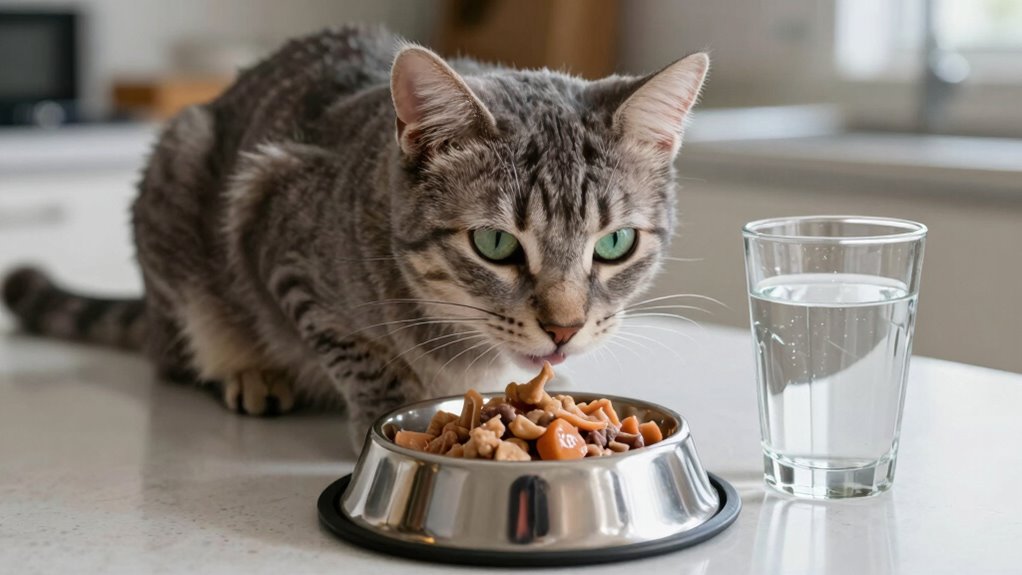
To keep your cat well-hydrated, feeding wet food is one of the easiest and most natural ways to boost water intake. It contains high moisture content that supports kidney health and digestion. Additionally, providing fresh water through multiple fountains and creating accessible water stations encourages your cat to drink more comfortably. By using these simple tips, you’ll help prevent dehydration and its health risks. Make certain exploring more effective strategies to ensure your cat stays hydrated and healthy.
Key Takeaways
- Wet food contains high water content that naturally boosts your cat’s hydration levels.
- Incorporating wet food helps prevent dehydration-related issues like dry gums and sunken eyes.
- Using multiple fresh water sources and fountains encourages cats to drink more regularly.
- Proper placement of water stations in quiet, accessible areas promotes consistent water intake.
- Recognizing dehydration signs early and combining wet food with hydration tips safeguards your cat’s health.
How to Recognize Dehydration in Your Cat and When to Seek Help
Dehydration in cats can develop quickly, so it’s important to recognize the signs early. Look for signs of dehydration such as dry gums, sunken eyes, and lethargy. If your cat’s skin doesn’t bounce back quickly when pinched or if they seem less active, these are warning signs. Emergency indicators include persistent vomiting, diarrhea, or difficulty breathing. A dry, sticky tongue and decreased urination also signal serious dehydration. If you notice any of these symptoms, act immediately. Contact your veterinarian without delay, as severe dehydration can lead to organ failure. Monitoring your cat’s hydration status regularly helps catch issues early, ensuring you can provide prompt care and prevent complications. Recognizing these signs saves your cat’s life. Additionally, understanding hydration monitoring can help you better assess your cat’s health and hydration needs during daily routines. Staying informed about water intake and maintaining a consistent hydration routine can make a significant difference in your cat’s well-being. Being aware of dehydration risks and how to prevent them is essential for maintaining your cat’s overall health.
Why Wet Food Is a Natural Way to Keep Your Cat Hydrated
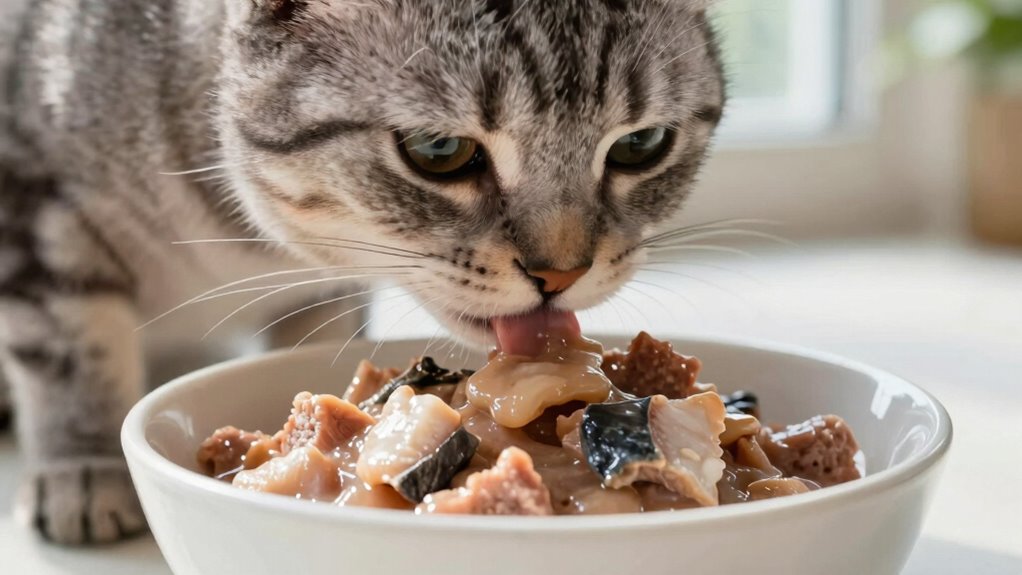
Have you ever wondered why wet cat food is often recommended for hydration? It’s because wet food plays a key role in supporting proper cat nutrition while naturally boosting hydration. Unlike dry kibble, which contains less moisture, wet food provides a significant water content that helps keep your cat’s body hydrated. Hydration is vital for maintaining kidney health, digestion, and overall well-being. When your cat eats wet food, they get essential nutrients along with added water, making it easier to meet their hydration needs without forcing extra water intake. Incorporating wet food into your cat’s diet ensures they stay well-hydrated, supporting their health and helping prevent dehydration-related issues. It’s a simple, natural way to promote ideal hydration through proper cat nutrition. Additionally, Free Floating environments can influence your cat’s hydration habits and overall health. Providing natural water sources like wet food can also encourage better hydration behaviors, especially in environments where water availability might be inconsistent, and understanding how environmental factors influence hydration can help you create a more supportive living space for your feline friend. For example, environmental conditions such as temperature and humidity levels can significantly impact a cat’s water intake needs, making it important to adapt their diet accordingly.
Simple Tips to Encourage Your Cat to Drink More Water
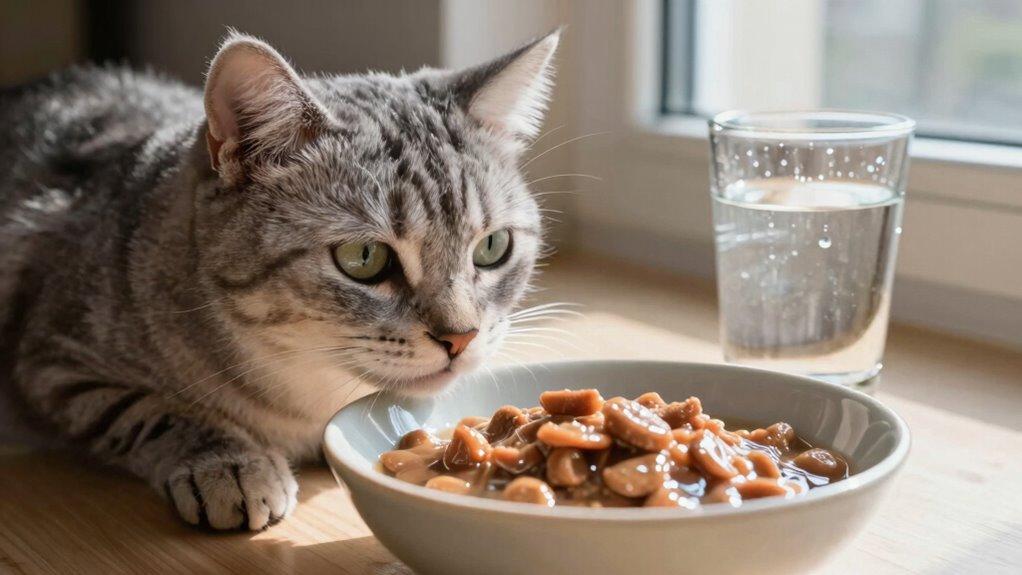
Encouraging your cat to drink more water can be straightforward with a few simple strategies. First, dispel hydration myths—cats often resist water due to misconceptions. Instead, highlight water bottle benefits, like fresh, flowing water that appeals to their instincts. Place multiple water sources around your home, using different bowls or fountains to entice drinking. Keep water clean and fresh daily, as cats prefer it that way. Incorporating indoor air quality considerations, such as avoiding drafts near water sources, can also make drinking more comfortable for your cat. Moreover, using energy-efficient water fountains can encourage more frequent drinking while supporting your commitment to sustainable solutions. Additionally, understanding voice over script optimization can help you communicate these tips effectively when sharing advice with fellow pet owners. Ensuring proper hydration awareness helps prevent health issues and keeps your feline happy and healthy.
Creating a Water Station Your Cat Will Love
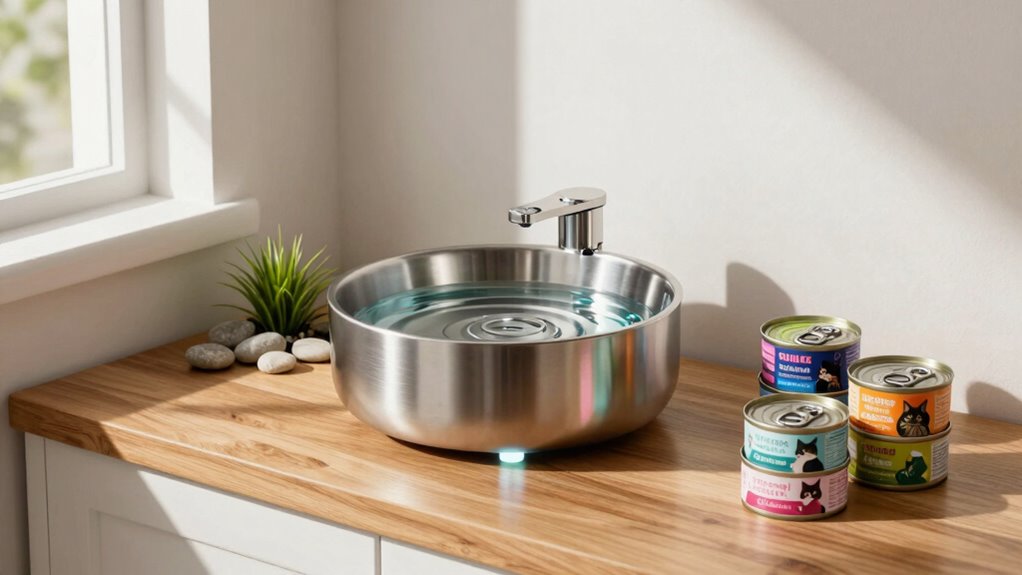
Creating a water station your cat will love starts with selecting the right location. Place it in a quiet, accessible spot away from the litter box and food bowls. Cats prefer fresh water in a peaceful environment, so avoid busy areas. To make the station more appealing, consider enriching water stations with features like interactive water fountains, which encourage cats to drink more by providing a flowing, enticing water source. These fountains not only keep water fresh but also stimulate your cat’s natural instincts. Keep the station clean and refill it regularly to maintain appeal. Using multiple stations around your home can also help ensure your cat always has easy access to hydration, making it more likely they’ll drink enough throughout the day. Proper placement of your water station can significantly influence your cat’s drinking habits. Additionally, ensuring the water remains fresh and clean encourages consistent drinking and supports overall hydration. Incorporating creative storytelling into the way you present your pet’s environment can also foster positive associations with drinking from the station, encouraging better hydration habits. A well-designed station can also incorporate shop fundamentals like durable, easy-to-clean materials to ensure longevity and hygiene.
Common Mistakes That Can Dehydrate Your Cat and How to Avoid Them
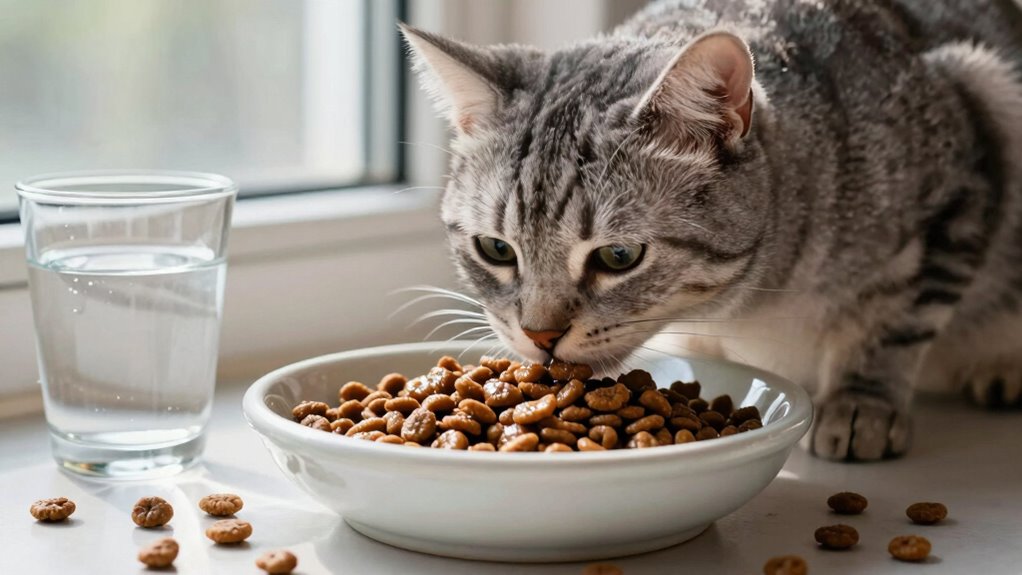
While setting up a water station is a great step toward keeping your cat hydrated, certain common mistakes can still lead to dehydration. One hydration myth is that cats naturally drink enough water on their own, but many don’t, which limits their water intake. Avoid assuming your cat will hydrate itself without encouragement. Another mistake is providing stale or low-quality water; cats prefer fresh, clean water and may refuse to drink if it’s unappealing. Additionally, placing water bowls in noisy or inaccessible areas can discourage drinking. Ensuring your cat has constant access to fresh water, avoiding these hydration myths, and encouraging water intake through wet food or fountains can prevent dehydration and support their health. Proper hydration habits are essential for maintaining your cat’s overall well-being. Moreover, understanding animal companionship and their role in emotional support can motivate pet owners to prioritize hydration and care.
Frequently Asked Questions
Can Certain Cat Breeds Be More Prone to Dehydration?
Some cat breeds are more prone to dehydration due to breed differences and hydration genetics. For example, breeds like the Siamese or Sphynx tend to have thinner coats and unique metabolic traits that can make them more susceptible to dehydration. You should monitor these breeds closely, make sure they have plenty of fresh water, and consider wet food to support their hydration needs. Knowing your cat’s breed traits helps you prevent dehydration effectively.
How Does Humidity Affect My Cat’s Hydration Needs?
In a humid climate, your cat’s hydration needs increase because high humidity slows down water evaporation from their body, making it harder for them to stay hydrated. You should encourage your cat to drink more water and provide fresh, clean water frequently. Using a cat fountain can also help, as moving water entices cats to drink more, especially when humidity affects their natural hydration balance.
Are There Specific Signs That Indicate a Water Intake Problem?
About 50% of cats with urinary issues show lethargy symptoms, indicating dehydration. You should watch for signs like decreased water intake, vomiting, or straining during urination. If your cat seems less active or avoids drinking water, these could signal a water intake problem. Promptly consult your vet if you notice these signs to prevent health complications and guarantee proper hydration.
Is It Safe to Add Flavor to My Cat’s Water?
Yes, it’s safe to add flavor to your cat’s water, but you should prioritize flavor safety. Use natural water additives like a splash of tuna juice or low-sodium broth, avoiding artificial flavors or sweeteners. These options can encourage your cat to drink more without risking health issues. Always check ingredient labels and consult your vet if you’re unsure about specific flavorings, ensuring your cat stays well-hydrated safely.
How Often Should I Change My Cat’s Water to Keep It Fresh?
You should change your cat’s water daily to guarantee water freshness and promote proper hydration. Fresh water encourages your cat to drink more often, preventing dehydration. Even if your cat isn’t drinking much, changing the water regularly keeps it clean and appealing. Remember, stale water can deter hydration, so make it a habit to refresh their bowl at least once every 24 hours for ideal health.
Conclusion
By paying attention to your cat’s hydration cues and providing fresh water, tasty wet food, and inviting water stations, you create a soothing oasis for them. Imagine your feline lounging happily, paws dipped in a crystal-clear bowl, feeling refreshed and content. When you avoid common mistakes, you nourish their body and spirit. With these simple tips, you turn everyday hydration into a loving ritual that keeps your cat vibrant and thriving.