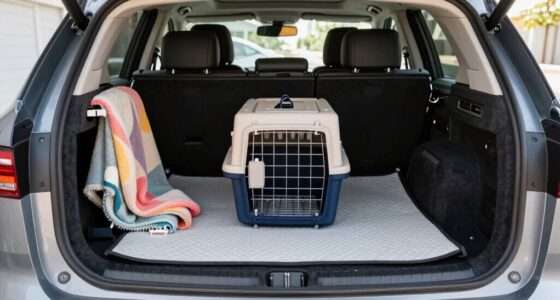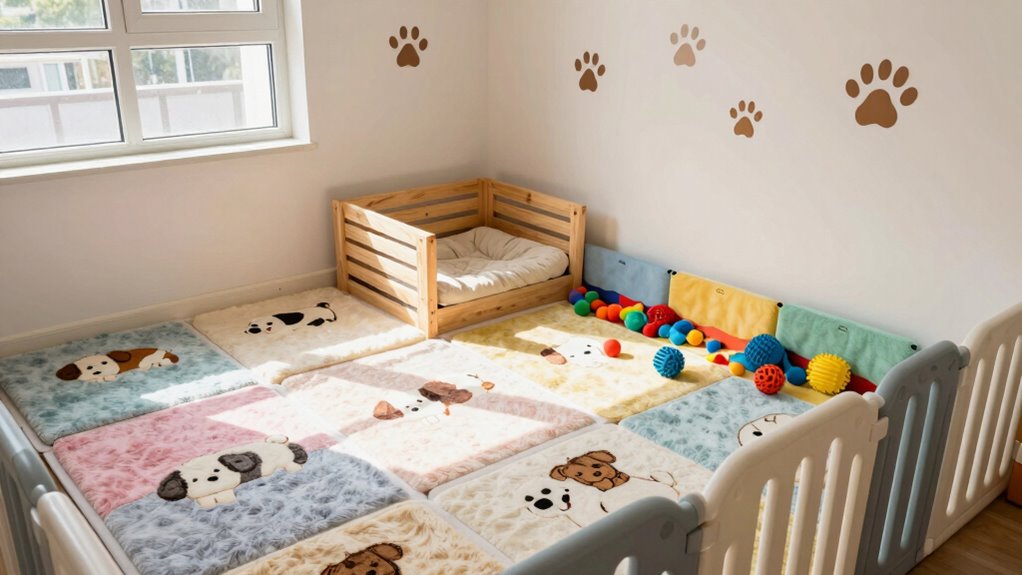

To set up a puppy zone in one room, start by removing hazards like small objects, household cleaners, and toxic plants. Choose a well-ventilated, easy-to-clean space, and set up a comfy bed or mat. Use baby gates or pet pens to contain your puppy, and provide durable, puppy-proof toys. Regularly inspect the area for new hazards and adjust as your puppy grows. Continuing with these tips will help you create a safe, nurturing space for your pup.

Get pet supplies delivered free — and shop member deals
- Fast, free delivery on millions of items
- Access to Prime Big Deal Days deals on October 6–7
- Prime Video, Amazon Music and more included
Key Takeaways
- Select a well-ventilated, easy-to-clean room with minimal hazards and enough space for play and rest.
- Remove small objects, toxic plants, household chemicals, and secure electrical cords before introducing the puppy.
- Set up a comfortable, washable bed or mat and puppy-proof toys that are durable and safe.
- Use barriers like baby gates or pet pens to contain the puppy within the designated zone.
- Gradually introduce the puppy to the space with treats, praise, and positive reinforcement to build familiarity and trust.
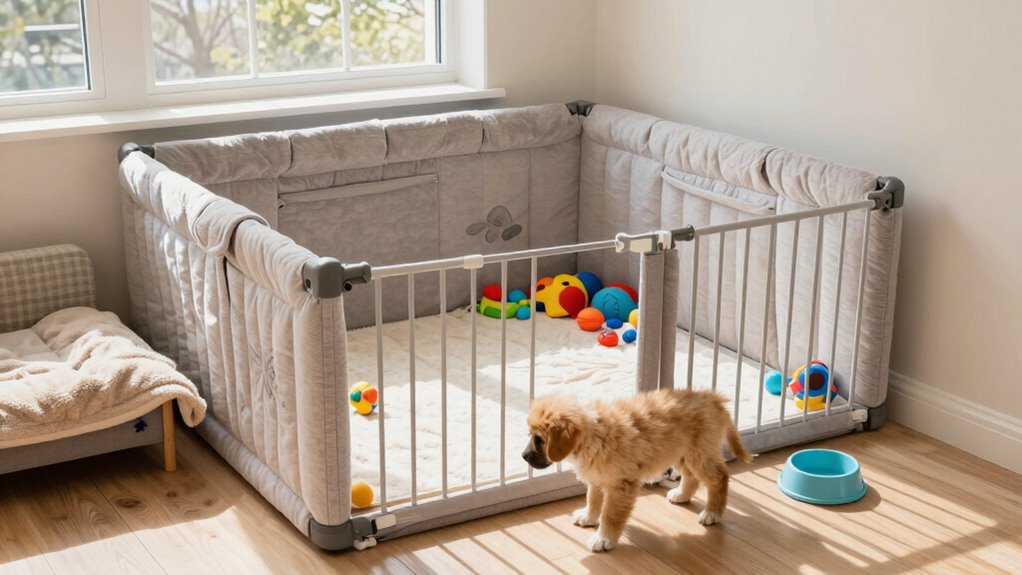
Creating a dedicated puppy zone is essential for safe and effective training. This space helps your puppy feel secure, limits their access to hazards, and makes housebreaking easier. To start, focus on puppy proofing essentials—removing any items that could be harmful or tempting for your puppy to chew or swallow. Small objects, electrical cords, household cleaners, and sharp items should be stored out of reach. You want to create a safe play area where your puppy can explore without risking injury or damage. Think of the zone as a mini sanctuary that balances fun and safety. Incorporating designated safe play areas with durable, puppy-proof toys can help prevent destructive chewing and keep your pup entertained. Designating a specific room as your puppy’s territory makes training more straightforward. Choose a space that’s easy to clean, well-ventilated, and not overly busy with household activity. Once you’ve picked the room, set up safe play areas by placing a comfortable, washable bed or mat for resting. Incorporate durable, puppy-proof toys to keep your pup entertained and prevent destructive chewing. Avoid toys with small parts that can be chewed off and swallowed. You might also set up a crate within this zone, which can serve as a safe retreat and aid in housebreaking. Safety is paramount when establishing your puppy zone. Cover electrical outlets with protectors and secure cords or hide them behind furniture. Use baby gates or pet pens to contain your puppy within the designated area, especially if you’re not able to supervise constantly. This containment helps prevent wandering into unsafe spots and keeps your puppy from getting into trouble when you’re busy. Keep cleaning supplies, medications, and other hazardous substances out of reach. You should also remove any plants that are toxic to dogs, ensuring the space remains a true safe play area. Additionally, puppy proofing can involve carefully inspecting the space for any overlooked hazards. Regularly checking your puppy’s environment and adjusting as they grow is important to maintain a safe environment that adapts to their developing needs. Establishing a consistent routine within this zone can also help your puppy feel more secure and understand boundaries. Incorporating positive reinforcement techniques during introductions can help your puppy associate the space with comfort and trust. Once everything is in place, introduce your puppy to the zone gradually. Encourage them to explore their new safe space with treats and praise. Keep the initial visits short and positive, so they associate the area with comfort and fun. Over time, this zone becomes a familiar environment where your puppy can relax, learn, and play safely. Consistently reinforce boundaries and safety rules within this space, making it a central part of your training routine. With careful planning and attention to puppy proofing essentials, you’ll create a secure and welcoming environment that supports your puppy’s development and your peace of mind.
As an affiliate, we earn on qualifying purchases.
Frequently Asked Questions
How Big Should the Puppy Zone Be?
You should aim for a puppy zone around 4×4 feet, providing enough space for their essentials without sacrificing safety. Focus on puppy proofing the area to prevent accidents, and optimize the space by including a cozy bed, toys, and water. Keep it manageable for you to clean and supervise, and expand the zone as your puppy grows or gets better at following boundaries. This way, your puppy stays safe and comfortable.
What Safety Hazards Should I Avoid?
Imagine you’re creating a safe harbor for your puppy, steering clear of hidden icebergs. You should puppy proof hazards like electrical cords, small objects, and toxic plants. Check furniture for loose parts or sharp edges that could hurt your pup. Keep cleaning supplies, medicines, and choking hazards out of reach. With vigilance, you turn your room into a secure haven, ensuring your puppy’s exploration is safe and joyful.
Can I Use Crate Training in the Zone?
Yes, you can definitely use crate training within your puppy zone. It promotes puppy socialization and helps establish boundaries. If you prefer crate alternatives, consider using playpens or baby gates to create a safe, contained area. These options allow your puppy to explore and socialize while feeling secure. Just make certain whatever you choose is comfortable, escape-proof, and free of hazards, making the zone a positive space for your pup.
How Many Toys Are Appropriate?
You should provide around 3 to 5 toys in your puppy’s zone, balancing stimulation with avoiding overstimulation. Imagine a playful puppy surrounded by a mix of soft chew toys, squeaky items, and interactive puzzles—each serving a different purpose. This variety supports healthy puppy behavior and keeps boredom at bay. Be sure to rotate toys regularly to maintain interest, ensuring your pup stays engaged and happy in their designated space.
Should I Include Bedding or a Mat?
Yes, include bedding or a mat for your puppy’s comfort. Choose soft, washable bedding materials that are safe and cozy, helping your puppy feel secure in their zone. A comfortable bedding or mat offers a designated space for rest, reducing stress and encouraging good habits. Make sure it’s easy to clean and appropriately sized for your puppy, so they can settle in comfortably and enjoy their new safe space.
Conclusion
Setting up a puppy zone helps your furry friend feel safe and happy in their new space. Remember, a well-designed area with cozy bedding, toys, and easy access to water encourages good behavior and eases training. Did you know that puppies who have a designated space are 40% less likely to develop separation anxiety? Creating this special zone shows your puppy you care, making their shift smoother and strengthening your bond from the start.
Fall Picks
fall essentials
As an affiliate, we earn on qualifying purchases.