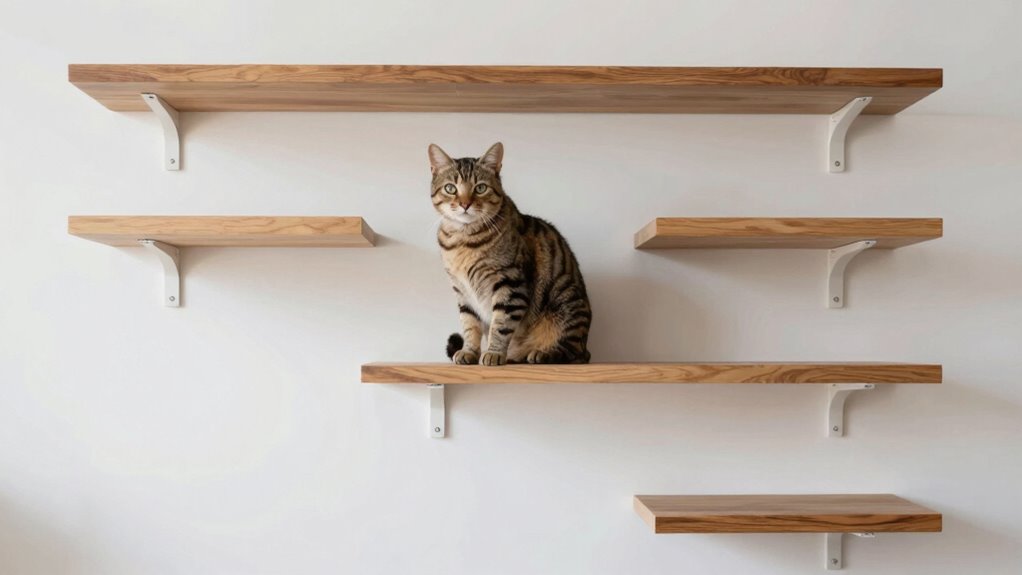

To build confidence in your cat using wall shelves, you should space them about 12 to 18 inches apart, which suits most cats. Larger or more agile cats might need wider gaps for safe jumps. Proper spacing reduces frustration and injury while encouraging movement. Think about your cat’s size and agility when arranging shelves, creating a safe, accessible, and intriguing environment. Keep exploring to discover how to perfectly integrate these systems into your home’s style and maximize their benefits.

Get pet supplies delivered free with Prime
- Fast, free delivery on millions of items
- Prime Video, Amazon Music and more included
- Member-only deals all year
Key Takeaways
- Space shelves 12 to 18 inches apart to match most cats’ jumping and climbing abilities.
- Adjust shelf spacing based on your cat’s size, agility, and activity level for optimal confidence.
- Properly spaced shelves reduce frustration, prevent injury, and promote safe exploration.
- Incorporate varied shelf sizes and shapes for visual interest and functional climbing routes.
- Position shelves near natural light sources and along appealing walls for enhanced confidence and engagement.
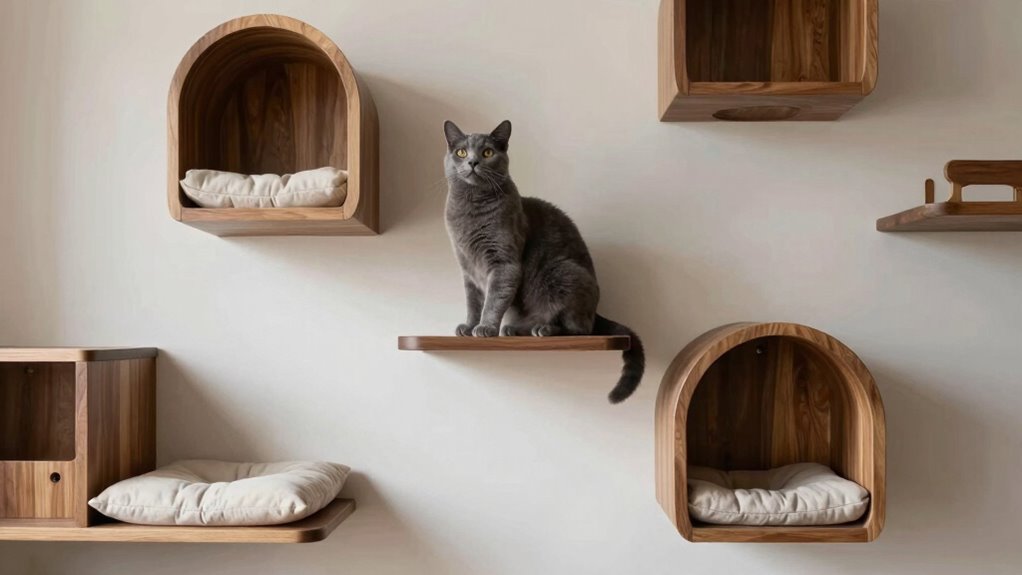
If you have a feline friend who loves to climb and explore, cat wall systems offer a practical and stylish solution to satisfy their instincts. Cats are natural explorers, and providing vertical spaces helps prevent boredom while fulfilling their desire for climbing challenges. When you install a well-designed system, you create an environment that encourages your cat to move, jump, and balance, which is essential for their physical and mental health. Properly spaced shelves allow your cat to navigate smoothly from one perch to another, reducing the risk of injury and making their environment more engaging.
Providing vertical spaces keeps cats engaged, active, and healthy while seamlessly blending into your home decor.
The key to a successful installation lies in understanding how to space the shelves effectively. If shelves are too far apart, your cat might struggle to reach the next level, leading to frustration. Conversely, if they’re too close, it diminishes the challenge and may look cluttered. Striking the right balance means considering your cat’s size, agility, and jumping ability. Typically, a spacing of 12 to 18 inches between shelves works well for most cats, but larger or more agile cats might prefer a bit more distance to stretch their legs. This careful planning not only makes climbing easier and more natural but also helps your feline friend develop confidence in their abilities. cat behavior insights can guide you in selecting the appropriate shelf arrangement and features to better suit your pet’s needs.
Aesthetic integration is another essential aspect of designing your cat wall system. You want the shelves to blend seamlessly into your home decor rather than stand out as an afterthought. Choose materials and colors that complement your walls and furniture, turning the climbing structure into an attractive feature. You can opt for sleek wood finishes, painted surfaces, or even wall-mounted cubbies that double as decorative elements. When your cat’s climbing space complements your interior style, it creates a harmonious look that enhances your home rather than detracts from it. Incorporating home decor considerations into your design ensures a more engaging and satisfying environment for your pet.
The placement of shelves should also consider the overall aesthetic flow of your room. Positioning them along a wall that’s already visually appealing or near natural light sources can make the setup feel intentional and integrated. Additionally, using varying shelf sizes and shapes adds visual interest while giving your cat different options for climbing and lounging. When designed thoughtfully, your cat wall system becomes both a playful haven for your pet and a stylish feature that elevates your living space. Proper planning and interior design considerations can help your cat wall system blend beautifully with your interior design. A well-thought-out arrangement can maximize space and make your small living area more functional and inviting.
cat wall shelves with adjustable spacing
As an affiliate, we earn on qualifying purchases.
As an affiliate, we earn on qualifying purchases.
Frequently Asked Questions
What Materials Are Best for Durable Cat Wall Shelves?
The best materials for durable cat wall shelves are solid wood, engineered wood, or sturdy metal. These materials offer great material aesthetics and withstand the weight and activity of your cats. When considering shelf installation, choose materials that are easy to secure and won’t warp or chip over time. Solid wood is especially ideal for durability and looks, ensuring your cat’s climbing space remains safe and attractive for years.
How Do I Prevent Shelves From Wobbling or Falling?
To prevent shelves from wobbling or falling, you should focus on proper mounting techniques and shelf reinforcement. Use sturdy anchors and guarantee each shelf is securely fastened to wall studs. Reinforce shelves with brackets or support braces for added stability. Regularly check the mounts and tighten any loose screws. By combining these methods, you’ll create a confident, safe space where your cat can climb and play without risk.
Can I Customize Wall System Designs to Fit My Space?
Did you know that 78% of pet owners customize their cat wall systems? Yes, you can definitely tailor designs to fit your space! A creative layout lets you maximize vertical areas, while color coordination guarantees your shelves blend seamlessly with your decor. You can choose different sizes, shapes, and colors to match your style. Customization makes your cat’s space both functional and visually appealing, fitting perfectly into your home’s unique layout.
Are There Weight Limits for Different Shelf Types?
Yes, there are weight limits for different shelf types, which directly impact shelf stability and your cat’s safety. Heavier shelves typically have higher weight capacities, but you should always check the manufacturer’s specifications. Proper spacing also helps distribute weight evenly, ensuring your shelves remain stable under your cat’s activity. Always prioritize sturdy materials and secure mounting to maximize weight capacity and keep your feline friends safe.
How Do I Ensure Safety for Active Cats?
Your cat climbing adventures are no small feat, so safety must be your top priority. To keep your active cats safe, guarantee shelves are securely anchored and spaced appropriately to prevent falls. Use sturdy materials that support weight limits, and consider wall aesthetics by blending safety features seamlessly into your decor. Regularly check for stability, and add non-slip surfaces to keep your feline friends confident and secure while exploring.
Conclusion
With the right cat wall system, you’ll turn your space into a feline paradise, just like the grand castles of old. Carefully spacing those shelves gives your kitty confidence to perch, leap, and explore — no more chasing shadows or knocking things over. Think of it as building a throne room for your royal feline. Trust me, it’s a simple upgrade that’ll keep your kitty happy and your home stylish, no matter what century you’re in.
Halloween Picks
halloween
As an affiliate, we earn on qualifying purchases.