
To create a better multi-cat feeding map, start by establishing a consistent schedule that suits your cats’ behaviors. Assign individual feeding stations or bowls, labeled or separated to prevent confusion and competition. Consider each cat’s preferences and dietary needs, consulting a vet if necessary. Keep the feeding area calm, clean, and quiet to reduce stress. Monitoring their responses allows you to fine-tune the setup. Keep going to discover how these strategies can help foster harmony.
Key Takeaways
- Designate separate feeding stations with individual bowls for each cat to prevent competition and confusion.
- Arrange feeding areas in quiet, low-traffic spots to reduce stress and promote relaxed eating.
- Use labels or distinct bowls to help cats identify their designated feeding spots easily.
- Schedule consistent feeding times aligned with each cat’s preferences and needs for routine stability.
- Regularly observe and adjust the map based on cats’ behaviors and dietary responses.
Creating a well-organized multi-cat feeding map is crucial for maintaining harmony and guaranteeing each cat gets the right amount of food. When you establish a clear feeding schedule, you help prevent disputes over food and reduce the chances of overeating or underfeeding. Your first step should be to determine a consistent feeding routine, whether you choose to feed all cats at the same time or stagger their meals. Some cats thrive on scheduled feedings, while others prefer free feeding, so observing your cats’ behaviors will help you decide what works best for your household.
Establish a consistent feeding routine to prevent disputes and support your cats’ well-being.
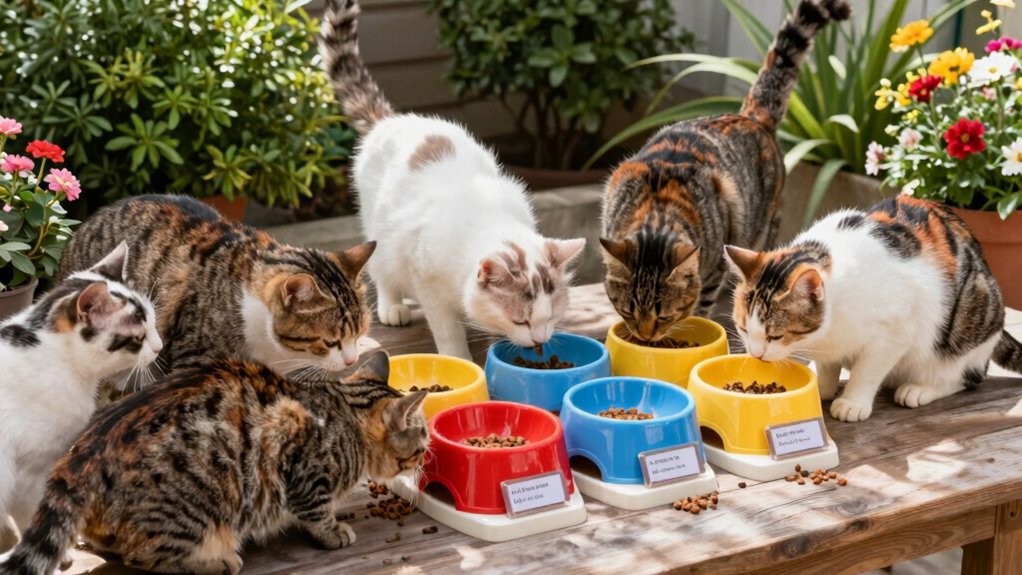
Next, consider each cat’s dietary preferences. Cats are creatures of habit and often develop strong preferences for certain flavors, textures, and types of food. You might notice that some prefer dry kibble, while others favor wet food or specific flavors like fish or poultry. Catering to these preferences not only keeps your cats happy but also encourages them to eat regularly. When designing your feeding map, assign specific bowls or feeding stations for each cat to prevent confusion and competition. Labeling bowls or placing them in individual spots can make it clear which food belongs to whom, reducing stress and potential aggression during mealtime.
It’s also essential to account for the nutritional needs of each cat. Older cats may require different diets than younger ones, and some might have health issues that influence their food choices. Consulting your veterinarian can help you develop a balanced diet plan that suits each cat’s unique requirements. Once you know what each cat needs, incorporate their dietary preferences into your feeding schedule. For example, if a cat prefers wet food, schedule that at a specific time to ensure it’s fresh and appealing. If another prefers dry kibble, keep that accessible throughout the day if you’re using a free-feeding approach. Additionally, understanding the importance of nutritional needs helps in creating a comprehensive feeding plan. Recognizing the significance of species-specific dietary needs ensures that each cat’s health is prioritized in your feeding strategy.
To keep your multi-cat feeding map effective, observe how your cats respond to the setup. Are they eating peacefully? Is anyone consistently skipping meals or overeating? Adjust feeding times, portions, or food types as needed. Regularly cleaning bowls and avoiding abrupt changes in diet will help maintain good eating habits. It’s also helpful to observe the room environment during mealtime, as a calm and quiet space can promote better eating behavior. Creating a stress-free environment during meals can significantly influence your cats’ willingness to eat and their overall well-being. Remember, consistency is key. When you create a predictable feeding environment that respects each cat’s preferences and nutritional needs, you foster a peaceful, healthy home where your cats can thrive.
multi-cat feeding bowls with labels
As an affiliate, we earn on qualifying purchases.
As an affiliate, we earn on qualifying purchases.
Frequently Asked Questions
How Often Should I Update My Multi-Cat Feeding Map?
You should update your multi-cat feeding map whenever there’s a change in your cats’ feeding schedule or meal rotation, ideally every few weeks. Regular updates help you stay aware of each cat’s preferences, health needs, and any new additions to your household. Keep an eye on their eating habits, and adjust the map accordingly to guarantee all cats are fed properly and maintain a balanced, consistent feeding routine.
What Tools Are Best for Creating a Feeding Map?
You should use tools like digital mapping apps or spreadsheet software to create your feeding map. These tools help you organize your feeding schedule and meal portioning efficiently. With digital tools, you can easily update the feeding schedule as needed, set reminders, and track each cat’s preferences. Using visuals like charts or color coding makes it easier to manage meal portioning and guarantee every cat gets the right amount at the right time.
How Do I Prevent Territorial Disputes Over Feeding Spots?
To prevent territorial disputes over feeding spots, you should establish clear territorial boundaries and guarantee consistent feeding zone separation. Placing multiple feeders in different areas helps reduce competition, and rotating feeding locations keeps cats from claiming a single spot. If disputes arise, calmly redirect cats to their designated zones, reinforcing boundaries with visual cues or barriers. Consistency and patience help your cats learn boundaries, reducing conflicts over feeding spots.
Can a Feeding Map Help Reduce Food Aggression?
Yes, a feeding map can help reduce food aggression by establishing consistent feeding routines and designated spots. When your cats know where and when they’ll eat, it minimizes territorial behavior and competition. By spreading out feeding areas, you prevent conflicts over food. Over time, this setup reassures your cats, decreases food-related tension, and encourages peaceful interactions during mealtime.
How to Customize a Feeding Map for Different Cat Personalities?
Think of your cats’ personalities as a symphony, each with its own rhythm. To customize a feeding map, observe their feeding habits and personality traits—some may prefer solitude, others thrive on shared space. Modify feeding stations, timing, and portion sizes accordingly, creating harmony. Tailoring the map ensures each cat feels secure and respected, reducing stress and promoting balanced, peaceful mealtimes for your feline ensemble.
Conclusion
Think of your multi-cat feeding map as a carefully woven tapestry, each thread representing a cat’s needs and preferences. When you skillfully thread these elements together, you create a harmonious mosaic where every feline feels valued and secure. By paying close attention and adjusting your design, you guarantee the fabric remains resilient and beautiful. A well-crafted feeding map isn’t just a plan—it’s the masterpiece that keeps your feline family thriving in balanced unity.