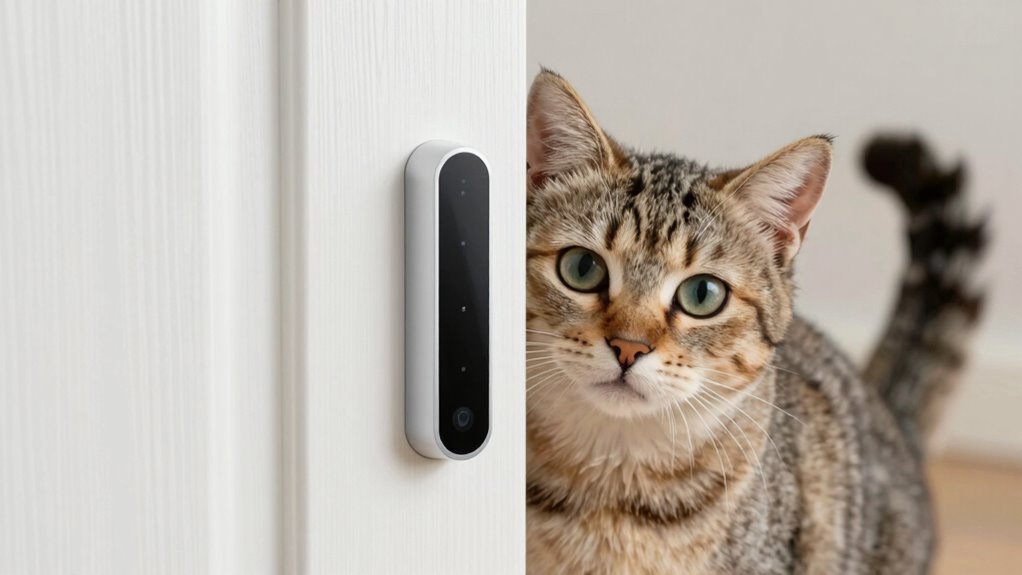

If you install a microchip cat door, watch for signs of territory stress like aggression, hiding, or withdrawal from your cat. You might notice increased grooming or a reduced appetite, which can indicate anxiety or discomfort. It’s essential to observe how your cat reacts, especially during changes, and adjust access gradually. Managing outdoor exposure and providing a secure indoor environment can help reduce stress. Curious to learn more about minimizing these effects and supporting your cat’s well-being?
Listen free for 30 days with Audible
Thousands of audiobooks and originals — cancel anytime.
As an affiliate, we earn on qualifying purchases.
Key Takeaways
- Watch for signs of increased aggression, hiding, or reduced appetite indicating territorial stress.
- Observe any escalation in outdoor disputes or territorial disputes among cats or neighborhood animals.
- Monitor for behavioral changes such as anxiety, excessive grooming, or withdrawal after installing the door.
- Note if outdoor access leads to heightened stress or conflicts, prompting environmental management adjustments.
- Ensure gradual transition and positive reinforcement to minimize territory-related behavioral issues.

Many cat owners turn to microchip cat doors as a convenient way to give their pets freedom while maintaining security, but these devices can sometimes inadvertently increase territory stress among cats. While microchip technology offers a high level of outdoor safety, it also alters how your cat interacts with its environment, which can lead to behavioral changes. If your cat starts acting more anxious or aggressive, it might be a sign that the microchip door is disrupting its natural territory instincts.
Behavior modification is key when introducing a microchip cat door. Cats are territorial animals, and sudden changes to their access points can create confusion or competition, especially if multiple cats share your home. To prevent stress, you need to carefully observe their reactions and gradually adjust their routines. Training your cats to use the new door with positive reinforcement helps them associate it with good experiences, reducing anxiety. If you notice signs of stress—such as hiding, excessive grooming, or reduced appetite—consider revisiting your approach to behavior adjustment. Making the shift slow and consistent can keep their territory feelings intact while providing outdoor access. This ongoing process requires patience as cats adapt gradually to new environments and routines.
Despite the benefits of outdoor safety that microchip cat doors offer, they can sometimes provoke territorial disputes among cats or with neighborhood animals. When your cat is allowed outside through a secure microchip door, it might feel more territorial if it perceives unfamiliar animals nearby. This can increase stress, making your cat more aggressive or withdrawn. To mitigate this, you could install additional safeguards, like outdoor fencing or visual barriers, to reduce the number of unfamiliar animals entering your yard. Keep an eye on how your cat responds to outdoor excursions, and if you notice signs of heightened territorial behavior, consider limiting outdoor time or providing more secure indoor environments. Recognizing territorial behavior early can help you develop better strategies to keep your cat calm. Understanding territorial instincts and how they influence your cat’s reactions is essential for managing their stress levels effectively. Furthermore, ensuring a stable environment indoors can lessen the impact of outdoor territorial disruptions.
Ultimately, the success of a microchip cat door depends on how well you manage your cat’s environment and emotional state. Regularly monitor their behavior and make adjustments as needed. Creating a stable indoor environment, combined with gradual outdoor access, helps your cat feel secure and reduces territorial stress. Remember, behavior modification isn’t a one-time fix—it’s an ongoing process that involves patience and attention. Understanding how territory stress impacts your cat’s mental health can help you implement more effective strategies. When you balance outdoor safety with your cat’s mental well-being, you foster a sense of security that encourages healthy, confident behavior. This way, your cat can enjoy the benefits of outdoor access without the negative consequences of territorial stress.
microchip cat door with adjustable settings
As an affiliate, we earn on qualifying purchases.
As an affiliate, we earn on qualifying purchases.
Frequently Asked Questions
How Do Microchip Cat Doors Differ From Traditional Cat Doors?
Microchip cat doors differ from traditional ones by using microchip technology and sensor detection to identify your cat. When your cat approaches, the sensor detects the microchip, allowing only your pet to enter or exit, preventing stray access. Unlike traditional doors that rely on collars or manual operation, microchip doors offer increased security, reduce territorial stress, and guarantee your cat’s safety by recognizing only the programmed microchips.
Can Territory Stress Cause Health Issues in Cats?
Territory conflicts and shifts in social hierarchy can cause stress in cats, leading to potential health issues like decreased immunity, digestive problems, or behavioral changes. When cats feel threatened or experience ongoing disputes, their stress levels rise, making them more vulnerable to illnesses. You should watch for signs like excessive grooming, aggression, or hiding, as these indicate your cat might be experiencing territory stress that could impact their health.
Are There Specific Microchip Brands Compatible With All Cat Doors?
You’ll be amazed—there’s no universal microchip brand compatible with all cat doors! Microchip compatibility varies wildly, so a brand comparison becomes essential. Some doors work with major brands like AVID, HomeAgain, and 9Lives, but many don’t. You need to double-check each cat door’s specifications to make certain your microchip’s brand matches. Otherwise, your cat might be locked out or stranded inside—talk about a nightmare!
How Long Does It Take for a Cat to Adjust to a New Door?
It usually takes your cat about a few days to a week to adjust to a new door, but this depends on their individual temperament. During this period, your cat undergoes behavioral adaptation and environmental adjustment, gradually becoming comfortable with the new setup. To help speed up the process, introduce the door gradually, offer treats, and give plenty of positive reinforcement to make the changeover smoother and less stressful.
What Are Signs of Excessive Territory Stress in Cats?
You notice your cat hiding more, scratching furniture excessively, or spraying to mark territory—these are signs of excessive territory stress. Aggressive behaviors like hissing, biting, or swatting can also emerge, disrupting peace. This juxtaposition of calm and chaos shows how territorial anxiety impacts their mood and actions. Watch for increased marking or aggression, as these signals indicate your cat’s stress level is rising and needs attention.
Conclusion
By understanding how microchip cat doors can turn your home into a bustling city, you can better manage your feline’s territory and reduce stress. Think of your cat’s territory as a delicate garden—too much intrusion, and it becomes overgrown and chaotic. With mindful access control, you’re the gardener, guiding your cat safely through their world. Keep an eye on their behavior, and you’ll help your feline friend thrive in their own peaceful sanctuary.
Fall Picks
fall essentials
As an affiliate, we earn on qualifying purchases.