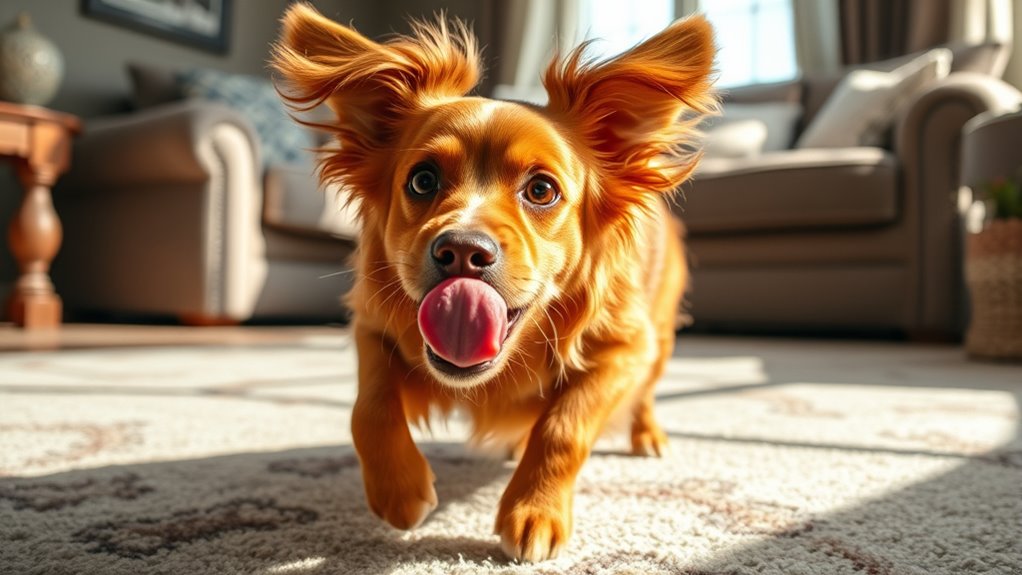

Excessive licking and spinning can be normal behaviors in pets, especially during grooming or playful moments. However, if your pet licks or spins obsessively, it might signal underlying health issues like allergies, skin irritation, or neurological concerns, or behavioral problems such as boredom or anxiety. Pay attention to other signs like redness, swelling, or distress, and consider how often these behaviors occur. Understanding what’s typical can help you identify when it’s time to seek advice.
Key Takeaways
- Normal licking helps clean and comfort, but excessive licking may signal allergies, skin irritation, or pain.
- Spinning can be a benign boredom behavior or a sign of anxiety, but persistent spinning could indicate health issues.
- Brief, infrequent licking and spinning are typical; persistent or intense behaviors warrant veterinary evaluation.
- Physical signs like redness, swelling, or wounds suggest problematic licking, while spinning may relate to neurological or ear issues.
- Observing behavior patterns, triggers, and accompanying symptoms helps determine if behaviors are normal or require medical attention.

Excessive licking and spinning are behaviors that can indicate underlying health or behavioral issues in your pet. While some licking and spinning are normal parts of your animal’s daily routine, when these actions become frequent or intense, it’s time to pay closer attention. Your pet might be trying to soothe discomfort, relieve stress, or communicate that something isn’t right. Recognizing what’s normal and what’s not can help you decide whether to consult a veterinarian or observe and manage their behavior at home.
Licking is natural for animals; they lick themselves to clean, comfort, or show affection. However, if your pet is excessively licking a particular area, it could signal skin irritation, allergies, parasites, or pain. For example, persistent licking around the paws may indicate allergies or dermatitis, while licking the genital area might suggest infections or discomfort. Sometimes, animals lick out of boredom or anxiety, especially if they’re left alone for long periods or lack sufficient mental stimulation. If you notice your pet licking obsessively, check for signs of skin redness, swelling, hair loss, or wounds. These physical cues can help identify whether the licking is driven by physical discomfort or behavioral issues. Additionally, understanding normal animal behavior can help you distinguish between harmless habits and problematic ones.
Spinning, on the other hand, often looks like your pet turning in circles repeatedly. This behavior can be a sign of anxiety, obsessive-compulsive tendencies, or medical problems like neurological issues or inner ear infections. Some animals spin as a way to self-soothe when stressed or anxious, especially in unfamiliar environments or after loud noises. In certain breeds, spinning can be a hereditary trait, but if it’s sudden or excessive, it warrants closer investigation. Observe whether the spinning occurs in specific situations or times of day, and note if it’s accompanied by other behaviors like pacing, vocalizing, or scratching. These clues can help determine whether the spinning is a behavioral response or a symptom of an underlying health concern.
Understanding what’s normal for your pet involves knowing their typical habits and mood. For many animals, brief bouts of licking and occasional spinning are harmless and part of their routine. The key is to notice when these behaviors become persistent, intense, or accompanied by other signs of discomfort. If you see redness, swelling, hair loss, or your pet seems distressed or unwell, a vet visit is essential. On the other hand, if your pet’s licking and spinning seem to stem from boredom or stress, providing more enrichment, exercise, and comfort may help reduce these behaviors. Always trust your instincts—when in doubt, consult a professional to ensure your pet’s health and well-being.

GORILLA GRIP 100% Waterproof Raised Edge BPA Free Silicone Pet Feeding Mat, Dog Cat Food Mats Contain Spills Protects Floors, Placemats for Cats and Dogs Water Bowl, 18.5x11.5, Gray
- Award-Winning Design: 2025 Pet Innovation Award winner
- Waterproof Silicone Material: Prevents spills from reaching floors
- Raised Edges: Contain food and water spills
As an affiliate, we earn on qualifying purchases.
Frequently Asked Questions
Can Anxiety Cause Excessive Licking and Spinning in Pets?
Yes, anxiety can cause your pet to lick excessively and spin. When they feel stressed or overwhelmed, these behaviors serve as coping mechanisms, helping them soothe themselves. You might notice increased licking around their paws or face, and spinning in circles. To help, identify and reduce stressors, provide a calming environment, and consider consulting your vet for behavior strategies or anxiety-reducing treatments.
Are Certain Breeds More Prone to Compulsive Licking and Spinning?
Just as some paintings are more prone to fading, certain breeds are more likely to develop compulsive licking and spinning. Breeds like Border Collies, German Shepherds, and Bulldogs have genetic tendencies that can make them more susceptible. You, as a pet owner, should watch for signs and provide mental stimulation and proper care. Recognizing these predispositions helps you address behaviors early, keeping your furry friend healthier and happier.
How Do I Differentiate Between Normal Grooming and Compulsive Behavior?
You can tell if your dog’s grooming is compulsive by observing if the behavior is excessive, persistent, and interferes with daily activities. Normal grooming helps keep your pet clean and comfortable, but compulsive habits often happen even when your dog is relaxed or not dirty. If your dog licks or spins nonstop, seems anxious, or causes skin irritation, it’s time to consult a vet for guidance and possible treatment options.
What Home Remedies Can Help Reduce Excessive Licking and Spinning?
To reduce your pet’s excessive licking and spinning, try providing more mental and physical stimulation through play and exercise. Keep their environment calm and free of stressors. Use calming aids like pheromone diffusers or natural supplements (after consulting your vet). Make certain they have a cozy, secure space to relax. Regular grooming can also reduce anxiety triggers. If behaviors persist, seek advice from a veterinarian or animal behaviorist.
When Should I See a Veterinarian for My Pet’s Behavior?
Think of your pet’s behavior as a warning flag in a parade. If licking or spinning becomes constant, intense, or sudden, it’s time to see a vet. These signs may signal underlying issues like anxiety, allergies, or pain. Don’t wait for the behavior to escalate; prompt veterinary attention can prevent more serious health problems and help your pet feel safe and comfortable again.
Conclusion
So, if your furry friend’s licking and spinning seem like they could power a spaceship, don’t ignore it! What might look like normal habits could actually be a signal of something much bigger—like a full-blown alien invasion of anxiety or allergies. Trust your instincts, keep a close eye, and don’t hesitate to seek help. After all, your pet’s well-being is way more important than a few spins or licks—unless they’re trying to tell you something truly urgent!