To stop leash pulling, use a simple trick: when your dog pulls, immediately stop walking and stand still without yanking or jerking. Wait until your dog relaxes and returns to your side, then mark the behavior with a gentle “Yes” or “Good” and resume walking. Consistency is key, and over time your dog learns that calm walking gets rewarded, not pulling. Stick with these steps, and you’ll discover more effective ways to enjoy stress-free walks.
Key Takeaways
- Stop walking immediately when your dog pulls to show pulling doesn’t lead to progress.
- Keep the leash slack; only move forward when your dog walks calmly beside you.
- Use a consistent cue like “Yes” or “Good” to reward relaxed walking and reinforce the behavior.
- Be patient and persistent, repeating the process during short, positive walks for best results.
- Avoid punishment; focus on positive reinforcement to teach your dog that calm walking is rewarding.
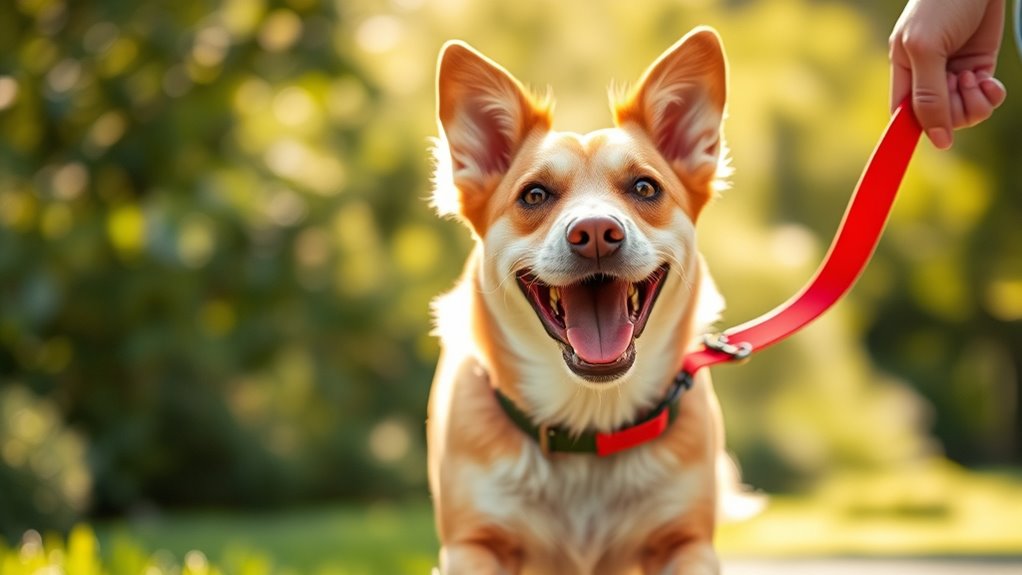
If your dog constantly pulls on the leash during walks, you’re not alone. Many dog owners struggle with this issue, feeling frustrated and unsure of how to curb it. The good news is that there’s a simple yet effective trick you can try right now to help your dog learn better leash manners. It all boils down to teaching your dog that pulling doesn’t lead to what they want, and that walking calmly by your side is more rewarding.
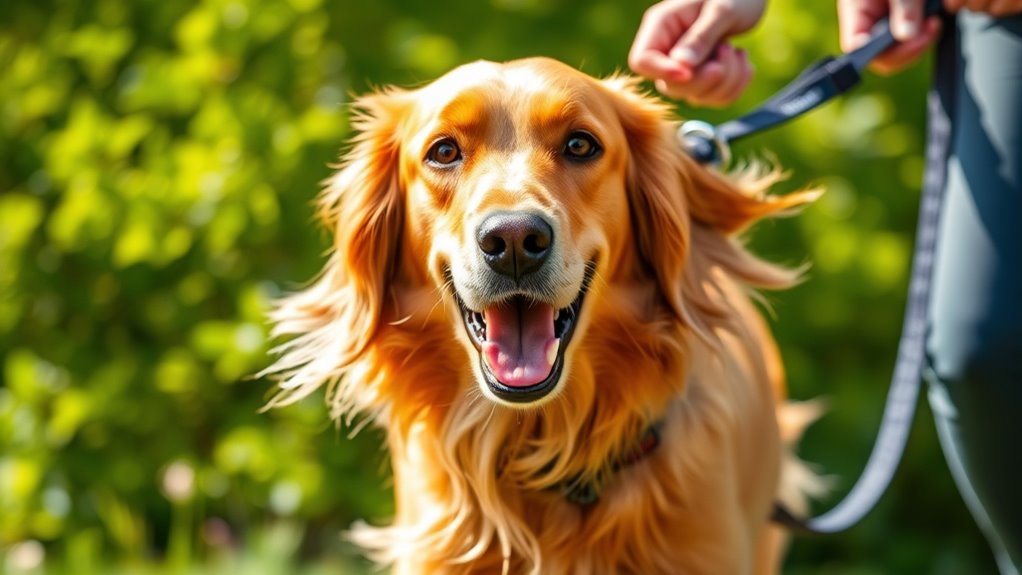
Start by keeping your dog’s leash slack when they’re walking beside you. The moment they start to pull, stop walking immediately. Don’t jerk or yank; just stand still. This signals to your dog that pulling isn’t going to get them anywhere. Keep your body still, and wait patiently until your dog returns to a more relaxed position beside you. Once they do, give a gentle, encouraging voice cue like “Yes” or “Good,” and resume walking. The key here is consistency. Every time your dog pulls, you stop. When they loosen the tension and walk nicely, you move forward again. Over time, your dog will begin to associate pulling with losing progress, and walking calmly with you as the way to get where they want to go.
Stop walking whenever your dog pulls; stand still until they relax and walk calmly again.
It’s essential to be patient and persistent. Sometimes, it takes several repetitions before your dog fully understands the message. Keep your walks short and positive, focusing on rewarding good behavior rather than punishing pulling. Use treats, praise, or their favorite toy to reinforce the idea that walking nicely by your side is the best way to get what they want.
This trick works because it taps into your dog’s natural desire to move forward and explore. By stopping when they pull, you’re teaching them that pulling doesn’t help them move faster or reach their goal. Instead, staying calm and close to you is what gets them where they want to go. With consistent practice, your dog will start to stay at your side without pulling, making walks more enjoyable for both of you. Remember, patience and positive reinforcement are your best tools. Over time, your dog will learn that walking calmly is more rewarding than pulling ahead. That’s how you turn a frustrating walk into a pleasant, controlled experience for everyone involved.

Buddy Biscuits Trainers Training Bites Soft & Chewy Dog Treats, Bacon, 10 oz. Pouch
Highly Palatable with natural pork liver base
As an affiliate, we earn on qualifying purchases.
As an affiliate, we earn on qualifying purchases.
Frequently Asked Questions
How Long Does It Typically Take to See Results?
You’ll typically see results within a few days to a week if you consistently apply the trick. Stay patient and keep practicing during each walk, as consistency is key. Some dogs respond faster than others, but with regular effort, you’ll notice less pulling and more enjoyable walks. Keep reinforcing good behavior, and you’ll both enjoy your outings more quickly than you might expect.
Can This Trick Work With Aggressive Dogs?
A leopard can’t change its spots, and aggressive dogs might need extra patience, but this trick can help. It’s effective if you stay consistent and calm. While results vary, many owners see progress within a few weeks. Remember, persistence is key; even the boldest dogs can learn new behaviors. Keep your training positive and steady, and you’ll see improvement over time, no matter how fierce they seem at first.
Is This Method Suitable for Puppies?
Yes, this method is suitable for puppies. You should start early, using gentle consistency to teach your pup proper leash manners. Keep training sessions short and positive, rewarding good behavior. Puppies are more receptive to learning new habits, so patience is key. By applying this trick consistently, you’ll help your puppy develop good leash habits and prevent leash pulling from becoming a bigger problem as they grow.
Do I Need Special Equipment to Try This Trick?
No, you don’t need special equipment to try this trick. All you need is a regular leash and collar or harness your dog already wears. Focus on consistency and patience as you guide your dog calmly. If you want extra control, consider a front-clip harness, which can help reduce pulling and make training easier. Remember, the key is gentle guidance, not harsh equipment.
How Should I Handle Setbacks During Training?
When setbacks happen during training, stay patient and consistent. You should calmly revisit the basics, reinforce positive behavior, and avoid harsh corrections. Celebrate small successes to keep motivation high, and remember that progress takes time. If your dog struggles, take a step back and try again later. Consistent practice and positive reinforcement will gradually help your dog improve, making setbacks just a part of the learning process.

SlowTon No Pull Dog Harness – Heavy Duty Dog Harness and Leash Set for Medium Large Dogs, Reflective Tactical Harness with Soft Padded and Front Clip for Easy Walk and Training (Black L)
【No Pull & No Choke Design】: This harness simply goes through the dog's head, snaps on the belly…
As an affiliate, we earn on qualifying purchases.
As an affiliate, we earn on qualifying purchases.
Conclusion
By applying this simple trick, you’ll notice your dog walking calmly on the leash in no time. Did you know that nearly 60% of dog owners experience leash pulling issues? It’s a common problem, but with patience and consistency, you can turn walks into enjoyable outings for both of you. Keep practicing this trick daily, and you’ll soon enjoy relaxed, frustration-free strolls together—making every walk a positive experience.

OYEFLY Dog Training Clicker with Wrist Strap Durable Lightweight Easy to Use, Pet Training Clicker for Cats Puppy Birds Horses. Perfect for Behavioral Training 2-Pack (Black and Water Lake Blue)
EASY TO USE – Simple push button with distinct clicking sound.
As an affiliate, we earn on qualifying purchases.
As an affiliate, we earn on qualifying purchases.

Jugbow Dog Shock Collar – 4500FT Dog Training Collar with Remote, IPX8 Waterproof Electric Dog Collar with 4 Training Modes, Security Lock, Rechargeable eCollar for 10-120lbs Small Medium Large Dogs
[4 Effective Training Mode – Recall & Correct Unwanted Dog Behavior] Featuring advanced Safe-Tech with 4 modes: Beep(1-8),…
As an affiliate, we earn on qualifying purchases.
As an affiliate, we earn on qualifying purchases.