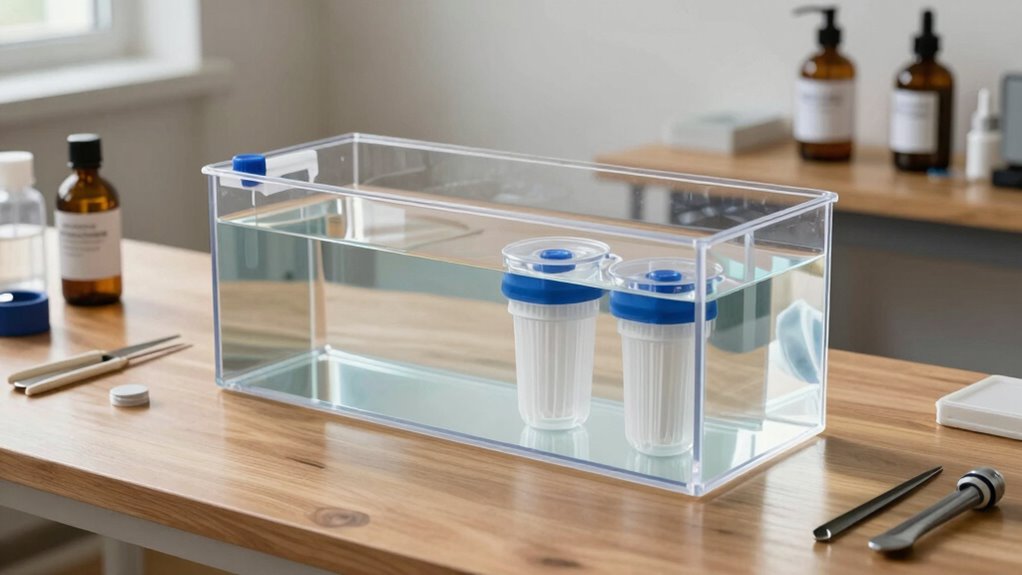
Even a temporary quarantine tank needs careful planning to keep your fish healthy and prevent disease spread. You should choose the right size, filters, heater, and hiding spots, and set up the tank properly before adding fish. Regular water testing and avoiding shared equipment help maintain water quality and reduce stress. Neglecting these details can lead to health issues that affect both the quarantine and main tank. Keep going to discover more essential tips for successful quarantine setups.
Key Takeaways
- Proper planning ensures the temporary tank provides appropriate size, filtration, and equipment to effectively prevent disease and reduce stress.
- Even short-term setups require cycling and water quality management to maintain a healthy environment.
- Adequate planning helps prevent cross-contamination and disease transmission between main and quarantine tanks.
- Properly equipped quarantine tanks facilitate quick response to illness, minimizing recovery time.
- Investing in thoughtful setup reduces the risk of health issues, ensuring safer fish introduction and long-term aquatic health.
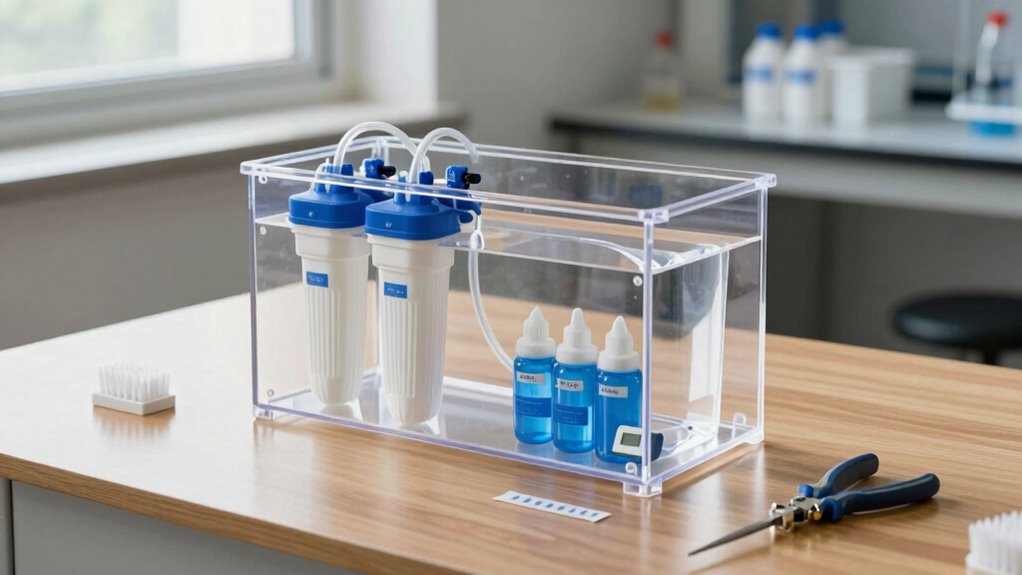
If you’re setting up a new aquarium or need a safe space to observe and treat sick fish, quarantine tank kits offer a practical solution. These kits are designed to help you establish a temporary tank quickly, but even a short-term setup requires careful planning to guarantee effective disease prevention. A well-thought-out tank setup minimizes stress on your fish and reduces the risk of spreading illnesses to your main display tank.
When you choose a quarantine tank kit, you’re making an investment in your fish’s health. The key to a successful quarantine process lies in creating an environment that’s functional and safe. This means selecting the right size tank, confirming proper filtration, and including essentials like a heater, lighting, and hiding spots. Even though the tank is temporary, neglecting these details can lead to stress or disease outbreaks. For instance, inadequate filtration can cause water quality issues, which weaken fish immune systems and make them more susceptible to disease. Proper tank setup involves cycling the tank before adding new fish, so beneficial bacteria establish themselves and help maintain stable water conditions. Additionally, understanding the importance of proper filtration can significantly impact the success of your quarantine setup.
Disease prevention is the primary goal during quarantine, so it’s vital to use separate equipment for the quarantine tank. Avoid sharing nets, siphons, or decorations with your main tank, because this can transfer pathogens. It’s also wise to monitor water parameters regularly, checking for ammonia, nitrite, and nitrate levels. Consistent testing helps identify problems early, preventing the spread of disease. If you notice any signs of illness, acting swiftly by isolating and treating the affected fish can save the entire quarantine period and protect your main display tank. Proper water quality management plays a crucial role in keeping your fish healthy during quarantine. Maintaining a clean environment reduces the chances of bacterial or fungal growth that can compromise your fish’s health. Incorporating regular water testing into your routine can further safeguard the health of your aquatic inhabitants. Additionally, being aware of aquarium cycling helps ensure your quarantine setup remains stable and safe for your fish. Even though quarantine tanks are meant for short-term use, it’s tempting to cut corners. But skipping proper tank setup or disease prevention measures can backfire, leading to longer recovery times or more severe health issues down the line. Remember, the goal isn’t just to keep fish alive temporarily but to guarantee they’re healthy when introduced to your main tank. This requires planning ahead—understanding the needs of your fish, preparing the tank accordingly, and maintaining clean, stable conditions.
As an affiliate, we earn on qualifying purchases.
Frequently Asked Questions
What Are the Best Materials for Quarantine Tank Kits?
You should choose durable, non-toxic materials like acrylic or glass for your quarantine tank kit to guarantee water filtration remains clean and safe for your fish. Select a tank size that provides enough space, considering the specific needs of your aquatic species. Additionally, choose sturdy, easy-to-clean materials that resist scratching and algae buildup, helping you maintain ideal water quality during the quarantine period.
How Long Should a Fish Stay in Quarantine?
You should keep a fish in quarantine for at least two to four weeks to guarantee ideal fish health and effective disease prevention. During this period, observe for any signs of illness or stress, and treat if necessary. This timeframe helps catch hidden infections early, reducing the risk of spreading disease to your main tank. Patience in quarantine is essential for maintaining a healthy, thriving aquatic environment.
Can Quarantine Tanks Be Used for Breeding?
Imagine you want to breed your betta fish; a quarantine tank can be used if it’s properly prepared. You need to take into account breeding compatibility and tank size considerations, ensuring the tank is large enough for the pair and has hiding spots. A small quarantine tank might work temporarily, but for successful breeding, you’ll need a dedicated, appropriately sized tank to support the pair’s health and reduce stress.
What Are Common Mistakes When Setting up a Quarantine Tank?
You often make mistakes like rushing tank acclimation, which can stress new fish and compromise disease prevention. Not properly cycling the quarantine tank leads to ammonia spikes that harm your fish. Overcrowding is another error that increases disease risk and complicates monitoring. Always guarantee adequate space, proper acclimation, and stable water parameters. This careful setup helps prevent disease outbreaks and ensures your quarantine tank effectively protects your main display.
How Often Should Quarantine Tanks Be Cleaned?
You might think cleaning your quarantine tank isn’t urgent, but regular tank maintenance is essential to prevent fish disease. You should clean your quarantine tank at least weekly, removing waste and performing partial water changes. This routine helps keep your fish healthy and minimizes the risk of disease transmission. Consistent cleaning guarantees a clean environment, making it easier to spot symptoms early and keep your quarantine process effective.
Conclusion
So, even if your quarantine tank feels like a brief chapter, giving it thoughtful planning guarantees it’s more than just a fleeting moment. A well-prepared space nurtures new arrivals, helping them settle gently into their new home. Remember, what starts as a temporary pause can become a lasting safeguard. By paying attention now, you set the stage for healthier, happier fish—making your hobby a seamless, satisfying journey, one thoughtful step at a time.