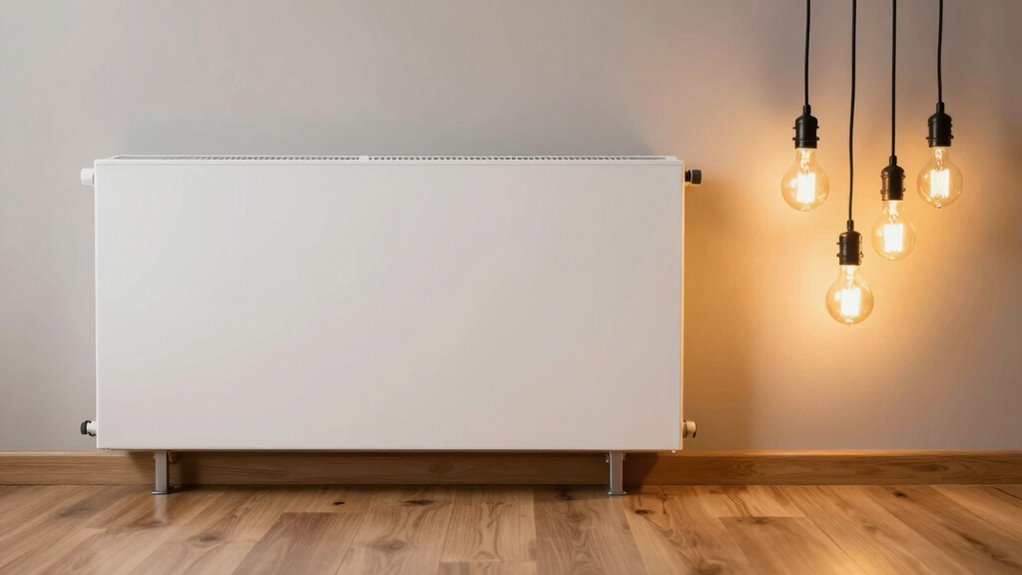

If you’re choosing between radiant heat panels and bulbs, panels offer better energy efficiency, safety, and even warmth across larger areas, making them a smart long-term investment. They use less power, last longer, and avoid hazards like hot spots or light interference that bulbs can cause. While bulbs are easy to install and portable, they can be costly over time due to shorter lifespans. To find out which option suits your needs best, keep exploring the details that matter most.
Key Takeaways
- Radiant heat panels offer energy-efficient, even heating with longer lifespan, while bulbs are simpler to install but less durable.
- Panels provide safer, diffuse warmth without light emission, whereas bulbs can disturb sleep and emit light interfering with pets or plants.
- Heat panels are fixed and require installation effort, whereas bulbs are portable and easy to replace.
- Long-term costs favor heat panels due to lower energy consumption and durability; bulbs may need frequent replacements.
- Panels eliminate fire and burn hazards, making them safer options compared to bulbs that emit surface heat and light.
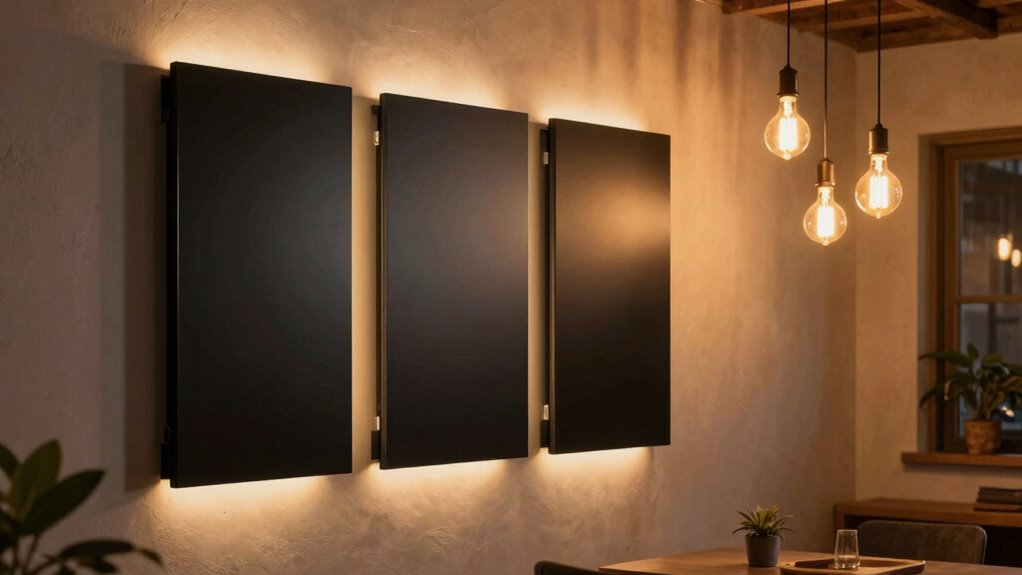
Are heat panels or bulbs better for keeping your pets or plants warm? When you’re deciding between these options, one of the most important factors to contemplate is energy efficiency. Heat panels tend to use less power compared to bulbs, making them a more sustainable choice in the long run. They convert more energy directly into heat without wasting as much on infrared or radiant heat loss. This means you’ll see lower energy bills while providing consistent warmth. Additionally, heat panels distribute heat evenly across a larger area, which can help prevent hot spots or cold zones in your space. This uniform heating not only saves energy but also creates a more comfortable environment for your pets or plants.
Another key point to think about is installation methods. Heat panels usually require a fixed mounting process, often installed on walls or ceilings, which might involve some initial effort and possibly tools. However, once set up, they usually stay in place with minimal maintenance. Bulbs, on the other hand, are simpler to install—just screw them into a socket and switch them on. They’re flexible and portable, making it easy to move them around or replace them as needed. Still, bulbs tend to have shorter lifespans and may need frequent replacements, which can add to your costs over time. It’s also worth noting that biodiversity can be affected by the type of heat source you choose, as some options may produce light or heat levels that impact local ecosystems if not used responsibly. Being aware of environmental impact can help you select a more eco-friendly heating solution. When considering safety and convenience, heat panels eliminate many risks associated with bulbs, such as burns or fire hazards, especially if you’re concerned about pets accidentally knocking over a hot bulb. They don’t emit light, so they won’t disturb your pets’ sleep cycles or your plants’ photoperiods. Bulbs, however, often emit visible light, which could interfere with your pets’ natural behaviors or plant growth patterns if used improperly. Also, bulbs generate more heat at the surface, which can be a concern if pets tend to get too close, whereas panels provide a safer, more diffuse heat source. Incorporating energy-efficient heating options can further reduce your carbon footprint and promote sustainable living practices. Additionally, choosing the right heat source can contribute to energy conservation, helping reduce overall environmental impact.

REPTIRAD – Advanced Radiant Heat Panel for Reptiles – ETL Certified Overhead Heater, 18.5mm Slim, Galvanised Steel Design, Even Heat, Energy Efficient (125 Watt)
- Even Radiant Heat: Consistent warmth with no hotspots
- Slim Profile: Only 18.5mm thick for space-saving design
- Durable Steel Build: Galvanised steel for corrosion resistance and longevity
As an affiliate, we earn on qualifying purchases.
As an affiliate, we earn on qualifying purchases.
Frequently Asked Questions
Are Radiant Heat Panels Energy-Efficient Compared to Bulbs?
Radiant heat panels are more energy-efficient than bulbs because they deliver direct warmth, reducing heat loss and providing better energy savings. They’re also more cost-effective over time since they consume less power and last longer. Bulbs might be cheaper initially, but they often waste energy and don’t provide consistent warmth. So, if you want efficient heating, radiant panels are the smarter choice for long-term cost effectiveness.
Which Heat Source Is Safer for Children and Pets?
Radiant heat panels are safer for children and pets because they don’t have exposed bulbs or hot surfaces that can cause burns or accidents. Child safety and pet protection are enhanced since panels emit gentle, consistent warmth without sharp or fragile parts. Bulbs, on the other hand, pose a risk of burns or breakage, making radiant panels a smarter choice for homes with kids and furry friends.
Can Heat Panels Be Used Outdoors?
Like a sturdy oak standing tall in a storm, radiant heat panels can be used outdoors if they’re designed for it. Look for models with strong outdoor durability and weather resistance to withstand rain, snow, and wind. Always check the manufacturer’s specifications to verify they’re rated for outdoor use. Properly installed, these panels provide efficient warmth outside, making your space cozy even in harsh weather.
How Quickly Do Bulbs Heat a Room?
Bulbs heat a room quickly, often within minutes, making them ideal for instant warmth. Their lighting ambiance can be adjusted with different bulb types, but they tend to consume more energy compared to radiant panels. If you want rapid, focused heat and adjustable lighting ambiance, bulbs are a good choice. However, keep in mind that their higher energy consumption might lead to increased electricity costs over time.
Are There Any Maintenance Requirements for Heat Panels?
You won’t need much maintenance with heat panels; they’re built for durability, often requiring only occasional inspections. Visualize checking for dust buildup or loose connections during your regular maintenance schedules, ensuring peak performance. Their sturdy design means fewer repairs and a longer lifespan. Keep these simple routines in mind, and your panels will continue to efficiently warm your space, providing reliable, consistent heat without the hassle of frequent upkeep.
Conclusion
When choosing between radiant heat panels and bulbs, think of it like picking the perfect dance partner—each has its rhythm and charm. Radiant panels are the steady drumbeat, providing consistent warmth that hugs you like an old friend. Bulbs are the flickering candle, quick to warm but fleeting. Whichever you choose, remember it’s about finding the right melody to keep your space cozy and inviting, turning your home into a warm embrace you’ll never want to leave.