Proper probe placement is vital for accurate temperature control in your reptile’s habitat. When you position the probe where your reptile spends most of its time, the thermostat responds to actual conditions, preventing dangerous hot spots or cold zones. Guesswork can lead to fluctuations that stress or harm your pet. Keeping the probe correctly placed guarantees consistent heating and lighting, creating a safer, more stable environment. Stick around to find out how to optimize your setup even further.
Key Takeaways
- Proper probe placement ensures the thermostat accurately measures the reptile’s microhabitat, leading to precise temperature control.
- Correct positioning prevents hot or cold spots, promoting habitat stability and reptile well-being.
- It allows the thermostat to respond to actual conditions where the reptile spends most time, reducing guesswork.
- Accurate placement supports consistent lighting and heating schedules, mimicking natural environmental cycles.
- Well-placed probes minimize temperature fluctuations, preventing stress and health issues in reptiles.
Have you ever wondered how reptile owners keep their pets safe and comfortable in their enclosures? One of the most essential aspects is maintaining the right environment, which involves more than just temperature. Habitat humidity and lighting schedules play a critical role in your reptile’s well-being. Properly managing these factors helps prevent health issues and guarantees your pet thrives. But equally important is how you control the temperature itself, and that’s where a good thermostat comes into play.
Using a thermostat with a probe is far more effective than relying on guesswork. When you place the probe correctly, it provides precise readings of the actual temperature in your reptile’s habitat. This means your thermostat can accurately regulate heating devices, preventing dangerous fluctuations. Without a probe, you might set a heater based on a general assumption, which can lead to overheating or insufficient warmth, both of which are harmful to your pet’s health. A probe allows you to tailor the environment so that habitat humidity stays within safe limits, and lighting schedules are maintained properly, especially if you have UVB or heat lamps that need to turn on and off at specific times.
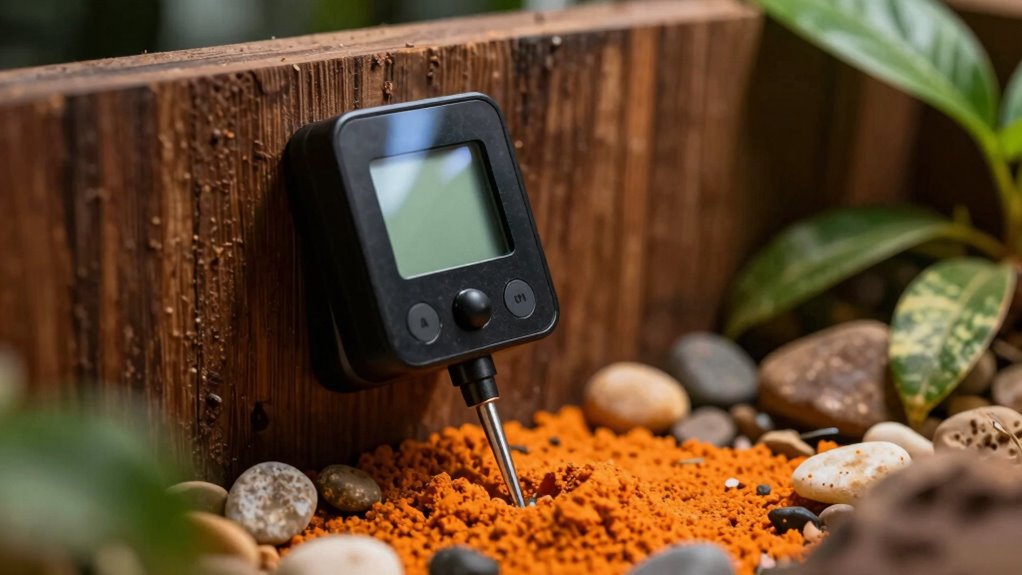
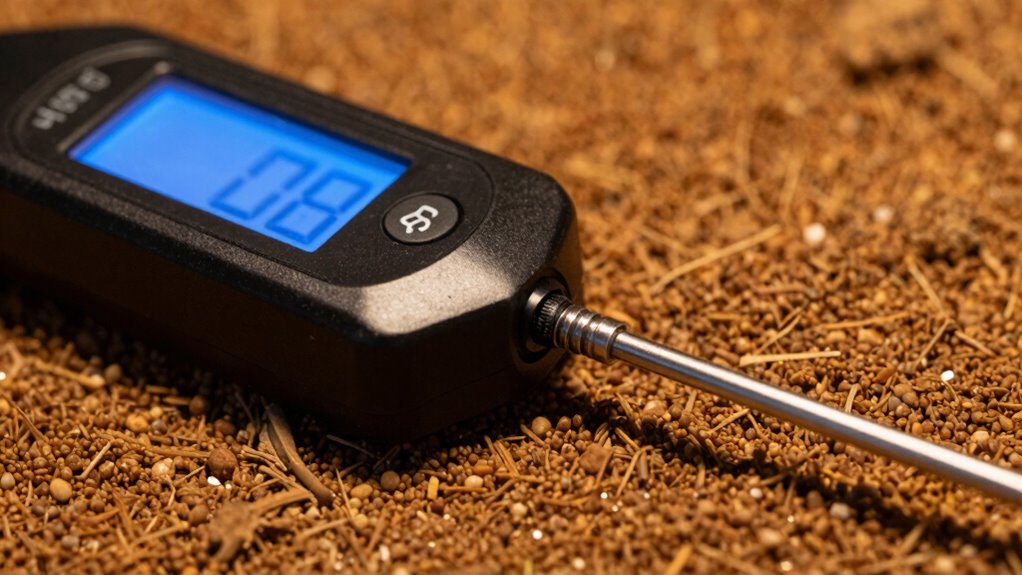
Positioning the probe correctly is key. You should place it at the level where your reptile spends most of its time, ideally on the substrate or near the basking spot. This ensures the thermostat responds to the temperature your pet actually experiences, rather than just a general area of the enclosure. If the probe is misplaced, you could end up with hot spots or cold zones, making your thermostat’s regulation ineffective. Proper placement of the temperature probe is especially essential when managing habitat humidity, as temperature influences moisture levels and overall enclosure conditions. Additionally, understanding probe placement can significantly improve the accuracy of temperature regulation and overall habitat stability. Correct probe placement also helps prevent temperature fluctuations, which can be stressful or dangerous for your reptile.
Lighting schedules are equally important, as they simulate day and night cycles your reptile relies on for natural behaviors. A thermostat with a probe can help coordinate heating and lighting, turning lamps on and off at scheduled times. This controlled environment mimics natural conditions, reducing stress and promoting health. Guesswork often leads to inconsistent lighting and heating, which can disrupt your pet’s biological rhythms.
In the end, using a thermostat with a well-placed probe isn’t just about convenience; it’s about giving your reptile a stable, healthy environment. It minimizes guesswork, guarantees accurate temperature control, and helps you maintain proper habitat humidity and lighting schedules. When you take these steps, you’re not just creating a safe space—you’re setting your pet up for a long, healthy life.

BN-LINK Reptile Thermostat Temperature Controller, Digital Heat Mat Thermostat for Seed Starting, Plant Germination, Greenhouse, Incubator, Brooder, Brewing, Reptiles Tank,40-108°F, 1000W, ETL Listed
- Easy Temperature Programming: Set temperature with 3 buttons, Fahrenheit/Celsius switch
- Bright, Easy-to-Read Display: Clear display with LED indicators for status
- Durable Construction: Built for durability with sensor probe and long cords
As an affiliate, we earn on qualifying purchases.
As an affiliate, we earn on qualifying purchases.
Frequently Asked Questions
How Often Should I Calibrate My Reptile Thermostat?
You should calibrate your reptile thermostat every 3 to 6 months to guarantee accurate temperature control. Proper probe placement is vital, so check that it’s positioned correctly in the basking area or habitat. Regular calibration helps account for sensor drift or environmental changes. By maintaining this schedule, you’ll keep your reptile’s environment safe and stable, preventing overheating or chilling, and securing their health and comfort.
Can I Use a Household Thermometer Instead of a Probe?
Using a household thermometer instead of a probe is a bad idea; it’s like trying to measure a hurricane with a teaspoon! Household thermometers lack the precision needed for reptile habitats, and their probe accuracy isn’t designed for consistent, accurate readings at your pet’s basking spot. For reliable temperature control, always use a dedicated probe thermometer. It guarantees your reptile stays healthy and comfortable, avoiding dangerous temperature fluctuations.
What Is the Ideal Temperature Range for Different Reptiles?
You should aim for specific temperature ranges based on your reptile species, typically between 75-85°F for most. Make certain your habitat humidity and lighting schedules complement this, as proper temperature helps regulate activity and digestion. Use a reliable thermometer probe placed correctly to monitor these conditions precisely. Avoid guesswork, as accurate temperature control minimizes stress and health issues, creating a comfortable environment that supports your reptile’s well-being.
How Do I Prevent Temperature Fluctuations in the Enclosure?
To prevent temperature fluctuations, you should regularly monitor your enclosure’s temperature and humidity control with a reliable thermostat probe placed correctly. Synchronize your lighting schedule with heating to maintain consistent warmth and light cycles. Avoid opening the enclosure too often, and consider using a backup power source. Proper probe placement guarantees accurate readings, helping you make adjustments and keep your reptile’s environment stable and safe.
Are Digital Thermostats More Accurate Than Analog Ones?
Are digital thermostats more accurate than analog ones? Absolutely, they tend to be, thanks to digital precision. Analog limitations, like dial inaccuracies and slower responses, can cause temperature swings. Digital thermostats offer more consistent readings and better control, making them a smarter choice for maintaining your reptile’s ideal environment. By choosing digital, you reduce guesswork and confirm your pet stays comfortable and healthy.
Conclusion
When it comes to your reptile’s comfort, proper probe placement isn’t just a detail—it’s the heartbeat of their well-being. Think of it like nurturing a delicate flower; if you place the probe just right, you guarantee steady warmth and happiness. Guesswork can leave your pet in the cold, but precise placement keeps them cozy and thriving. Remember, a small shift makes a world of difference, so pay attention and give your reptile the best care possible.