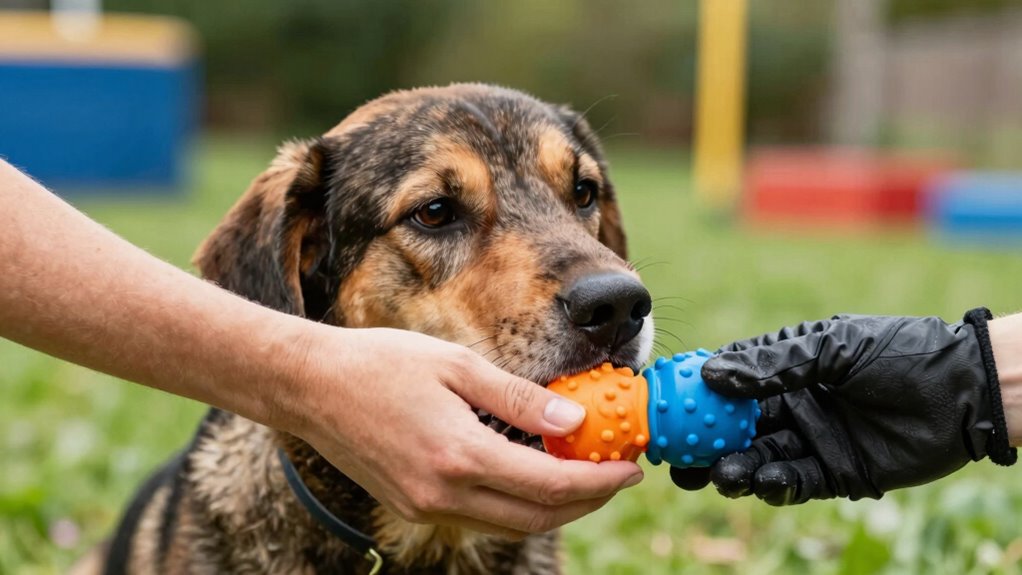

To teach item retrieval without mouthing damage, be consistent during each session by using the same commands, gestures, and reinforcing with praise or treats. Choose safe items and hold them gently when practicing. Incorporate clear cues to signal acceptable mouthing and boundaries to prevent damage. Keep sessions short and positive, emphasizing reinforcement for gentle handling. Patience and persistence are key. If you keep these strategies in mind, you’ll develop effective techniques to promote safe retrieval behavior.

Get pet supplies delivered free — and shop member deals
- Fast, free delivery on millions of items
- Access to Prime Big Deal Days deals on October 6–7
- Prime Video, Amazon Music and more included
Key Takeaways
- Use consistent cues and commands to signal acceptable retrieval behavior and gentle handling.
- Select safe, appropriate items for mouthing and reinforce gentle handling through positive feedback.
- Keep training sessions short, engaging, and end on a positive note to promote confidence.
- Reinforce desired behaviors immediately with praise or treats to encourage repetition.
- Redirect or reset when mouthing becomes too vigorous, and avoid punishment to maintain motivation.

Have you ever wondered how to effectively teach someone to retrieve items on command? It’s a skill that requires patience, clear communication, and a structured approach. One of the most important aspects is maintaining training consistency. When you’re working on item retrieval, you need to practice the same steps every time. Consistency helps your learner understand what’s expected and reduces confusion. Use the same commands, gestures, and rewards during each session. Over time, this predictability builds confidence and speeds up learning. It’s also essential to create a routine, so your learner knows what to anticipate and can focus on mastering the task, rather than guessing what’s coming next.
Reinforcement techniques are equally critical. Positive reinforcement, like praise or treats, encourages your learner to repeat the behavior. When they successfully retrieve the item, immediately reward them with something they value. This strengthens the connection between the action and the reward, making it more likely they’ll perform the task again. Conversely, avoid punishing mistakes; instead, gently redirect or reset the task. Over time, this positive approach fosters motivation and reduces frustration, which is fundamental for sustained progress. Incorporating training consistency helps your learner develop reliable habits and reduces confusion about expectations. Regular practice also reinforces behavioral patterns, making successful retrieval more instinctive.
To prevent mouthing damage during training, it’s important to select appropriate items and set boundaries. Use objects that are safe for mouthing, or better yet, avoid items that can cause damage altogether. When practicing retrieval, hold the item firmly but gently, and guarantee your learner isn’t biting or chewing excessively. If mouthing becomes a problem, incorporate cues to signal gentle handling. For example, teach them to take the item softly or to drop it gently into your hand. Consistent cues paired with reinforcement help your learner understand the difference between acceptable and destructive mouthing. Additionally, understanding positive reinforcement is vital because it encourages desirable behaviors and motivates continued effort. Incorporating clear cues and establishing boundaries with mouthing prevention techniques enhances the overall effectiveness of training and encourages desirable behaviors.
Furthermore, keeping training sessions short and engaging helps maintain your learner’s focus and enthusiasm. End each session on a positive note, with a successful retrieval and a reward. This encourages enthusiasm for the next session and helps build a positive association with the task. Remember that patience and persistence are key. Every learner progresses at their own pace, so stick to your routine, reinforce good behaviors, and be attentive to their cues. With time, consistent practice, and proper reinforcement techniques, you’ll see progress in their ability to retrieve items reliably without mouthing or causing damage.
dog item retrieval training tools
As an affiliate, we earn on qualifying purchases.
As an affiliate, we earn on qualifying purchases.
Frequently Asked Questions
What Are Common Signs My Dog Is Ready to Learn Retrieval?
You’ll notice your dog is ready to learn retrieval when they show patience during training and enthusiastically anticipate rewards. They might bring toys or objects to you, showing interest without mouthing or biting. Use positive reinforcement to encourage this behavior, rewarding calm and gentle interactions. Training patience is key—wait for your dog to calmly engage, then reward their efforts. This builds confidence and readiness for effective, damage-free retrieval lessons.
How Do I Handle a Dog That Refuses to Fetch?
Imagine your dog sitting patiently, eyes fixed on the toy you gently hold out. If your dog refuses to fetch, try choosing a different, more enticing toy that sparks their interest. Practice patience, giving your dog time to build confidence. Keep training sessions short and positive, rewarding every small success. With consistent, gentle encouragement and careful toy selection, your dog will gradually learn to enjoy retrieving.
Can I Train Retrieval Without Using Treats?
Yes, you can train retrieval without treats by using play training and scent work. Engage your dog with a favorite toy or game to motivate them, gradually encouraging fetch. Incorporate scent work to stimulate their nose and build interest in the item. Keep sessions fun and positive, using praise and play as rewards. Over time, your dog will learn to retrieve through these engaging methods, without relying on treats.
How Long Does It Typically Take to See Progress?
Progress can feel like a slow bloom, but with consistent training patience and positive reinforcement, you’ll notice improvements in a few weeks. Every session builds a foundation, so stay patient and keep encouraging your dog gently. Usually, you’ll see small signs of progress within 2-4 weeks, but some dogs may take longer. Stay committed, celebrate small wins, and trust the process—you’re planting seeds for a lifelong skill.
What Are Alternative Methods if Mouthing Damage Occurs?
If mouthing damage occurs, you should explore alternative techniques that focus on damage prevention. Use visual cues or gestures to guide your child instead of relying solely on mouthing. Incorporate gentle, consistent redirection to discourage damaging behaviors, and provide safe, appropriate items to replace what they’re mouthing. This approach helps protect your child’s mouth while reinforcing positive item retrieval skills, ensuring progress without risking injury.
Conclusion
Think of teaching item retrieval like guiding a young bird from the nest. With gentle encouragement and patience, you help your dog learn to fly confidently, retrieving items without mouthing damage. Each successful fetch is a feather in your cap, building trust and skill. As the bird gains strength, so does your bond. Keep nurturing with kindness, and soon, your dog will soar in retrievals, graceful and damage-free, ready to explore new heights together.
Fall Picks
fall essentials
As an affiliate, we earn on qualifying purchases.