
In the first 30 days with your puppy, focus on creating a safe, cozy environment and establishing consistent routines for feeding, potty, and play. Build trust through positive interactions and gentle socialization, introducing new sounds, people, and experiences gradually. Use a crate as a safe space and reinforce house training with patience and praise. Staying consistent and loving helps your puppy adjust and develop healthy habits. Keep exploring to discover more tips for a happy, confident new companion.
Key Takeaways
- Establish a safe, comfortable environment with consistent routines and positive interactions to build trust and security.
- Use crate training to support housebreaking and create a safe space for the puppy.
- Keep training sessions short, positive, and gradually introduce new sounds, people, and environments.
- Provide high-quality, age-appropriate nutrition to support growth and immune development.
- Set clear boundaries, address accidents promptly, and shower the puppy with love to foster trust and good behavior.

Bringing a puppy home for the first time is an exciting experience, but it also comes with a lot of responsibility. During these initial weeks, your focus should be on creating a safe, comfortable environment that fosters trust and healthy habits. One of the most important aspects is establishing a routine, which helps your puppy feel secure and understand what to expect. This includes regular feeding times, potty breaks, and play sessions. When it comes to puppy nutrition, you want to choose high-quality puppy food that supports growth and development. Consult your veterinarian to determine the right diet, and stick to consistent feeding schedules to prevent digestive issues and encourage good behavior.
Establish a routine for feeding, potty breaks, and play to help your puppy feel secure and understand expectations.
Crate training plays a essential role during these early days. A crate isn’t just a confinement space; it becomes your puppy’s safe haven and a tool for housebreaking. Introduce the crate gradually, making it a positive spot with treats, toys, and comfortable bedding. Never use it as a punishment. When your puppy whines or seems restless, try to identify if they need to go outside or if they’re simply seeking comfort. Over time, your puppy will learn to associate the crate with safety and relaxation, which makes housetraining easier and reduces accidents around the house.
During these first 30 days, it’s imperative to be patient and consistent. Puppies are learning about their new world, and your calm, predictable behavior helps them adjust. Keep training sessions short and positive, rewarding good behavior with praise or treats. Socialization is also indispensable at this stage; gently introduce your puppy to different sounds, people, and environments. This builds confidence and lessens fearfulness later in life. Remember, though, that your puppy’s immune system is still developing, so avoid overwhelming them with too many new experiences at once. Additionally, understanding the importance of puppy development stages can help you tailor your approach during these critical weeks. Recognizing these stages also allows you to provide age-appropriate stimulation and social interactions to support healthy growth.
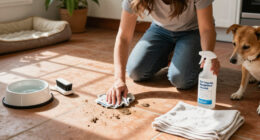
In addition to focusing on nutrition and crate training, establishing boundaries early on sets the tone for good behavior. Be clear with commands, and avoid mixed signals. When accidents happen, clean them thoroughly to eliminate odors that might attract your puppy back to the same spot. Most importantly, give your puppy plenty of love and attention—building a trusting relationship now will pay off in the long run. These initial weeks are about laying a foundation built on consistency, patience, and care, ensuring your puppy grows into a happy, well-adjusted dog.
puppy crate with bedding and toys
As an affiliate, we earn on qualifying purchases.
As an affiliate, we earn on qualifying purchases.
Frequently Asked Questions
How Do I Handle My Puppy’s Separation Anxiety?
To handle your puppy’s separation anxiety, start with crate training to create a safe, cozy space. Use puppy play sessions to tire them out before you leave, so they’re less anxious. Gradually increase your time apart, offering treats and comforting words when you return. Consistency is key—stay calm and patient, helping your puppy associate alone time with positive experiences. Over time, they’ll learn to feel secure on their own.
When Should I Start Training Basic Commands?
Did you know puppies can start learning basic commands as early as 8 weeks old? You should begin training right away, focusing on potty training and crate training. Start with simple commands like “sit” and “come,” and be consistent. Early training helps build good habits and trust. Short, fun sessions daily help your puppy learn faster and feel secure, setting a strong foundation for future obedience.
What Should I Do if My Puppy Gets Sick?
If your puppy gets sick, act quickly by contacting your veterinarian immediately, especially if it’s a veterinary emergency. Keep calm and monitor their symptoms closely. Never give your puppy medication without veterinary approval to guarantee medication safety. Follow your vet’s advice carefully, and bring your puppy in if symptoms worsen. Prompt care helps prevent complications and ensures your pup recovers comfortably and safely.
How Can I Socialize My Puppy Safely?
The ball’s in your court to keep your puppy safe while socializing. Start with short, controlled puppy socialization sessions, exposing your pup to new people, pets, and environments gradually. Use positive reinforcement to encourage calm behavior. Always supervise interactions to prevent overstimulation or accidents. Remember, slow and steady wins the race—prioritize safe interactions to build confidence and prevent fear or aggression later on.
What Are Signs of a Happy, Healthy Puppy?
A happy, healthy puppy shows signs like bright eyes, wagging tail, and steady energy. You’ll notice good puppy nutrition reflected in shiny coat and playful behavior, while regular puppy dental care keeps breath fresh and teeth strong. If your puppy eats well, sleeps peacefully, and interacts happily, you’re on the right track. Keep monitoring these signs to guarantee your pup stays vibrant and healthy as they grow.
Conclusion
In these first 30 days, you’re planting the roots of a lifelong bond. Patience and consistency are your guiding stars, shaping a confident, happy pup from the blank slate before you. Remember, this journey is like tending a delicate garden—you’ll face some weeds, but with care and love, your puppy will blossom into a loyal companion. Stay committed, and watch your friendship grow stronger each day, transforming your home into a haven of trust and joy.