TL;DR

Get pet supplies delivered free with Prime
- Fast, free delivery on millions of items
- Prime Video, Amazon Music and more included
- Member-only deals all year
Riley S. and her family adopted Pumpkin, a 9-year-old Rottweiler, from Colorado Animal Rescue during the ASPCA’s Rescue Effect campaign in September 2026. The campaign covered Pumpkin’s adoption fee and, according to the shelter, helped free space and resources for other animals needing care.
Riley S. and her family adopted Pumpkin, a 9-year-old, 130-pound Rottweiler, from Colorado Animal Rescue during the ASPCA’s Rescue Effect campaign in September 2026. The campaign covered Pumpkin’s adoption fee, while the shelter said adoptions helped free kennel space and support other animals in need.
Pumpkin had been returned to C.A.R.E. after her adopter’s health unexpectedly declined, following an earlier adoption. The dog first arrived at the shelter in May 2025, when her previous family moved and could not find pet-friendly housing, according to Maggie Niehoff, C.A.R.E.’s programs director. Pumpkin underwent spay and dental surgery before being adopted, but later came back into the shelter’s care.
Riley said she found Pumpkin on C.A.R.E.’s website while her family was grieving the loss of their 13-year-old dog, Kati. Riley and her husband, Alex, live in Grand Junction, nearly two hours from the shelter, and checked in about Pumpkin as they considered whether she would suit their household. Riley and a friend drove to meet her over Labor Day weekend; Riley finalized the adoption the next day.
Riley said she had expected to pay an adoption fee but learned it was covered by the campaign. She said Pumpkin went home with a dog bed, collar, food, name tag and microchip; the family purchased a harness. The family calls Pumpkin “Punky.” Riley said she has settled in with the couple’s sons, Walker and Nolan, their Miniature Australian Shepherd, Peanut, and their cat, Pretzel.
Adoptions Open Space for Other Animals
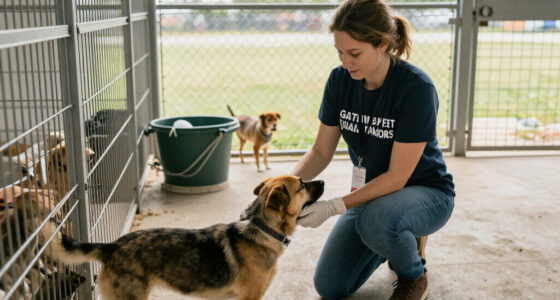
The adoption mattered to the family and also had a practical effect at the shelter, according to C.A.R.E. Niehoff said freeing kennel space during the campaign allowed the organization to respond to special requests, including emergency boarding for two dogs whose owner was hospitalized.
C.A.R.E. also took in two adult dogs with heartworm from a nearby shelter and a puppy with broken hind legs after it was hit by a car, Niehoff said. The shelter provided veterinary care for the three dogs. The account does not give totals for campaign adoptions or quantify how much kennel capacity or funding was freed, but it describes how an adoption can make room for animals with urgent needs.
As an affiliate, we earn on qualifying purchases.
Pumpkin’s Return to C.A.R.E.
Pumpkin’s story included two separate disruptions to her home life. Her first stay at C.A.R.E. began after a housing move made it difficult for her family to keep her, according to Niehoff. After surgery and adoption, she later returned when her adopter’s health declined. The shelter posted her photographs and description online to find another home.
Riley had previously heard of C.A.R.E. because her parents had adopted from the organization. She said she was drawn to Pumpkin’s profile and wanted to meet her before deciding. Their adoption took place while the shelter was participating in The Rescue Effect, an ASPCA campaign that supported waived adoption fees. Riley said she did not know about the campaign before arriving.
“Sadly, this is one of the main reasons pets end up in our care.”
— Maggie Niehoff, C.A.R.E. programs director
Campaign Results and Longer-Term Care
The account does not report how many animals C.A.R.E. placed during the campaign, the total value of fees waived, or how the campaign’s results compared with the shelter’s usual adoption activity. It also does not provide further details about the animals’ treatment or outcomes beyond saying C.A.R.E. provided veterinary care to the two heartworm-positive dogs and the injured puppy.
Riley described Pumpkin as settled into the household, but the report does not include follow-up information about her health or longer-term adjustment. The shelter’s broader campaign impact is presented through specific examples rather than a full accounting of outcomes.
Pumpkin’s New Home and Shelter Work
Pumpkin is now living with Riley, Alex, their sons, Peanut and Pretzel. The report offers no scheduled follow-up or additional campaign milestone. C.A.R.E. said the adoption campaign’s freed kennel space helped it respond to other animals and emergency requests; further details about ongoing care or later outcomes were not provided.
Key Questions
Who adopted Pumpkin?
Riley S. and her family adopted Pumpkin from Colorado Animal Rescue. They live in Grand Junction, nearly two hours from the shelter.
Why did Pumpkin return to the shelter?
Pumpkin first came to C.A.R.E. in May 2025 after her family moved and could not find pet-friendly housing. After she was adopted, her adopter’s health unexpectedly declined, and Pumpkin returned to the shelter.
What did The Rescue Effect campaign do for Pumpkin’s adoption?
The ASPCA campaign covered Pumpkin’s adoption fee. Riley said the shelter also sent her home with a dog bed, collar, food, name tag and microchip.
How did the adoption help other animals?
C.A.R.E. programs director Maggie Niehoff said freed kennel space helped the shelter provide emergency boarding for two dogs whose owner was hospitalized. The shelter also took in two heartworm-positive dogs and a puppy with broken hind legs and provided veterinary care.
Source: rss
Halloween Picks
halloween
As an affiliate, we earn on qualifying purchases.