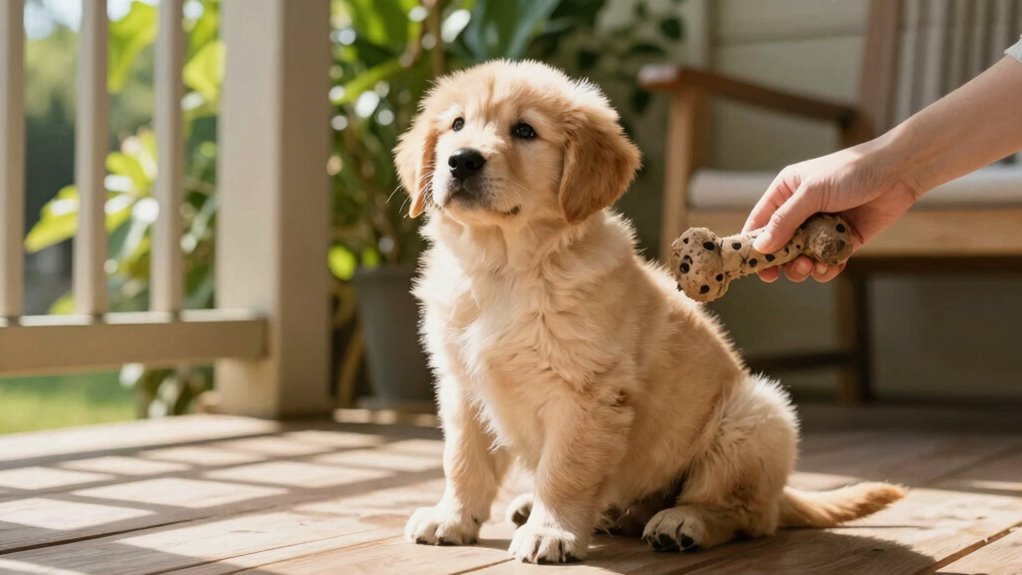

To raise a puppy that can wait, set clear boundaries early and stay consistent with routines. Use positive reinforcement to encourage patience, gradually introducing your puppy to new people, environments, and situations in a controlled way. Practice crate training as a safe space, slowly increasing alone time. Focus on gentle, persistent guidance and celebrate small successes. If you keep building on these techniques, you’ll develop a confident, patient pup capable of waiting calmly in any situation.
Key Takeaways
- Establish clear boundaries and routines early to teach patience and self-control.
- Use positive reinforcement to reward calm, waiting behaviors consistently.
- Gradually introduce the puppy to crate training as a secure, calm space.
- Socialize gradually with different stimuli, rewarding patience and confident reactions.
- Respond calmly and avoid immediate attention to whining or barking, reinforcing calmness.
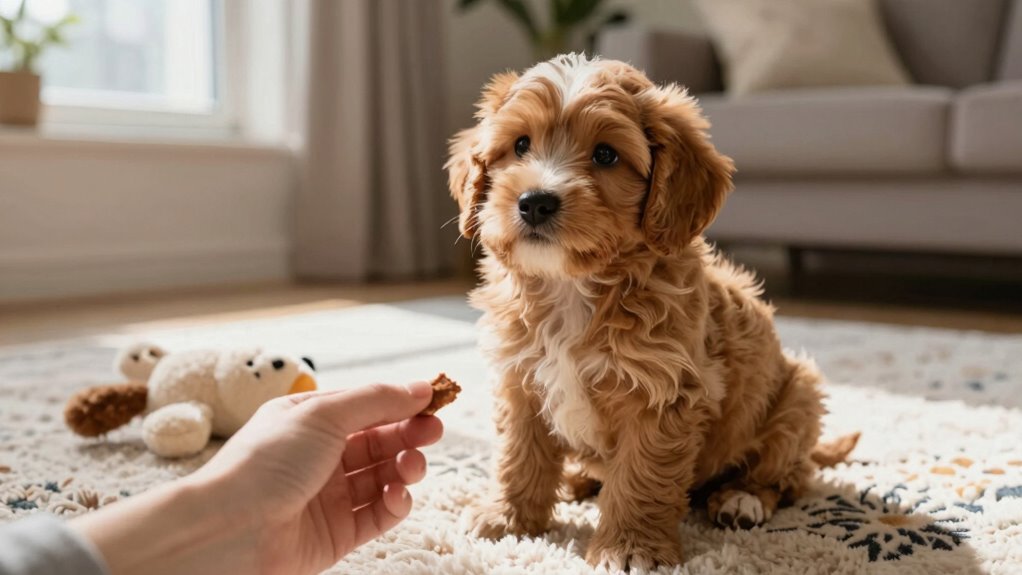
Raising a puppy that can wait requires intentional training and consistent boundaries from the start. It’s all about setting clear expectations early on so your puppy learns patience and self-control. One of the most effective methods to achieve this is through crate training. When you introduce your puppy to a crate, do so gradually, making it a safe and comfortable space. Use positive reinforcement—offer treats and praise when they enter willingly or settle down calmly. The crate becomes a place where your puppy learns to be alone quietly, which is essential for waiting periods, whether it’s waiting for food, attention, or walks. Over time, your puppy will associate the crate with calmness and security, making it easier to manage their patience in other situations.
Gradual crate training fosters patience, security, and calmness in your puppy.
Alongside crate training, socialization techniques play an essential role. Expose your puppy to different people, animals, environments, and sounds in a controlled manner. Socialization isn’t just about fun; it’s about teaching your puppy to remain calm and composed amidst new experiences. When you introduce new stimuli, do so gradually and reward your puppy for good behavior. This helps them develop confidence and self-control, which are indispensable for waiting patiently. For example, if your puppy is meeting other dogs, keep the interactions brief and positive, gradually increasing exposure as they become more comfortable. Proper socialization teaches your puppy how to handle excitement and novelty without becoming overwhelmed or impatient. Developing confidence and self-control are key components in fostering a patient and well-behaved dog. Incorporating controlled exposure is crucial for building resilience and patience in your puppy. Consistent routines and training patience also reinforce these qualities, ensuring your puppy learns to wait calmly in various situations. Establishing positive reinforcement techniques helps your puppy associate waiting with good things and builds their motivation to stay patient. Additionally, understanding the importance of early socialization can significantly influence your puppy’s ability to adapt and wait calmly in unfamiliar settings.
Consistency is key in both crate training and socialization. Set routines so your puppy knows what to expect throughout the day. When you’re establishing boundaries, be firm yet gentle. If your puppy starts to whine or bark in the crate, avoid giving in immediately; instead, wait until they settle before offering attention. This teaches patience and prevents the development of demanding behaviors. Similarly, during socialization, respond calmly and positively to your puppy’s reactions, guiding them toward calmness rather than frustration or fear.
Every interaction is an opportunity to reinforce patience and boundaries. Keep training sessions short, frequent, and filled with positive reinforcement. Celebrate small victories, like waiting patiently before eating or staying calm when meeting new people. Remember, raising a puppy that can wait isn’t about harsh discipline but about consistent, gentle guidance that builds your puppy’s confidence and self-control. With patience, persistence, and these foundational techniques, you’ll foster a well-behaved pup capable of waiting calmly in any situation.

PupLuxe Puppy Starter Kit – Black 22 Piece Dog Training Kit | Great Puppy Gift for First Time & Experienced Owners | New Dog Bundle
- Complete Puppy Starter Kit: Includes essentials for small and medium dogs
- Comprehensive Training Supplies: Leash, collar, treat balls, and more
- Hygiene and Grooming Tools: Nail clippers, toothbrushes, hair remover
As an affiliate, we earn on qualifying purchases.
As an affiliate, we earn on qualifying purchases.
Frequently Asked Questions
At What Age Should I Start Training My Puppy to Wait?
You should start training your puppy to wait around 8 to 10 weeks old. Early training helps with puppy socialization and house training, establishing good habits from the start. Use positive reinforcement to teach patience, and incorporate waiting exercises during daily routines. Consistent practice makes a big difference, so be patient and gentle. Starting early guarantees your puppy learns to wait comfortably, setting the foundation for well-behaved behavior as they grow.
How Do I Handle a Puppy That Whines When Waiting?
When your puppy whines during wait time, stay calm and consistent. Use crate training to create a safe space, and incorporate leash training to teach patience. While it’s tempting to comfort or give in, avoid rewarding whining—wait until they’re quiet before praising or giving treats. Juxtapose their restlessness with your steady, calm presence, helping them learn that waiting calmly leads to positive reinforcement, building patience over time.
What Are Common Mistakes to Avoid in Teaching Patience?
You should avoid rushing your puppy’s socialization or skipping crate training, as these can teach impatience. Don’t punish whining or frustration; instead, reward calm behavior and gradually increase waiting times. Be consistent and patient, ensuring your puppy feels secure. Remember, socialization helps them learn patience in diverse situations, while crate training teaches them to wait comfortably. Avoid abrupt changes or overloading your puppy, which can hinder their learning process.
How Long Can a Healthy Puppy Realistically Wait?
A healthy puppy can typically wait about 2 to 3 hours between bathroom breaks, but this varies with age and size. During training, keep their puppy diet and sleeping schedule consistent to support patience. Avoid rushing them or forcing delays, as a proper routine helps build their endurance. As they grow, they’ll gradually learn to wait longer, making patience easier for both of you.
Should I Use Treats or Praise to Reinforce Waiting Behavior?
Use treats for immediate reinforcement, ensuring treat timing is precise when your puppy waits successfully. Praise should be consistent to build a clear connection between the behavior and your response. Both methods work well together; treats reinforce the behavior in the moment, while praise boosts your puppy’s confidence. Keep your cues clear, and always reward promptly to help your puppy learn to wait patiently.
Conclusion
Now that you’ve learned the secrets to raising a puppy that can wait, the real test begins. Will your training hold up when your puppy faces its biggest challenge yet? Remember, patience and consistency are your best allies. Stay committed, and you’ll soon see a well-behaved pup that surprises everyone—even you. But don’t get too comfortable—there’s always a new lesson waiting just around the corner. Are you ready for the next step?