Setting up a quarantine tank is your best shortcut to avoiding big fish losses. It allows you to isolate new or sick fish, spot health issues early, and prevent disease from spreading to your main tank. Use proper equipment, maintain stable water conditions, and keep the environment stress-free. Regular monitoring and good management practices are key. Keep going to discover more tips on setting up and managing effective quarantine tanks.
Listen free for 30 days with Audible
Thousands of audiobooks and originals — cancel anytime.
As an affiliate, we earn on qualifying purchases.
Key Takeaways
- Quarantine tanks isolate new or sick fish, preventing disease transmission to the main aquarium.
- Proper setup and maintenance of quarantine tanks enable early detection of health issues.
- Regular monitoring and water quality management reduce the risk of contamination and losses.
- Using appropriate materials and equipment ensures a safe, stress-free environment for quarantined fish.
- Adhering to best practices minimizes environmental impact and promotes sustainable, effective quarantine management.
As an affiliate, we earn on qualifying purchases.
Why Quarantine Tanks Are Critical for Fish Health

Quarantine tanks are essential because they help prevent the spread of diseases to your main aquarium. When you isolate new or sick fish, you reduce the risk of introducing harmful pathogens that can infect your entire tank. This practice is crucial for disease prevention, especially with fish prone to infections or parasites. Additionally, quarantine tanks help minimize stress for your fish. By giving them a quiet, controlled environment, you allow their immune systems to recover and fight off illnesses more effectively. Keeping fish separate during the initial period also makes it easier to observe their behavior and health, catching problems early. Proper tank maintenance is vital for keeping quarantine tanks effective and ensuring your fish remain healthy. Understanding color accuracy can help you monitor fish health more precisely, as changes in coloration often indicate stress or illness. Being attentive to water quality parameters in quarantine tanks further supports early detection of potential issues. Additionally, monitoring fish behavior closely can give you early clues about their well-being and help you intervene promptly. Implementing regular testing of water parameters is also key to maintaining a safe environment in quarantine tanks. Overall, quarantine tanks are a proactive step that safeguards your main aquarium and promotes healthier, more resilient fish.
How to Set Up and Equip Your Quarantine Tank

Setting up a quarantine tank requires careful planning to make certain it effectively isolates new or sick fish. Begin with your quarantine tank setup by choosing a suitable size—small enough to manage easily but large enough for comfort. The equipment essentials include a reliable filter, a heater to maintain stable temperatures, and a thermometer to monitor conditions. Use a gentle flow filter to prevent stress and ensure proper water quality. Add a fine substrate or bare bottom for easy cleaning. Keep lighting subdued to reduce stress. Make sure to cycle the tank before introducing fish, and have water testing kits on hand to monitor ammonia, nitrite, and nitrate levels. Incorporating sound therapy techniques can also help reduce stress and promote healing in fish. Proper setup and essential equipment ensure your quarantine tank works effectively, protecting your main display tank from disease and ensuring fish health. Additionally, proper water parameters are crucial for the recovery and well-being of quarantined fish. Ensuring your setup aligns with reliable backup power principles can help maintain consistent conditions even during power outages.
Choosing the Right Materials and Equipment for Your Quarantine Tank

Choosing the right materials and equipment guarantees your quarantine tank functions smoothly and keeps your fish healthy. Material selection impacts durability, safety, and ease of cleaning, so opt for non-toxic, corrosion-resistant options like glass or high-quality acrylic. Using European cloud innovation can also help you access reliable, energy-efficient materials that promote sustainability. Additionally, incorporating smart monitoring systems can enhance your ability to maintain optimal water conditions remotely. Equipment essentials include a reliable heater, filter, aerator, and water testing kits to monitor water quality. Consider the table below to guide your choices:
| Material | Equipment Essential | Benefits |
|---|---|---|
| Glass/Acrylic | Heater | Maintains stable temperature |
| PVC/Plastic | Filter | Ensures clear, healthy water |
| Silicone Sealant | Aerator | Provides oxygenation |
| Mesh or Netting | Water Testing Kits | Tracks ammonia, pH, and nitrates |
| Rubber or Silicone | Water Conditioner | Prevents toxicity and stress |
Prioritize quality to prevent costly failures. Additionally, selecting appropriate materials can significantly extend the lifespan of your quarantine tank and reduce maintenance needs.
Managing Fish During Quarantine: Best Practices
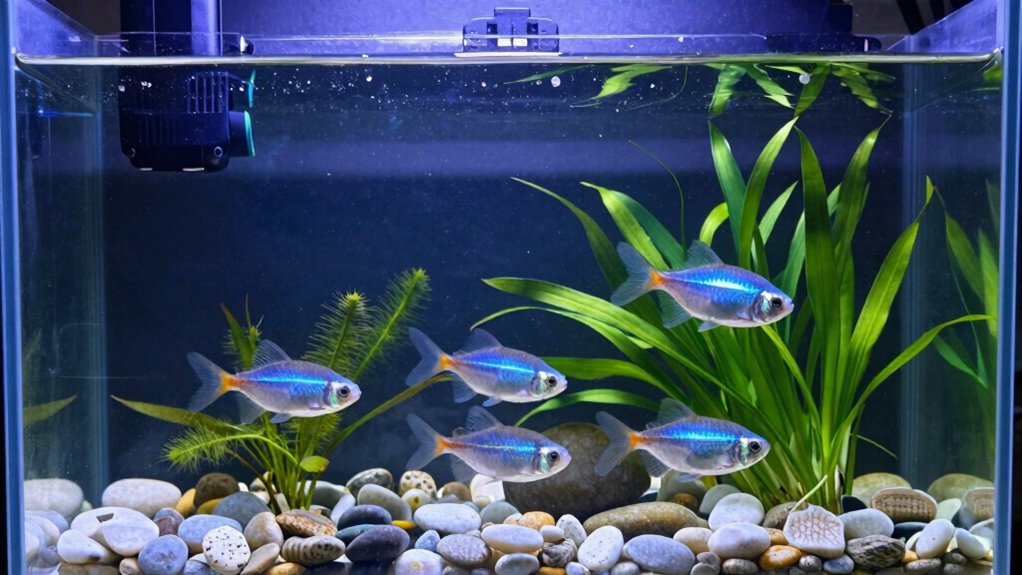
Effective fish management during quarantine is crucial for preventing disease spread and ensuring your new arrivals adapt well. Start by monitoring water quality daily, keeping parameters stable to support disease prevention and reduce stress. Minimize handling to avoid unnecessary stress, which can weaken fish immunity. Maintain a quiet environment around the quarantine tank, limiting disturbances that could cause stress-induced health issues. Feed sparingly but consistently, offering high-quality food to promote health without polluting the water. Observe your fish closely for signs of illness or abnormal behavior, acting promptly if needed. Consistent, gentle care helps reduce stress, making your fish less susceptible to diseases. Proper management during quarantine creates a safe environment, safeguarding your main display tank from potential outbreaks, water parameters, which play a vital role in fish health. Additionally, understanding the history of fish diseases can help you identify and prevent common health issues early on. Maintaining optimal conditions and being vigilant about essential oils for fish health can further support your quarantine process and overall fish well-being. Incorporating regular water testing techniques helps you detect early signs of illness and ensures you catch any issues early, maintaining a stable environment for your fish.
Troubleshooting Common Quarantine Problems
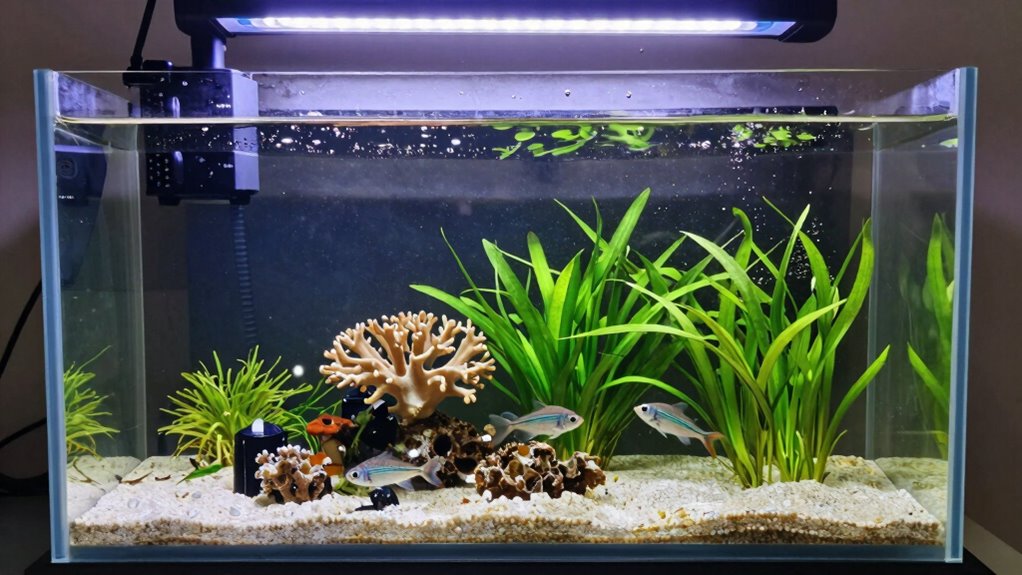
Troubleshooting common quarantine problems requires careful observation and prompt action to prevent minor issues from escalating. If you notice fish showing signs of disease, act quickly to isolate and treat the problem, as early intervention is key to disease prevention. Keep an eye out for stress indicators like unusual swimming or coloration, which can weaken fish immunity and increase vulnerability. Maintaining stable water parameters and providing hiding spots help reduce stress, supporting quicker recovery. If symptoms persist, consider adjusting your quarantine setup or treatments. Regular monitoring and quick responses ensure the health of your quarantine tank and prevent the spread of illness to your main display. Incorporating sustainability practices into your quarantine routine can further enhance the health and well-being of your aquatic environment. Paying attention to fish net worth and its impact on your overall setup can also guide better management decisions. Proper water quality management is essential for disease prevention and stress reduction, which are critical to successful quarantine, protecting your fish and saving you future headaches. Additionally, implementing best quarantine practices can help minimize the risk of introducing new diseases or pests into your main tank. Using appropriate air purifier maintenance dos and don’ts can also contribute to a cleaner environment and healthier quarantine conditions.
Frequently Asked Questions
How Long Should a Fish Remain in Quarantine Before Introducing to the Main Tank?
You should keep the fish in quarantine for at least 2 to 4 weeks, depending on their health and origin. During this quarantine duration, you need to monitor their fish health closely for signs of disease or stress. This period allows you to observe any issues early and treat them if necessary, preventing the spread of illness to your main tank. Proper quarantine practices help guarantee the overall health of your aquatic environment.
What Are Signs That a Quarantine Tank Needs Cleaning or Maintenance?
You’ll notice your quarantine tank needs cleaning if algae buildup covers surfaces or if filtration issues cause water to become cloudy. Studies show that algae can double in number every 48 hours if left unchecked, so regular maintenance is vital. Check filters for clogs or reduced flow, and clean the tank when you see excessive algae or debris. Regular maintenance keeps water healthy and your fish stress-free.
Can Quarantine Tanks Be Used for Other Aquatic Species Besides Fish?
Yes, you can use quarantine tanks for other aquatic species like aquatic plants and invertebrates. These tanks help prevent the spread of diseases and pests, making them ideal for invertebrate quarantine. Just guarantee you adjust water parameters and provide suitable habitat conditions for each species. Regular cleaning and monitoring are essential to keep the environment healthy, so you avoid introducing problems into your main display tanks.
Are There Specific Water Parameters Recommended for Quarantine Tanks?
You should aim for specific water parameters in your quarantine tank to make certain of health and safety. Maintain water chemistry with stable pH levels around 7.0 to 7.4, temperature between 75-78°F, and low ammonia, nitrite, and nitrate levels. Your tank setup should include proper filtration, aeration, and regular water changes. Keeping these parameters consistent helps reduce stress and prevents the spread of disease among aquatic species.
How Often Should Water Be Tested and Changed During Quarantine?
You should test the water at least twice a week to guarantee ideal conditions and catch any issues early. Follow water change protocols by replacing about 25% of the water weekly, or more if needed, to maintain water quality. Regular water testing frequency helps you monitor parameters like ammonia, nitrite, and pH, allowing you to adjust water changes proactively and keep quarantined fish healthy and stress-free.
Conclusion
By setting up an effective quarantine tank, you prevent serious health issues and save money in the long run. Imagine spotting early signs of illness in a new fish and isolating it promptly—you’re avoiding spreading disease to your entire tank. Taking these precautions might seem like extra effort, but it’s well worth it. With proper quarantine practices, you’ll enjoy a healthier, more vibrant aquarium and avoid costly setbacks down the line.
Flea & tick season Picks
flea and tick prevention
As an affiliate, we earn on qualifying purchases.