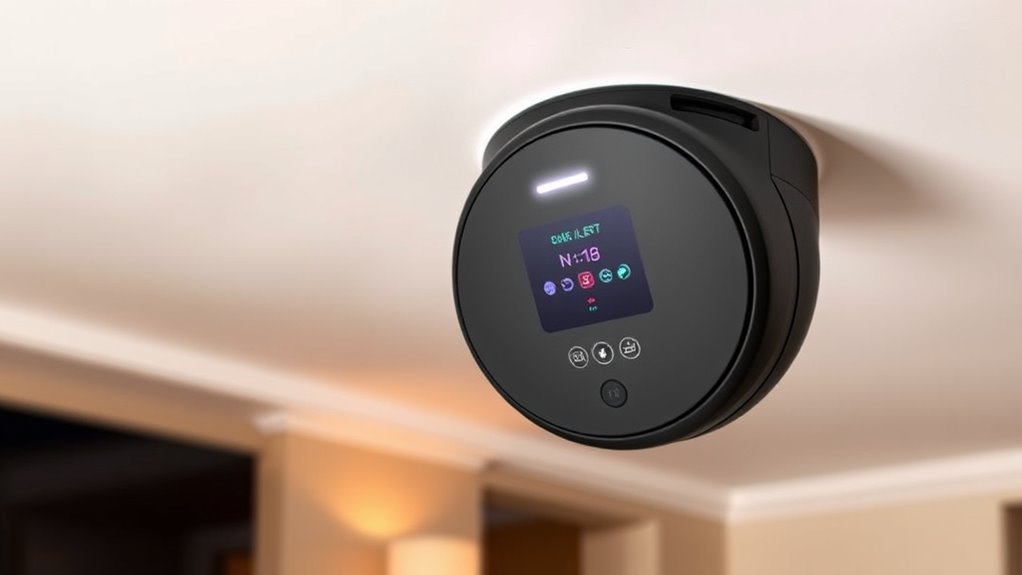

Advanced smoke alarms with voice alerts can tell you more than a siren alone, but the right choice depends on whether you need smoke-only or carbon monoxide coverage, hardwired or battery power, and alarms that communicate across rooms. My best overall pick is the First Alert Hardwired Smoke and Carbon Monoxide Alarm with Voice and Location Alerts, which pairs dual-hazard detection with spoken location cues. For a simpler hardwired setup, the Kidde 20SA10-V 3-pack stands out for voice alerts and a long-life backup battery, while the Heiman S1-R kit suits buyers seeking a wireless interconnected system. The main tradeoffs are installation needs, backup-battery upkeep, smart-home features, and whether location-specific alerts justify added complexity. Read on for the full breakdown of all 14 options and guidance on matching an alarm to your home.

Get pet supplies delivered free — and shop member deals
- Fast, free delivery on millions of items
- Access to Prime Big Deal Days deals on October 6–7
- Prime Video, Amazon Music and more included
Complete the kit



Key Takeaways
- Location cues set the clearest distinction: the First Alert hardwired combination alarm explicitly identifies the detected room, while many other voice-alert models focus on hazard type.
- Hardwired models lead this lineup: several Kidde and First Alert picks add voice alerts to existing wired systems, but buyers without compatible wiring should look first at battery-powered or wireless options.
- Backup power is not one-size-fits-all: the products span AA backup, sealed 10-year batteries, and other battery configurations, so replacement convenience and service life vary.
- Wireless interconnection is a separate advantage: the Heiman kit is designed around a gateway and multiple detectors, unlike the more conventional hardwired multipacks.
- Combination detection can reduce device count: several choices detect smoke and carbon monoxide together, while smoke-only picks may suit homes that already have separate CO coverage.
| Kidde Hardwired Smoke and Carbon Monoxide Detector with Voice Alerts, Battery Backup, and Interconnect, 2-Pack |  | Best Overall for Hardwired Smoke and CO Coverage | Power: 120V AC hardwired | Battery backup: 2 included AA alkaline batteries per alarm | Alarm volume: 85 dB | VIEW ON AMAZON | See Our Full Breakdown |
| Kidde 20SA10-V Hardwired Smoke Detectors with 10-Year Battery Backup and Voice Alerts, 3-Pack |  | Best for Low-Maintenance Smoke-Only Upgrades | Model: Kidde 20SA10-V | Power: 120V AC | Backup battery: Built-in 10-year battery | VIEW ON AMAZON | See Our Full Breakdown |
| Heiman S1-R Smart Wireless Interconnected Smoke Detector Kit, 6 Detectors with Gateway |  | Best Smart Wireless System | Included: 6 smoke detectors and 1 gateway | Sensor: Dual-beam photoelectric | Battery: 10-year CR123A lithium battery | VIEW ON AMAZON | See Our Full Breakdown |
| Kidde Smoke and Carbon Monoxide Detector, AA Battery-Powered, Model 30CUDR-V, 3-Pack |  | Best for Homes Without Alarm Wiring | Model: Kidde 30CUDR-V | Pack size: 3 alarms | Detection: Smoke and carbon monoxide | VIEW ON AMAZON | See Our Full Breakdown |
| First Alert Hardwired Smoke and Carbon Monoxide Alarm with Battery Backup, Voice and Location Alerts, 2-Pack |  | Best for Spoken Room Identification | Model: First Alert SMCO100V-AC | Pack count: 2 alarms | Power: 120V hardwired with battery backup | VIEW ON AMAZON | See Our Full Breakdown |
| SITERWELL Interconnected Hardwired Smoke and Carbon Monoxide Detector Combo |  | Best for Whole-Home Interconnection | Model: GS886F | Detection: Smoke and carbon monoxide | Alarm volume: 85 dB | VIEW ON AMAZON | See Our Full Breakdown |
| First Alert 10-Year Sealed Battery Combination Smoke and Carbon Monoxide Alarm with Voice Alerts |  | Best for Low-Maintenance Installation | Model: SMCO210V | Detection: Smoke and carbon monoxide | Battery: Sealed 10-year battery | VIEW ON AMAZON | See Our Full Breakdown |
| Kidde 30CUAR-V Hardwired Smoke and Carbon Monoxide Detectors with AA Battery Backup, 3-Pack |  | Best Value Multi-Alarm Pack | Model: 30CUAR-V | Pack size: 3 | Detection: Smoke and carbon monoxide | VIEW ON AMAZON | See Our Full Breakdown |
| First Alert SC5 Battery Smart Smoke & Carbon Monoxide Alarm |  | Best Smart Connected Pick | Model: SMCO600NV | Detection: Smoke and carbon monoxide | Power: 3V CR123A lithium batteries | VIEW ON AMAZON | See Our Full Breakdown |
| Kidde Hardwired Smoke and Carbon Monoxide Detector with 10-Year Battery Backup, 3-Pack |  | Best for Long-Term Backup Power | Model: 30CUA10-V | Pack size: 3 | Detection: Smoke and carbon monoxide | VIEW ON AMAZON | See Our Full Breakdown |
| First Alert Hardwired Smoke Alarm with Voice Alerts |  | Best for Reducing Cooking Nuisance Alarms | Detection technology: First Alert BRK Precision Detection | Detection type: Smoke | Alerts: Voice and location alerts | VIEW ON AMAZON | See Our Full Breakdown |
| Kidde Smart Smoke and CO Detector with Ring, AA Battery, RGCUDR-RW |  | Best for Ring App Alerts Without Wiring | Detection: Smoke and carbon monoxide | Power: Two included AA alkaline batteries | Connectivity: Ring app notifications and wire-free interconnectivity | VIEW ON AMAZON | See Our Full Breakdown |
| Kidde 20SAR-VRF Hardwired Smoke Detector with AA Battery Backup and Voice Alerts |  | Best for Wireless Linking of Hardwired Smoke Alarms | Model: 20SAR-VRF | Detection: Smoke | Power: 120V AC hardwired | VIEW ON AMAZON | See Our Full Breakdown |
| Kidde Hardwired Smoke & Carbon Monoxide Detector, 10-Year Battery Backup, Voice Alerts, Interconnectable, 4 Pack |  | Best for Whole-Home Smoke and CO Coverage | Detection types: Smoke and carbon monoxide | Power source: 120V AC hardwired | Battery backup: Sealed 10-year battery backup | VIEW ON AMAZON | See Our Full Breakdown |
| advanced smoke alarms with voice alert | Power | Model | Detection | Alarm volume |
|---|---|---|---|---|
| Kidde Hardwired Smoke and Carb | 120V AC hardwired | — | Smoke and electrochemical carbon monoxide | 85 dB |
| Kidde 20SA10-V Hardwired Smoke | 120V AC | Kidde 20SA10-V | — | 85 dB |
| Heiman S1-R Smart Wireless Int | — | — | — | — |
| Kidde Smoke and Carbon Monoxid | — | Kidde 30CUDR-V | Smoke and carbon monoxide | 85 dB |
| First Alert Hardwired Smoke an | 120V hardwired with battery backup | First Alert SMCO100V-AC | — | — |
| SITERWELL Interconnected Hardw | Hardwired with 2 AA battery backup | GS886F | Smoke and carbon monoxide | 85 dB |
| First Alert 10-Year Sealed Bat | — | SMCO210V | Smoke and carbon monoxide | — |
| Kidde 30CUAR-V Hardwired Smoke | 120V AC hardwired | 30CUAR-V | Smoke and carbon monoxide | 85 dB |
| First Alert SC5 Battery Smart | 3V CR123A lithium batteries | SMCO600NV | Smoke and carbon monoxide | — |
| Kidde Hardwired Smoke and Carb | 120V AC with built-in 10-year battery backup | 30CUA10-V | Smoke and carbon monoxide | 85 dB |
| First Alert Hardwired Smoke Al | Hardwired with battery backup | — | — | — |
| Kidde Smart Smoke and CO Detec | Two included AA alkaline batteries | RGCUDR-RW | Smoke and carbon monoxide | — |
| Kidde 20SAR-VRF Hardwired Smok | 120V AC hardwired | 20SAR-VRF | Smoke | 85 dB |
| Kidde Hardwired Smoke & Carbon | — | — | — | — |
More Details on Our Top Picks
Kidde Hardwired Smoke and Carbon Monoxide Detector with Voice Alerts, Battery Backup, and Interconnect, 2-Pack
I’d put this two-pack near the top for households replacing hardwired alarms that need both smoke and carbon monoxide detection. Its voice alert names the hazard, making it more informative than a smoke-only alarm such as the Kidde 20SA10-V. The 120V connection and interconnect capability suit homes where alarms should sound together, while the included AA backup batteries keep the units operating through a power outage. Enhanced sensing is designed to reduce cooking-related false alarms, a useful benefit near kitchens. The tradeoff is that backup batteries still need periodic replacement, and this model’s weekly manual testing recommendation adds a recurring task. I’d choose it over the battery-powered Kidde 30CUDR-V when existing wiring is available and whole-home interconnection matters.
Pros:- Detects both smoke and carbon monoxide, with voice messages identifying the hazard
- AA battery backup keeps the alarm powered during an outage
- Interconnect capability can extend alerts to compatible alarms
- Enhanced sensing is designed to reduce cooking-related nuisance alarms
Cons:- Needs 120V AC wiring for normal operation
- Backup AA batteries need replacement every six months
- Manual button testing is recommended weekly
Best for: Homeowners replacing wired alarms who want smoke and CO detection, named voice alerts, and interconnection in a two-alarm set.
Not ideal for: Renters or homeowners without compatible 120V alarm wiring, and anyone seeking sealed, maintenance-free backup power.
- Power:120V AC hardwired
- Battery backup:2 included AA alkaline batteries per alarm
- Alarm volume:85 dB
- Detection:Smoke and electrochemical carbon monoxide
- Voice alerts:Fire; Warning. Carbon Monoxide.
- Interconnect:Yes
- Standards:UL 217 9th Edition, UL 2034 4th Edition, FCC, and CSFM
- Pack size and warranty:2 alarms; 10-year limited warranty
Our verdict“Choose this Kidde two-pack for wired homes needing voice-identified smoke and CO alerts with backup power and interconnection.”
Kidde 20SA10-V Hardwired Smoke Detectors with 10-Year Battery Backup and Voice Alerts, 3-Pack
This three-pack is the strongest fit here for buyers who want hardwired smoke alarms with long-life backup and do not need carbon monoxide detection in each unit. Unlike the dual-hazard Kidde B0DDWC1RP9, the 20SA10-V focuses on smoke, but its built-in 10-year backup battery avoids the scheduled AA changes that model requires. Voice alerts, a red LED, and an 85 dB alarm give occupants more than one warning cue. Wired interconnection can spread an alarm through compatible units, though compatibility varies by model, so I’d check the existing system before buying. Its principal compromise is the hardwired installation: it is not a convenient choice for renters or homes without alarm wiring. For a smoke-only replacement across several rooms, the three-unit set is a more coherent choice than buying combination alarms you may not need.
Pros:- Built-in 10-year backup battery reduces routine battery replacement
- Voice alert, red LED, and 85 dB alarm provide multiple warning cues
- Three alarms help cover multiple rooms in one installation
- Sensing is designed to reduce cooking- and steam-related false alarms
Cons:- Requires 120V AC hardwired installation
- Detects smoke but not carbon monoxide
- Interconnection requirements vary across alarm models
Best for: Homeowners replacing several wired smoke-only alarms who want voice alerts and a built-in long-life backup battery.
Not ideal for: Buyers who need carbon monoxide detection from the same alarm, or renters and homes without 120V alarm wiring.
- Model:Kidde 20SA10-V
- Power:120V AC
- Backup battery:Built-in 10-year battery
- Alarm volume:85 dB
- Interconnect:Wired interconnect capability
- Pack size:3 alarms
- Standards:UL 217 10th Edition and FCC
- Warranty:10-year limited warranty
Our verdict“Pick this three-pack for a wired, smoke-only upgrade where long-life backup matters more than combination CO detection.”
Heiman S1-R Smart Wireless Interconnected Smoke Detector Kit, 6 Detectors with Gateway
The Heiman kit takes a different approach from the wired Kidde alarms: six detectors link wirelessly, and a gateway can send remote app or email alerts over 2.4 GHz Wi-Fi. That makes it appealing for larger homes or owners who want notifications when away, rather than just a local siren. Its 10-year CR123A batteries reduce routine changes, and the system can expand to as many as 24 linked detectors. Compared with the First Alert SMCO100V-AC, this setup offers gateway-based remote notifications and wireless linking, but it detects smoke only; it does not provide that model’s voice identification of smoke versus CO or location. Smart-home compatibility also takes setup, and the Wi-Fi restriction can be a snag in networks configured only for 5 GHz. I’d choose it for connected, scalable smoke coverage—not as a direct substitute for combination alarms.
Pros:- Six detectors interconnect wirelessly and can trigger local alarms together
- Gateway supports remote app or email alerts
- 10-year CR123A batteries reduce routine battery changes
- Supports up to 24 detectors and several smart-home platforms with compatible setup
Cons:- Remote notifications require the gateway and 2.4 GHz Wi-Fi
- Detects smoke only, not carbon monoxide
- Smart-home integrations require additional platform setup
Best for: Owners of larger homes who want wire-free smoke detector interconnection, remote notifications, and smart-home platform options.
Not ideal for: Buyers needing carbon monoxide detection or spoken hazard and location alerts, or those without 2.4 GHz Wi-Fi.
- Included:6 smoke detectors and 1 gateway
- Sensor:Dual-beam photoelectric
- Battery:10-year CR123A lithium battery
- Siren:85 dB
- Wireless network:2.4 GHz Wi-Fi; not compatible with 5 GHz
- Interconnection:Up to 24 wireless smoke detectors
- Smart-home compatibility:Home Assistant, IFTTT, Google Home, and SmartThings; compatible setup required
- Certification and warranty:UL 217 10th Edition, CSFM, and FCC; 10 years for non-artificial damage
Our verdict“Choose Heiman for scalable wireless smoke coverage and connected alerts, but pair it with separate CO alarms where needed.”
Kidde Smoke and Carbon Monoxide Detector, AA Battery-Powered, Model 30CUDR-V, 3-Pack
For buyers who cannot or do not want to connect alarms to household wiring, this three-pack offers battery-powered smoke and CO detection with voice messages naming the hazard. That makes it more flexible to place than the hardwired Kidde B0DDWC1RP9, while retaining combination detection and an 85 dB alarm. It also uses sensing designed to reduce cooking- or steam-related false alarms, which can help in rooms where nuisance alerts are a concern. The tradeoff is ongoing battery upkeep: each unit relies on two AA alkaline batteries, rather than the built-in 10-year backup battery in the smoke-only Kidde 20SA10-V. The supplied details do not specify interconnection, so I would not select it on the assumption that alarms will sound together. It suits straightforward standalone coverage, not a wired whole-home network.
Pros:- Detects smoke and carbon monoxide in one battery-powered unit
- Voice alerts identify which hazard has been detected
- Three alarms provide coverage for multiple locations without wiring
- Sensing is designed to reduce cooking- and steam-related false alarms
Cons:- Requires two AA alkaline batteries per alarm, with ongoing replacement needs
- No interconnection capability is specified in the supplied product information
- Warranty is limited to 10 years from the purchase date
Best for: Renters, older-home owners, and anyone adding smoke and CO coverage where hardwired installation is unavailable or impractical.
Not ideal for: Buyers seeking hardwired interconnection or minimal battery maintenance, or those who need a specified whole-home linked system.
- Model:Kidde 30CUDR-V
- Pack size:3 alarms
- Detection:Smoke and carbon monoxide
- Power source:2 included AA alkaline batteries per alarm
- Alarm volume:85 dB
- Alerts:Voice messages and red LED
- Standards:UL 217 10th Edition, UL 2034 5th Edition, and FCC
- Warranty:10-year limited warranty from date of purchase
Our verdict“Choose this Kidde three-pack for flexible, standalone smoke and CO protection where hardwired alarms are not practical.”
First Alert Hardwired Smoke and Carbon Monoxide Alarm with Battery Backup, Voice and Location Alerts, 2-Pack
This First Alert set earns its place through voice alerts that identify both the hazard and its programmed location, a useful distinction when several alarms sound at once. It supports up to 11 location labels, giving it an advantage over the Kidde B0DDWC1RP9, whose voice messages identify fire or CO but do not specify a room in the supplied details. Like that Kidde, the First Alert is hardwired, has AA battery backup, and can interconnect with compatible alarms. It also lists adapters for existing systems, which may help with replacement, though compatibility should be checked before installation. The main compromise is setup: location announcements depend on programming, and the unit still needs 120V wiring. I’d choose this model when pinpointing where an alert began is worth more than avoiding configuration work.
Pros:- Voice alerts identify smoke or CO and can announce a programmed location
- Supports up to 11 location labels for clearer room-level warnings
- AA battery backup provides power during outages
- Compatible interconnection and included adapters can support replacement of existing systems
Cons:- Requires hardwired installation
- Location alerts depend on programming
- Interconnection depends on compatibility with the existing alarm system
Best for: Homeowners with compatible hardwired alarms who want spoken smoke or CO alerts to name the affected room.
Not ideal for: Renters, homes without 120V alarm wiring, or buyers who want location alerts without programming the units.
- Model:First Alert SMCO100V-AC
- Pack count:2 alarms
- Power:120V hardwired with battery backup
- Battery backup:2 AA batteries per alarm
- Voice alerts:Identifies smoke or CO and programmed location; supports up to 11 locations
- Compatible brands:First Alert, BRK, Kidde, and FireX
- Standards:UL 217 8th Edition and UL 2034 4th Edition
- Warranty and dimensions:10 years; 5.1 × 5.1 × 2.4 inches
Our verdict“Choose the First Alert two-pack if room-specific voice warnings matter more to you than a simpler, unprogrammed alarm setup.”
SITERWELL Interconnected Hardwired Smoke and Carbon Monoxide Detector Combo
The SITERWELL stands out for combining smoke and carbon monoxide detection with voice alerts that name the hazard and interconnection for up to 12 units. That shared alerting can help occupants elsewhere in the home respond when a detector sounds in a closed room. Its automatic self-check and 10-year sensor life also reduce some routine upkeep. Compared with the First Alert SMCO210V, which emphasizes sealed-battery simplicity and location alerts, this model is a better fit for buyers prioritizing linked alarms over a slim, self-contained unit. The tradeoff is installation: primary power requires hardwiring, even though AA batteries provide backup. I’d choose it for a home with compatible wiring and a plan to interconnect detectors, but skip it if you need a battery-only alarm.
Pros:- Voice alerts identify whether smoke or carbon monoxide triggered the alarm.
- Supports hardwired or wireless interconnection with up to 12 units.
- Automatic self-check reduces reliance on manual testing.
- 10-year sensor life and AA battery backup support longer-term operation.
Cons:- Requires hardwired primary power, which can complicate installation.
- The product data does not specify location announcements, unlike the First Alert SMCO210V.
Best for: Homeowners with hardwired alarm locations who want up to 12 linked detectors to sound across the home.
Not ideal for: Renters or buyers without suitable wiring who need a straightforward battery-powered installation.
- Model:GS886F
- Detection:Smoke and carbon monoxide
- Alarm volume:85 dB
- Interconnection:Up to 12 units; hardwired or wireless
- Power:Hardwired with 2 AA battery backup
- Sensor life:10 years
- Certifications:UL 217 and UL 2034
Our verdict“Choose the SITERWELL if you have hardwired locations and want voice alerts shared across a network of up to 12 detectors.”
First Alert 10-Year Sealed Battery Combination Smoke and Carbon Monoxide Alarm with Voice Alerts
This First Alert is the simplest fit in this group for buyers who want smoke and CO detection without wiring. Its sealed 10-year battery removes routine battery changes, while voice alerts identify both the hazard and its location—a useful distinction when several alarms are sounding. The slim profile also suits spaces where a deeper alarm would be visually intrusive. Compared with the hardwired three-packs from Kidde, it trades whole-home wired coverage for easier installation and a single, self-contained unit. Its precision sensing is designed to reduce cooking-related nuisance alarms, but the battery is not intended for routine replacement. That makes it less flexible if the unit develops a problem before its service life ends or if you want a replaceable power source.
Pros:- Combines smoke and carbon monoxide detection in one alarm.
- Voice alerts identify the hazard and its location.
- Sealed 10-year battery avoids routine battery replacement.
- Slim design and precision sensing are suited to unobtrusive placement and fewer cooking-related nuisance alarms.
Cons:- The sealed battery is not designed for routine replacement.
- Listed as a single unit, so it does not provide the multi-detector coverage of the Kidde three-packs.
- The provided specifications do not list an interconnection feature.
Best for: Homeowners or renters permitted to install alarms who want a slim, standalone combination detector with minimal battery upkeep.
Not ideal for: Buyers planning a hardwired, multi-alarm system or anyone who prefers replaceable batteries.
- Model:SMCO210V
- Detection:Smoke and carbon monoxide
- Battery:Sealed 10-year battery
- Alerts:Voice and location alerts
- Design:Slim profile, half the depth of a standard alarm
- Unit count:1
Our verdict“Pick this First Alert for a slim, easy-to-install standalone alarm with location-specific voice alerts and no routine battery changes.”
Kidde 30CUAR-V Hardwired Smoke and Carbon Monoxide Detectors with AA Battery Backup, 3-Pack
This Kidde pack makes the most sense when you need to cover several hardwired locations at once. Each of the three combination alarms gives an 85 dB warning and voice messages identifying fire or carbon monoxide, while AA backup batteries keep the units powered during an outage. That’s a more direct path to multi-room coverage than buying single alarms such as the First Alert SMCO210V, though the First Alert offers location-specific voice alerts and sealed-battery convenience. The Kidde units can interconnect with compatible alarms, allowing a detection in one area to alert other parts of the home. The catch is that compatibility depends on the existing system, and each detector needs a 120V AC hardwired connection. I’d favor this pack for replacing multiple wired alarms, not for homes without matching wiring.
Pros:- Three detectors provide coverage for multiple rooms.
- Voice messages identify fire or carbon monoxide.
- Two AA backup batteries per alarm support operation during power outages.
- 85 dB alarms and compatible interconnection can spread warnings through the home.
Cons:- Every unit requires a 120V AC hardwired connection.
- Interconnection depends on compatibility with other Kidde alarms.
- AA backup batteries require replacement when depleted.
Best for: Homeowners replacing three hardwired alarms who want smoke and CO voice alerts with battery backup.
Not ideal for: Renters or households without 120V alarm wiring, and buyers who need confirmed compatibility with a specific existing system before purchase.
- Model:30CUAR-V
- Pack size:3
- Detection:Smoke and carbon monoxide
- Power:120V AC hardwired
- Backup batteries:2 AA alkaline batteries per detector
- Alarm volume:85 dB
- Voice alerts:Fire; Warning, Carbon Monoxide
- Standards:UL 217 10th Edition, UL 2034 5th Edition, FCC
- Warranty:10-year limited warranty
Our verdict“Choose this three-pack when you need several hardwired combination alarms and can verify compatibility with your existing interconnection system.”
First Alert SC5 Battery Smart Smoke & Carbon Monoxide Alarm
The SC5 is the standout here for buyers who want alerts beyond the alarm itself. Through the First Alert app, it can send phone notifications, while voice and Heads-Up alerts identify the hazard and its location. That remote layer may be more useful when a home is empty than the local-only voice alerts on the Kidde 30CUAR-V. The SC5 also supports interconnection with compatible alarms and works with Google Nest Protect, but that compatibility requirement narrows the audience: it is not a universal way to link any detector. Precision detection is intended to reduce nuisance alarms, though this model uses specific CR123A lithium batteries rather than a sealed 10-year battery. I’d pick it for a connected home already using supported devices, not for buyers who want a simple standalone alarm.
Pros:- First Alert app can deliver alerts to a smartphone.
- Voice and Heads-Up alerts identify the hazard and its location.
- Interconnects with compatible alarms.
- Precision Detection Technology is designed to reduce nuisance alarms.
Cons:- Full interconnection depends on compatible devices, such as Google Nest Protect.
- Requires specific CR123A lithium batteries.
- App and remote-alert benefits depend on a compatible home network and setup.
Best for: Smart-home owners who want smoke and CO voice alerts, app notifications, and compatibility with supported Nest Protect or First Alert devices.
Not ideal for: Buyers seeking a basic standalone detector or broad interconnection with alarms from any brand.
- Model:SMCO600NV
- Detection:Smoke and carbon monoxide
- Power:3V CR123A lithium batteries
- Alerts:Voice, Heads-Up, and smartphone alerts
- App:First Alert app
- Compatibility:Google Nest Protect and compatible First Alert devices
- Detection feature:Precision Detection Technology
Our verdict“Choose the SC5 if remote phone alerts and supported smart-home interconnection matter more to you than a simple standalone setup.”
Kidde Hardwired Smoke and Carbon Monoxide Detector with 10-Year Battery Backup, 3-Pack
This Kidde pack differs from the 30CUAR-V three-pack by using a built-in 10-year battery backup instead of two replaceable AA batteries per detector. For buyers replacing multiple hardwired alarms, that means fewer backup-battery changes while retaining voice alerts for smoke and CO, an 85 dB alarm, and a red LED indicator. Compatible Kidde alarms can interconnect so a warning may reach more than the room where a hazard starts. The tradeoff is the same hardwired installation requirement found on the 30CUAR-V, and interconnection still depends on model compatibility. Compared with the battery-powered First Alert SC5, this is a better fit for established wired alarm locations than for smart-home monitoring; the provided product details do not list app alerts. I’d choose it for a multi-location wired replacement where long-life backup matters.
Pros:- Three alarms provide coverage for multiple locations.
- Built-in 10-year battery backup avoids routine AA battery replacement.
- Voice messages identify the detected hazard.
- Compatible interconnection can alert occupants in other areas.
Cons:- Requires 120V AC hardwired power.
- Interconnection options depend on compatibility with other Kidde alarms.
- The supplied product details do not specify smartphone or app alerts.
Best for: Homeowners replacing several hardwired alarms who want built-in 10-year backup power and voice identification of smoke or CO.
Not ideal for: Renters, homes without 120V alarm wiring, or buyers who want smartphone notifications and smart-home monitoring.
- Model:30CUA10-V
- Pack size:3
- Detection:Smoke and carbon monoxide
- Power:120V AC with built-in 10-year battery backup
- Alarm volume:85 dB
- Alerts:Voice messages and red LED indicator
- Interconnection:Connects with compatible Kidde alarms
- Standards:UL 217 10th Edition, UL 2034 5th Edition, FCC
- Warranty:10-year limited warranty
Our verdict“Pick this Kidde pack for multiple hardwired locations where long-life backup and voice hazard identification matter more than app connectivity.”
First Alert Hardwired Smoke Alarm with Voice Alerts
I’d pick this First Alert for a hardwired smoke-only setup where kitchen-related false alarms are a frequent frustration. Its BRK Precision Detection is designed to reduce cooking-triggered alarms, while voice and location alerts help identify where danger was detected. The latching indicator also makes it easier to find the unit that initiated an alarm or has a low battery. Compared with the Kidde 20SAR-VRF, this model emphasizes cooking nuisance reduction and unit identification, while the Kidde specifies an 85 dB alarm and wireless interconnection for up to 12 compatible alarms. This First Alert has battery backup for outages and can connect with compatible First Alert and BRK alarms, but that brand-specific compatibility limits flexibility. It detects smoke only, so buyers needing CO coverage should choose a combination detector instead.
Pros:- Sensing technology is designed to reduce cooking-related nuisance alarms
- Voice and location alerts help identify the source of danger
- Latching indicator identifies the alarm that initiated an alert or has a low battery
- Battery backup and compatible-alarm interconnection support protection during outages
Cons:- Interconnectivity is limited to compatible First Alert and BRK alarms
- Detects smoke but not carbon monoxide
- Hardwired power may make installation less convenient than a battery-powered alarm
Best for: Homeowners replacing a hardwired First Alert or BRK smoke alarm who want location-specific voice alerts and fewer cooking-related nuisance alarms.
Not ideal for: Buyers who need carbon monoxide detection or want an alarm that interconnects across a broad range of brands.
- Detection technology:First Alert BRK Precision Detection
- Detection type:Smoke
- Alerts:Voice and location alerts
- Indicator:Latching indicator identifies the initiating alarm or a low-battery unit
- Power:Hardwired with battery backup
- Interconnectivity:Connects with most compatible First Alert and BRK alarms
Our verdict“Choose this smoke-only First Alert if cooking-triggered alarms and locating the initiating unit matter more than cross-brand compatibility or CO detection.”
Kidde Smart Smoke and CO Detector with Ring, AA Battery, RGCUDR-RW
This Kidde is the lineup’s app-connected option for buyers who want smoke and carbon monoxide detection without adding wiring. It sends real-time notifications through the Ring app, including low-battery and low-level CO warnings, so it offers remote awareness that the voice-alert-focused Kidde 20SAR-VRF does not specify. Its wire-free interconnectivity can link compatible Kidde alarms, and Alexa-enabled devices can relay notifications. Enhanced sensing is designed to reduce cooking-related false alarms, though this remains a battery-powered detector rather than a hardwired alarm with backup. That makes installation simpler, but it also means keeping track of its two AA alkaline batteries. Optional 24/7 monitoring requires a separate Ring subscription; buyers seeking local voice and location announcements should compare it with the First Alert Hardwired Smoke Alarm with Voice Alerts.
Pros:- Detects both smoke and carbon monoxide
- Ring app sends real-time alerts, including low-level CO and low-battery notifications
- Battery-powered installation needs no wiring
- Can wirelessly interconnect with compatible Kidde alarms
Cons:- Uses two AA alkaline batteries that need eventual replacement
- 24/7 monitoring requires an optional Ring subscription
- App and Alexa notifications depend on connected services and compatible devices
Best for: Ring users who want battery-powered smoke and CO detection, app notifications, and wireless linking without hardwiring.
Not ideal for: Buyers who want voice-and-location announcements at the alarm, hardwired power, or 24/7 monitoring without a separate subscription.
- Detection:Smoke and carbon monoxide
- Power:Two included AA alkaline batteries
- Connectivity:Ring app notifications and wire-free interconnectivity
- Alexa compatibility:Notifications from Alexa-enabled devices
- Certifications:UL 217 and FCC
- Model:RGCUDR-RW
Our verdict“Choose this model if Ring notifications and wire-free smoke-and-CO coverage matter more than hardwired power or voice alerts from the detector itself.”
Kidde 20SAR-VRF Hardwired Smoke Detector with AA Battery Backup and Voice Alerts
For a home with compatible Kidde alarms, the 20SAR-VRF pairs 120V hardwired power with wireless interconnection for up to 12 units. That can help alerts reach other areas without relying on an interconnection wire between every alarm. Its voice warnings, visual LED signals, and specified 85 dB alarm give occupants several ways to receive a smoke alert. Two AA backup batteries keep the unit operating during a power outage, unlike a battery-only approach that depends on routine battery replacement for everyday power. Compared with the First Alert Hardwired Smoke Alarm with Voice Alerts, this Kidde publishes a clear wireless network capacity, while the First Alert highlights cooking-nuisance reduction and a latching indicator. The tradeoff is compatibility: Kidde notes that interconnection options and requirements vary by model. This is smoke-only, so it does not replace a CO detector.
Pros:- Voice warnings provide spoken fire alerts
- Two AA backup batteries support operation during power outages
- Wireless interconnection supports up to 12 compatible Kidde alarms
- Includes visual LED warnings and a specified 85 dB alarm
Cons:- Interconnection options and requirements vary by model
- Detects smoke only, not carbon monoxide
- Requires a 120V hardwired connection
Best for: Homeowners with compatible Kidde alarms who want a hardwired smoke detector that can wirelessly link with other units.
Not ideal for: Buyers who need smoke and CO in one device, or who cannot confirm that their existing alarms are compatible with this model.
- Model:20SAR-VRF
- Detection:Smoke
- Power:120V AC hardwired
- Backup batteries:Two AA batteries
- Alarm volume:85 dB
- Interconnection:Wire-free; up to 12 compatible alarms
- Certifications:UL 217 10th Edition, FCC standards, and ETL Listed
- Warranty:10-year limited warranty
Our verdict“Choose the 20SAR-VRF for hardwired, smoke-only coverage when wireless linking with compatible Kidde alarms is a priority.”
Kidde Hardwired Smoke & Carbon Monoxide Detector, 10-Year Battery Backup, Voice Alerts, Interconnectable, 4 Pack
This four-pack is the lineup’s strongest fit for buyers outfitting several hardwired locations with both smoke and CO detection. Each alarm uses voice alerts to distinguish fire and carbon monoxide warnings, while a sealed 10-year battery backup avoids the regular battery swaps required by the AA-backup Kidde 20SAR-VRF. The 20SAR-VRF, by contrast, specifies wireless linking for up to 12 compatible alarms; this four-pack lists interconnect capability but does not give the same network capacity or wireless detail. When linked appropriately, the Kidde combo alarms can sound together, helping alerts reach beyond the room where danger is detected. The main tradeoff is installation: these units need 120V AC hardwiring, and compatibility may depend on wiring and alarm models. Buyers replacing only one smoke detector may find a four-unit combo set more coverage than they need.
Pros:- Combines smoke and carbon monoxide detection in each alarm
- Voice alerts distinguish fire warnings from CO warnings
- Sealed 10-year battery backup avoids frequent battery changes
- Four alarms support multi-location coverage and interconnection
Cons:- Requires 120V AC hardwired installation
- Interconnection compatibility may depend on wiring and alarm model
- A four-pack may be excessive for buyers replacing a single alarm
Best for: Homeowners planning a multi-room hardwired upgrade who want smoke and CO detection, spoken alerts, and long-term battery backup in each unit.
Not ideal for: Renters, buyers without suitable hardwired connections, or households needing only one smoke-only replacement alarm.
- Detection types:Smoke and carbon monoxide
- Power source:120V AC hardwired
- Battery backup:Sealed 10-year battery backup
- Alert type:Voice alerts
- Interconnectable:Yes
- Quantity:Four detectors
- Certifications:UL 217 9th Edition, UL 2034 4th Edition, and FCC
Our verdict“Choose this four-pack for a hardwired whole-home upgrade when smoke and CO coverage with long-life backup matters more than easy installation.”

How We Picked
I compared the 14 listed alarms by the job their voice alerts perform, not by the presence of a speaker alone. The ranking gives weight to clear hazard communication and, where available, room-location information; smoke and carbon monoxide coverage; interconnection; power and backup arrangements; and whether the system fits a new installation or an existing setup. I also considered how a buyer will live with the alarm: battery replacement, the need for a gateway, smart-home dependencies, and the practical value of buying a multipack.
The top positions go to options that combine useful spoken alerts with broad household coverage and a clear installation role. The First Alert model with location alerts ranks ahead for buyers who need help identifying where an alarm originated; Kidde multipacks rank strongly for straightforward wired coverage and varied backup configurations. The Heiman kit earns a distinct place for wireless interconnection, while smart and battery-only models suit narrower needs. A bundle size alone does not determine rank: compatibility, alert usefulness, and fit for the home matter more than the number of units.
| advanced smoke alarms with voice alert | Detection |
|---|---|
| Kidde Hardwired Smoke and Carb | Smoke and electrochemical carbon monoxide |
| Kidde 20SA10-V Hardwired Smoke | — |
| Heiman S1-R Smart Wireless Int | — |
| Kidde Smoke and Carbon Monoxid | Smoke and carbon monoxide |
| First Alert Hardwired Smoke an | — |
| SITERWELL Interconnected Hardw | Smoke and carbon monoxide |
| First Alert 10-Year Sealed Bat | Smoke and carbon monoxide |
| Kidde 30CUAR-V Hardwired Smoke | Smoke and carbon monoxide |
| First Alert SC5 Battery Smart | Smoke and carbon monoxide |
| Kidde Hardwired Smoke and Carb | Smoke and carbon monoxide |
| First Alert Hardwired Smoke Al | — |
| Kidde Smart Smoke and CO Detec | Smoke and carbon monoxide |
| Kidde 20SAR-VRF Hardwired Smok | Smoke |
| Kidde Hardwired Smoke & Carbon | — |
Factors to Consider When Choosing Advanced Smoke Alarms With Voice Alerts
Voice alerts are only one part of a dependable alarm setup. I would start with your home’s wiring, hazard coverage, and floor plan, then decide how much value you place on room identification or connected features. These broader choices help prevent mismatched purchases and gaps between alarms.
Match the Alarm to Existing Wiring
Start by checking whether your current alarms are hardwired and what connectors and interconnection method they use. A hardwired replacement can simplify installation when it is compatible, but a product being described as hardwired does not mean every home is ready for it. Replacing one unit in a linked system with an incompatible model can disrupt how alarms communicate. For a home without alarm wiring, battery-powered products or a wireless system may be a better fit. Avoid choosing a multipack before checking the installation requirements for every location. If you are unsure about wiring or local requirements, ask a qualified installer rather than guessing.
Choose Smoke-Only or Smoke-and-CO Coverage
Combination alarms can reduce the number of separate devices on a ceiling, but they make sense only if their placement works for both hazards and local guidance. A smoke-only alarm may be the better purchase when carbon monoxide detection is already covered throughout the home. Do not assume that a combination unit replaces every CO alarm needed in the building. Map existing coverage before buying, including sleeping areas and levels of the home. A lower device count can simplify upkeep, but a purpose-built arrangement may give you more flexibility. Match the product’s detection types to actual gaps instead of buying the broadest label automatically.
Decide What You Need the Voice to Say
Voice alerts differ in how much information they provide, so check whether the alarm announces the hazard, identifies a room, or both. Hazard-specific speech can help distinguish smoke from carbon monoxide when a household is woken by an alarm. Location announcements are particularly useful in larger homes, where several units could sound at once. They do not replace a household escape plan or make it safe to investigate a suspected fire. Think about who needs to understand the alert, including children, guests, and anyone who may not hear a siren clearly. Choose speech that adds useful direction rather than treating any voice feature as interchangeable.
Compare Backup Battery Types and Maintenance
Backup designs affect more than the initial installation: they determine what maintenance may be needed years later. Replaceable AA batteries give owners a familiar service routine, while sealed long-life batteries can reduce scheduled changes but may mean replacing the whole unit when the battery reaches end of life. A hardwired alarm still needs its backup power checked and maintained. Read the product instructions for end-of-life signals, cleaning, and replacement intervals rather than assuming a backup battery lasts as long as the alarm. Buying a pack of different models can also create a mixed maintenance calendar. A consistent system may be easier to track across the household.
Weigh Interconnection Against Smart Features
Interconnection lets an alarm in one area alert people elsewhere, but wired, wireless, and app-linked systems do not work the same way. A gateway-based kit may suit someone building a wireless network across several rooms, while a hardwired interconnected alarm may fit an existing system more naturally. Smart notifications can add another route for alerts, but they depend on compatible equipment and connectivity. Do not treat a phone notification as a replacement for a local audible alarm. Check what happens if the internet, gateway, or power source is unavailable. Pay for connected features only when you expect to use them and can maintain the system.
Plan Placement Before Choosing Pack Size
Multipacks can make it easier to cover several rooms with the same model, but the right number depends on your home’s layout and local code. Count required alarm locations before comparing two-, three-, or four-unit bundles. A package that leaves a hallway or level uncovered is not a better fit just because it has more devices. Mixed smoke-only and combination alarms may be appropriate when their placements differ, so uniformity is not always the goal. Keep the manufacturer’s placement instructions in mind, especially around kitchens and bathrooms where nuisance alarms can affect usability. Buy for a coverage plan, then choose pack size.
Frequently Asked Questions
Should I choose the First Alert voice-and-location model or a Kidde voice alarm?
Choose the First Alert hardwired combination model if spoken room-location information is a priority and you also want smoke and carbon monoxide detection in one unit. Kidde’s lineup offers more variation in pack size and backup arrangements, which can make it a closer match for an existing hardwired setup or a particular maintenance preference. Check interconnection and wiring compatibility before comparing brand names. The useful distinction is what the voice communicates and how the unit fits your system, not simply that both have voice alerts. For homes with several alarms, consider how quickly occupants could identify the alarm’s source.
Can I install a hardwired voice alarm in a home with battery-only alarms?
A hardwired model generally needs compatible household wiring, so it is not a direct substitute for a battery-only alarm in an unwired location. A battery-powered model or a wireless interconnected kit may be more appropriate where running wires is impractical. Installation also depends on the mounting base, electrical setup, and applicable local requirements. Do not assume that a hardwired unit will work from its backup battery alone as a permanent installation. Check the product instructions and have an electrician assess the location if the wiring is uncertain.
Is a sealed 10-year battery better than replaceable AA backup?
Neither type is automatically better; the choice is between less routine battery handling and easier battery replacement. A sealed design can simplify scheduled upkeep, but when its service life ends, the whole alarm may need replacement. Replaceable AA backup lets you change batteries separately, though you must keep up with testing and replacement. Also distinguish the backup battery from the alarm’s full service life: one does not necessarily define the other. Check the model’s end-of-life instructions and choose the maintenance routine your household is more likely to follow.
Do wireless interconnected alarms need internet to sound together?
Wireless interconnection and internet access are separate functions, but the exact behavior depends on the system. A gateway may support setup or connected features while local alarm communication follows the product’s own network design. Before buying, check the instructions for what happens during an internet outage, gateway failure, or power interruption. Do not assume that a smart label guarantees every alarm will communicate without the hub. If local interconnection is your main goal, confirm that behavior directly in the manufacturer’s specifications.
Should I buy a combination smoke-and-CO alarm if I already have carbon monoxide detectors?
Not necessarily. A combination model can consolidate devices, but only if its placement provides suitable coverage for both smoke and carbon monoxide under the manufacturer’s directions and local rules. If your existing CO alarms already cover the required areas, a smoke-only alarm may fill a gap without adding duplicate detection. First map the location and type of every alarm in the home, including units on each level and near sleeping areas where required. Replace or add devices based on the full coverage plan, not solely on a combination model’s broader feature list.
Conclusion
For the strongest all-around fit in this lineup, I would start with the First Alert hardwired smoke-and-CO alarm with voice and location alerts, especially when identifying the source of an alert matters. The best value for wired coverage is a Kidde multipack whose backup type and unit count match the home’s layout; the 20SA10-V 3-pack is a clear choice for buyers seeking voice alerts with a long-life backup. For a premium-style connected setup, consider the Heiman S1-R kit if its gateway-based wireless system suits your needs. Beginners should favor a product that matches their existing wiring and offers a clear, manageable maintenance routine rather than adding smart features by default. For specific needs, choose First Alert for room-location speech, a battery-powered combination alarm where hardwiring is unavailable, or a smoke-only model when CO coverage is already handled. Check placement, compatibility, and local requirements before buying, then select the system that closes the actual gaps in your home.
Fall Picks
fall essentials
As an affiliate, we earn on qualifying purchases.