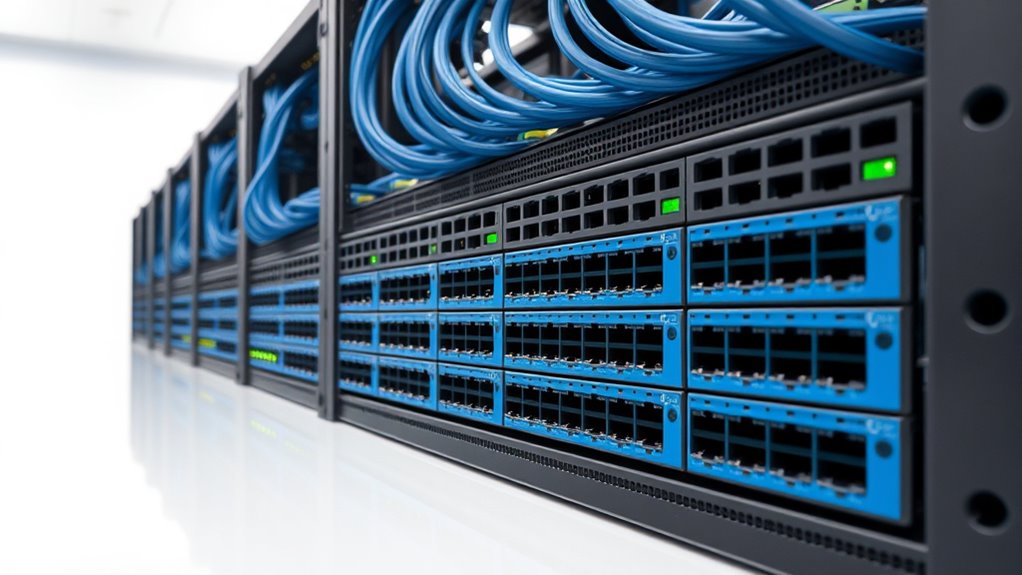

For most home labs, I’d start with the QNAP QSW-L3208-2C6T-US as the best overall candidate, thanks to its flexible multi-gigabit port mix; the TP-Link TL-SX1008 stands out for straightforward 10G RJ45 expansion, while the SODOLA 12-Port suits labs that need managed controls and SFP+. The key tradeoff is not simply speed: it is how many 10G devices you need, whether you want copper or fiber, and whether management features justify added setup and upkeep. Compact switches can be simpler and quieter, while higher-port-count and managed models offer more room to grow at the cost of complexity. Read on for the full breakdown and a guide to matching a switch to your lab.

Get pet supplies delivered free with Prime
- Fast, free delivery on millions of items
- Prime Video, Amazon Music and more included
- Member-only deals all year
Complete the kit



Key Takeaways
- The QNAP QSW-L3208-2C2T-US (check exact model designation) represents the lineup’s flexible multi-gigabit approach: hybrid port choices can suit mixed 10G and slower equipment better than an all-10G switch, but confirm the exact port layout before buying.
- Port count alone does not determine the best fit: the NICGIGA 6-port and 10-port models pair two 10Gb RJ45 connections with 2.5Gb ports, a useful pattern for labs with a few fast servers and several lighter-duty devices.
- SFP+ models target different cabling needs: the SODOLA 12-port and 8-port managed switches, plus the 6-Base-T/2-SFP+ option, make sense when fiber or DAC links are part of the plan; they are less convenient if every device uses RJ45.
- Unmanaged switches favor quick deployment: models such as the TP-Link TL-SX1008 and TL-SX105 avoid configuration work, while managed options make more sense when VLANs or traffic separation are part of the lab design.
- Several listings need specification checks before purchase: generic product names and similar-looking port mixes make exact model identity, management features, port speeds, and included power or cooling details especially important.
| NICGIGA 6-Port Ethernet Switch with 2 × 10Gb RJ45 and 4 × 2.5Gb Ports |  | Best for a Quiet Mixed-Speed Desk Lab | Ports: 4 × 2.5Gb Ethernet; 2 × 10Gb RJ45 | Speeds, ports 1–4: 2.5G, 1G, 100Mbps | Speeds, ports 5–6: 10G, 5G, 2.5G, 1G, 100Mbps | VIEW ON AMAZON | See Our Full Breakdown |
| SODOLA 12-Port 10Gb Managed Switch with 8 SFP+ and 4 RJ45 Ports |  | Best for a Rack-Based Fiber Lab | Ports: 8 × 10G SFP+; 4 × 10GBase-T RJ45 | Backplane capacity: 240Gbps | Management features: LACP, QoS, VLAN, SNMP, web GUI | VIEW ON AMAZON | See Our Full Breakdown |
| SODOLA 6-Port 10Gb Managed Ethernet Switch |  | Best Compact Managed Switch | Ports: 4 × 10G RJ45; 2 × 10G SFP+ | RJ45 speeds: 100M, 1G, 2.5G, 5G, 10G | Switch type: Web-managed | VIEW ON AMAZON | See Our Full Breakdown |
| TP-Link TL-SX1008 8-Port 10G Multi-Gigabit Unmanaged Ethernet Switch |  | Best for Simple 10GbE Expansion | Ports: 8 × RJ45 | Port speeds: 100Mbps, 1Gbps, 2.5Gbps, 5Gbps, 10Gbps | Switching capacity: 160Gbps | VIEW ON AMAZON | See Our Full Breakdown |
| TRENDnet TEG-S7102 10-Port 10G Unmanaged Switch |  | Best Unmanaged Copper-and-SFP+ Mix | Ports: 8 × 10GBASE-T RJ45; 2 × 10G SFP+ | Switching capacity: 200Gbps | Switch type: Unmanaged | VIEW ON AMAZON | See Our Full Breakdown |
| SODOLA 8-Port 10Gb Managed Layer 3 SFP+ Switch |  | Best for Managed Fiber Labs | Ports: 8 × 10Gb SFP+ | Management: Layer 3; web interface and console | Supported features: IPv4/IPv6 routing, DHCP, LACP, VLAN, QoS, IGMP, STP, SNMP | VIEW ON AMAZON | See Our Full Breakdown |
| VunLink 10-Port 2.5GbE and 10GbE Unmanaged Ethernet Switch |  | Best for 2.5GbE Device Density | Ports: 8 × 2.5GbE and 2 × 10GbE RJ45 | Port speeds, ports 1–8: 2.5G/1G/100Mbps | Port speeds, ports 9–10: 10G/5G/2.5G/1G/100Mbps | VIEW ON AMAZON | See Our Full Breakdown |
| 10G Unmanaged Ethernet Switch with 6 Base-T Ports and 2 SFP+ Uplinks |  | Best for Mixed Copper and SFP+ Uplinks | Ethernet ports: 6 × 10G Base-T | Uplink ports: 2 × 10G SFP+ | Supported speeds: 1G, 2.5G, 5G, 10G | VIEW ON AMAZON | See Our Full Breakdown |
| 6-Port Unmanaged Ethernet Switch with 4×2.5G and 2×10G RJ45 Ports |  | Best for Quiet Small Labs | Port configuration: 4 × 2.5G RJ45 and 2 × 10G RJ45 | Switching capacity: 60Gbps | Forwarding rate: 44.64Mpps | VIEW ON AMAZON | See Our Full Breakdown |
| TP-Link TL-SX105 5-Port 10G/Multi-Gigabit Unmanaged Ethernet Switch |  | Best Compact 10GbE Starter | Ports: 5 × 10-Gigabit Ethernet | Switching capacity: Up to 100Gbps | Supported link speeds: 100Mbps, 1Gbps, 2.5Gbps, 5Gbps, 10Gbps | VIEW ON AMAZON | See Our Full Breakdown |
| TRENDnet TEG-S762 6-Port 10G Switch |  | Best for Mixed-Speed Upgrades | Ports: 4 x 2.5G RJ-45; 2 x 10G RJ-45 | Switching capacity: 60Gbps | 2.5G cabling: Cat5e or better | VIEW ON AMAZON | See Our Full Breakdown |
| QNAP QSW-L3208-2C6T-US 8-Port Multi-Gigabit 10GbE Network Switch |  | Best for Managed Mixed-Media Labs | Ports: 6 x 10GbE multi-gigabit RJ-45; 2 x combo 10GbE SFP+/RJ-45 | RJ-45 speeds: 10G, 5G, 2.5G, 1G, 100M | Management: Lite-managed | VIEW ON AMAZON | See Our Full Breakdown |
| NICGIGA 8-Port 10G Unmanaged Ethernet Switch |  | Best for Plug-and-Play 10GbE Density | Number of ports: 8 | Port speeds: 10G, 5G, 2.5G, 1G, 100Mbps | Interface: RJ-45 | VIEW ON AMAZON | See Our Full Breakdown |
| NICGIGA 10-Port Ethernet Switch with 2 × 10Gb RJ45 and 8 × 2.5Gb Ports |  | Best Silent Switch for 2.5GbE Clients | Ports: 8 x 2.5Gb Ethernet; 2 x 10Gb RJ-45 | Ports 1–8 speeds: 2.5Gb, 1Gb, 100Mbps | Ports 9–10 speeds: 10Gb, 5Gb, 2.5Gb, 1Gb, 100Mbps | VIEW ON AMAZON | See Our Full Breakdown |
| 5-Port 10Gb RJ45 Web-Managed Ethernet Switch |  | Best Compact Managed 10GbE Switch | Ports: 5 x 10Gb RJ-45 | Supported speeds: 10Gb, 5Gb, 2.5Gb, 1Gb, 100Mb | Switching capacity: 100Gbps | VIEW ON AMAZON | See Our Full Breakdown |
| 10gbe network switches for home lab | Ports | Switching capacity | Management |
|---|---|---|---|
| NICGIGA 6-Port Ethernet Switch | 4 × 2.5Gb Ethernet; 2 × 10Gb RJ45 | 60Gbps | Unmanaged |
| SODOLA 12-Port 10Gb Managed Sw | 8 × 10G SFP+; 4 × 10GBase-T RJ45 | — | — |
| SODOLA 6-Port 10Gb Managed Eth | 4 × 10G RJ45; 2 × 10G SFP+ | — | — |
| TP-Link TL-SX1008 8-Port 10G M | 8 × RJ45 | 160Gbps | — |
| TRENDnet TEG-S7102 10-Port 10G | 8 × 10GBASE-T RJ45; 2 × 10G SFP+ | 200Gbps | — |
| SODOLA 8-Port 10Gb Managed Lay | 8 × 10Gb SFP+ | — | Layer 3; web interface and console |
| VunLink 10-Port 2.5GbE and 10G | 8 × 2.5GbE and 2 × 10GbE RJ45 | 60Gbps | Unmanaged |
| 10G Unmanaged Ethernet Switch | — | 160Gbps | Unmanaged |
| 6-Port Unmanaged Ethernet Swit | — | 60Gbps | Unmanaged |
| TP-Link TL-SX105 5-Port 10G/Mu | 5 × 10-Gigabit Ethernet | Up to 100Gbps | Unmanaged |
| TRENDnet TEG-S762 6-Port 10G S | 4 x 2.5G RJ-45; 2 x 10G RJ-45 | 60Gbps | — |
| QNAP QSW-L3208-2C6T-US 8-Port | 6 x 10GbE multi-gigabit RJ-45; 2 x combo 10GbE SFP+/RJ-45 | 160Gbps | Lite-managed |
| NICGIGA 8-Port 10G Unmanaged E | — | 160Gbps | — |
| NICGIGA 10-Port Ethernet Switc | 8 x 2.5Gb Ethernet; 2 x 10Gb RJ-45 | 80Gbps | Unmanaged |
| 5-Port 10Gb RJ45 Web-Managed E | 5 x 10Gb RJ-45 | 100Gbps | Web interface and SNMP |
More Details on Our Top Picks
NICGIGA 6-Port Ethernet Switch with 2 × 10Gb RJ45 and 4 × 2.5Gb Ports
I’d pick this NICGIGA for a small home lab where a few devices need faster-than-gigabit access but only one or two need 10GbE. Its two 10Gb RJ45 ports can link a server or NAS to a router, while four 2.5Gb ports suit faster desktops and access points without paying for eight full-speed 10GbE connections in the topology. Setup is plug-and-play, and the fanless metal case avoids the fan noise found in the managed SODOLA 6-Port. The tradeoff is control: this is unmanaged, so VLANs, link aggregation, and traffic policies are out. The TP-Link TL-SX1008 offers eight 10Gb ports for broader expansion, but this NICGIGA is a more focused fit when the rest of the lab is primarily 2.5GbE.
Pros:- Combines two 10Gb RJ45 ports with four 2.5Gb ports for mixed-speed labs
- Fanless operation suits desks and quiet rooms
- Plug-and-play setup requires no switch configuration
- Supports desktop or wall mounting
Cons:- Only two ports support speeds above 2.5Gb
- Unmanaged operation provides no VLAN, LACP, or monitoring controls
Best for: Home-lab owners connecting one NAS or server and several 2.5GbE clients in a quiet office or living space.
Not ideal for: Buyers who need VLANs, LACP, monitoring, or more than two 10GbE connections; its unmanaged design and limited 10Gb port count are restrictive.
- Ports:4 × 2.5Gb Ethernet; 2 × 10Gb RJ45
- Speeds, ports 1–4:2.5G, 1G, 100Mbps
- Speeds, ports 5–6:10G, 5G, 2.5G, 1G, 100Mbps
- Switching capacity:60Gbps
- Management:Unmanaged
- Mounting:Desktop or wall mount
- Cooling:Fanless
- Lightning protection:6KV
Our verdict“Choose this NICGIGA if you want silent 10GbE links alongside several 2.5GbE devices without needing managed features.”
SODOLA 12-Port 10Gb Managed Switch with 8 SFP+ and 4 RJ45 Ports
For a home lab built around servers, storage, and fiber or DAC links, this SODOLA offers the broadest port mix in this batch: eight SFP+ ports plus four 10GBase-T RJ45 ports. That gives a lab room to connect multiple hosts over SFP+ while retaining copper for devices that lack compatible transceivers. Its VLAN, LACP, QoS, and SNMP support also makes it more useful for network segmentation and monitoring than the unmanaged TRENDnet TEG-S7102. The 240Gbps backplane matches the larger port count. The tradeoffs are practical: it needs a rack, and its built-in fans may be audible in a small room. Compared with the smaller managed SODOLA 6-Port, this model suits a growing rack better, but is excessive if the lab only needs a few 10GbE links.
Pros:- Eight SFP+ ports support fiber or DAC connections for multiple lab hosts
- Four 10GBase-T ports retain compatibility with copper-connected equipment
- VLAN, LACP, QoS, and SNMP provide useful network controls
- 1U rack-mount format includes mounting brackets
Cons:- Built-in fans may be distracting in a quiet home office
- Requires a rack or suitable rack shelf rather than a simple desktop setup
- SFP+ links may require compatible transceivers or DAC cables
Best for: Home-lab builders with a rack, several SFP+-equipped servers or storage devices, and a need for VLANs or SNMP monitoring.
Not ideal for: Desk-based users or quiet-room setups that need only a few 10GbE ports; the 1U rack format and built-in fans add bulk and potential noise.
- Ports:8 × 10G SFP+; 4 × 10GBase-T RJ45
- Backplane capacity:240Gbps
- Management features:LACP, QoS, VLAN, SNMP, web GUI
- RJ45 speeds:10G, 5G, 2.5G, 1G, 100M
- Cooling:Built-in fans
- Form factor:1U rack-mount
- SFP+ compatibility:Fiber, DAC, and 10G SFP+ transceivers
Our verdict“Pick this SODOLA for a rack lab that needs many SFP+ links and managed controls, not for a small or noise-sensitive setup.”
SODOLA 6-Port 10Gb Managed Ethernet Switch
This six-port SODOLA is the compact managed choice for a lab that needs several copper 10Gb links but still wants an SFP+ connection for a server or uplink. Its four adaptive 10G RJ45 ports handle common multi-gig speeds, while two SFP+ ports offer a route to fiber or DAC. Compared with the NICGIGA six-port model, it gives up silent, fanless operation and simple plug-and-play use in exchange for VLAN, LACP, port mirroring, and SNMP. Those controls can help separate lab networks or inspect traffic, but setup is less immediate: the product data notes that an IPv4 address must be set before login. The internal fan may also be noticeable. It is a better fit than the larger SODOLA 12-Port if rack space and port count are limited, though its management adds complexity for a basic home network.
Pros:- Four adaptive 10G RJ45 ports support common multi-gig link speeds
- Two SFP+ ports allow fiber or DAC connections
- Broad management set includes VLAN, LACP, port mirroring, and SNMP
- Desktop or wall mounting gives placement flexibility
Cons:- Internal fan may add noise in a quiet room
- Requires setting an IPv4 address before accessing the management interface
- Six ports provide less room for expansion than the SODOLA 12-Port
Best for: Home-lab operators who need four copper 10GbE connections, a couple of SFP+ links, and hands-on network controls in a compact enclosure.
Not ideal for: Beginners seeking a silent, plug-and-play switch or users who do not plan to configure VLANs and other management features.
- Ports:4 × 10G RJ45; 2 × 10G SFP+
- RJ45 speeds:100M, 1G, 2.5G, 5G, 10G
- Switch type:Web-managed
- Management features:LACP, storm control, port mirroring, VLAN, MAC filtering, spanning tree, multicast, QoS, DHCP snooping, SNMP, RSTP
- Case material:Metal
- Cooling:Internal fan
- Mounting:Desktop or wall-mounted
- Warranty support:One-year replacement for qualifying quality issues; lifetime technical support
Our verdict“Choose this SODOLA if you want managed features and four copper 10GbE ports in a smaller format and can accept setup and fan noise.”
TP-Link TL-SX1008 8-Port 10G Multi-Gigabit Unmanaged Ethernet Switch
The TL-SX1008 is the straightforward choice when the main goal is adding eight 10Gb-capable RJ45 ports without learning a management interface. It auto-negotiates across five speeds, so existing 1Gb or 2.5Gb devices can share the switch while faster servers and storage use 10GbE. That broad copper compatibility makes it simpler to deploy than the SODOLA 12-Port, which offers more total ports and management but brings SFP+ considerations and a rack-focused setup. The TL-SX1008 can sit on a desktop or go into a rack, and its 160Gbps switching capacity suits a full set of high-speed links. Its limitation is equally clear: there are no VLAN, LACP, or monitoring controls. The speed-adjusting fan also means it is not the fanless choice offered by the smaller NICGIGA.
Pros:- Eight RJ45 ports support speeds up to 10Gb
- Auto-negotiates across 100Mbps, 1G, 2.5G, 5G, and 10G
- Plug-and-play operation avoids management setup
- Metal enclosure supports desktop or rackmount placement
Cons:- Unmanaged design offers no VLAN, LACP, or monitoring features
- Speed-adjusting fan may produce noise under some operating conditions
- No SFP+ ports for fiber or DAC links
Best for: Home-lab owners expanding several copper-connected servers, NAS units, and workstations who want straightforward 10GbE without switch configuration.
Not ideal for: Buyers who need VLAN segmentation, link aggregation, SNMP monitoring, SFP+ connectivity, or a completely fanless switch.
- Ports:8 × RJ45
- Port speeds:100Mbps, 1Gbps, 2.5Gbps, 5Gbps, 10Gbps
- Switching capacity:160Gbps
- Switch type:Unmanaged
- Case material:Metal
- Mounting:Desktop or rackmount
- Dimensions:11.57 × 7.09 × 1.73 inches
- Weight:3.3 pounds
Our verdict“Choose the TL-SX1008 if you want eight flexible copper 10GbE ports and do not need managed networking or SFP+ links.”
TRENDnet TEG-S7102 10-Port 10G Unmanaged Switch
The TRENDnet TEG-S7102 suits a home lab that needs several copper 10GbE connections plus a pair of SFP+ links, without managed-switch setup. Its eight 10GBASE-T ports cover servers and workstations, while the two SFP+ slots can serve fiber or DAC connections for compatible equipment. Compared with the TP-Link TL-SX1008, it trades two RJ45 ports for SFP+ flexibility and a higher stated 200Gbps switching capacity; unlike the managed SODOLA 12-Port, it offers no VLANs, LACP, or SNMP. The smart fan is described as quiet, but this is still an actively cooled rack-style unit rather than a silent desktop switch. Plan cabling carefully: the product specifies Cat6A or better for 10GbE RJ45 connections. Its stated lifetime manufacturer protection applies only in the U.S. and Canada.
Pros:- Eight 10GBASE-T ports plus two SFP+ slots give a useful mixed interface layout
- 200Gbps switching capacity supports the full set of high-speed links
- Plug-and-play installation requires no configuration
- Rack-mountable metal housing and smart fan suit a compact rack setup
Cons:- 10GbE RJ45 links require Cat6A or better cabling
- Unmanaged operation lacks VLAN, LACP, and SNMP controls
- Stated lifetime manufacturer protection is limited to the U.S. and Canada
Best for: Home-lab owners who want eight copper 10GbE ports and two SFP+ connections in an unmanaged rack-mount switch.
Not ideal for: Users needing VLANs, link aggregation, or monitoring, and buyers whose existing copper runs are not suitable for 10GbE.
- Ports:8 × 10GBASE-T RJ45; 2 × 10G SFP+
- Switching capacity:200Gbps
- Switch type:Unmanaged
- Cabling for 10GBASE-T:Cat6A or better
- Housing:Metal, 1U 19-inch rack-mountable
- Maximum power:40 watts
- Operating temperature:32–104 °F
- Warranty:Lifetime manufacturer protection in the U.S. and Canada
Our verdict“Pick the TEG-S7102 if you want a simple rack switch with both copper 10GbE and SFP+ ports and do not need management features.”
SODOLA 8-Port 10Gb Managed Layer 3 SFP+ Switch
For a home lab built around fiber links and configurable network segments, I’d put this SODOLA ahead of the plug-and-play TP-Link TL-SX105. Its eight 10Gb SFP+ ports provide more high-speed connections, while Layer 3 routing, DHCP, VLAN, QoS, and LACP give lab builders room to shape traffic and test network services. The fanless metal chassis also suits a quiet office or wall-mounted setup. The tradeoff is that SFP+ modules are not included, so you’ll need to source compatible optics or cables separately. Connecting 1Gb devices also requires a manual speed setting, adding setup friction absent from simpler RJ45 switches. I’d choose this when management flexibility matters more than an effortless copper-port setup.
Pros:- Eight 10Gb SFP+ ports support dense high-speed fiber or DAC connections.
- Layer 3 routing and features such as VLAN, DHCP, QoS, and LACP support more involved lab designs.
- Fanless metal construction suits quiet rooms.
- Wall-mountable casing offers flexible placement.
Cons:- SFP+ modules or compatible cables must be purchased separately.
- Connecting 1Gb devices requires a manual port speed setting.
- Management features add setup complexity compared with unmanaged switches.
Best for: Home-lab builders using SFP+ fiber or DAC links who want Layer 3 routing, VLANs, and LACP in a quiet switch.
Not ideal for: Buyers who need ready-to-use RJ45 ports for mixed 1Gb devices or want a simple plug-and-play switch without sourcing transceivers.
- Ports:8 × 10Gb SFP+
- Management:Layer 3; web interface and console
- Supported features:IPv4/IPv6 routing, DHCP, LACP, VLAN, QoS, IGMP, STP, SNMP
- Port rates:10Gb/2.5Gb adaptive; 10Gb/1Gb setting available
- Cooling:Fanless, bilateral cooling
- Mounting and casing:Wall-mountable metal casing
- Included transceivers:None
- Warranty:1-year replacement for quality issues
Our verdict“Choose this SODOLA when you need eight managed SFP+ links and can accommodate separate optics and some configuration.”
VunLink 10-Port 2.5GbE and 10GbE Unmanaged Ethernet Switch
I’d favor the VunLink when the lab has several 2.5GbE clients but only a couple of devices that need 10GbE. Its eight 2.5GbE RJ45 ports can serve faster PCs or access points, while two multigigabit 10GbE ports give a NAS and a core link room to run faster. Compared with the six-port unmanaged model with four 2.5G and two 10G ports, this one offers twice as many 2.5GbE connections, though both leave you without managed network controls. Plug-and-play operation and fanless cooling keep setup and noise simple. The cost of that simplicity is no VLAN configuration, routing, or traffic controls; it’s a fixed-connectivity appliance rather than a switch for experimenting with network policy.
Pros:- Eight 2.5GbE ports provide more multigigabit client connections than smaller mixed-port options.
- Two RJ45 ports support links up to 10GbE and intermediate multigigabit speeds.
- Unmanaged plug-and-play setup avoids configuration work.
- Fanless design and desktop or wall-mount installation suit quiet home spaces.
Cons:- Unmanaged operation provides no configuration options for VLANs or traffic policies.
- Only two ports support 10GbE, limiting high-speed device count.
- The one-year limited warranty is shorter than the TP-Link TL-SX105’s stated three-year warranty.
Best for: Home-lab owners connecting multiple 2.5GbE PCs, access points, or workstations alongside a 10GbE NAS.
Not ideal for: Lab builders who need managed VLANs, routing, link aggregation controls, or more than two 10GbE connections.
- Ports:8 × 2.5GbE and 2 × 10GbE RJ45
- Port speeds, ports 1–8:2.5G/1G/100Mbps
- Port speeds, ports 9–10:10G/5G/2.5G/1G/100Mbps
- Switching capacity:60Gbps
- Forwarding rate:44.64Mpps
- Management:Unmanaged
- Cooling and installation:Fanless; desktop or wall-mount
- Warranty:1-year limited warranty
Our verdict“Pick the VunLink if your lab needs many 2.5GbE copper connections and only a pair of 10GbE links.”
10G Unmanaged Ethernet Switch with 6 Base-T Ports and 2 SFP+ Uplinks
This switch suits a lab that needs several direct 10GbE copper connections but still wants SFP+ uplinks for a server, storage link, or fiber run. Its mix of six 10G Base-T ports and two SFP+ ports is more versatile than the RJ45-only TP-Link TL-SX105, especially when the rest of the network already uses fiber or DAC. Auto-negotiation across 1G, 2.5G, 5G, and 10G also helps accommodate older and newer devices without manual speed selection. The compromise is an unmanaged design: there are no VLAN or routing controls for segmented lab networks. A built-in fan and metal casing support cooling, but the fan can be audible in a quiet room. I’d prioritize its port mix over silence or management depth.
Pros:- Six 10G Base-T ports connect copper-based servers, PCs, and storage.
- Two 10G SFP+ uplinks add options for fiber or DAC connections.
- Auto-negotiates across 1G, 2.5G, 5G, and 10G speeds.
- Metal casing and built-in fan support heat dissipation.
Cons:- Unmanaged operation provides no network configuration or VLAN controls.
- Built-in fan may create noticeable noise in a quiet room.
- The product data does not specify warranty coverage.
Best for: Home-lab owners who need multiple 10GbE RJ45 devices plus SFP+ uplinks to a fiber or DAC-connected network.
Not ideal for: Users who need VLAN management or a silent switch for a desk-side lab.
- Ethernet ports:6 × 10G Base-T
- Uplink ports:2 × 10G SFP+
- Supported speeds:1G, 2.5G, 5G, 10G
- Switching capacity:160Gbps
- Management:Unmanaged
- Cooling and casing:Built-in fan; metal casing
- Lightning protection:6kV
- Mounting:Desktop or wall-mount
Our verdict“Choose this model when a home lab needs a flexible mix of 10GbE copper ports and SFP+ uplinks, and fan noise is acceptable.”
6-Port Unmanaged Ethernet Switch with 4×2.5G and 2×10G RJ45 Ports
When a home lab needs just two 10GbE endpoints and a handful of faster-than-gigabit clients, I’d choose this compact switch over the VunLink 10-Port model for its fanless, space-conscious design. Four 2.5G ports can handle client devices, while two 10G RJ45 ports suit a NAS and a server or uplink. The standout extra is one-touch port isolation: it separates the four 2.5G ports while keeping them connected to the 10G ports, offering a simple form of separation that a basic unmanaged switch like the TP-Link TL-SX105 does not list. This is not a substitute for managed VLAN controls, though, and the supplied data gives no warranty details. I’d treat its compact footprint and quiet operation as the main draw, not advanced network control.
Pros:- Two 10G RJ45 ports support a NAS and another high-speed endpoint.
- Four 2.5G ports give compatible clients more bandwidth than standard gigabit.
- One-touch port isolation adds basic separation without a managed interface.
- Fanless metal construction supports quiet, compact desktop or wall-mounted placement.
Cons:- Only two 10GbE ports limit expansion for labs with several high-speed devices.
- Unmanaged controls are limited to the stated one-touch isolation function.
- Warranty details are not provided in the supplied product information.
Best for: Quiet home-lab setups with a 10GbE NAS and one other high-speed device, plus up to four 2.5GbE clients.
Not ideal for: Buyers who need more than two 10GbE ports, full VLAN configuration, or clear warranty information before purchase.
- Port configuration:4 × 2.5G RJ45 and 2 × 10G RJ45
- Switching capacity:60Gbps
- Forwarding rate:44.64Mpps
- Management:Unmanaged
- VLAN function:One-touch port isolation
- Cooling and case:Fanless passive cooling; metal
- Installation:Desktop or wall-mount
- Dimensions and weight:7.79 × 2.9 × 1.15 in; 12.8 oz
Our verdict“This is a sensible quiet pick for a small lab with two 10GbE devices and a few 2.5GbE clients.”
TP-Link TL-SX105 5-Port 10G/Multi-Gigabit Unmanaged Ethernet Switch
The TL-SX105 is the straightforward choice when a lab needs a few 10GbE connections without the footprint or configuration overhead of a larger switch. Its five multigigabit RJ45 ports can connect a NAS, workstation, and other devices while negotiating down to 100Mbps or up through 10Gbps. Unlike the managed SODOLA 8-Port SFP+ switch, it needs no optics or web-interface setup, and its fanless metal case makes it a better fit for a desk or quiet room. The limit is growth: five ports can disappear quickly in a lab, and there are no VLAN, routing, or traffic controls. The SODOLA offers far more management depth, while the VunLink offers more 2.5GbE ports; I’d pick this TP-Link for a small, copper-only 10GbE segment.
Pros:- Five 10GbE-capable RJ45 ports suit a compact high-speed segment.
- Negotiates across 100Mbps, 1Gbps, 2.5Gbps, 5Gbps, and 10Gbps.
- Fanless metal construction supports quiet desktop placement.
- Three-year warranty is longer than the one-year coverage listed for the VunLink.
Cons:- Unmanaged operation offers no VLAN, routing, or traffic configuration.
- Five ports limit expansion compared with the eight-port SFP+ SODOLA.
- RJ45-only connectivity does not provide SFP+ options for fiber or DAC links.
Best for: Home-lab beginners or small setups connecting a few 10GbE RJ45 devices who want silent, no-configuration operation.
Not ideal for: Lab owners who need managed VLANs, SFP+ connections, or enough ports for a growing cluster of 10GbE devices.
- Ports:5 × 10-Gigabit Ethernet
- Switching capacity:Up to 100Gbps
- Supported link speeds:100Mbps, 1Gbps, 2.5Gbps, 5Gbps, 10Gbps
- Management:Unmanaged
- Setup:Plug and play
- Cooling and casing:Fanless; metal
- Mounting:Desktop or wall-mount
- Warranty:3 years
Our verdict“Choose the TL-SX105 for a small, quiet, copper-based 10GbE setup that values easy setup over management features.”
TRENDnet TEG-S762 6-Port 10G Switch
The TRENDnet TEG-S762 makes sense for a home lab where a few devices need 10GbE but most clients are moving up from Gigabit. Its four 2.5G RJ-45 ports can use existing Cat5e or better cabling, while the two 10G ports provide faster links for a server, workstation, or uplink. Compared with the NICGIGA 10-Port Ethernet Switch, it has fewer ports but a clearer split between everyday multi-gig clients and 10GbE connections. The tradeoff is that those two 10G ports can become a bottleneck if several high-throughput devices need direct 10GbE access. Desktop or wall mounting offers placement flexibility, though the stated lifetime protection applies only in the U.S. and Canada. I’d choose it for a modest mixed-speed lab, not a dense 10GbE rack.
Pros:- Four 2.5G ports support faster client links over Cat5e or better cabling
- Two 10G RJ-45 ports suit a server and a high-speed uplink
- 60Gbps switching capacity
- Can sit on a desktop or mount on a wall
Cons:- Only two 10G ports, limiting direct high-speed connections
- The stated lifetime manufacturer protection is limited to the U.S. and Canada
Best for: Home-lab owners upgrading several Cat5e-connected clients to 2.5GbE while adding 10GbE for a server or workstation.
Not ideal for: Users with more than two devices that need direct 10GbE connections, or buyers outside the U.S. and Canada who expect the stated lifetime protection.
- Ports:4 x 2.5G RJ-45; 2 x 10G RJ-45
- Switching capacity:60Gbps
- 2.5G cabling:Cat5e or better
- Installation:Desktop or wall mountable
- Compliance:NDAA and TAA compliant
- Manufacturer protection:Lifetime protection in the U.S. and Canada
Our verdict“Choose the TEG-S762 if your lab needs several 2.5GbE ports and just two 10GbE links without replacing existing cabling.”
QNAP QSW-L3208-2C6T-US 8-Port Multi-Gigabit 10GbE Network Switch
The QNAP QSW-L3208-2C6T-US is the strongest fit here for a lab that needs both 10GbE port density and practical traffic controls. Six multi-gigabit RJ-45 ports cover copper-connected servers and workstations, while two combo ports let you choose SFP+ fiber or RJ-45 copper for those connections. Its lite-managed controls—VLAN, QoS, LACP, and IGMP snooping—give it more network-shaping flexibility than the unmanaged NICGIGA 8-Port switch. That distinction matters when separating lab traffic or grouping links, but lite-managed is not the same as a fully managed platform, so buyers needing deeper configuration should look elsewhere. The listed 80Gbps non-blocking throughput and 36W consumption help frame its capacity and operating draw; its feature set and mixed-media ports make it a more involved choice than a plug-and-play switch.
Pros:- Six multi-gigabit RJ-45 ports support speeds up to 10GbE
- Two combo ports can use SFP+ fiber or RJ-45 copper
- VLAN, QoS, LACP, IGMP snooping, and loop detection support traffic management
- Supports 12K jumbo frames and lists 80Gbps non-blocking throughput
Cons:- Lite-managed controls may fall short for users needing fully managed switching
- Only two ports offer the SFP+ or RJ-45 combo choice
- More configuration than an unmanaged switch may be unnecessary for basic labs
Best for: Home-lab builders who need several 10GbE copper links, optional SFP+ connections, and VLAN or LACP controls without a fully managed switch.
Not ideal for: Buyers who want a simple unmanaged setup or need the full configuration depth of a fully managed switch.
- Ports:6 x 10GbE multi-gigabit RJ-45; 2 x combo 10GbE SFP+/RJ-45
- RJ-45 speeds:10G, 5G, 2.5G, 1G, 100M
- Management:Lite-managed
- Networking features:VLAN, QoS, LACP, IGMP snooping, loop detection
- Switching capacity:160Gbps
- Non-blocking throughput:80Gbps
- Jumbo frame support:12K
- Power consumption:36W
- Construction:Metal
Our verdict“Pick the QSW-L3208-2C6T-US when your lab needs 10GbE density and useful network controls, but not a fully managed switch.”
NICGIGA 8-Port 10G Unmanaged Ethernet Switch
If your priority is connecting many copper devices at multi-gigabit speeds without setting up VLANs or other controls, the NICGIGA 8-Port 10G Unmanaged Switch keeps the job simple. All eight RJ-45 ports support up to 10G and also negotiate at 5G, 2.5G, 1G, or 100Mbps, giving it more direct 10GbE capacity than the TRENDnet TEG-S762. The flip side is its fixed unmanaged design: unlike the QNAP QSW-L3208-2C6T-US, it offers no VLAN, QoS, or LACP configuration. Rack mounting is useful for a home lab, and the metal case adds a substantial enclosure, but the stated 5000 RPM fan may matter in a quiet room despite the listed 24 dB noise level. I’d favor it for straightforward, port-heavy copper networks rather than a lab that needs traffic segmentation.
Pros:- Eight RJ-45 ports support 10G, 5G, 2.5G, 1G, and 100Mbps
- Auto-negotiation and unmanaged operation keep setup straightforward
- Supports desktop or 19-inch rack mounting
- Metal case and 160Gbps switching capacity
Cons:- Unmanaged design has no software configuration features
- Industrial-grade fan may be a poor fit for noise-sensitive rooms
- One-year warranty is shorter than the stated protection on the TRENDnet TEG-S762
Best for: Home-lab owners who want eight auto-negotiating copper ports for multi-speed devices and prefer plug-and-play operation.
Not ideal for: Users who need VLANs, QoS, link aggregation, fiber uplinks, or a fanless switch for a quiet workspace.
- Number of ports:8
- Port speeds:10G, 5G, 2.5G, 1G, 100Mbps
- Interface:RJ-45
- Switching capacity:160Gbps
- Switch type:Unmanaged
- Mounting:Desktop or 19-inch rack
- Case material:Metal
- Noise level:24dB
- Warranty:1 year
Our verdict“Choose this NICGIGA if you need eight copper multi-gigabit ports and want a simple rack-mountable switch rather than traffic controls.”
NICGIGA 10-Port Ethernet Switch with 2 × 10Gb RJ45 and 8 × 2.5Gb Ports
The NICGIGA 10-Port is aimed at a different home-lab bottleneck than an all-10GbE switch: it gives eight clients 2.5GbE access and reserves two ports for 10GbE connections. That layout suits a NAS, server, or uplink alongside several faster desktops and access points. Compared with the TRENDnet TEG-S762, it adds four 2.5GbE ports and keeps a similar two-port 10GbE ceiling; compared with the eight-port NICGIGA unmanaged switch, it trades all-10GbE capacity for more 2.5GbE client ports and fanless, silent operation. The 80Gbps switching capacity fits the specified port mix, but this is unmanaged, so there are no VLAN or QoS controls for separating lab traffic. Desktop or wall mounting offers flexible placement in a quiet office or equipment area.
Pros:- Eight 2.5GbE ports plus two multi-gigabit 10GbE RJ-45 ports
- Fanless design avoids switch-fan noise
- Supports desktop or wall mounting
- LED status indicators and 4KV lightning protection are specified
Cons:- Unmanaged design provides no configuration features
- Only two ports support speeds up to 10GbE
- One-year warranty
Best for: Home-lab owners with several 2.5GbE clients, one or two 10GbE devices, and a preference for silent operation.
Not ideal for: Labs that need more than two 10GbE connections or VLAN, QoS, and other switch configuration features.
- Ports:8 x 2.5Gb Ethernet; 2 x 10Gb RJ-45
- Ports 1–8 speeds:2.5Gb, 1Gb, 100Mbps
- Ports 9–10 speeds:10Gb, 5Gb, 2.5Gb, 1Gb, 100Mbps
- Switching capacity:80Gbps
- Management:Unmanaged
- Mounting:Desktop or wall mount
- Cooling:Fanless
- Lightning protection:4KV
- Warranty:One year
Our verdict“Choose this NICGIGA for a quiet lab with many 2.5GbE devices and only a couple of 10GbE endpoints.”
5-Port 10Gb RJ45 Web-Managed Ethernet Switch
This five-port web-managed switch suits a compact lab where a handful of devices need 10GbE and the owner wants more control than an unmanaged box provides. Its ports accept 10G, 5G, 2.5G, 1G, and 100Mb connections, while VLAN, QoS, security, multicast, and SNMP features support more deliberate traffic management than the NICGIGA 8-Port Unmanaged Switch. The compact 7.9 x 4.7 x 1.8-inch casing can fit on a desktop or in a 19-inch rack, but five ports leave less room to expand than the QNAP QSW-L3208-2C6T-US. The listed cable recommendation is also a real planning factor: 10GbE calls for CAT6A or higher pure copper cable. A built-in fan helps cool the metal casing, though it may be audible in a nearby workspace.
Pros:- Five RJ-45 ports support multiple Ethernet speeds up to 10Gb
- Web management includes VLAN, QoS, security, multicast, and SNMP
- Compact metal casing supports desktop or 19-inch rack installation
- 100Gbps switching capacity
Cons:- Five ports offer less expansion room than the QNAP QSW-L3208-2C6T-US
- The built-in fan may produce noise
- 10GbE operation calls for CAT6A or higher pure copper cable
Best for: Home-lab owners with up to five 10GbE devices who want web-based VLAN, QoS, and SNMP controls in a compact unit.
Not ideal for: Buyers who need more than five ports, silent fanless operation, or who are not prepared to use CAT6A or higher pure copper cable for 10GbE.
- Ports:5 x 10Gb RJ-45
- Supported speeds:10Gb, 5Gb, 2.5Gb, 1Gb, 100Mb
- Switching capacity:100Gbps
- Management:Web interface and SNMP
- Features:VLAN, QoS, security, multicast, MAC address table, diagnostics
- Casing:Metal with built-in fan
- Installation:Desktop or 19-inch rack mount
- Dimensions:7.9 x 4.7 x 1.8 inches
- Cable recommendation:CAT6A or higher pure copper cable for 10Gb speeds
Our verdict“Pick this switch for a compact, configurable 10GbE segment when five ports are enough and fan noise is acceptable.”

How We Picked
I compared these 15 candidates around the needs that shape a home lab: usable 10Gb port count, support for 2.5Gb or other multi-gigabit devices, RJ45 versus SFP+ connectivity, and whether management features add practical value. A switch with fewer ports can rank well when it fits a small lab cleanly; a larger model does not automatically win if its port types or management approach do not match typical equipment.
The ranking gives priority to fit, flexibility, and ease of ownership, then weighs expansion headroom and the likely learning or maintenance burden. Unmanaged options are stronger candidates for plug-and-play use, while managed models earn their place when features such as VLAN configuration or Layer 3 capabilities answer a real need. Product names alone do not establish every hardware detail, so I call out the need to verify exact specifications rather than treating uncertain listing information as confirmed.
| 10gbe network switches for home lab | Management |
|---|---|
| NICGIGA 6-Port Ethernet Switch | Unmanaged |
| SODOLA 12-Port 10Gb Managed Sw | — |
| SODOLA 6-Port 10Gb Managed Eth | — |
| TP-Link TL-SX1008 8-Port 10G M | — |
| TRENDnet TEG-S7102 10-Port 10G | — |
| SODOLA 8-Port 10Gb Managed Lay | Layer 3; web interface and console |
| VunLink 10-Port 2.5GbE and 10G | Unmanaged |
| 10G Unmanaged Ethernet Switch | Unmanaged |
| 6-Port Unmanaged Ethernet Swit | Unmanaged |
| TP-Link TL-SX105 5-Port 10G/Mu | Unmanaged |
| TRENDnet TEG-S762 6-Port 10G S | — |
| QNAP QSW-L3208-2C6T-US 8-Port | Lite-managed |
| NICGIGA 8-Port 10G Unmanaged E | — |
| NICGIGA 10-Port Ethernet Switc | Unmanaged |
| 5-Port 10Gb RJ45 Web-Managed E | Web interface and SNMP |
Factors to Consider When Choosing 10gbe Network Switches For Home Labs
Choosing a home-lab switch is easier when you plan around the devices and links you actually have, not the largest number on the box. I’d map out connection types, cabling, and management needs before deciding whether to buy a compact switch or a larger one with room to expand.
Count 10Gb Links, Not Just Devices
Start by listing every device that can use 10Gb today: servers, a NAS, a workstation, or an uplink to another switch. Then separate those from clients that top out at 1Gb or 2.5Gb, since giving every endpoint a 10Gb port may add capacity you cannot use. Leave at least one connection for an uplink or future device if you expect the lab to grow. A common mistake is counting a switch’s total ports as equivalent when only some are 10Gb. Mixed-port models can be a better fit when fast storage and compute sit alongside ordinary home-network devices. If your list is short, a compact five- or six-port model may be easier to place and manage than a larger switch.
Choose RJ45, SFP+, or a Deliberate Mix
RJ45 is usually the simpler path when existing endpoints already have copper 10Gb ports and you want familiar cabling. SFP+ can suit short DAC connections or fiber runs, but it may require compatible modules, cables, and endpoint adapters. Check the supported media and any vendor restrictions before assuming an SFP+ port will connect to every transceiver. Mixing RJ45 and SFP+ can be handy for linking a server and a second switch, though it also adds compatibility decisions. Avoid buying a fiber-oriented model solely because SFP+ sounds more capable if your devices are all copper. Compare the whole link—from switch port to network card—before choosing the port type.
Pay for Management Only When You Have a Plan
Managed features are useful when you intend to separate lab traffic with VLANs, control access, or learn network administration. They also bring a setup interface, configuration choices, and another device to maintain. If you only need to connect a NAS, server, and workstation on one network, an unmanaged switch may be the more dependable fit for your workflow. Layer 3 capabilities can matter in a lab that needs routing between networks, but they do not replace a deliberate routing and firewall design. Check which features are actually supported in the specific model rather than relying on the word “managed.” Buying management without a use for it can leave complexity unused while making initial setup less direct.
Plan for Heat, Noise, and Placement
Home labs often share space with offices or living areas, so fan noise and heat can matter as much as throughput. Look for reliable information about cooling, physical dimensions, and mounting options, especially for a switch with many 10Gb ports. A compact desktop chassis may be easier to place, but a small enclosure can still run warm under sustained traffic. Do not assume that a fanless design is automatically the right choice; placement and workload affect how well it fits your setup. If the switch will sit near a desk or media area, check its cooling approach before committing. A rack-oriented unit may be a better match in a ventilated equipment space than on an open shelf.
Verify the Full Link Budget and Compatibility
A 10Gb label describes a port’s potential link speed, not the speed of every transfer through your lab. The network card, cable or transceiver, storage device, and system workload all shape real results. Check whether your existing NICs support the switch’s copper speeds or SFP+ media, and confirm cable requirements for the distance you need. For mixed 1Gb, 2.5Gb, and 10Gb equipment, verify that ports negotiate at the speeds your devices support. Also check whether the switch’s total switching capacity and feature set fit the number of simultaneous links you expect. This avoids spending on faster ports when another part of the path remains the bottleneck.
Buy Expansion Headroom That Matches Your Timeline
Extra ports are valuable when you already know which devices are coming, but speculative expansion can lead to a larger, noisier, or more complex switch than the lab needs. Consider whether a second switch later would be an acceptable way to grow; for some setups, it is easier than replacing a small model immediately. If you expect several 10Gb servers or multiple switch uplinks, prioritize enough fast ports rather than just a high total port count. If most planned additions are low-bandwidth endpoints, a model with 2.5Gb ports may stretch further. Check how the switch connects to your router or core network so the uplink does not become the choke point. The best amount of headroom is the one tied to a realistic device plan.
Frequently Asked Questions
Should I choose an unmanaged 10Gb switch or a managed one for my first home lab?
I’d choose unmanaged if your devices only need to communicate on one network and you want the fewest configuration steps. A managed switch becomes worthwhile when you have a specific use for VLANs, traffic separation, or other controls. It can also be a useful learning tool, but added features mean more settings to understand and maintain. Before choosing, confirm that the exact model offers the management functions you need. If you are undecided, a straightforward unmanaged switch is often the easier starting point.
Do I need SFP+ if my servers and NAS have 10Gb RJ45 ports?
No; a switch with 10Gb RJ45 ports is the more direct match when all of your endpoints use copper Ethernet. SFP+ is useful when you plan to use DAC cables or fiber, or when another device already has an SFP+ interface. Those connections may require compatible adapters or modules, so include that hardware in your planning. Avoid assuming that SFP+ and RJ45 ports are interchangeable without extra parts. Choose based on the interfaces at both ends of each link.
Is a switch with 2.5Gb ports a sensible choice if I am building toward 10Gb?
Yes, when only a few current devices need 10Gb and other endpoints can use 2.5Gb. This mix can give a NAS or server fast connections without dedicating a 10Gb port to every client. It is less suitable if you already have many 10Gb devices or expect to add them soon. Map your current and planned links before deciding whether the mixed-port layout leaves enough fast connections. The NICGIGA models in this roundup illustrate this approach with two 10Gb RJ45 ports alongside 2.5Gb ports.
Will a 10Gb switch make file transfers to my NAS ten times faster?
Not by itself. A 10Gb link can raise the network connection’s ceiling, but the NAS drives, storage controller, client network card, and workload still affect transfer speed. Small files and simultaneous tasks may behave differently from a single large file copy. Confirm that each part of the path supports the desired speed before upgrading the switch alone. If storage or a client remains limited to a slower connection, that link can still set the pace.
How should I choose between a compact switch and a larger 8- or 12-port model?
Choose compact when you have a small, known group of fast devices and want a simpler footprint. A larger model is a better fit if you can name the extra 10Gb links you need or have a clear plan to add them soon. Check the number of 10Gb ports separately from the overall port count, since some models combine 10Gb and 2.5Gb connections. Also account for cooling, placement, and whether added management features are part of the larger model. If growth is uncertain, compare the cost and effort of adding a second switch later with buying unused capacity now.
Conclusion
For a balanced home lab, I’d begin with the QNAP QSW-L3208-2C2T-US as the best overall option, while verifying the exact model and port layout against the listing. The best value direction is a mixed 10Gb/2.5Gb switch such as the NICGIGA 6-port or 10-port, provided two 10Gb links are enough. For a premium, expandable setup, compare the managed SODOLA models and the larger SFP+ choices against your VLAN, fiber, or growth plans rather than buying ports you will not use. Beginners are better served by a straightforward unmanaged pick such as the TP-Link TL-SX105 or TL-SX1008, chosen by the number of links they need. For labs that need SFP+ or more advanced controls, the SODOLA managed models are the more targeted candidates; confirm supported features and media before purchase. Match the switch to your devices and cabling, and the right choice should be clear.