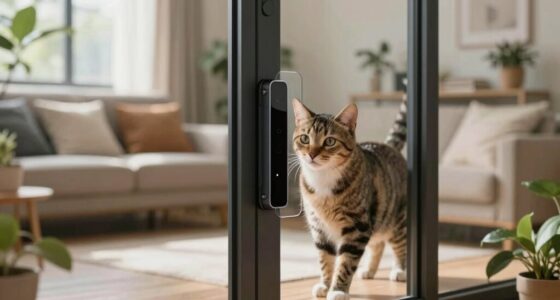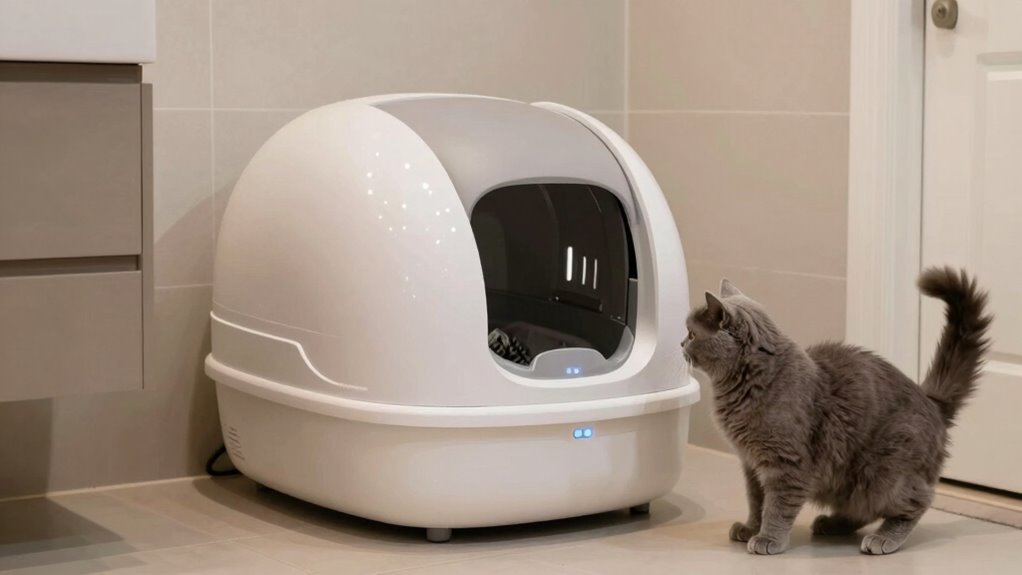

Switching to an automatic litter box can be a quiet, smooth process that makes maintaining a clean, odor-free home easier for you and less stressful for your cat. Keep the new system in the same spot as the old one and keep the traditional box for a gradual changeover. Observe your cat’s response and adjust as needed. With proper setup and patience, you’ll soon enjoy a hassle-free routine—if you continue, you’ll find tips to make the switch even smoother.

Get pet supplies delivered free with Prime
- Fast, free delivery on millions of items
- Prime Video, Amazon Music and more included
- Member-only deals all year
Key Takeaways
- Place the automatic litter box in the same spot as the traditional one for a seamless transition.
- Keep both boxes initially to allow your cat to adjust gradually.
- Monitor your cat’s behavior for signs of comfort or avoidance during the switch.
- Ensure the new system is clean, inviting, and functioning properly to encourage acceptance.
- Gradually phase out the manual box once your cat consistently uses the automatic one.
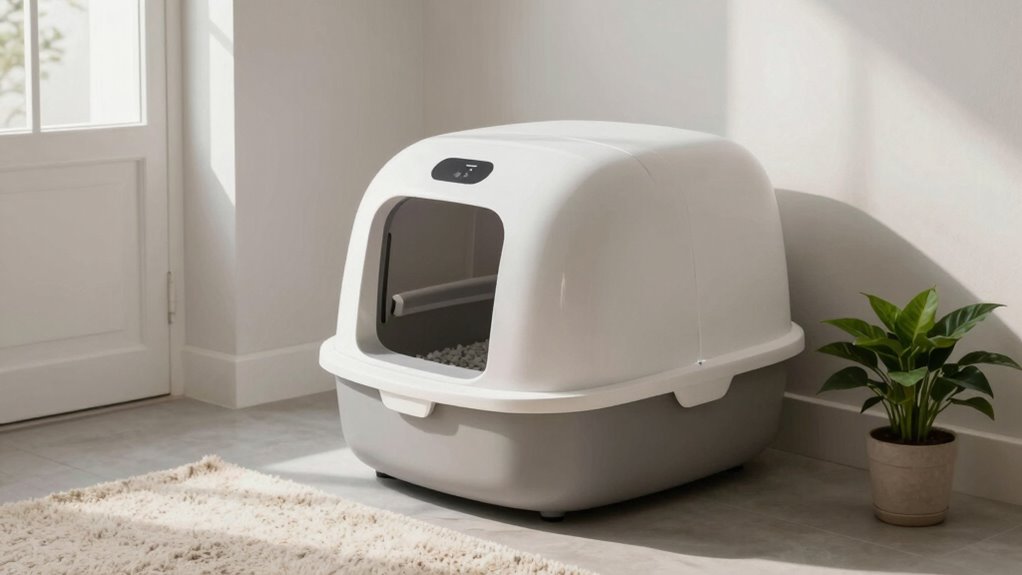
Are you ready to make your feline’s litter box routine simpler and cleaner? Transitioning to an automatic litter box can be a game-changer, especially if you’re tired of constant scooping and dealing with unpleasant odors. When you switch, you’ll notice that litter box maintenance becomes less of a chore. No more daily scooping or worrying about missed spots. Instead, the automatic system handles most of the cleaning, giving you more time and peace of mind. Plus, your cat will benefit from a consistently clean environment, which can positively influence their pet behavior. Cats are naturally particular about their litter box, and a dirty box can lead to accidents or reluctance to use it. An automatic box keeps the litter fresh and minimizes odors, encouraging your feline to maintain healthy habits without stress.
Adapting to an automatic litter box might seem intimidating at first, but the transition is usually smooth if you choose the right model and follow some simple tips. Start by placing the new box in the same spot where your cat usually goes, so they don’t get confused or anxious. Keep the old litter box around initially, giving your cat some time to adjust. Once they’re comfortable, you can gradually phase out the manual box. It’s important to observe your cat’s pet behavior during this change. Most cats adapt quickly if the new litter box is inviting, well-maintained, and easy to access. If your cat shows signs of avoidance, such as hesitating to use the new box or eliminating outside it, check that the litter depth, scent, and cleanliness meet their preferences. Some cats prefer finer litter or a certain type of material, so consider sticking to what they’re used to if issues arise. Regularly check the automatic litter box’s components to ensure everything’s functioning properly. Though it automates most tasks, a little maintenance on your part ensures it keeps running smoothly. Empty the waste receptacle when full and refill the litter if needed. Keeping the litter at the right level prevents tracking or discomfort. Many cats respond positively to the consistent cleanliness and odor control, which can reduce pet behavior issues like marking or avoiding the box altogether. Understanding the technology behind these systems can help you troubleshoot minor issues and optimize its performance, ultimately making your routine easier. Additionally, choosing a model with user-friendly features can simplify the maintenance process even further. To further enhance your experience, researching automatic litter box options with reliable reviews can help you select the best fit for your needs. When you make the switch thoughtfully, you’ll find that your feline’s litter box routine becomes less of a hassle and more of a seamless part of your daily life, resulting in a happier, healthier cat and a cleaner home. Electric scooters and e-bikes are an example of how automation and modern technology can improve everyday routines, making tasks more efficient and less burdensome.
As an affiliate, we earn on qualifying purchases.
Frequently Asked Questions
How Long Does It Take for Cats to Get Used to the New Litter Box?
It usually takes cats between a few days to a week to get used to a new litter box, but it can vary based on feline behavior and individual preferences. To help with litter box training, introduce the automatic litter box gradually, keep it clean, and place it in a quiet, accessible spot. Be patient and consistent, as most cats adapt quickly once they understand it’s safe and comfortable.
Are Automatic Litter Boxes Suitable for Multiple Cats?
Automatic litter boxes are generally suitable for multiple cats if you choose models with multiple chambers or sensors. Did you know that improper Litter box placement can lead to issues like marking or avoidance? To guarantee all your cats are comfortable, observe their preferences and place the box in a quiet, accessible spot. This minimizes conflicts and keeps the litter box environment inviting for each feline.
What Maintenance Is Required for Automatic Litter Boxes?
You need to regularly perform litter box cleaning to guarantee your automatic litter box stays odor-free and functions properly. Maintenance frequency varies depending on the model and number of cats, but typically, you should check it daily and clean the scoop mechanism weekly. Empty the waste drawer or bin as needed, and replace the litter according to the manufacturer’s instructions. Staying consistent keeps your cat happy and the box hygienic.
Do Automatic Litter Boxes Eliminate All Odors Completely?
Automatic litter boxes greatly improve odor control, but they don’t eliminate all smells completely. Studies show that regular cleaning frequency, about once a week, helps maintain a fresh environment. These boxes incorporate features like sealed waste compartments and charcoal filters to reduce odors, but some smell may still escape if not cleaned consistently. To keep your space odor-free, stay on top of cleaning and replace filters regularly.
Can Elderly or Disabled Cats Adapt to Automatic Litter Boxes Easily?
Elderly or disabled cats can adapt to automatic litter boxes, but it depends on their mobility challenges and comfort levels. You should prioritize senior comfort by choosing a model with easy entry and low sides. Gradually introduce the new setup, offering reassurance and support. With patience and gentle encouragement, your cat can adjust, making their shift smoother and less stressful, ensuring their needs are met comfortably.
Conclusion
So, next time you marvel at your cat’s newfound cleanliness, thank the silent hero behind the scenes—the automatic litter box. No more scooping, no more odors, just pure feline bliss and your own wasted effort. Who knew technology could make litter box duty so effortless? Now, sit back, relax, and enjoy the illusion of a pristine home, all thanks to that quiet, sneaky little device doing the dirty work while you pretend you’re still in charge.
Halloween Picks
halloween
As an affiliate, we earn on qualifying purchases.