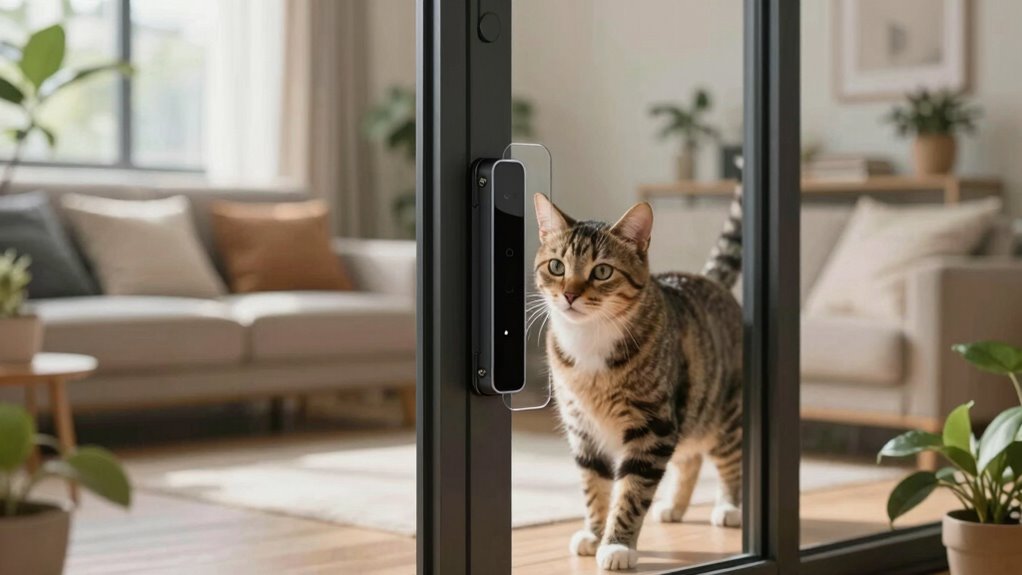

To introduce a smart pet door without causing fear, start by familiarizing your pet with its presence using treats and positive reinforcement. Gradually guide them through small passing attempts, avoiding force if they show hesitation. Use the door’s features, like sensors or programmed routines, to reduce unpredictability and make the experience calmer. Stay patient and supportive, watching for stress signals. Keep exploring these strategies to help your pet feel comfortable and confident moving through their new door.

Get pet supplies delivered free with Prime
- Fast, free delivery on millions of items
- Prime Video, Amazon Music and more included
- Member-only deals all year
Key Takeaways
- Gradually introduce the smart pet door using treats and positive reinforcement to build familiarity and reduce anxiety.
- Conduct training sessions during calm times, using soft voices and encouraging gestures to create a relaxed environment.
- Use sensor-based features and programmed routines to make the door’s operation predictable and less stressful for your pet.
- Observe early signs of hesitation or stress, and back off to try again later, avoiding forcing your pet through the doorway.
- Celebrate small successes and reinforce positive behavior to boost your pet’s confidence and ease doorway fears.
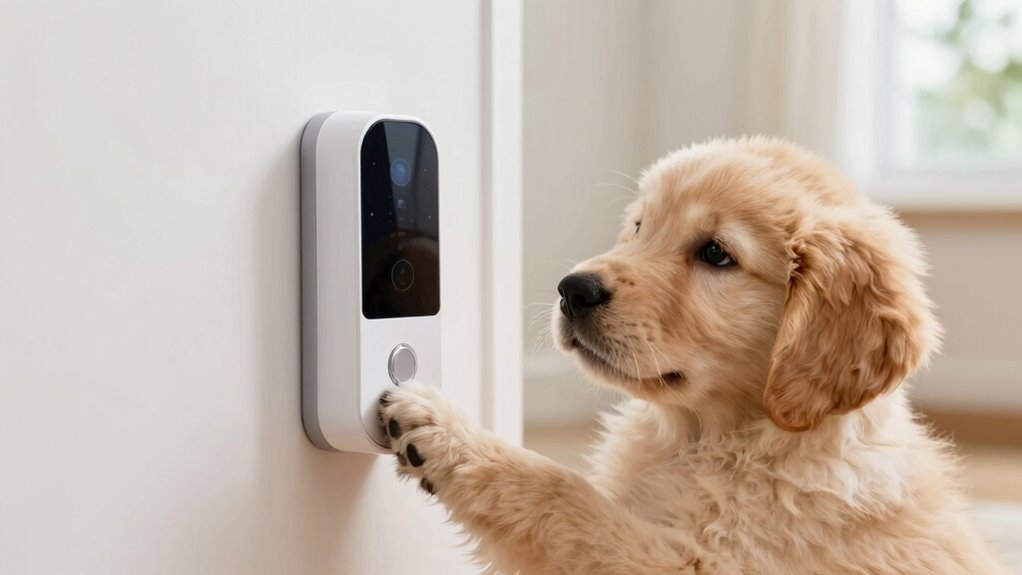
Introducing a smart pet door to your home can be a smooth process if you approach it thoughtfully. The key is to understand your pet’s behavior and gradually introduce the new technology to minimize stress. When planning to install a smart pet door, consider your pet’s comfort level with new objects and sounds. Some animals might be hesitant at first, so patience and positive reinforcement are essential. You want to create a calm environment where your pet feels safe exploring the new device.
Pet training plays an essential role here. You should start by familiarizing your pet with the door’s presence, perhaps by placing treats near or on the door to encourage curiosity. Use gentle commands and praise when your pet approaches or interacts with it. This positive reinforcement builds confidence and reduces fear. Remember, the goal is to make your pet associate the smart door with good things, not anxiety. Over time, you can guide your pet through the process of passing through the door, rewarding every successful attempt.
Technology integration makes this process easier. Many smart pet doors come with features designed to assist pet owners in training and easing their pets into using the device. For example, some models include sensor-based entry that only opens when your pet wearing a specific collar approaches. This reduces the unpredictability and helps your pet feel more in control. You can also program the door to operate at specific times, which helps establish a routine. When you combine these technological features with patience and consistent training, your pet is more likely to accept the door without fear.
When introducing the smart pet door, keep the environment calm and free of distractions. You might want to conduct training sessions during quiet times when your pet is relaxed. Use a soft voice and encouraging gestures to guide your pet through each step. If your pet shows signs of hesitation, don’t force them; instead, back off and try again later. Overcoming doorway fear takes time, so celebrate small successes along the way. Understanding pet behavior can help you tailor your approach for better results. Additionally, understanding animal anxiety can help you recognize early signs of stress and adjust your training accordingly. Being aware of these stress signals allows you to modify your training plan to better suit your pet’s needs. Incorporating positive reinforcement techniques can also significantly improve your training outcomes.
Ultimately, the combination of pet training and technology integration makes the changeover smoother. Your pet learns to associate the smart door with positive experiences, and the smart features provide added security and convenience. With patience, consistency, and a gentle approach, you can help your pet embrace the new door without fear, making life easier for both of you.
As an affiliate, we earn on qualifying purchases.
Frequently Asked Questions
What Is the Best Age for My Pet to Use a Smart Door?
You should consider letting your pet use a smart door around 4 to 6 months old, when they’re receptive to pet training and learning new skills. At this age, they’re usually physically capable of door installation and can quickly adapt. Starting early helps prevent doorway fear, making the shift smoother. Be patient and use positive reinforcement to encourage your pet, ensuring they’re comfortable with the new access point.
How Do I Prevent My Pet From Damaging the Smart Door?
To prevent your pet from damaging the smart door, focus on consistent pet training to teach proper door usage. Reinforce positive behavior with treats and praise, making the door a safe, rewarding experience. Also, guarantee door security by installing sturdy hardware and monitoring your pet’s interactions. Regularly check for any signs of damage, and address issues early to maintain the door’s functionality and prolong its lifespan.
Can the Smart Pet Door Be Programmed for Multiple Pets?
You’ll be pleased to know that most smart pet doors can be programmed for multiple pets, making pet training and door customization seamless. As you set up the device, you can assign unique access codes or RFID tags for each pet, ensuring only authorized animals can go through. This coincidence of technology simplifies managing your multi-pet household, giving you peace of mind while keeping your pets safe and comfortable.
What if My Pet Refuses to Use the Smart Door Initially?
If your pet refuses to use the smart door initially, you should practice training patience and encourage curiosity. Start by guiding your pet near the door, rewarding them for approaching, and using treats to create positive associations. Gradually introduce the door’s features, allowing your pet to explore at their own pace. Consistent, calm encouragement helps build confidence, making them more comfortable with the smart door over time.
How Do I Troubleshoot Connectivity Issues With the Smart Door?
To troubleshoot connectivity issues with your smart pet door, start by checking for wireless interference from other devices, which can disrupt signals. Make sure your Wi-Fi network is stable and within range. Also, perform regular battery maintenance; low batteries can cause connectivity problems. Reset the device if needed, and update its firmware. Keeping these in check helps your smart door stay connected and functioning smoothly.
Conclusion
Once you’ve patiently introduced your pet to the smart door, you’ll find that persistence pays off. Keep encouraging them and rewarding their curiosity, and soon enough, they’ll see it as just another part of their routine. Remember, Rome wasn’t built in a day, so don’t rush the process. With time and gentle guidance, your furry friend will happily embrace their new freedom. Before you know it, they’ll be walking through that door like they’ve known it forever.
Halloween Picks
halloween
As an affiliate, we earn on qualifying purchases.