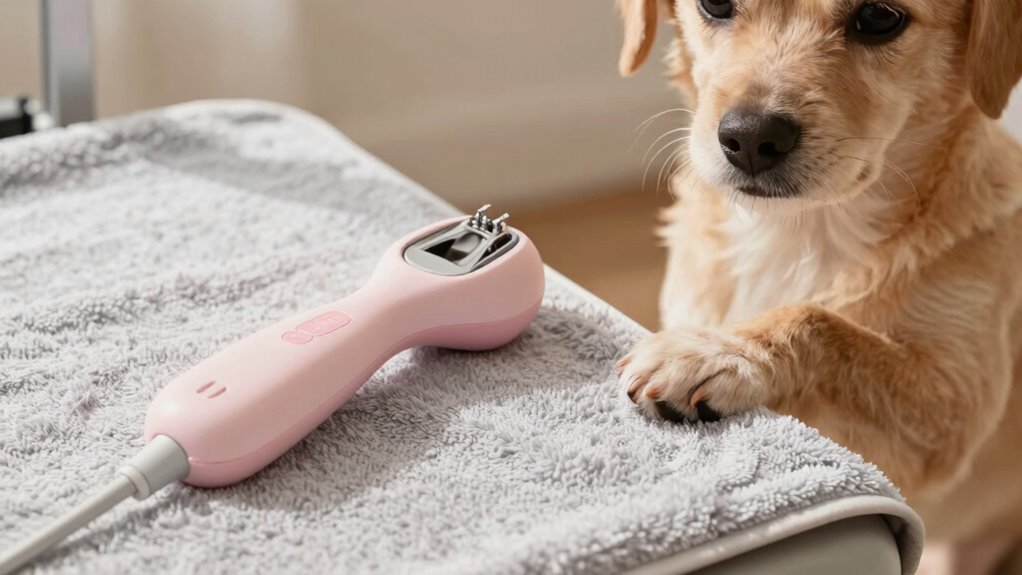
To fix your dog’s nail grinder fear, start by creating a calm environment and gradually introduce the tool without turning it on. Use treats and gentle handling to build trust, then slowly desensitize by turning the grinder on at a distance before bringing it closer. Keep sessions short, positive, and reward calm behavior. If you follow these tiny, consistent steps, you’ll help your dog become comfortable. Keep going for more helpful tips.
Key Takeaways
- Gradually introduce the nail grinder by allowing the dog to sniff and explore it before turning it on.
- Use positive reinforcement like treats and praise to create a calm association with the grinder.
- Keep sessions short and watch for signs of stress, gradually increasing duration as the dog becomes more comfortable.
- Create a quiet, soothing environment to reduce anxiety and handle paws gently with soft touches.
- Seek professional help if fear persists, ensuring a gentle, patient approach tailored to your dog’s needs.
Why Do Dogs Fear Nail Grinders: And How Can You Help?

Dogs often fear nail grinders because the noise and vibration can be unfamiliar and intimidating to them. This reaction isn’t surprising, as many dogs experience heightened dog anxiety when faced with new or loud sensations. Grooming myths, like the idea that nail trimming should be quick and forceful, can worsen their fears. Instead, dogs need patience and gentle exposure to build confidence. Understanding that their fear isn’t stubbornness but a natural response helps you approach nail grinding with compassion. Gradually introducing the grinder, pairing it with treats, and avoiding sudden movements can ease their anxiety. Additionally, familiarizing your dog with animal behavior and training techniques can help reduce overall anxiety and create positive associations with new experiences. Recognizing that halal dietary practices emphasize gentle, respectful treatment can remind us to approach our pets with kindness and patience. Developing a gradual desensitization plan can make a significant difference in how your dog perceives grooming tools. By addressing these fears calmly, you can help your dog see the process as less threatening, making grooming sessions smoother for both of you.
How Can You Tell If Your Dog Is Nervous About Nail Grinders?

You can often tell if your dog is nervous about nail grinders by observing their body language and behavior during grooming. Look for signs like pinned-back ears, a tucked tail, or stiff posture, which indicate discomfort. Your dog might also try to pull away or avoid eye contact. Vocal cues are also important—whining, whimpering, or trembling can signal anxiety. Pay attention to these subtle signals, as they reveal your dog’s emotional state. If you notice these behaviors, it’s a clear sign your dog feels uneasy about the nail grinder. Recognizing body language cues early helps you address their nervousness more effectively, allowing you to adjust your approach and create a calmer, more positive grooming experience. Additionally, understanding behavioral signs can enhance your ability to comfort your dog and reduce stress during grooming sessions. Being aware of stress signals can help you intervene early before your dog becomes overly anxious, especially when you consider dog body language as a key indicator of their emotional comfort. Moreover, paying close attention to early warning signs can help prevent escalation of anxiety during grooming.
How to Prepare Your Dog for a Calm Nail Trimming Session

To help your dog stay calm during nail trims, start with gradual desensitization by introducing the grinder slowly. Use positive reinforcement, like treats and praise, to create a positive association with the process. Consistent practice and patience will build your dog’s confidence and ease their fear. Incorporating energy-efficient cloud solutions can also reduce environmental impact during training sessions by minimizing power consumption. Additionally, selecting the right tools, such as a quality lint roller, can help keep your grooming area tidy and stress-free for both you and your pet. For added comfort, choosing a quiet nail grinder can further reduce your dog’s anxiety. Utilizing trusted market resources can also help you select the most suitable grooming tools for your needs. Being mindful of safe pet handling practices ensures a comfortable experience for your dog throughout the process.
Gradual Desensitization Techniques
Since many dogs find nail trims stressful, gradually introducing them to the process can make a big difference. Start by exposing your dog to the tools without touching their paws, allowing them to become comfortable with the sights and sounds. Use short, positive sessions to build trust and reduce dog anxiety. Slowly progress by gently touching their paws, then rewarding calm behavior. Keep training patience in mind—don’t rush, and go at your dog’s pace. If they show signs of stress, pause and revisit later. Consistency is key; repeated, gentle exposure helps your dog associate nail trimming with positive experiences. Over time, these desensitization techniques will help your dog stay calmer during nail trims, making the process less stressful for both of you.
Positive Reinforcement Strategies
Building on desensitization, positive reinforcement is a powerful way to prepare your dog for a calm nail trimming session. Using clicker training helps your dog associate calm behavior with a clear signal, making training more effective. When your dog remains relaxed or tolerates gentle handling, immediately use treats reinforcement to reward that behavior. Keep treats small and enticing to encourage continued cooperation. Consistently reward calmness before, during, and after trimming, so your dog learns that good behavior leads to positive outcomes. This approach builds trust and reduces anxiety over time. Remember, patience is key—never force your dog, and always end sessions on a positive note. Incorporating simple routines into your training creates a predictable environment that fosters calmness. Reinforcing calm behavior consistently helps your dog understand what is expected. Establishing a training routine can further enhance your dog’s comfort and cooperation during nail trims. Consistent positive reinforcement helps your dog associate nail trims with positive experiences, making future sessions easier. Additionally, understanding and utilizing desensitization techniques can significantly improve your dog’s overall experience with grooming. With consistent positive reinforcement, your dog will start to see nail trims as a pleasant experience.
Step-by-Step: Introducing the Nail Grinder Gradually

Introducing the nail grinder gradually is essential to help your dog feel more comfortable and reduce fear. Start with desensitization exercises by letting your dog sniff and explore the grinder without turning it on. Use calming aids like treats or calming sprays to create positive associations. Begin by placing the grinder near your dog during calm moments, rewarding calm behavior. Once your dog is comfortable, turn the grinder on in the background, and gradually bring it closer over several sessions. Keep sessions short and positive. Always watch your dog’s reactions and stop if they show signs of stress. The key is to build trust slowly, ensuring your dog associates the grinder with calmness and rewards rather than fear. Incorporating safe and effective tools like electric grinders designed for pets can further ease the process. Additionally, understanding dog behavior cues helps you recognize when your dog is ready to progress. Recognizing signs of stress allows you to adjust your approach and keep the experience positive for your dog. Being aware of pinball machine weights can also be important if you’re using certain tools that require moving or positioning equipment carefully.
How to Keep Your Dog Calm During Nail Grinding

Creating a calm environment helps your dog feel secure during nail grinding. Using gentle handling techniques and positive reinforcement keeps them relaxed and focused. Together, these strategies make the process less stressful for both of you. Incorporating consistent feedback can further help your dog become more comfortable with the process. Additionally, understanding animal behavior can guide you in recognizing signs of stress and adjusting your approach accordingly. Paying attention to proper equipment ensures a smooth and safe experience during nail grooming.
Create a Calm Environment
To keep your dog calm during nail grinding, setting a peaceful environment is essential. A calm environment helps reduce stress and makes the experience more positive. Choose a quiet space where there are minimal distractions, and guarantee the area is comfortable for your dog. Dim the lights if possible, and limit noise from other pets or household activities. Keep the temperature moderate and use soft, soothing tones to promote relaxation. Having everything ready beforehand—like treats, the grinder, and grooming tools—prevents unnecessary interruptions. By creating this calm environment, you set the stage for stress reduction, helping your dog associate nail grinding with a peaceful experience. This approach encourages calm behavior and lays the foundation for successful nail care sessions.
Use Gentle Handling Techniques
Using gentle handling techniques is key to keeping your dog calm during nail grinding. Your touch should be soft and reassuring, avoiding sudden movements that might cause stress. Gently hold your dog’s paw, applying light pressure and speaking calmly to promote trust. Focus on stress reduction by maintaining a relaxed posture and using a soothing voice. If your dog pulls away, pause and give them a moment to settle before continuing. Consistent, gentle handling helps your dog associate nail grinding with comfort rather than fear. Remember, patience is essential—rushing can increase anxiety. Over time, this approach builds confidence, making future grooming sessions less stressful for both of you. Proper gentle handling transforms nail grinding into a positive, calm experience.
Incorporate Positive Reinforcement
Incorporating positive reinforcement into your dog’s nail grinding routine encourages calm behavior and helps your dog associate the process with good experiences. Use positive language to praise your dog whenever they stay still or remain relaxed, reinforcing calmness. Offer treats or gentle petting as rewards for patience, making the experience feel safe and rewarding. Remember, owner patience is key—you may need to repeat steps slowly and consistently to build trust. Avoid scolding or using negative language, as this can increase fear. Instead, focus on small successes, celebrating each calm moment with encouragement. Over time, your dog will begin to associate nail grinding with positive feelings, reducing fear and making the process smoother for both of you.
Building a Positive Nail Trimming Experience With Rewards and Relaxation

Creating a positive nail trimming experience starts with pairing the process with rewards and relaxation techniques that your pet enjoys. When your dog feels safe, their anxiety decreases, making nail trims easier over time. Use reward systems like treats, praise, or affection to reinforce calm behavior during each step. Start with short, gentle sessions, and immediately reward your dog for staying relaxed. Incorporate soothing activities like petting or calming music to help your dog relax further. Consistency is key—reward every calm moment to build a positive association with nail trimming. Over time, these rewards and relaxation methods help your dog associate nail care with comfort, reducing anxiety and making future grooming sessions smoother and less stressful for both of you.
Troubleshooting Common Challenges in Teaching Calm Nails
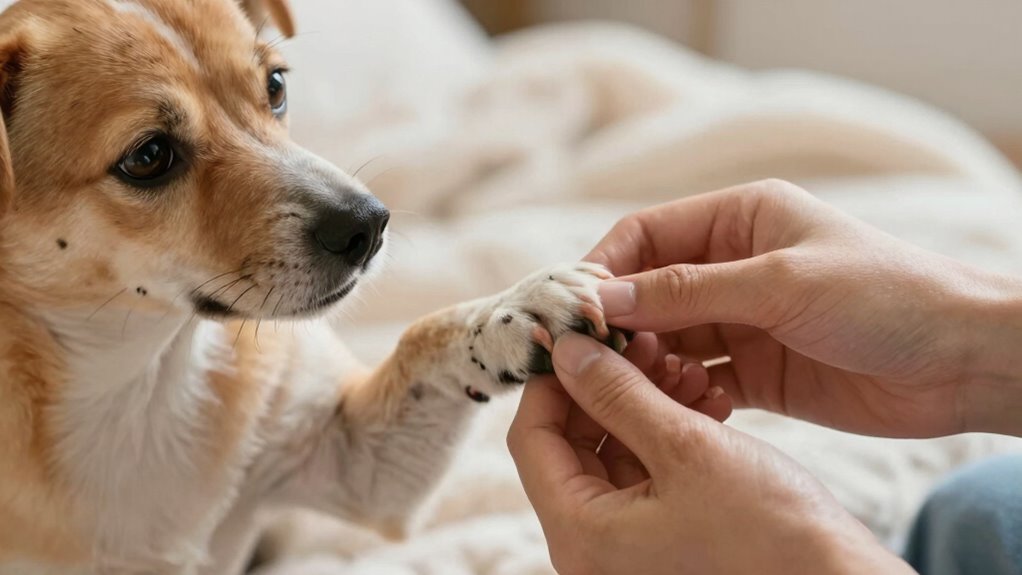
When your dog resists nail trimming or becomes anxious despite your efforts, troubleshooting becomes essential to overcoming these challenges. Recognize that different dog breeds respond uniquely, and some may have heightened sensitivity affecting nail health. If anxiety persists, try adjusting your approach—shorter sessions, different tools, or calming techniques. Understanding your dog’s comfort level helps prevent setbacks. Keep track of progress and note which methods work best. Here’s a quick guide:
| Challenge | Solution | Tips |
|---|---|---|
| Dog resists nail grinder | Use positive reinforcement and patience | Short, frequent sessions |
| Anxiety during trimming | Incorporate calming signals and treats | Keep sessions relaxed and brief |
| Nail health concerns | Consult a vet if nails seem unhealthy | Regular checkups |
| Breed-specific sensitivities | Tailor approaches to breed traits | Research breed tendencies |
How to Maintain Progress and Prevent Setbacks
Maintaining your dog’s nail trimming progress requires consistent effort and mindful strategies to prevent setbacks. To keep moving forward, focus on progress tracking by noting small achievements and recognizing improvements. This helps you stay motivated and aware of your dog’s comfort level. To prevent setbacks, consider these steps:
- Reinforce positive behavior consistently, rewarding calmness during sessions.
- Gradually increase exposure, avoiding rushing to prevent fear from returning.
- Address any signs of discomfort immediately, adjusting your approach as needed.
When Should You Seek Professional Help for Nail Grinder Fear?

Recognizing when to seek professional help is crucial if your dog’s fear of the nail grinder persists despite your efforts. If your dog continues to show extreme anxiety, aggressive behavior, or refuses to tolerate any grooming, professional intervention may be necessary. A qualified trainer or veterinarian can perform a behavioral assessment to identify underlying issues and develop an effective plan. They can guide you through specialized techniques or recommend gradual exposure strategies tailored to your dog’s needs. Don’t delay seeking help if progress stalls or fear worsens. Addressing nail grinder fear early with expert support can prevent long-term behavioral problems and ensure your dog feels safe and comfortable during grooming. Ultimately, professional help can make the process less stressful for both of you.
Frequently Asked Questions
How Long Does It Typically Take for a Dog to Become Comfortable With Nail Grinders?
It usually takes a few days to a few weeks for your dog to become comfortable with a nail grinder. The nail grinder timeline varies based on your dog’s temperament and how consistently you use comfort building methods. To speed up the process, start slowly, let your dog get used to the sound, and reward calm behavior. Patience and gentle, positive reinforcement are key to helping your dog feel secure during grooming.
Are There Specific Dog Breeds More Prone to Nail Grinder Fear?
Certain breeds are more prone to nail grinder fear due to breed sensitivities and fear predispositions. For example, small breeds like Chihuahuas and Yorkshire Terriers often have heightened sensitivities, making them more anxious about noises and vibrations. Similarly, breeds with a history of fear or anxiety, such as miniature poodles or whippets, may require extra patience and gradual desensitization. Understanding these tendencies helps you tailor your approach for calmer nail grooming sessions.
Can Using Treats Alone Effectively Reduce Nail Grinder Anxiety?
Treat effectiveness alone can substantially reduce your dog’s nail grinder anxiety if used consistently and positively. You should give treats immediately after each gentle exposure or step toward nail grinding, reinforcing calm behavior. This approach builds trust and gradually diminishes fear. Remember, patience is key—pair treats with calm praise, and over time, your dog will associate the grinder with positive experiences, helping reduce anxiety effectively.
What Are Signs of Progress When Training a Dog to Tolerate Nail Grinding?
Ever wonder how you’ll know if your dog is making progress with nail grinding? You’ll see behavioral cues like relaxed body posture, calm tail wagging, or even leaning into your touch. Patience milestones include your dog willingly allowing brief introductions, minimal hesitation, and gradually longer sessions without signs of stress. These signs show they’re becoming comfortable and trusting, making nail grooming a calmer experience for both of you.
How Can I Prevent My Dog From Developing a Fear of Nail Trimming Altogether?
You can prevent your dog from developing a fear of nail trimming by using positive reinforcement and gradual exposure. Start by introducing the tools gently, rewarding calm behavior, and only touching your dog’s paws without trimming. Slowly increase the exposure, praising and rewarding each step. Consistently practicing in a calm environment helps your dog associate nail trimming with positive experiences, reducing fear before it even begins.
Conclusion
Think of teaching your dog to accept nail grinding as guiding a tiny boat through calm waters. With patience and gentle steering, you’ll help your pup navigate each step with confidence. Remember, setbacks are just ripples, not storms. Stay steady, celebrate small victories, and soon your dog will sail through nail trimming with ease. Keep your course calm and consistent, and you’ll both enjoy smooth sailing ahead.