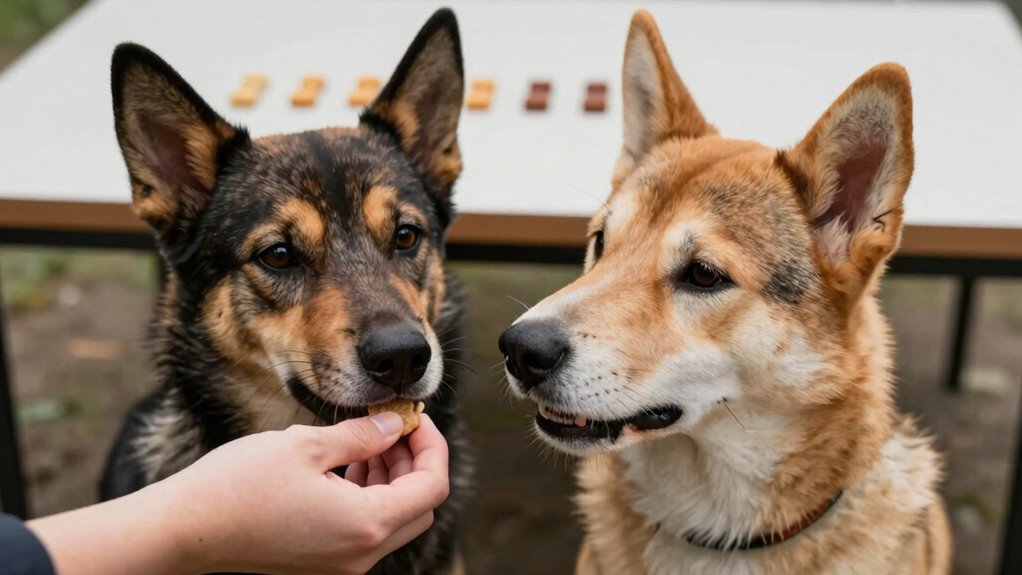

To fade treats without losing good behavior, gradually reduce treat frequency while maintaining praise, toys, or play as rewards. Watch your dog’s reactions and adjust the pace if behaviors weaken, using consistent timing and reinforcement. Incorporate alternative rewards to keep motivation high and prevent dependency. Monitoring responses and being patient helps your dog stay confident and responsive. If you want detailed steps to guarantee a smooth shift, keep exploring.
Key Takeaways
- Gradually decrease treat frequency while maintaining consistent timing and rewarding only correct behaviors.
- Replace treats with praise, toys, or play to reinforce behaviors and maintain motivation.
- Observe your dog’s responses and adjust reinforcement strategies if signs of frustration or regression appear.
- Use alternative rewards like scent work or puzzle feeders to keep engagement without treats.
- Monitor for signs of stress or loss of enthusiasm, and pause or reassess the fading process as needed.
Why Fading Treats Is Key to Long-Term Good Behavior

Fading treats is essential because it helps your dog develop self-control and reliable good behavior over time. When you rely too much on treats, your dog can become treat-dependent, only performing commands when food is involved. This can weaken their motivation to obey without immediate rewards. By gradually reducing treats, you encourage a motivational shift, where praise, affection, or other rewards become just as appealing. This shift builds a more balanced and confident dog, less focused solely on food. It also ensures your pet maintains good behavior even without constant treats. Fading treats prevents dependency from taking over and helps your dog understand that good behavior is expected, not just rewarded. Additionally, understanding the concept of Free Floating can aid in maintaining consistent training without relying heavily on treats. This approach promotes long-term obedience and a healthier relationship based on trust. Incorporating generalization techniques can further reinforce desired behaviors across different settings and situations, making the training more effective. Moreover, applying behavioral consistency ensures that your dog learns to respond reliably regardless of the environment or distractions. Recognizing the importance of timing and patience can also help owners implement fading treats more smoothly and successfully.
How to Assess Your Pet’s Motivation and Current Behavior

Before you begin fading treats, it’s important to assess your dog’s current motivation and behavior. Conduct a thorough motivation assessment by observing what excites your pup most—whether it’s praise, toys, or specific treats. A behavior evaluation helps you understand how well your dog performs commands without frequent treats. Ask yourself:
Assess your dog’s motivation and behavior to ensure successful treat fading and maintain engagement.
- Is my dog still enthusiastic to respond during training sessions?
- Does my dog lose focus or become distracted easily?
- Are there signs of frustration or disinterest?
This insight reveals your dog’s current engagement level and helps you plan a gradual reduction. Recognizing these cues ensures you won’t unintentionally diminish your pet’s motivation or disrupt good behavior, setting a strong foundation for successful treat fading. Additionally, understanding your dog’s overall motivation level can guide you in choosing appropriate reinforcement strategies during the fading process. Incorporating positive reinforcement techniques that align with your dog’s unique preferences can further support a smooth transition away from treats. Observing your dog’s receptiveness to training provides valuable clues on how best to tailor your approach throughout the process. Being aware of the performance metrics related to your dog’s behavior can help you track progress and make informed adjustments.
When and How Often to Reduce Treats Gradually
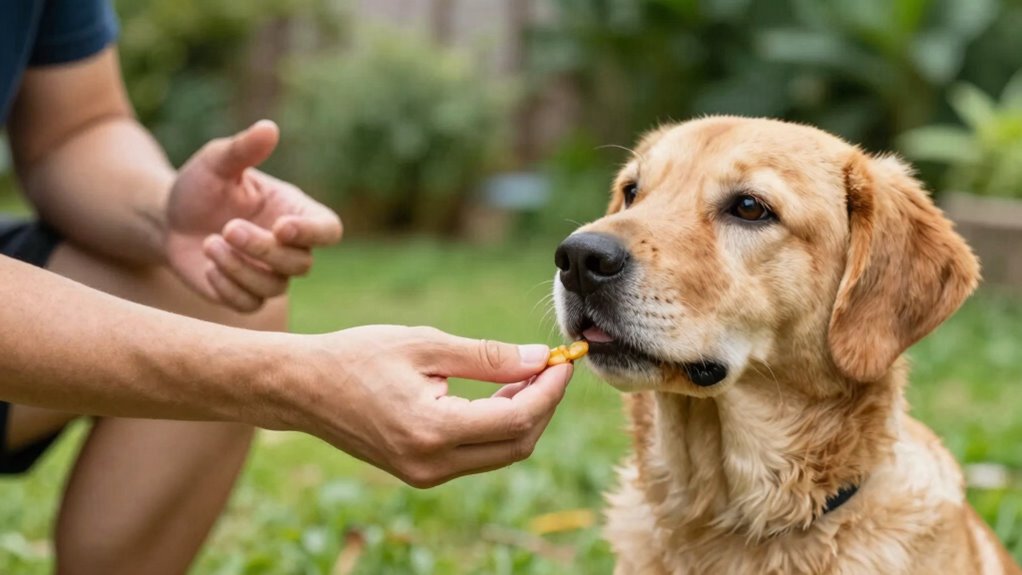
To effectively reduce treats, you should gradually decrease their frequency over time, allowing your dog to adjust without losing motivation. Start by spacing out treat sessions, perhaps from daily to every other day, then to once a week. During this process, monitor your dog’s response closely; if they begin to lose interest or revert to unwanted behaviors, slow down the reduction. The key is a steady, consistent approach with a gradual reduction in treat frequency, rather than abrupt cut-offs. This helps your dog associate fewer treats with good behavior without feeling deprived. Additionally, understanding behavioral reinforcement principles can help you tailor your approach for better long-term results. Remember, patience is essential—small, incremental changes over weeks will help your dog learn that good behavior remains rewarded, even as treats become less frequent. Incorporating positive reinforcement techniques can also support this transition, ensuring your dog stays motivated and engaged throughout the process. Employing timing and consistency in your training sessions further reinforces desired behaviors effectively, which is especially important for maintaining motivation during behavioral change.
Using Alternative Rewards to Keep Your Pet Motivated
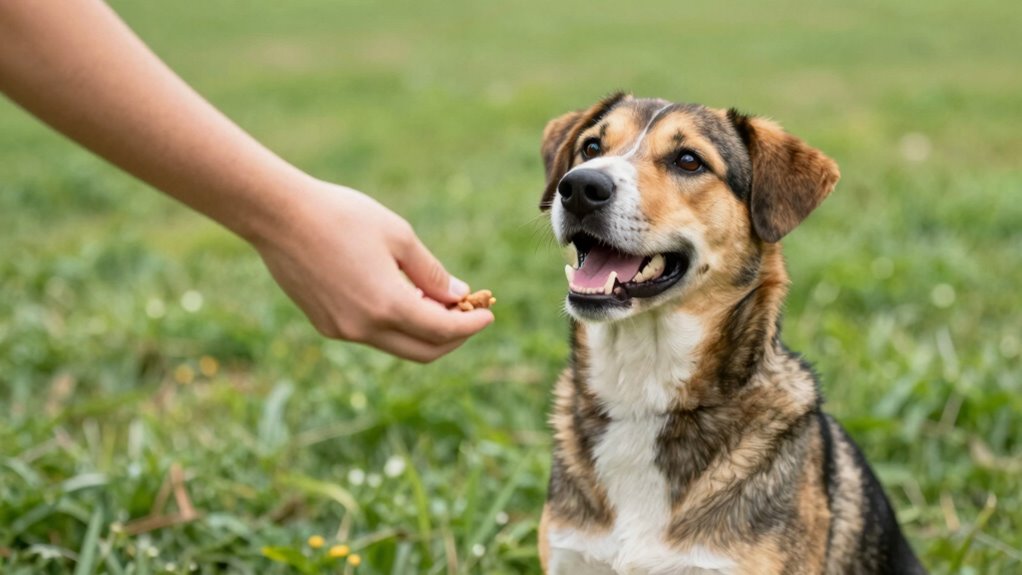
When you’re reducing treats, incorporating alternative rewards can keep your dog motivated and engaged. Treat alternatives serve as motivation boosters, helping your pet stay enthusiastic to learn without relying solely on food. Consider using praise, playtime, or access to favorite toys as effective rewards. These options tap into your dog’s natural instincts and build a stronger bond.
- Heartfelt praise that makes your dog feel loved and appreciated
- Play sessions that turn training into fun and excitement
- Access to cherished toys that reinforce positive behavior
Step-by-Step Techniques to Fade Treats Without Losing Progress
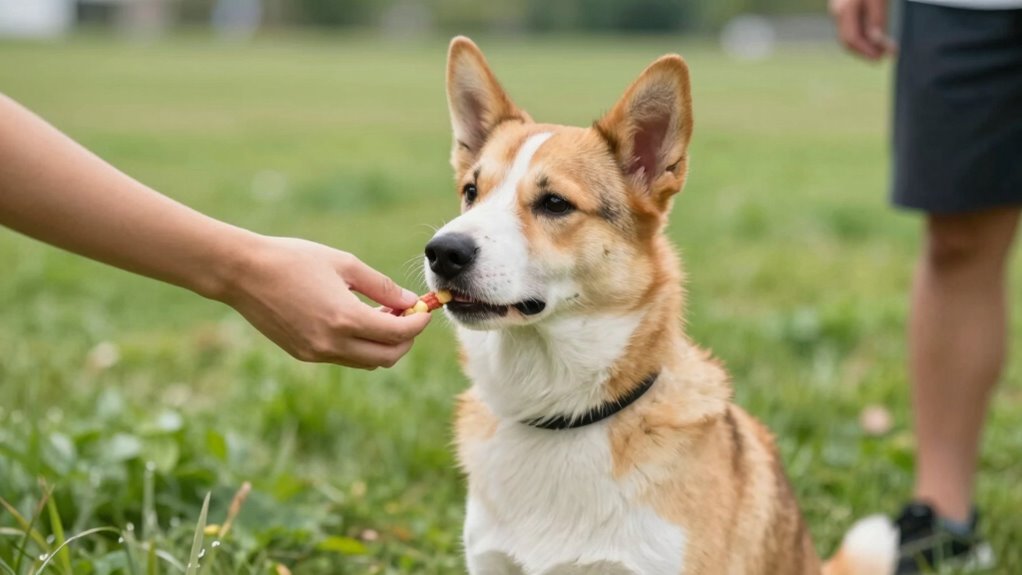
Once you’ve established alternative rewards like praise, play, and toys, gradually reducing treats becomes more manageable. Start by implementing treat substitution, offering a smaller or less appealing treat while maintaining the same level of reinforcement. Incorporate environment enrichment by increasing your pet’s engagement with toys, puzzles, or new activities, which helps keep their motivation high without relying solely on treats. As your pet responds consistently, slowly decrease the frequency or size of treats, ensuring they still associate good behavior with positive outcomes. Consistency is key—only reduce treats after your pet performs well. This step-by-step approach helps prevent loss of progress, making the transition seamless while keeping your pet motivated through positive reinforcement and enriching their environment. Paying attention to body piercing hygiene and ensuring proper aftercare can also serve as a reminder to be gentle and patient during the training process. Additionally, understanding behavior management principles can further support this gradual fading process, ensuring your pet remains confident and motivated. Incorporating training consistency and clear cues ensures the behavior remains stable throughout the fading process.
How to Monitor Your Pet’s Response and Adjust Your Plan

Monitoring your pet’s response is essential to guarantee the fading process stays effective and positive. Pay close attention to how your pet reacts when you reduce treat frequency. Response monitoring helps you identify signs of confusion or frustration early. Adjust your plan if your pet shows signs of difficulty or loss of motivation. Recognizing consistent testing methods allows you to evaluate progress accurately and make informed adjustments. A filter can be used to ensure that your observations are not affected by external factors, providing clearer insights into your pet’s behavior. Consistently observing your pet’s behavioral cues helps you better understand their comfort levels and adapt your approach accordingly. – Notice if they continue to perform behaviors confidently without frequent treats. – Watch for signs of stress, like whining or avoiding commands. – Celebrate small successes to reinforce their progress. Being aware of celebrity transformations related to pet training can offer inspiring ideas for adapting your approach during different stages of the process.
Troubleshooting Common Challenges in Treat Fading
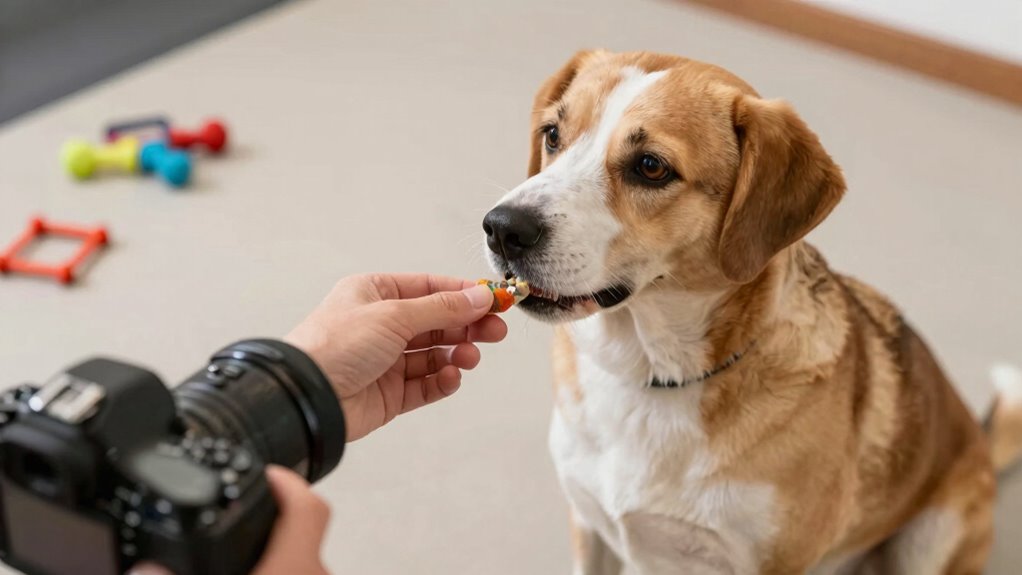
Sometimes, you might notice your pet’s behavior dropping off or setbacks during treat fading. You can adjust your reinforcement strategies to keep progress steady and prevent frustration. Recognizing these challenges early helps you manage regression and stay on track with your training plan. Incorporating consistent application of your chosen methods can also reinforce positive behaviors and minimize setbacks. Additionally, understanding the importance of behavioral consistency can help you maintain a calm and predictable environment, which supports your pet’s learning process. Establishing a structured routine further enhances understanding and reduces confusion during the fading process.
Recognizing Behavior Dropoff
Recognizing a behavior dropoff early is essential to troubleshooting treat fading effectively. When training consistency slips or environmental cues change, your pet may start to lose the behavior you’ve worked so hard to establish. Look for signs like decreased enthusiasm, hesitation, or incomplete responses. Carefully monitor these cues to catch issues before they escalate.
You might notice:
- Your pet no longer responds promptly, even with treats nearby
- The behavior diminishes when environmental cues differ
- You see less enthusiasm during training sessions
Being attentive helps you identify when the behavior begins to fade. Adjust your approach by maintaining consistent training routines and controlling environmental cues, so your pet stays motivated and engaged. Early recognition allows you to intervene before the behavior drops off completely.
Adjusting Reinforcement Strategies
When you notice your pet’s response to treats starts to decline, it’s time to adjust your reinforcement approach. Focus on maintaining treat consistency, giving rewards only when your pet performs the desired behavior. Make sure your reward timing is precise—immediately after the correct action—so your pet associates the treat with the behavior. If your pet begins to ignore treats or seems less motivated, consider slightly reducing the frequency of treats while still reinforcing with verbal praise or a gentle touch. This helps prevent dependency on treats and encourages intrinsic motivation. Adjusting your reinforcement strategies keeps your pet engaged and maintains the behavior as you gradually fade treats. Remember, consistency and timely rewards are key to successful treat fading without losing the behavior.
Managing Frustration and Regression
As you begin to fade treats, it’s common to encounter frustration or regression in your pet’s behavior. They might become less enthusiastic, lose focus, or revert to old habits. To manage these challenges:
- Remember that setbacks are normal and temporary.
- Use puzzle feeders or scent work to keep their mind engaged without relying solely on treats.
- Offer reassurance and pause the fading process if needed, then gradually resume.
These strategies help your pet stay motivated and reduce stress. Patience is key; progress may seem slow, but consistency pays off. Recognizing that frustration is part of the process allows you to adjust without giving up. With gentle reassurance and creative enrichment, you can navigate setbacks and continue fostering good behavior.
Frequently Asked Questions
Can I Use Different Types of Treats During the Fading Process?
Yes, you can use different types of treats during the fading process. Incorporating treat variety and alternative rewards helps keep your dog motivated and engaged. Switch between small treats, toys, or praise to gradually reduce reliance on treats alone. This approach maintains your dog’s interest and reinforces good behavior without overusing one type of reward. Just make certain the treats are still meaningful and appropriate for your dog’s size and dietary needs.
How Do I Handle Setbacks or Regressions in Behavior?
When setbacks happen, stay calm and avoid punishing your pet. Reinforce the desired behavior with consistency, offering treats and praise as usual. Remember, setbacks are normal, so don’t rush the process. Focus on maintaining behavior reinforcement, gradually reducing treat frequency while keeping your expectations clear. With patience and steady treat consistency, your pet will regain confidence and continue to follow commands, making progress over time.
Is It Better to Replace Treats With Praise or Toys?
It’s better to use praise as a treat alternative before toys because verbal praise reinforces your connection and is quick and easy to deliver. Toys can also be effective, especially for high-energy behaviors, but they might distract or excite your dog too much. Using praise versus toys depends on the situation and your dog’s preferences. Combining both can help you fade treats while maintaining motivation and reinforcing good behavior.
How Long Should Each Fading Phase Last?
Each fading phase should last until you see consistent, reliable behavior without the treat. Use treat consistency to gradually reduce treats, giving your pet time to adapt. Typically, this phase lasts a few days to a week, but it depends on your pet’s progress. Monitor their response, and if they hesitate, slow down the reduction. The key is a gradual reduction to guarantee the behavior sticks without the treat.
Can Treat Fading Affect My Pet’s Overall Training Progress?
Treat fading can impact your pet’s overall training progress if you don’t maintain training consistency and follow a gradual reduction approach. When you reduce treats too quickly, your pet might lose motivation or become confused. To prevent this, implement a steady, step-by-step decline in treats, while reinforcing good behavior with praise or other rewards. This balanced method helps preserve your pet’s progress and keeps training effective.
Conclusion
Fading treats is like gently guiding a delicate butterfly—it takes patience and care, but rewards you with lasting beauty. As you gradually reduce treats, watch your pet blossom into confident, motivated behavior that doesn’t rely on rewards alone. Remember, every step is a brushstroke in your masterpiece of training. Keep your eye on the bigger picture, and soon, your pet will soar freely, happily guided by their own good habits.