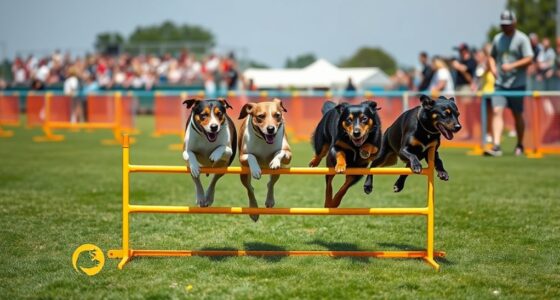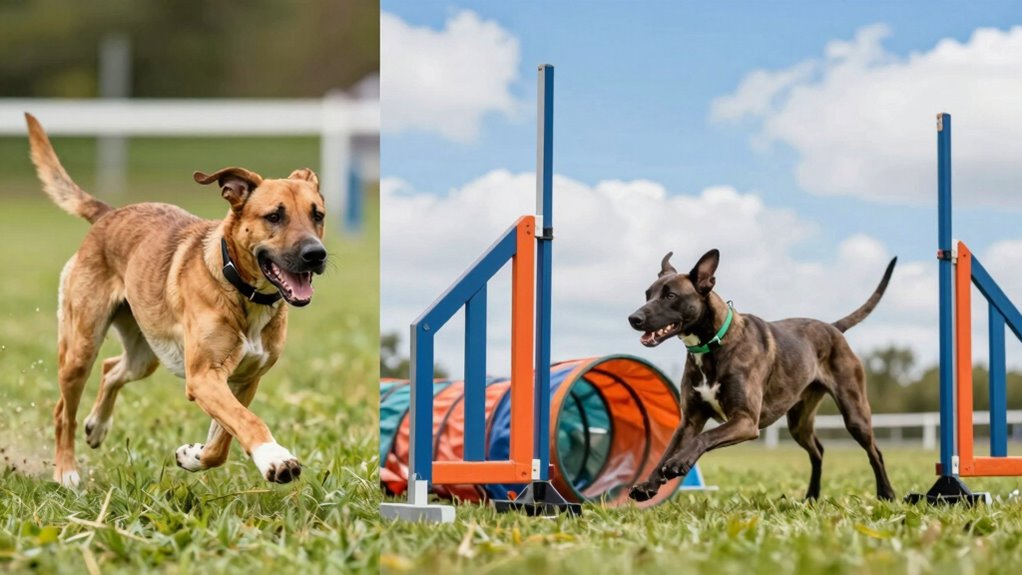
Balancing conditioning and skill days is key to developing a strong, capable sport dog. Conditioning days boost endurance, strength, and overall fitness through high-intensity workouts, while skill days focus on honing technique, agility, and coordination. You need both to keep your dog healthy and well-rounded. Proper nutrition, hydration, and rest support this split approach and prevent burnout or injury. Keep going to discover how to fine-tune this balance for peak performance.
Key Takeaways
- Conditioning days build endurance, strength, and resilience, while skill days focus on technique, agility, and coordination.
- Both training types are essential for developing a balanced, well-rounded sport dog.
- Proper nutrition, hydration, and rest support recovery and maximize training effectiveness for each session type.
- Balancing conditioning and skill days prevents overtraining, reduces injury risk, and promotes steady progress.
- Combining both approaches enhances overall performance, stamina, and technical precision in sport dogs.
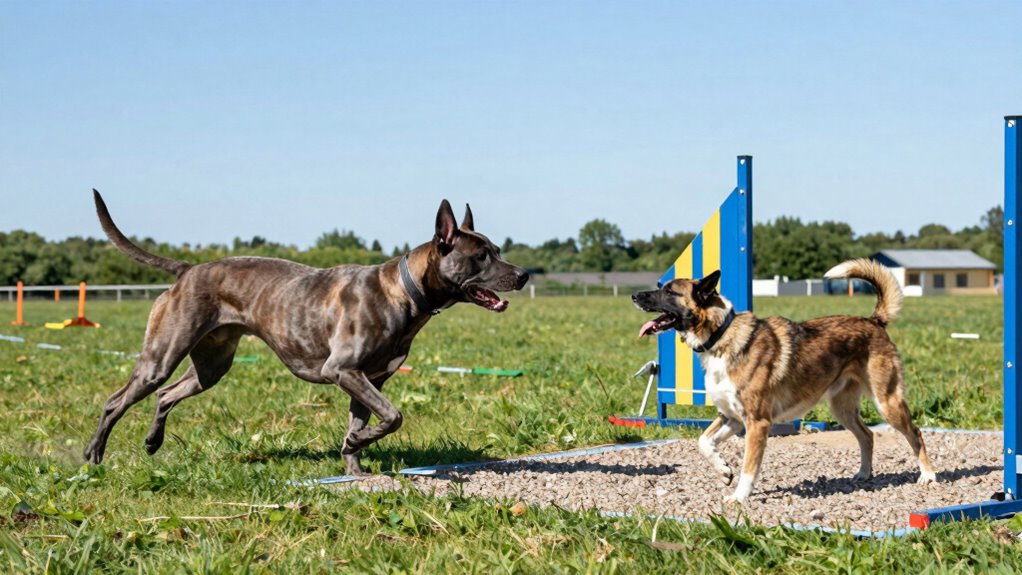
When training for a sport or improving your fitness, understanding the difference between conditioning days and skill days is essential. Each plays a vital role in developing a well-rounded athlete or a split sport dog, and balancing them correctly can make all the difference in your progress. Conditioning days focus on building endurance, strength, and overall physical resilience. These sessions often involve high-intensity workouts, cardio, or strength training that push your body beyond its usual comfort zone. On the other hand, skill days concentrate on refining specific techniques, agility, coordination, and sport-specific movements. Both types of days require different approaches to nutrition plans, rest, and recovery to optimize results and prevent injury. Incorporating balanced training routines can enhance overall performance and reduce the risk of overtraining.
On conditioning days, your body needs ample fuel to sustain the increased workload. Proper nutrition plans become crucial here; fueling your body with the right balance of carbohydrates, proteins, and healthy fats ensures you have energy and aids recovery afterward. Hydration is equally important during these intensive sessions, helping to prevent fatigue and muscle cramps. Post-workout, focus on replenishing glycogen stores and repairing muscles through protein intake, which speeds up recovery and prepares you for future conditioning efforts. Rest and recovery after these days shouldn’t be overlooked, as they allow your muscles to rebuild and adapt. Incorporating light activity or stretching can help reduce soreness and improve flexibility, contributing to better performance on subsequent days.
Fuel your body with carbs, proteins, and fats; hydrate well; and prioritize rest for optimal recovery after conditioning days.
Skill days, by contrast, demand a different approach. These sessions are less about pushing physical limits and more about honing technique and precision. Nutrition plans here should support mental alertness and muscle readiness, emphasizing balanced meals that sustain focus and energy without causing sluggishness. Since skill training often involves repeated practice and fine motor control, adequate rest is essential to consolidate learning and avoid fatigue-induced mistakes. Recovery on skill days might include light stretching or mental relaxation techniques to help your body and mind stay sharp. Overtraining on skill days can lead to burnout or diminished coordination, so listening to your body and incorporating rest intervals is key.
Balancing conditioning and skill days creates a sustainable training routine that promotes continuous improvement. Each type of day complements the other, ensuring your body stays strong while your technique sharpens. Paying close attention to nutrition plans and prioritizing rest and recovery not only boosts performance but also reduces injury risk. Whether you’re preparing for a competition or simply aiming to elevate your fitness, recognizing the importance of this split approach will keep you progressing steadily and safely.

JMMPOO Dog Agility Training Equipment, 60-piece Dog Obstacle Course Training Starter Kit Pet Outdoor Game with Tunnel, Agility Hurdle, Weave Poles, Jump Ring, Pause Box, Toy Balls and Storage Bag
- Promotes Dog Health and Fitness: Encourages running, jumping, and playing
- Durable and Safe Materials: Made of sturdy ABS and tear-resistant polyester
- Easy to Set Up and Transport: No tools needed, lightweight, quick assembly
As an affiliate, we earn on qualifying purchases.
As an affiliate, we earn on qualifying purchases.
Frequently Asked Questions
How Do I Determine the Right Balance Between Conditioning and Skill Days?
You should balance conditioning and skill days by observing your dog’s energy levels and training progress. Maintain consistency in training routines, but don’t forget rest and recovery, which are essential for avoiding injury and overtraining. Adjust the balance based on your dog’s response, ensuring they’re challenged without getting exhausted. Regularly reassess and tweak the schedule to optimize performance and keep your dog motivated and healthy.
What Signs Indicate My Dog Needs More Conditioning Versus Skill Training?
Think of your dog like a car—if they seem sluggish or easily fatigued, they likely need more conditioning. Watch for behavioral cues like decreased enthusiasm or signs of fatigue during play. If they’re enthusiastic but struggle with precision or agility, they might need more skill training. Pay attention to their nutrition needs too, as proper fuel supports both conditioning and skill development, ensuring your dog performs at their best.
How Long Should Each Conditioning or Skill Session Last?
You should aim for each conditioning or skill session to last about 15-30 minutes, depending on your dog’s age and endurance. Use appropriate training equipment to keep sessions engaging and effective. Incorporate rest periods of 5-10 minutes between exercises to allow recovery and prevent fatigue. Keep sessions focused and positive, gradually increasing duration as your dog builds stamina and skills. Always watch for signs of tiredness and adjust accordingly.
Can I Combine Conditioning and Skill Exercises in One Day?
Can you combine conditioning and skill exercises in one day? Absolutely, but you should be strategic. Use proper training equipment to prevent overexertion, and always include rest days to allow your dog to recover. Incorporating both into one session can boost performance, but watch for signs of fatigue. Mix exercises carefully, keep sessions manageable, and make sure your dog gets enough downtime to stay healthy and motivated.
How Does Weather Affect Conditioning and Skill Training Schedules?
Weather considerations substantially influence your conditioning and skill training schedules. Extreme heat can cause fatigue or heatstroke, so you should schedule intense sessions during cooler parts of the day or in shaded areas. Cold weather may reduce motivation or cause injury, so seasonal adjustments like indoor training or shorter sessions are essential. Rain or snow can also disrupt plans, prompting you to adapt by finding covered spaces or postponing outdoor workouts.
Conclusion
Balancing conditioning and skill days is crucial for your dog’s development. Did you know that dogs participating in a well-structured split schedule show a 30% improvement in performance and endurance? By dedicating specific days to build strength and others to hone skills, you guarantee your dog stays motivated and injury-free. Remember, your consistent effort and understanding of their needs create a happier, healthier athlete, ready to excel in every challenge you set.