If your dog shows signs of fatigue, excessive panting, limping, or avoids activity, the load might be too much. Always start with a light weight and gradually increase, monitoring their response closely. Avoid high-impact exercises or uneven terrain, and consult a veterinarian if health concerns arise. Remember that a vest should fit comfortably without causing stress or discomfort. Want to guarantee safe and effective use? Stay tuned to find out more tips.

Get pet supplies delivered free with Prime
- Fast, free delivery on millions of items
- Prime Video, Amazon Music and more included
- Member-only deals all year
Key Takeaways
- Signs of fatigue, limping, or excessive panting indicate the load may be too heavy for the dog.
- Avoid using weighted vests during high-impact activities or on uneven, challenging terrain.
- Gradually increase weight, ensuring the dog adjusts comfortably without showing resistance or stress.
- Dogs with health issues or joint problems should not wear weighted vests without veterinary approval.
- If the dog shows discomfort or resistance, remove the vest immediately to prevent injury.
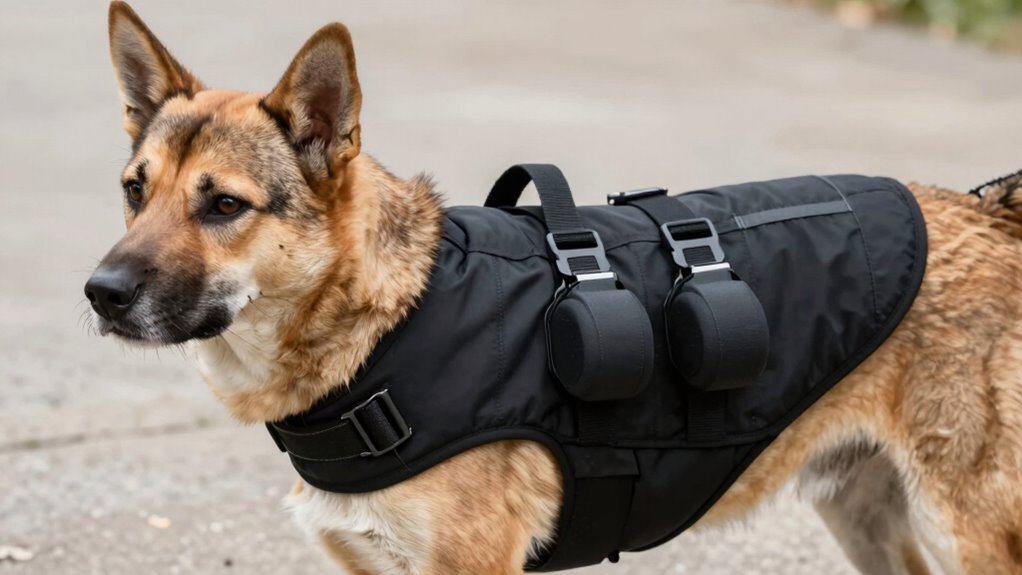
One of the main advantages of using weighted vests is the training benefits they offer. They can help build muscle, increase stamina, and promote better overall fitness. For dogs that need a bit of encouragement to stay active, a weighted vest can act as a motivational tool, making walks or exercises more engaging. Additionally, some trainers find that the extra load helps improve coordination and balance, especially for working or sporting dogs. But, it’s critical to remember that not every dog will respond well to added weight. You should start with very light loads, gradually increasing as your dog adapts, and always monitor their response closely. Overloading can lead to strain or injury, which defeats the purpose of trying to enhance their health. Proper weight management is essential to prevent adverse effects and ensure your dog’s safety. Recognizing individual differences in dog fitness levels can also help tailor the training to your pet’s specific needs. Incorporating safety precautions during training sessions further minimizes risk and promotes safe exercise habits.
Safety precautions are vital when using weighted vests for dogs. First, always choose a vest that fits properly — it should be snug but not restrictive, allowing free movement and breathing. Never force your dog into a vest that’s uncomfortable or causes resistance; this can cause stress or injury. Pay attention to signs of fatigue or discomfort, such as excessive panting, limping, or reluctance to continue activity. If your dog shows any of these signs, remove the vest immediately and give them time to rest. It’s also wise to consult your veterinarian before introducing a weighted vest, especially if your dog has pre-existing health issues or joint problems. Using the vest on uneven terrain or during high-impact activities should be avoided unless cleared by a professional. Proper fitment and gradual introduction are crucial for ensuring safety and effectiveness.
Remember that proper fitting and gradual introduction are essential to prevent injury and ensure your dog benefits safely from the added weight. Ultimately, the key to safely enjoying the benefits of weighted vests for dogs is moderation and attentiveness. They can be a great addition to your training toolkit when used thoughtfully, but they’re not a one-size-fits-all solution. Keep the weight light, observe your dog’s reactions, and always prioritize their safety. When used properly, a weighted vest can help your dog become stronger and more confident — just don’t forget that responsible use is essential to prevent any unintended harm.
As an affiliate, we earn on qualifying purchases.
Frequently Asked Questions
Can All Dog Breeds Safely Wear Weighted Vests?
Not all dog breeds can safely wear weighted vests. Smaller, older, or health-compromised dogs might struggle with the extra load. Before using one, consider their diet needs and make sure they’re not overweight, which could worsen health issues. Also, check grooming tips to prevent overheating or skin irritation. Always consult your vet first, and start with light weights, monitoring your dog’s comfort and safety closely.
How Do I Choose the Right Weight for My Dog?
Choosing the right weight for your dog isn’t just a small step—it’s like launching them into a whole new universe of dog weight management and training effectiveness. Start with just 5-10% of their body weight and observe how they handle it. If they’re energetic and comfortable, you can gradually increase. Always prioritize their comfort and safety, and consult your vet for tailored advice.
Are Weighted Vests Suitable for Senior or Injured Dogs?
Weighted vests aren’t suitable for senior dogs or those recovering from injuries, as they can strain fragile joints or hinder recovery. For senior health, gentle exercises and supportive accessories work better. Injury recovery requires careful rest and vet-approved treatments. Always consult your veterinarian before considering a weighted vest for your dog, especially if they’re senior or injured, to guarantee safety and proper healing.
How Long Should My Dog Wear a Weighted Vest During a Session?
You should limit your dog’s weighted vest sessions to about 10-15 minutes, as overexertion can cause stress or injury. Notably, a study shows dogs can experience a 20% increase in exercise intensity with added weight. Always choose a vest made from breathable, durable material to prevent overheating and discomfort. Watch for signs of fatigue or distress, and gradually increase wear time to ensure safety and comfort.
What Signs Indicate My Dog Is Uncomfortable or Stressed?
You’ll notice stress signals and discomfort cues if your dog becomes anxious or overwhelmed. Watch for signs like panting, yawning, lip licking, or avoiding eye contact. If your dog seems tense, tries to remove the vest, or shows excessive whining, these are clear indicators they’re uncomfortable. Pay close attention during the session, and if you observe these cues, remove the vest immediately to guarantee your dog’s safety and well-being.
Conclusion
While a weighted vest can help strengthen your dog’s muscles, too much weight can turn a healthy hike into a strained struggle. Imagine a spirited pup enthusiastically bounding forward, then suddenly weighed down like a backpacker carrying too much on their shoulders. The difference is clear: the right amount of load supports growth, but excess burdens can hinder progress and cause harm. Always balance the load, so your furry friend can enjoy the journey without the weight of unnecessary strain.
Halloween Picks
halloween
As an affiliate, we earn on qualifying purchases.