Maintaining a rimless tank requires paying close attention to water quality, lighting, and flow, as its sleek design makes any imperfections or algae blooms immediately noticeable. You’ll need to regularly test and stabilize pH, ammonia, nitrates, and other parameters to prevent algae growth and keep your tank looking pristine. Consistent water changes, proper filtration, and controlled light exposure are essential. If you keep these tips in mind, you’ll be able to enjoy a beautiful, crystal-clear rimless aquarium—more details await.

Get pet supplies delivered free — and shop member deals
- Fast, free delivery on millions of items
- Access to Prime Big Deal Days deals on October 6–7
- Prime Video, Amazon Music and more included
Key Takeaways
- Regularly test and adjust water parameters to prevent imbalances that quickly affect the tank’s appearance.
- Limit light exposure to prevent algae blooms, given the tank’s high visibility and algae sensitivity.
- Maintain vigilant cleaning and water changes, as rimless tanks show imperfections immediately.
- Ensure proper water flow and oxygenation to avoid stagnant areas and support water chemistry stability.
- Consistently monitor and manage nutrients like nitrates and phosphates to prevent algae growth and keep the tank pristine.
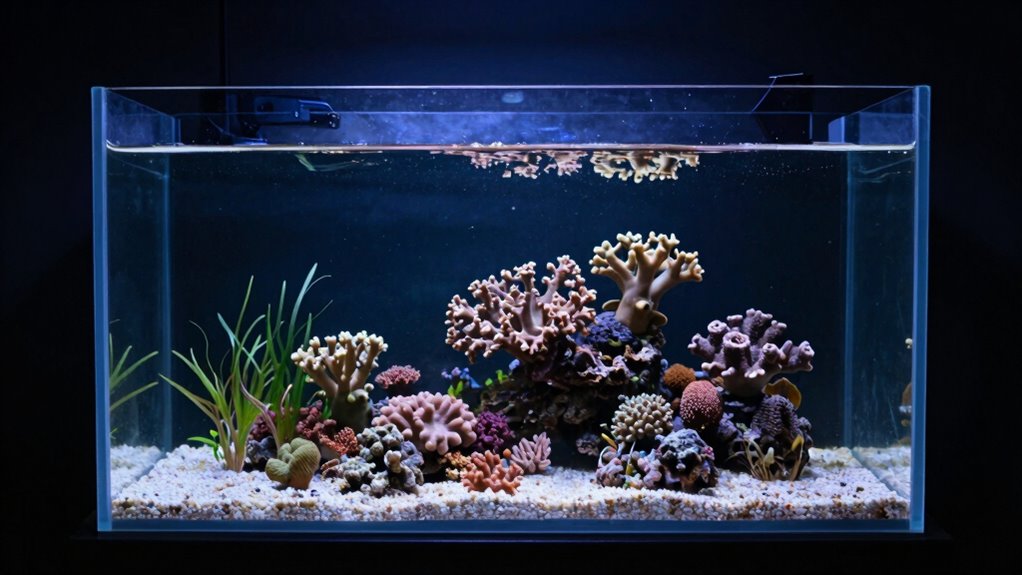
Ever wondered how to keep your rimless tank looking pristine and functioning smoothly? It’s all about maintaining a delicate balance, especially since rimless tanks are known for their sleek, unobstructed views. These tanks require a bit more attention because they’re less forgiving when it comes to water chemistry and algae control. Without a rim to hide equipment or build-in features, every aspect of maintenance becomes more visible and vital to your tank’s aesthetic appeal. You need to stay vigilant about water quality, ensuring it remains stable and healthy for your aquatic inhabitants.
Maintaining a rimless tank requires careful water quality and algae control for stunning, unobstructed views.
Algae buildup is one of the biggest challenges in rimless tanks. Because these tanks often have high clarity, even the tiniest algae bloom is noticeable and can quickly ruin the visual appeal. To combat this, you must prioritize algae control by monitoring light exposure, managing nutrient levels, and performing regular cleanings. Limiting the amount of light your tank receives each day is essential—aim for about 8-10 hours of controlled lighting. Excess light, especially from direct sunlight or overly bright fixtures, creates an environment where algae thrive. Additionally, keeping nutrient levels like nitrates and phosphates in check helps prevent algae outbreaks. Regular water changes and proper filtration are your best tools here, removing excess nutrients before they fuel algae growth.
Water chemistry plays a pivotal role in the health and clarity of your rimless tank. Maintaining proper parameters isn’t just about keeping fish alive; it’s about ensuring your tank remains visually stunning. You need to test regularly for pH, ammonia, nitrites, and nitrates, adjusting as needed to stay within ideal ranges. When water chemistry is off, algae tend to flourish, and your plants or corals may suffer. Using high-quality test kits, you can detect imbalances early and take corrective action. Proper water movement and oxygenation also contribute to stable water chemistry, preventing dead zones and ensuring a healthy environment. A crucial aspect of rimless tank maintenance is understanding the importance of water chemistry in keeping your tank both beautiful and healthy. Additionally, understanding the water flow dynamics helps in preventing stagnant areas that can lead to algae buildup and other issues.
Furthermore, maintaining consistent water parameters is essential to prevent sudden changes that can stress aquatic life and promote algae growth.
As an affiliate, we earn on qualifying purchases.
Frequently Asked Questions
How Often Should I Clean My Rimless Tank?
You should clean your rimless tank weekly to prevent algae buildup and maintain fish health. Regular maintenance helps control aquarium algae, which can quickly overgrow and stress your fish. Use a gentle scraper and perform partial water changes to keep the tank clear. Consistent cleaning guarantees your rimless tank stays beautiful and healthy, reducing the risk of algae overgrowth and keeping your aquatic friends happy and thriving.
What Tools Are Best for Rimless Tank Cleaning?
Like a trusty Swiss Army knife, a soft microfiber cloth and algae scrubbers are your best tools for rimless tank cleaning. Use gentle tools to prevent scratches, and a siphon is great for water changes. Regular equipment maintenance and algae control keep your tank sparkling. An algae scraper or razor blade can help remove stubborn spots, but always handle with care to preserve the tank’s clarity and beauty.
How Do I Prevent Water Spots on Glass?
To prevent water spots on your rimless tank glass, regularly wipe the surface with a soft, clean cloth after water changes. Control algae growth by maintaining proper water hardness and using algae control products if needed. Avoid letting mineral deposits build up by using filtered or dechlorinated water, and dry the glass thoroughly to prevent mineral spots. Consistent maintenance keeps your tank looking crystal clear and beautiful.
Can I Use Vinegar for Cleaning?
Yes, you can use vinegar for cleaning your rimless tank, but make sure to prioritize vinegar safety by diluting it with water to avoid harsh residues. Vinegar is a natural cleaning option that effectively removes water spots and mineral deposits without chemicals. Always rinse your tank thoroughly after cleaning to prevent any vinegar residue, which can harm aquatic life. Natural cleaning with vinegar is a safe, eco-friendly choice when used properly.
What Are Signs of Tank Glass Damage?
Keep your eyes peeled for signs of tank glass damage—tiny scratches, cloudy spots, or cracks that suddenly appear. These may indicate glass scratches or compromised seal integrity. If you notice any of these, don’t turn a blind eye; this is a red flag that your tank might be at risk. Acting quickly helps prevent leaks or further damage, keeping your aquatic display safe and stunning.
Conclusion
Maintaining a rimless tank is like tending a delicate crystal garden—its beauty captivates, but it demands your constant care. Every splash and wipe is akin to polishing a treasured gem, ensuring clarity and brilliance shine through. Remember, your diligent attention keeps the aquarium’s glass as pristine as a clear lake reflecting the sky. With patience and care, your rimless sanctuary becomes a vibrant mirror of harmony—beautiful, fragile, yet resilient under your watchful eye.
Halloween Picks
halloween
As an affiliate, we earn on qualifying purchases.