To size your return pump correctly, determine your tank’s volume and aim for a turnover rate of 10-20 times per hour for reef systems. Consider factors like pipe diameter, head height, and fittings, since these affect actual flow. An adjustable pump helps you fine-tune the flow for peak coral health and water quality. Keep these guidelines in mind, and you’ll avoid guesswork—there’s more to this essential process that can help you improve your setup.

Get pet supplies delivered free with Prime
- Fast, free delivery on millions of items
- Prime Video, Amazon Music and more included
- Member-only deals all year
Key Takeaways
- Calculate your tank’s volume and target turnover rate (10-20x) to determine the ideal GPH for your return pump.
- Consider system head height and plumbing fittings to accurately assess pump flow capacity.
- Choose adjustable or controllable pumps to fine-tune flow rates based on real-world performance.
- Match pump GPH to your tank size to promote coral growth, prevent stagnation, and reduce algae buildup.
- Use precise calculations instead of guesswork to select a pump that ensures system stability and energy efficiency.
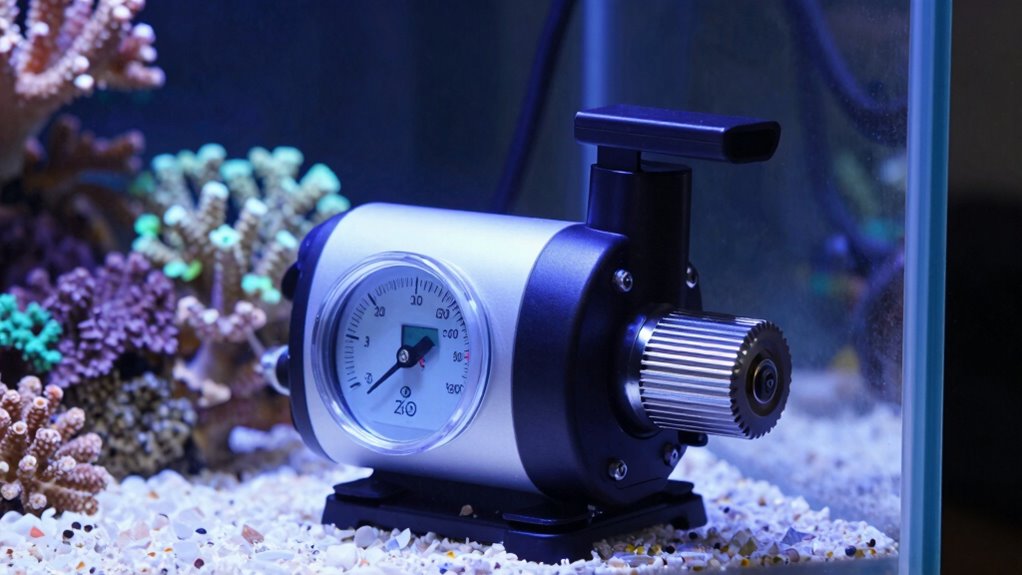
Choosing the right return pump is essential for maintaining a healthy, efficient aquarium. When you’re setting up or upgrading your tank, one of the most critical decisions is selecting a pump that provides the correct flow rate. Too much flow can stress your corals during fragging or disrupt delicate ecosystems, while too little hampers filtration, oxygenation, and overall tank health. Properly sizing your return pump helps you achieve ideal water movement without unnecessary power consumption or noise.
To determine the right pump size, you need to understand your tank’s turnover rate—how many times the total volume of water circulates through your filtration system each hour. A common rule of thumb for reef tanks is aiming for 10 to 20 times the tank’s volume per hour. For instance, if you have a 50-gallon tank, a return pump rated between 500 and 1000 GPH (gallons per hour) generally works well. This range ensures that water is adequately circulated, promoting coral fragging and healthy growth, while also keeping algae growth in check by preventing stagnant zones.
However, keep in mind that actual flow depends on factors like pipe diameter, head height, and fittings. The height your water has to be pumped up affects the pump’s efficiency; the higher the lift, the lower the flow rate. You should account for these factors when choosing a pump to avoid overestimating its capacity. A pump that’s too powerful can create strong currents that stress corals during fragging or cause damage to delicate invertebrates. Conversely, a pump with too low a capacity might not generate enough movement to keep detritus suspended or prevent algae from settling on your rocks and substrate. Additionally, understanding your system’s head height is crucial for selecting a pump that can handle the necessary elevation without performance loss. Proper calculations considering system head height can help prevent undersized or oversized pumps, saving energy and reducing wear and tear. It is also advisable to consider pump noise levels when selecting equipment, as quieter pumps contribute to a more peaceful tank environment. Properly choosing a pump with adjustable flow or a controllable speed gives you flexibility. You can fine-tune water movement to suit your specific needs, whether you’re fragging corals or trying to control algae growth. When you understand your tank’s flow requirements, you’ll notice improvements in coral health and growth, as well as more effective algae control.
Understanding your tank’s turnover rate is also crucial for optimizing overall system efficiency and ensuring that your equipment is working harmoniously. Choosing the right return pump isn’t just about matching GPH numbers; it’s about balancing flow, energy efficiency, and tank stability. By calculating your turnover rate with your tank size and considering head height and plumbing, you set yourself up for success. Properly sizing your return pump creates a more stable environment, enhances coral fragging efforts, and helps you maintain a cleaner, healthier aquarium with less algae buildup. Avoid guesswork—measure your needs carefully, and select a pump that fits those parameters for the best results.
adjustable return pump for reef tank
As an affiliate, we earn on qualifying purchases.
As an affiliate, we earn on qualifying purchases.
Frequently Asked Questions
How Often Should I Clean My Return Pump?
You should clean your return pump every 3 to 6 months to guarantee ideal pump maintenance and water circulation. Regular cleaning prevents buildup of debris or calcium deposits, which can reduce efficiency and strain the pump. During cleaning, inspect for wear and tear, and replace parts if necessary. Proper maintenance keeps your system running smoothly, prolongs pump lifespan, and maintains a healthy aquarium environment.
What Is the Noise Level of Different Pump Sizes?
The noise level of different pump sizes varies based on design and motor quality. Smaller pumps tend to be quieter, producing minimal vibrations, while larger pumps may generate more noise during operation. Regular pump maintenance, like cleaning and checking for wear, helps reduce noise. For a clear noise comparison, read reviews and manufacturer specs. Selecting a pump with quiet operation guarantees your tank remains peaceful, especially in quiet environments.
Can a Larger Pump Cause Water Quality Issues?
A larger pump can cause water quality issues if it’s not properly managed. It might produce excessive flow rates, leading to turbulence that stirs up debris and fosters bacteria growth. Over time, this stresses pump durability and disrupts flow rate maximization. Imagine your tank’s water turning murky because the pump is overworking, risking health for your aquatic life. Proper sizing ensures ideal flow without compromising water quality.
How Do I Choose the Right Pump for a Frag Tank?
To choose the right pump for your frag tank, focus on flow optimization and proper pump maintenance. Select a pump that provides adequate turnover rates without causing water turbulence or stress to your corals. Regularly clean and inspect the pump to guarantee it runs efficiently. Avoid oversized pumps that can harm water quality, and instead, opt for one that balances flow needs with gentle circulation, promoting a healthy, thriving environment.
What Are the Energy Consumption Differences Between Pump Sizes?
Larger pumps generally consume more power, leading to higher energy costs, while smaller pumps are more energy-efficient with lower power consumption. When choosing a pump, consider energy efficiency to save on electricity bills and reduce environmental impact. A pump that’s too powerful for your system wastes energy, so selecting one with appropriate flow rates helps balance performance and power consumption. Always compare specs for best energy-efficient operation.
Conclusion
By properly sizing your return pump, you’re setting the heartbeat of your aquarium, ensuring everything flows smoothly rather than just guessing at the beat. Think of it as tuning an instrument—you want perfect harmony, not a discordant jumble. When you choose the right pump, your tank thrives with vibrant life, and you avoid the chaos of over- or under-circulation. Take the time to get it right; your aquatic world will thank you with every ripple and shimmer.
Halloween Picks
halloween
As an affiliate, we earn on qualifying purchases.