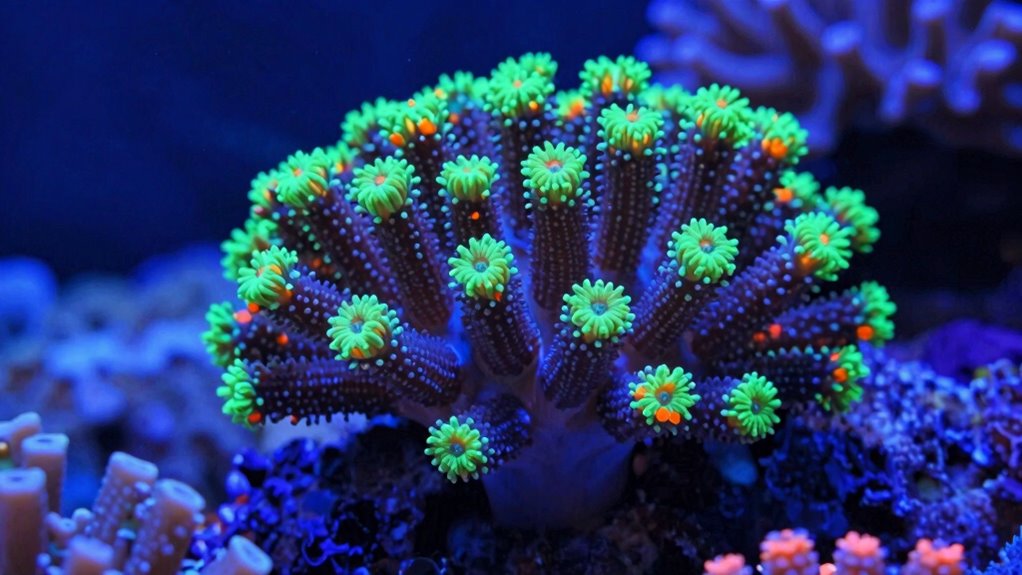

Reef lighting involves understanding PAR, spectrum, and photoperiod to support healthy coral growth. PAR measures how much usable light hits your corals, affecting their photosynthesis and essentiality. Choosing the right spectrum, especially blue and actinic light, enhances color and tissue growth. Setting a consistent photoperiod mimics natural sunlight, promoting healthy development. Balancing intensity and coverage prevents stress and uneven growth. Keep exploring these basics to create a thriving reef environment.

Get pet supplies delivered free — and shop member deals
- Fast, free delivery on millions of items
- Access to Prime Big Deal Days deals on October 6–7
- Prime Video, Amazon Music and more included
Key Takeaways
- PAR measures the usable light spectrum for photosynthesis, indicating how much light reaches corals for growth.
- A full spectrum, especially blue and actinic light, promotes coral pigmentation, tissue health, and deeper light penetration.
- Typical reef lighting uses a 10-12 hour photoperiod with gradual light transitions and moonlight to mimic natural cycles.
- Adjust light intensity carefully to ensure even coverage, prevent shading, and reduce stress or bleaching of corals.
- Regularly monitor PAR levels and coral response to optimize spectrum, intensity, and photoperiod for healthy reef growth.
As an affiliate, we earn on qualifying purchases.
What Does PAR Mean for Reef Lighting?
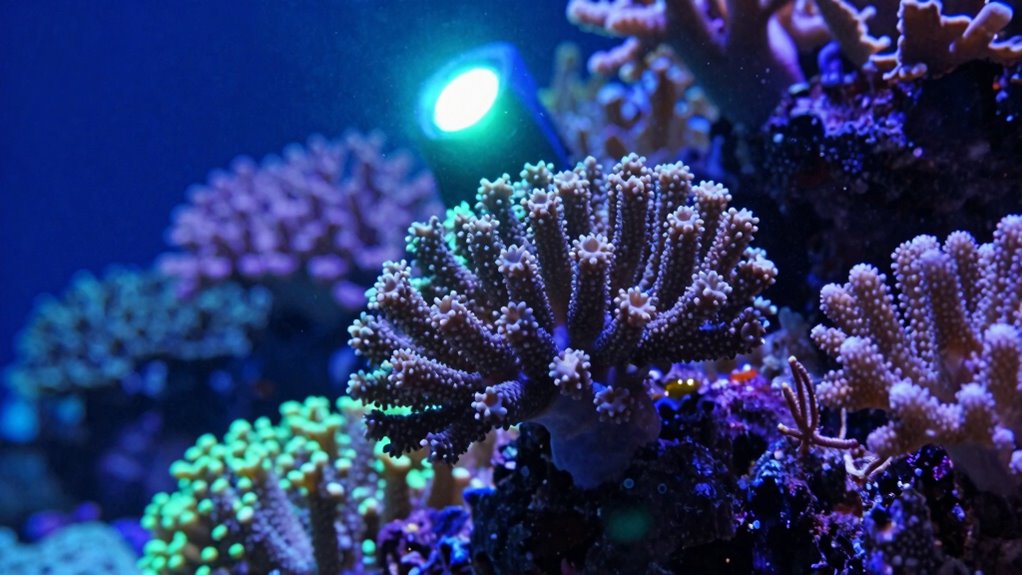
Understanding PAR, or Photosynthetically Active Radiation, is essential for reef lighting because it measures the light spectrum that corals and other photosynthetic organisms need to thrive. PAR indicates the amount of usable light available for photosynthesis, directly affecting your corals’ health and growth. Higher PAR levels generally lead to better photosynthesis efficiency, helping corals produce energy more effectively. It’s also vital to consider light penetration, which determines how deeply light can reach within your aquarium. If light doesn’t penetrate well, even high PAR near the surface won’t benefit corals buried deeper. Monitoring PAR helps you optimize your lighting setup, ensuring your corals receive the right amount of light for vibrant growth and overall health. Proper understanding of PAR is key to successful reef keeping. Additionally, light penetration influences how effectively light reaches different depths, which is crucial for maintaining corals at various positions within your tank. Recognizing the relationship between PAR and spectrum can help you fine-tune your lighting for optimal coral health. Moreover, understanding how spectral quality impacts coral coloration and growth can also enhance your reef’s appearance and vitality. Being aware of spectral distribution allows you to select lighting that promotes both health and vibrant colors in your corals.
How to Choose the Best Light Spectrum for Your Corals
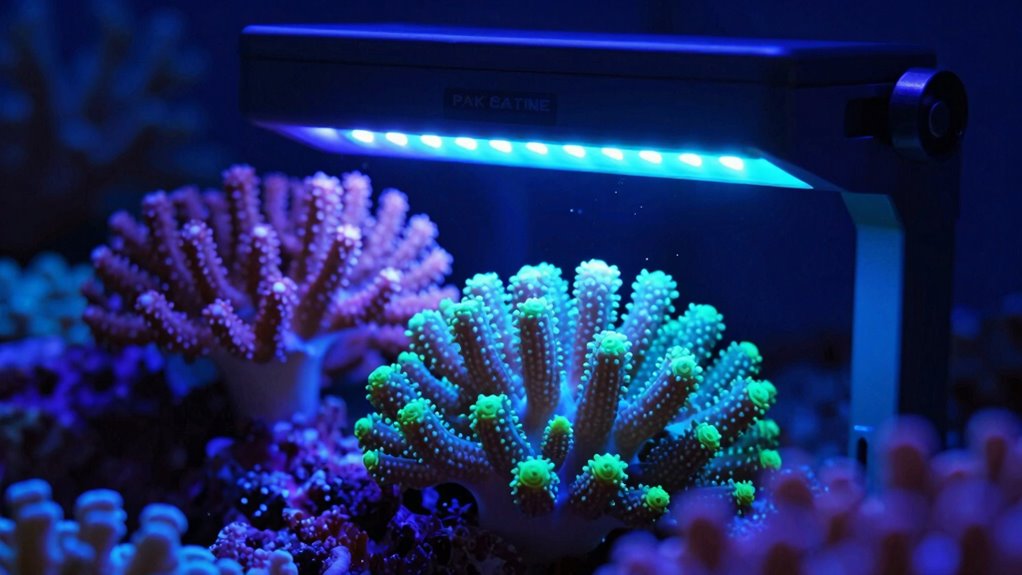
Choosing the right light spectrum is essential because different coral species thrive under specific wavelengths. To enhance coral pigmentation, select a spectrum that emphasizes blue and actinic light, which brings out vibrant colors and promotes healthy tissue growth. Additionally, consider light penetration; deeper waters require broader spectrum lighting to ensure light reaches all coral levels effectively. A balanced spectrum that combines blue, violet, and some red wavelengths supports both pigmentation and photosynthesis. Avoid overly narrow spectra, which can limit coral health and color development. By matching your lighting to your corals’ needs, you’ll foster vibrant coloration and ideal growth. Understanding light spectra helps optimize coral health by ensuring the correct wavelengths are provided for photosynthesis and pigmentation. Furthermore, appropriate light spectrum can influence coral stress levels and resilience, contributing to overall vitality. Providing a full spectrum that closely mimics natural sunlight conditions ensures your corals receive the necessary wavelengths for thriving growth and coloration. The goal is to replicate natural sunlight conditions as closely as possible, providing sufficient wavelength diversity for overall coral well-being. Incorporating spectral diversity in your lighting setup ensures your corals receive a full range of wavelengths necessary for their optimal growth and coloration.
How to Set an Effective Photoperiod for Reef Growth
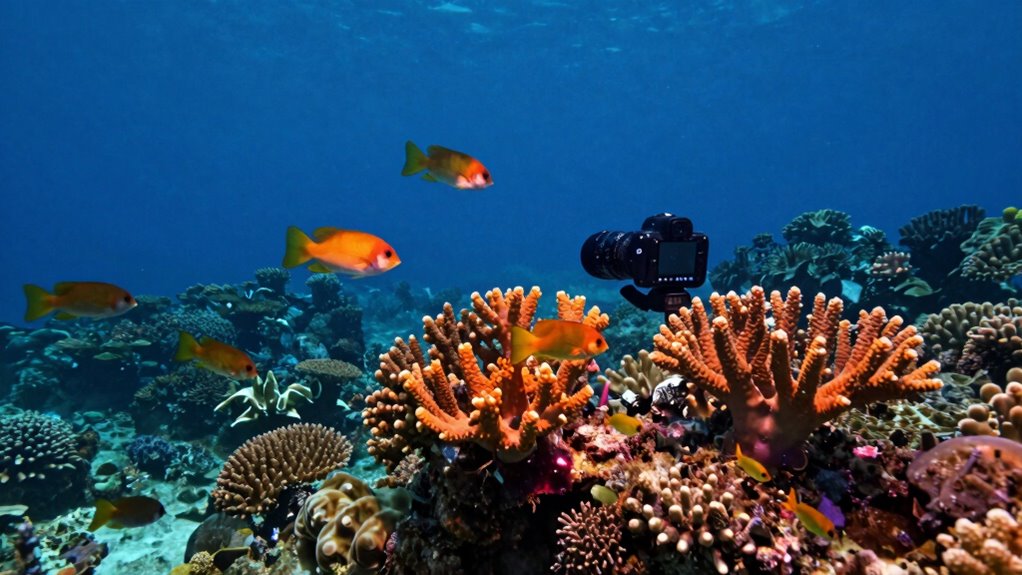
Setting the right photoperiod is key to promoting healthy coral growth and vibrant coloration. Typically, a 10-12 hour light cycle works well, mimicking natural sunlight patterns. Incorporate a subtle moonlight effect during the night to simulate natural lunar cycles, which can benefit coral reproduction and reduce stress. This gentle moonlight also helps with algae control by discouraging unwanted algae growth during dark periods. Avoid leaving the lights on continuously, as corals need periods of darkness for healthy metabolic processes. Using timers to create consistent, gradual changeovers between day and night, preventing sudden light changes that can stress your corals. Ensuring proper light spectrum is also crucial for optimal coral health and coloration. A well-balanced photoperiod ensures ideal growth while supporting natural behaviors and maintaining overall tank health, and understanding the candy varieties available can inspire creative lighting effects for display tanks. Additionally, understanding the photosynthetic needs of different coral species allows for more tailored and effective lighting setups. Incorporating light intensity adjustments can further optimize coral development by matching their specific growth requirements.
How to Balance Light Intensity and Coverage for Healthy Growth
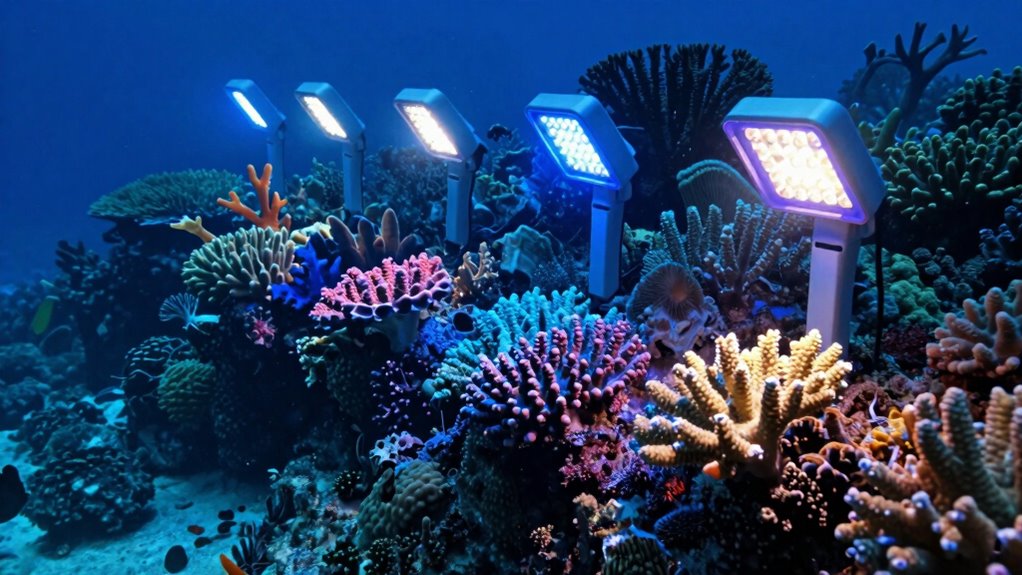
Achieving the right balance between light intensity and coverage is essential for healthy coral growth and vibrant coloration. Too much light can cause coral shading or stress, while too little limits growth. To optimize this balance: 1. Adjust light intensity gradually, monitoring how well light penetrates different reef zones. 2. Ensure even coverage to prevent shaded areas where corals receive less light. 3. Use adjustable fixtures to target specific areas, avoiding excessive coral shading. 4. Regularly inspect corals for signs of stress or bleaching, and modify light levels accordingly. 5. Incorporate light distribution techniques to ensure consistent illumination across your reef. 6. Understand the importance of spectral quality in promoting optimal coral health and coloration, and consider how different light spectra influence coral photosynthesis. Additionally, maintaining appropriate light spectrum can enhance coral pigmentation and overall vitality. Proper light calibration is also crucial to prevent over- or under-lighting, ensuring a thriving reef environment.
Tips for Monitoring and Adjusting Your Reef Lighting
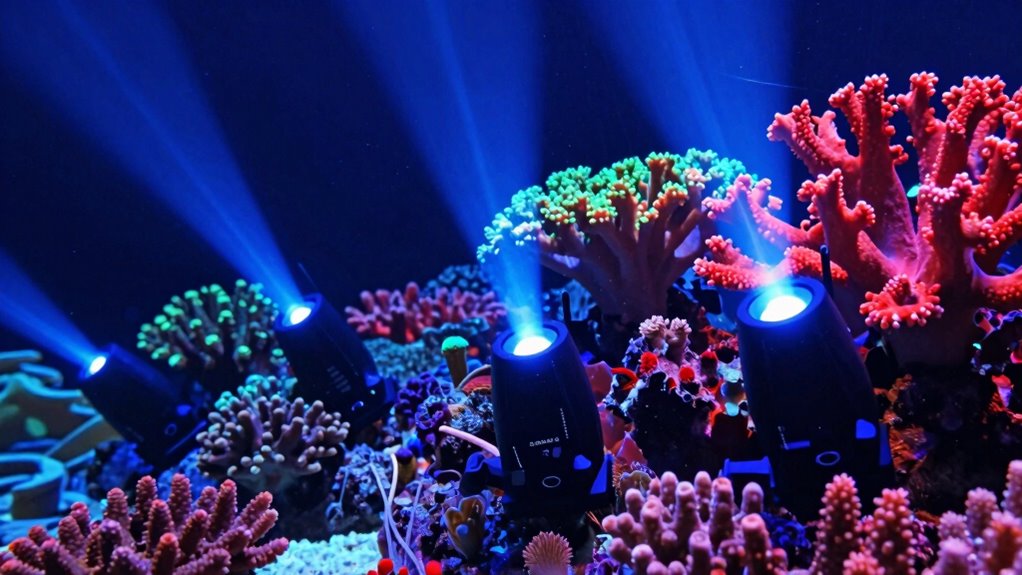
How can you guarantee your reef lighting remains ideal? Regularly monitor your tank’s conditions and adjust lighting accordingly. Use a PAR meter to measure light levels and ensure your corals receive proper intensity. Spectral quality plays a crucial role in coral health and coloration, so understanding and adjusting spectrum can be beneficial. Lighting timers are essential—they help maintain consistent photoperiods and prevent fluctuations that can promote aquarium algae growth. Check your timers periodically to confirm they turn lights on and off as scheduled. Observe coral behavior and algae presence; if algae proliferates, reduce light duration or intensity. Here’s a quick guide:
| Monitoring Focus | Adjustment Strategy |
|---|---|
| PAR Levels | Fine-tune with dimmers or spectrum adjustments |
| Coral Response | Modify photoperiod or intensity |
| Aquarium Algae | Reduce light exposure or improve flow |
| Timer Functionality | Replace or recalibrate as needed |
Consistent monitoring ensures excellent coral health and minimizes algae issues. Additionally, staying informed about spectrum control options can help optimize coral growth and coloration.
Frequently Asked Questions
How Does Water Depth Affect Reef Lighting Requirements?
Water depth considerably impacts your reef lighting requirements because of water penetration and light attenuation. As depth increases, less light reaches corals, so you need stronger lighting or better spectrum to compensate. Shallow waters allow more natural light, reducing your need for intense artificial lighting. Adjust your light intensity and spectrum based on depth to guarantee your corals get enough light for healthy growth, considering the effects of water penetration and light attenuation.
Can LED Lights Simulate Natural Sunlight Cycles Accurately?
You’ll be glad to know that LED lights can accurately simulate natural sunlight cycles. Studies show that high-quality LED spectrum and adjustable photoperiods mimic the sun’s intensity and colors very closely, supporting coral health and growth. With artificial sunlight, you control the timing and spectrum, creating a natural environment. This guarantees your reef receives consistent lighting, encouraging vibrant growth and healthy ecosystems, just like in nature.
What Are the Signs of Lighting Stress in Corals?
You’ll notice coral bleaching, where corals turn white or pale, indicating stress from excessive light. Algae overgrowth can also occur, as stressed corals struggle to compete, leading to an imbalance. Additionally, you might see corals retracting or losing their vibrant colors. If you observe these signs, it’s a clear indication that your lighting may be too intense or inconsistent, and adjusting your PAR levels or photoperiod can help reduce stress.
How Often Should Reef Lighting Be Replaced or Upgraded?
You should replace or upgrade your reef lighting roughly every 1 to 2 years. The lighting lifespan varies depending on the type and quality, but technology advances quickly, and bulbs or LEDs can lose intensity over time. Regularly check for dimming or color shifts, and upgrade when you notice diminished performance or signs of coral stress. Staying current ensures ideal PAR levels, spectrum, and overall coral health.
Are There Specific Lighting Needs for Different Coral Species?
Yes, different coral species have specific lighting needs to enhance their pigmentation and health. You should tailor your lighting intensity and spectrum accordingly, considering each species’ preferences. Gradually acclimate your corals to new lighting conditions to prevent stress, and pay attention to their pigmentation changes as a sign of proper light exposure. Adjusting these factors guarantees ideal growth and vibrant colors in your reef ecosystem.
Conclusion
When you understand PAR, spectrum, and photoperiod, you naturally create a thriving reef environment. It’s no coincidence that the right lighting fosters vibrant corals and healthy growth—your attentive adjustments mirror nature’s balance. As you fine-tune your setup, you’re not just maintaining an aquarium; you’re nurturing a miniature ocean. Embrace the process, and watch how your reef responds, reminding you that patience and knowledge are the keys to revealing its full beauty.
Halloween Picks
halloween
As an affiliate, we earn on qualifying purchases.