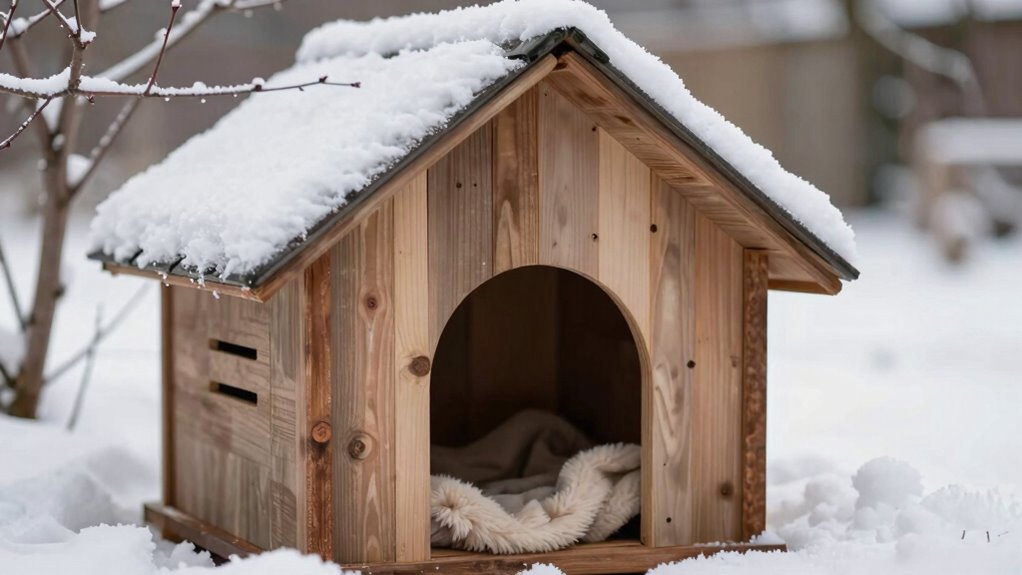

To keep outdoor cats warm in winter without moisture build-up, choose a shelter with thick, weather-resistant insulation and proper ventilation to prevent dampness and promote airflow. Elevate the shelter slightly off the ground to avoid dampness and use moisture-resistant interior layers. Regularly check for condensation, repair any damage promptly, and consider adding safe indoor heating options like heated pads for extra warmth. Keep your cat’s shelter dry, ventilated, and well-maintained to guarantee its comfort and health—more tips await you.

Get pet supplies delivered free with Prime
- Fast, free delivery on millions of items
- Prime Video, Amazon Music and more included
- Member-only deals all year
Key Takeaways
- Insulate walls with foam panels to retain heat and prevent moisture transfer inside the shelter.
- Elevate the shelter slightly off the ground to improve airflow and reduce dampness.
- Ensure proper ventilation to allow moisture escape while maintaining warmth.
- Use moisture-resistant interior materials and regularly check for condensation or dampness.
- Incorporate safe indoor heating options like heated pads to supplement warmth without moisture buildup.
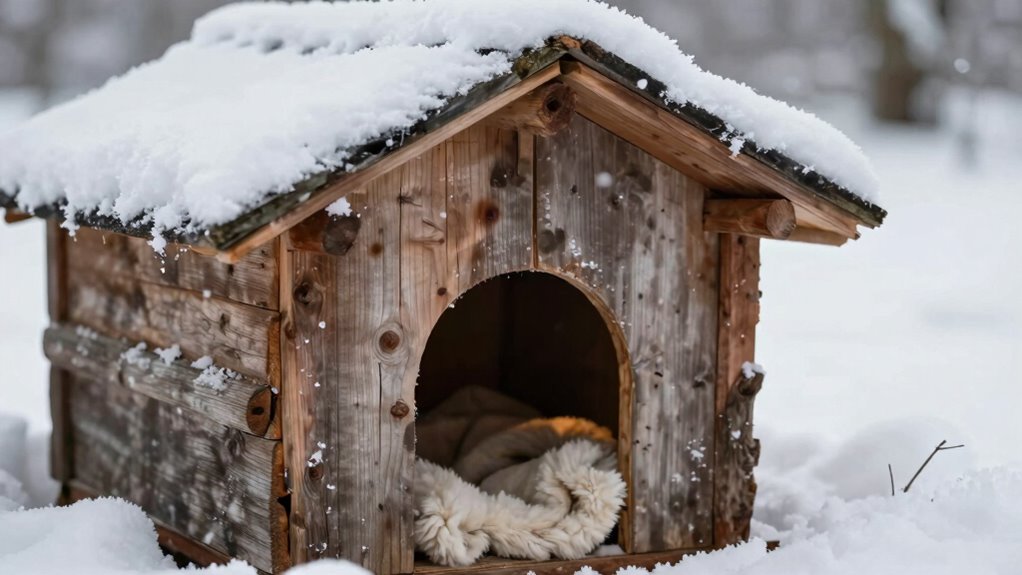
Are you worried about keeping your outdoor cat safe and warm during winter? If so, providing a sturdy outdoor cat house that offers both warmth and protection from moisture is essential. While outdoor shelters help keep your cat dry and shielded from harsh weather, it’s equally important to think about indoor heating options and overall cat health. A well-insulated, ventilated shelter can make a significant difference in maintaining your cat’s comfort and well-being during the cold months.
Ensure your outdoor cat stays warm and dry with a well-insulated, ventilated shelter and proper indoor heating support.
When choosing or designing an outdoor cat house, prioritize insulation to prevent heat loss. Using materials like foam panels or thick, weather-resistant insulation inside the walls can help retain your cat’s body heat. Avoid overly airtight designs, as proper ventilation is crucial to prevent moisture build-up. Moisture is one of the biggest threats during winter, as it can lead to hypothermia or respiratory issues. Make sure your shelter is elevated slightly off the ground to prevent dampness from seeping in and to promote air circulation underneath. This setup helps keep the interior dry, ensuring your cat stays warm without feeling damp or uncomfortable. Incorporating proper ventilation can also help reduce moisture accumulation inside the shelter. Additionally, adding a moisture-resistant layer to the shelter’s interior can further protect against dampness and condensation.
While a cozy outdoor shelter is fundamental, you should also think about how indoor heating can complement your efforts. If you have a garage or a shed that’s attached to your house, consider installing a safe space where your cat can retreat if the weather becomes too severe. Using electric heating pads designed specifically for pets can provide additional warmth, but always follow manufacturer instructions to prevent overheating or fire hazards. These heating options can be especially beneficial for cats with health issues or those that struggle with the cold more than others. Remember, the goal is to create a balanced environment where your outdoor cat has access to warmth without risking moisture buildup that can compromise their health. Ensuring the shelter has proper ventilation and insulation can greatly reduce the risk of condensation and dampness. Proper shelter design also involves selecting materials that resist moisture and facilitate airflow, further protecting your feline friend.
Additionally, monitoring the humidity levels inside the shelter can help you prevent excessive moisture and maintain a dry environment for your cat. Regularly checking for any signs of condensation or dampness is essential to ensure the shelter remains a safe and comfortable space. Ultimately, keeping your outdoor cat healthy during winter involves a combination of proper shelter design, indoor heating support, and regular checks on their condition. Make sure to regularly inspect the shelter for condensation or dampness, and replace or repair any damaged insulation or weatherproofing. Providing your cat with a warm, dry, and ventilated space helps reduce stress, supports their immune system, and preserves their overall health. With thoughtful planning and attention, you can give your outdoor feline friend a safe haven that keeps them warm and healthy all winter long.
outdoor insulated cat house winter
As an affiliate, we earn on qualifying purchases.
As an affiliate, we earn on qualifying purchases.
Frequently Asked Questions
How Often Should I Clean My Outdoor Cat House?
You should clean your outdoor cat house at least once a month for proper cat house maintenance. Regular cleaning helps prevent moisture build-up, which is especially important during winter weather tips to keep your cat warm and dry. After storms or heavy snowfall, check and clean more frequently to remove snow, ice, and debris. Keeping the house clean guarantees your feline friend stays comfortable, dry, and healthy throughout the cold months.
Can I Insulate a Plastic or Wooden Cat House Effectively?
You can definitely insulate a plastic or wooden cat house effectively! Use insulation materials like foam boards or straw to trap warmth, and combine weatherproofing techniques such as sealing gaps and adding waterproof covers. These steps create a fortress of warmth that keeps your cat cozy even in the coldest weather. Proper insulation and weatherproofing guarantee your feline friend stays warm, dry, and happy during harsh winter days.
What Materials Prevent Condensation Inside the Shelter?
To prevent condensation inside your outdoor cat house, use insulation materials like foam boards or thermal blankets that also help with humidity control. These materials keep the air inside dry and warm, reducing moisture buildup. Additionally, guarantee proper ventilation to allow excess humidity to escape. By combining insulation and ventilation, you create a cozy, moisture-free environment that keeps your cat comfortable and dry during winter.
How Do I Ensure Proper Ventilation Without Losing Heat?
You might find it amusing how small openings can serve as clever ventilation techniques without sacrificing warmth. To guarantee proper airflow, incorporate adjustable vents or tiny screened windows that allow air exchange while retaining heat through insulation. Using heat retention strategies like thick, insulated walls helps maintain warmth, so your cat stays cozy without moisture buildup. Balancing ventilation with insulation ensures a dry, warm shelter that keeps your feline safe during winter.
Are Heated Mats Safe for Outdoor Cat Houses?
Heated mats are generally safe for outdoor cat houses if you choose models designed specifically for outdoor safety. Look for mats with automatic shut-off features and waterproof, durable materials. Always supervise your cats when the mats are in use, and guarantee the power cords are protected from weather and chewing. Properly installed heated mats can provide reliable warmth without risking moisture buildup or electrical hazards, keeping your outdoor cats cozy and safe.
Conclusion
In winter, your outdoor cat house is like a cozy fortress against the cold, but without proper insulation and moisture control, it can become a trap rather than a refuge. Think of it as a warm blanket that keeps moisture out, ensuring your feline friend stays dry and comfortable. By taking these simple steps, you’re creating a safe haven that shields your cat from winter’s icy grip—making warmth and dryness your cat’s best allies.
Fall Picks
fall essentials
As an affiliate, we earn on qualifying purchases.