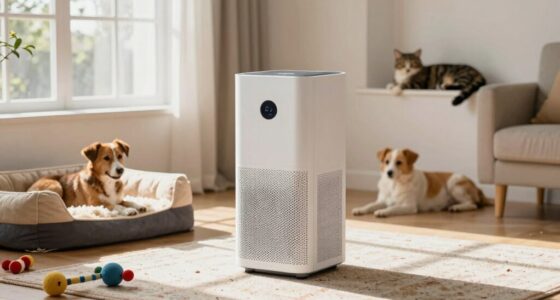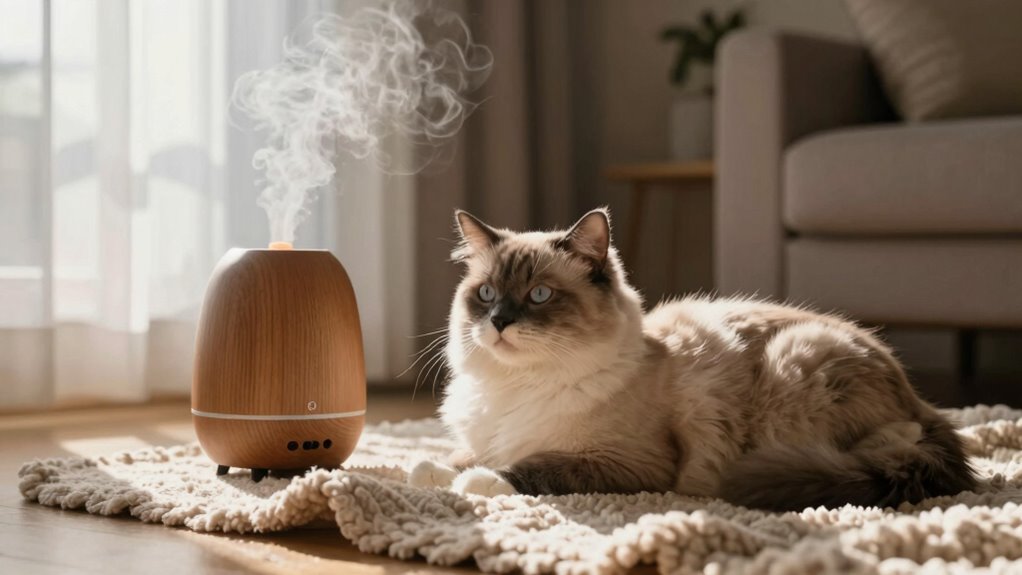

Maintaining the right indoor humidity is key to your pet’s skin health and comfort. Proper humidity prevents dryness, irritation, and flaky skin by supporting hydration and skin barrier function. Using a humidifier can help reduce itching, promote a shiny coat, and prevent cracks that invite infections. It also benefits their respiratory health and overall well-being. Keep your home’s humidity balanced, and you’ll see your pet happier and healthier—if you want to find out how to get it just right, keep going.

Get pet supplies delivered free — and shop member deals
- Fast, free delivery on millions of items
- Access to Prime Big Deal Days deals on October 6–7
- Prime Video, Amazon Music and more included
Key Takeaways
- Maintaining proper indoor humidity prevents pet skin dryness, irritation, and flaky patches.
- Humidifiers add moisture, supporting skin hydration and reducing cracks or infections.
- Adequate humidity levels help keep your pet’s coat shiny and smooth.
- Balanced humidity alleviates respiratory dryness and enhances overall comfort.
- Regular humidifier maintenance ensures a healthy environment, protecting skin and respiratory health.
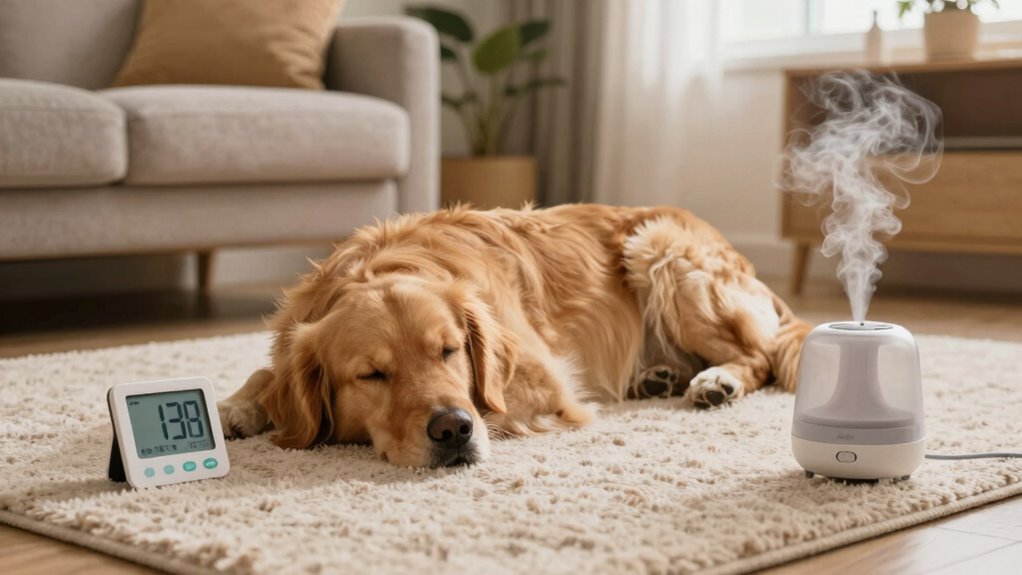
Maintaining proper home humidity levels is vital for your pet’s skin health, especially during dry seasons or in climate-controlled environments. When the air around you becomes too dry, it can lead to skin issues for your furry friend, such as dryness, irritation, and even flakiness. Using a humidifier can be a simple yet effective way to combat these problems by increasing indoor humidity. The humidifier benefits go beyond just adding moisture; it helps maintain skin hydration, which is essential for your pet’s overall comfort and health. Proper skin hydration prevents dryness and keeps your pet’s coat shiny and smooth, reducing itching and discomfort.
Keeping home humidity balanced supports your pet’s skin health and overall comfort.
When you keep the humidity at appropriate levels, you create an environment that supports your pet’s skin barrier. This barrier is critical because it prevents moisture loss and shields against irritants. Without enough moisture in the air, your pet’s skin can become rough and prone to infections or inflammation. A humidifier helps to sustain the right moisture balance, making it easier for your pet’s skin to stay elastic and healthy. It’s especially beneficial if your pet has pre-existing skin conditions or is prone to allergies, as dry skin can exacerbate these issues. Additionally, indoor air quality can influence your pet’s overall health, making proper humidity levels even more important. Ensuring optimal humidity can also help reduce static electricity, which can be irritating to pets with sensitive skin.
You’ll notice that with adequate skin hydration, your pet may scratch less and show fewer signs of discomfort. When the air is too dry, even the most resilient pets can experience irritation, which leads to scratching, licking, or biting at their skin. By using a humidifier, you’re supporting their natural skin defenses, helping to soothe irritation and promote healing. It’s also a great way to prevent the formation of dry patches or cracks that can serve as entry points for bacteria and fungi. This proactive approach ensures your pet stays comfortable and reduces the likelihood of needing medicated treatments. Proper humidity levels also play a role in reducing static electricity, which can be especially bothersome for pets with sensitive skin or allergies.
Additionally, maintaining proper humidity levels can have a positive impact on your pet’s respiratory health, which is often linked to skin health. Dry air can cause nasal and throat dryness, making your pet more susceptible to respiratory infections. The added moisture from a humidifier creates a more comfortable breathing environment, further supporting overall well-being. Proper humidity levels can also help reduce allergy symptoms, which can be worsened by dry air. To maximize these benefits, it’s important to understand how home environment influences your pet’s health, including factors like humidity, temperature, and air quality. Just remember to regularly clean and maintain your humidifier to prevent mold and bacteria growth, ensuring that the benefits of increased humidity are safe and effective for your pet. By paying attention to your home’s humidity, you’re not only helping your pet’s skin stay hydrated but also contributing to their overall health, comfort, and happiness.
As an affiliate, we earn on qualifying purchases.
Frequently Asked Questions
Can Low Humidity Cause Pets to Develop Skin Infections?
Yes, low humidity can cause pets to develop skin infections. When humidity levels are too low, your pet’s skin can become dry, cracked, and more vulnerable to bacteria and fungi. To prevent this, guarantee proper pet hydration and maintain humidity control in your home. Adequate moisture helps keep your pet’s skin healthy and resistant to infections, so monitor your pet’s skin condition and adjust humidity levels accordingly.
How Does Humidity Affect Different Types of Pet Fur?
Imagine your pet’s fur as a delicate tapestry; humidity levels can soften or roughen its texture over time. High humidity makes thick or curly fur more prone to matting and discomfort, while low humidity can dry out and irritate fine or short fur. You notice your pet’s coat changing—these shifts are tied to humidity levels affecting their fur texture, so maintaining balanced humidity helps keep their coat healthy and comfortable.
Are Certain Breeds More Sensitive to Humidity Changes?
Yes, certain breeds are more sensitive to humidity changes due to breed sensitivity and humidity response. Breeds with thick, double coats like Huskies or Malamutes tend to struggle in high humidity because their fur traps heat and moisture. Similarly, breeds with short noses like Bulldogs may experience breathing issues in humid conditions. Being aware of your pet’s breed sensitivity helps you adjust their environment and care accordingly.
What Signs Indicate My Pet’s Skin Is Suffering From Humidity Issues?
Like a Shakespearean play, your pet’s skin might show signs of humidity issues. Look for excessive scratching, redness, flaky patches, or dull coat, which suggest dehydration and poor skin hydration. If their skin seems irritated or inflamed, it’s time to improve humidity control at home. Maintaining proper humidity levels helps keep their skin healthy, prevents dryness, and guarantees your pet stays comfortable and happy.
Can Adjusting Home Humidity Improve Pet Allergy Symptoms?
Yes, adjusting your home humidity can improve your pet’s allergy symptoms. Using a humidifier benefits allergy relief by maintaining ideal moisture levels, which soothe irritated skin and respiratory issues. When humidity is too low, your pet might scratch or cough more; too high, and mold can develop. Keep humidity between 40-60% for the best environment, helping reduce allergy triggers and keeping your pet comfortable and healthy.
Conclusion
Maintaining the right home humidity isn’t just about comfort—it could be the key to your pet’s healthy skin. Some say dry air causes more skin issues than you’d think, but recent studies suggest balancing humidity levels can markedly reduce itching and irritation. So, next time you adjust your thermostat, remember: a little moisture might be just what your furry friend needs for healthier, happier skin. Don’t overlook this simple step—it might be the secret to your pet’s well-being.
Halloween Picks
halloween
As an affiliate, we earn on qualifying purchases.