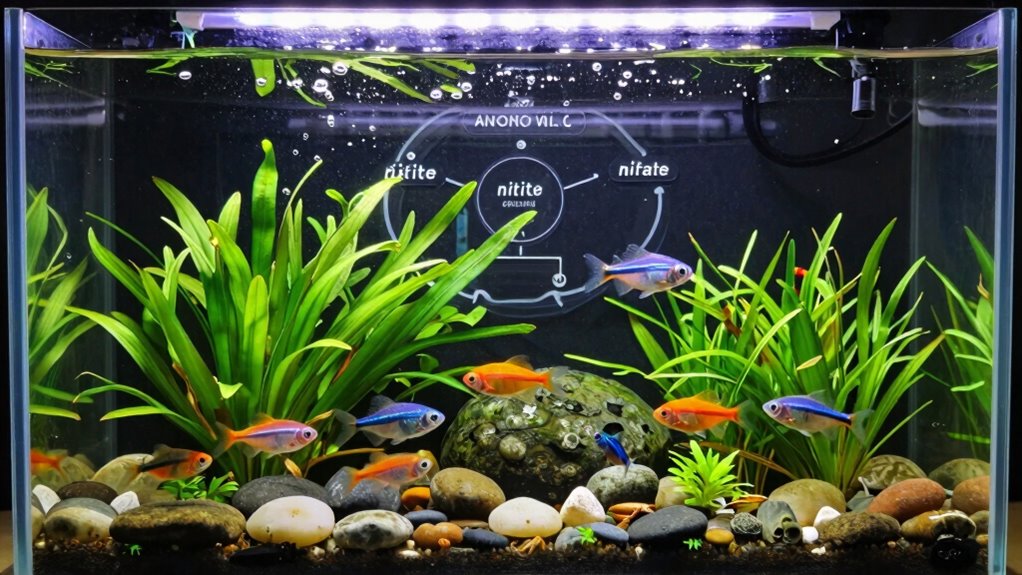

Fish tank cycling is the process of establishing beneficial bacteria that break down harmful fish waste into less toxic substances. It involves an ammonia source, where bacteria convert ammonia into nitrites, then into nitrates, creating a safe environment. This cycle can take several weeks but is essential for a healthy tank. By understanding this process, you guarantee your fish thrive. Keep exploring to learn more about speeding up and monitoring your cycle effectively.
Key Takeaways
- Fish tank cycling establishes beneficial bacteria that convert harmful ammonia into less toxic substances.
- The nitrogen cycle involves ammonia, nitrites, and nitrates, with bacteria transforming each stage.
- A fully cycled tank shows zero ammonia and nitrites, with nitrates present at safe levels.
- Proper cycling involves adding ammonia sources, monitoring water parameters, and patience over several weeks.
- Maintaining stable temperature, pH, and good filtration speeds bacterial growth and ensures a healthy aquatic environment.

API QUICK START Freshwater and Saltwater Aquarium Nitrifying Bacteria 4-Ounce Bottle
- Includes 4-ounce bottle of bacteria: Freshwater and Saltwater Aquarium Nitrifying Bacteria
- Enables instant fish addition: For new aquarium setup
- Reduces harmful compounds: For routine use to protect fish
As an affiliate, we earn on qualifying purchases.
As an affiliate, we earn on qualifying purchases.
What Is Fish Tank Cycling and Why Is It Essential?
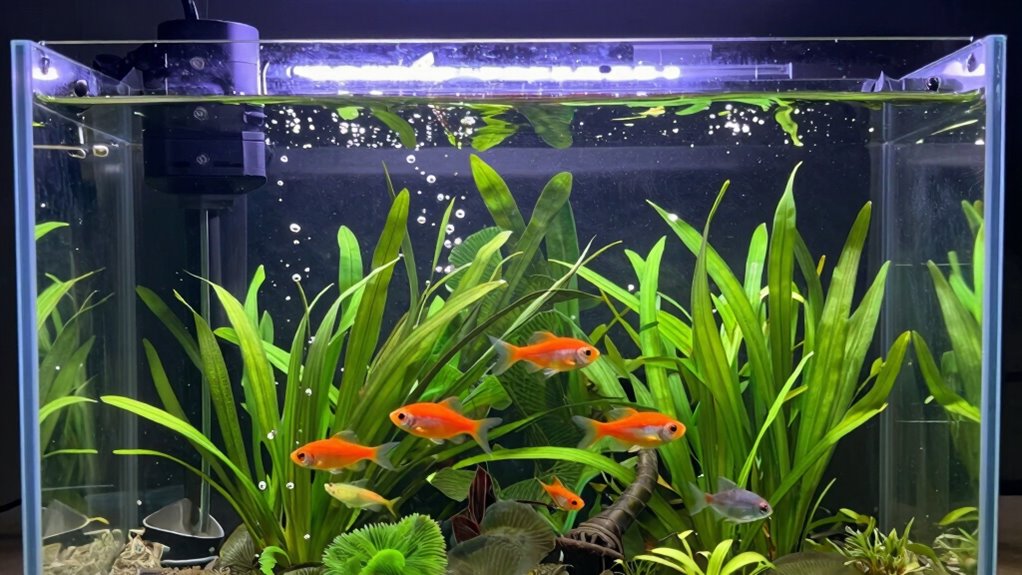
Have you ever wondered why cycling a fish tank is so vital? It’s because cycling creates a healthy environment for your fish by establishing beneficial bacteria. Fishless cycling is a popular method that allows you to cycle your tank without adding fish, which helps avoid stress and ammonia spikes that can harm aquatic life. During this process, ammonia detox becomes essential, as it keeps harmful ammonia levels in check while beneficial bacteria develop. These bacteria convert ammonia into less toxic substances, making the water safe for fish. Properly managing ammonia detox is crucial to prevent dangerous ammonia and nitrite buildup, which can cause stress or illness in your fish. Additionally, understanding beneficial bacteria and ammonia detox helps you maintain a stable aquatic environment, reducing risks of tank crashes. Skipping proper cycling can lead to dangerous ammonia and nitrite buildup, causing stress or illness in your fish. To ensure effective cycling, maintaining optimal water parameters supports the growth of beneficial bacteria and overall tank health.
Understanding the Fish Tank Nitrogen Cycle: The Basics
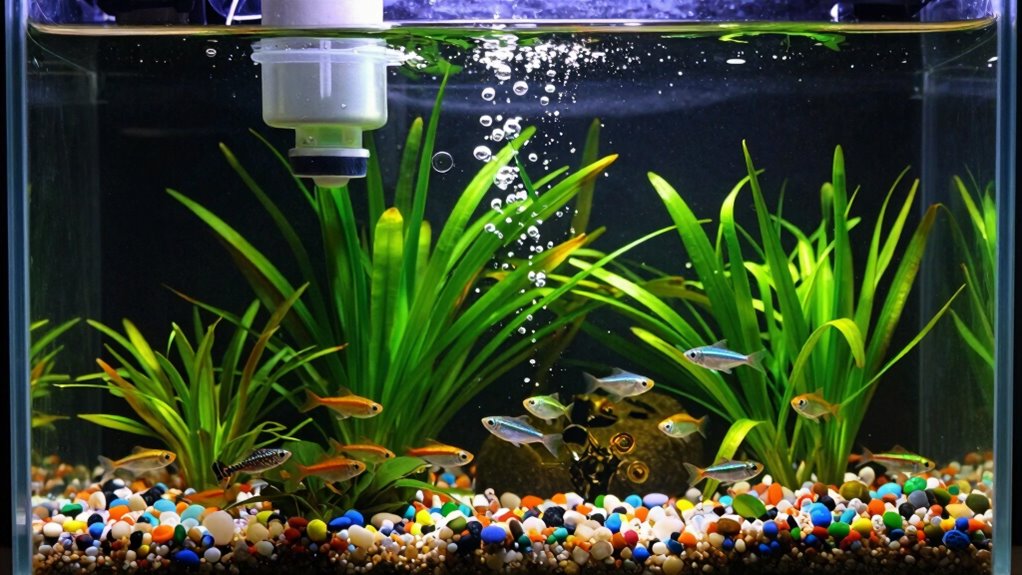
Understanding the fish tank nitrogen cycle is essential because it explains how harmful substances are naturally processed in your aquarium. At the core is biological filtration, which uses beneficial bacteria to convert toxic ammonia into less harmful substances. When fish produce waste, ammonia builds up quickly, posing a threat to their health. That’s where ammonia detoxification comes in—these bacteria break down ammonia into nitrites, which are also toxic, but then convert those into nitrates. Nitrates are much less harmful and can be removed through water changes or absorbed by plants. This natural process maintains a safe environment for your fish and keeps your tank balanced. Grasping these basics helps you understand how your tank stays healthy without constant manual intervention.
How to Cycle Your Fish Tank in Easy Steps
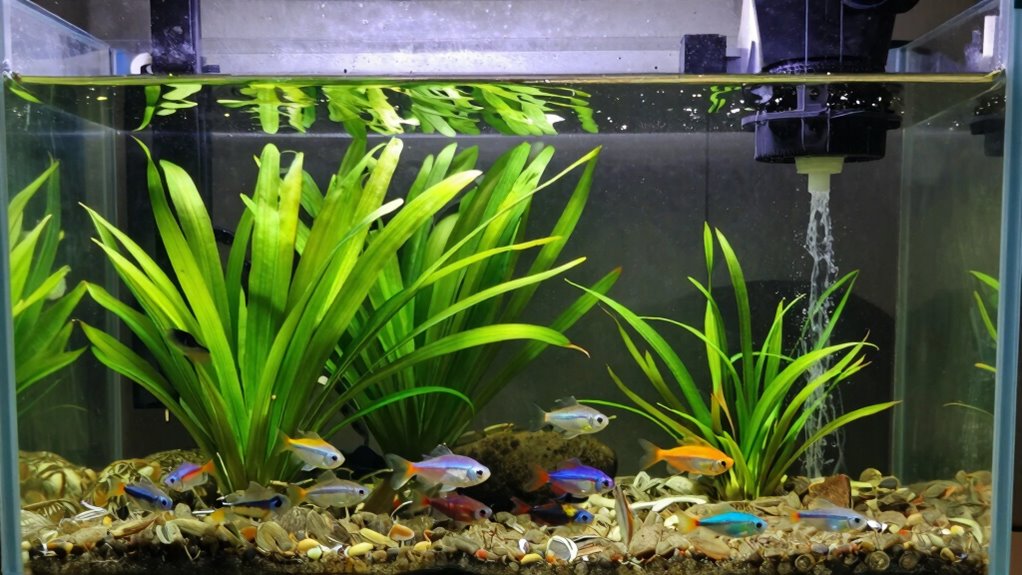
Cycling your fish tank might seem complicated, but breaking it down into simple steps makes the process straightforward. First, set the water temperature to match your fish’s needs, usually around 75-78°F, to reduce fish stress during cycling. Next, add a source of ammonia, like fish food or pure ammonia, to start the beneficial bacteria growth. Test your water regularly to monitor ammonia, nitrite, and nitrate levels. Guarantee good aeration and avoid sudden temperature changes, which can stress your fish. Be patient; cycling can take several weeks. During this time, keep the water stable and avoid adding fish too early. Properly cycling your tank ensures a healthy environment for your fish while minimizing stress and maintaining water quality. Monitoring water parameters is essential to track your progress and ensure a successful cycle. Using biological filtration can also aid in establishing a stable nitrogen cycle more efficiently, especially with beneficial bacteria that develop during cycling. Incorporating the nitrogen cycle process into your setup helps to understand how ammonia is converted to less harmful substances, promoting a safer environment for your aquatic life. Understanding the nitrogen cycle can help you troubleshoot issues that may arise during cycling and ensure a smooth process.
How Long Does Fish Tank Cycling Usually Take? Tips to Make It Easier
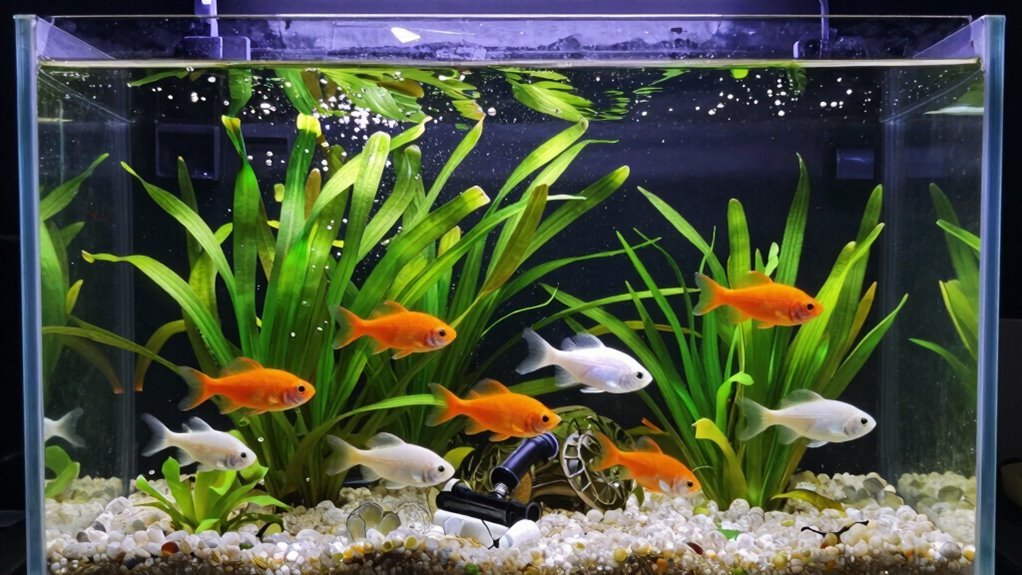
Typically, cycling your fish tank can take anywhere from a few weeks to a month. Several factors, like tank size and water temperature, influence how quickly it completes. You can speed up the process by using starter bacteria and maintaining stable conditions. Incorporating natural filtration systems can also promote a healthier environment and potentially shorten the cycling period. Additionally, understanding the nitrogen cycle helps in managing expectations and ensuring a successful cycle. Using healthy bacteria cultures can further enhance the efficiency of the cycling process. Having a good grasp of biological filtration can help you optimize your tank’s conditions for a faster and more stable cycle.
Typical Cycling Duration
Fish tank cycling usually takes anywhere from 4 to 8 weeks, depending on several factors such as tank size, water quality, and the method you choose. Introducing aquarium plants can help speed up this process by absorbing nitrates and providing beneficial bacteria, but don’t rely solely on them. Regular water testing is essential during this period to monitor ammonia, nitrite, and nitrate levels. Understanding the nitrogen cycle is crucial for successful cycling, as it helps you grasp how beneficial bacteria convert harmful substances into less toxic ones. Additionally, knowing who makes the best testing kits can ensure accurate readings. Consistent testing helps you understand when the cycle is complete, typically indicated by stable readings across all parameters. Patience is key—rushing the process can harm your fish and delay cycling. Keep monitoring water quality and maintain good practices, and your tank will cycle efficiently, providing a safe environment for your aquatic life. Proper water conditioning techniques can also help establish beneficial bacteria more quickly. Developing a routine for regular maintenance can further support a healthy and stable cycling process.
Factors Affecting Speed
Several factors influence how quickly your fish tank cycles, and understanding them can help you manage the process more effectively. First, pH stability affects bacterial growth; steady pH levels encourage faster nitrification. Second, water temperature plays a critical role, with warmer water (around 75-80°F) accelerating bacterial activity, while cooler water slows it down. Third, the presence of beneficial bacteria and how you introduce them impacts the cycle’s speed. Additionally, maintaining consistent water parameters minimizes stress on bacteria, promoting quicker establishment. Proper piercing aftercare and hygiene are also essential in preventing infections that could hinder the cycling process. Monitoring pH levels and adjusting water temperature appropriately can help speed up cycling. Incorporating microbial diversity into your tank setup can promote a more resilient nitrogen cycle. Considering gastrointestinal bacteria can also contribute to establishing a robust nitrogen cycle. Understanding beneficial bacteria helps in creating a healthier environment for your fish more efficiently. Remember, patience is key, but optimizing these factors allows you to create a healthier environment for your fish more efficiently.
Tips for Faster Cycle
Understanding how long fish tank cycling usually takes can help you set realistic expectations and plan accordingly. To accelerate the process, consider adding aquarium plants, as they absorb nitrates and aid in establishing beneficial bacteria. Using water conditioners can also help by removing chlorine and chloramine, making the environment more bacteria-friendly. Confirm your tank has proper aeration and maintain stable, suitable temperatures to promote bacterial growth. Proper tool maintenance and regular water testing are essential to monitor progress and prevent issues. Avoid overfeeding, which can produce excess waste and delay cycling. Regularly test water parameters to track progress and identify issues early. Promoting good water quality is essential for healthy bacterial development and overall tank stability. Additionally, ensuring adequate circulation helps distribute nutrients and oxygen throughout the tank, further supporting a faster cycle. Maintaining a consistent feeding schedule can also help stabilize ammonia and nitrite levels, speeding up the establishment of beneficial bacteria. Patience is key, but these tips can help create ideal conditions for a faster, smoother cycle, making your aquarium ready for fish sooner.
How to Tell When Your Fish Tank Is Fully Cycled and Safe for Fish
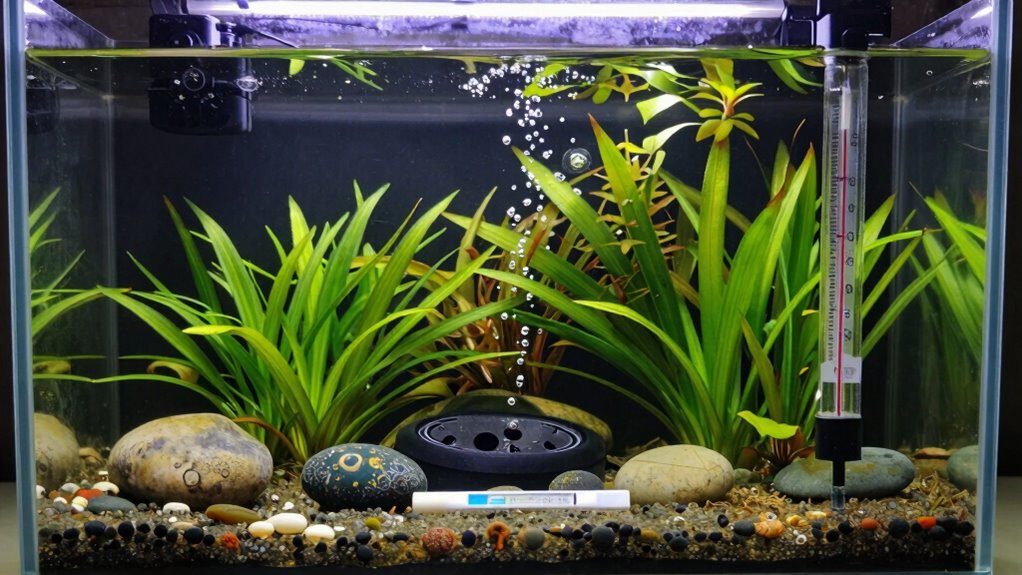
Knowing when your tank is fully cycled is essential before adding fish, as it guarantees the environment is safe and stable. The best way to confirm this is through water testing, focusing on ammonia, nitrite, and nitrate levels. When ammonia and nitrite consistently read zero, and nitrate remains within safe limits, your tank is likely cycled. Additionally, monitoring fish health after introducing fish can reveal early signs of stress or illness, indicating whether the cycle is stable. To ensure accuracy, test your water regularly over several days. Here are three indicators to watch for:
- Zero ammonia and nitrite levels
- Acceptable nitrate concentrations
- Healthy, stress-free fish behavior
Troubleshooting Common Cycling Problems and How to Fix Them
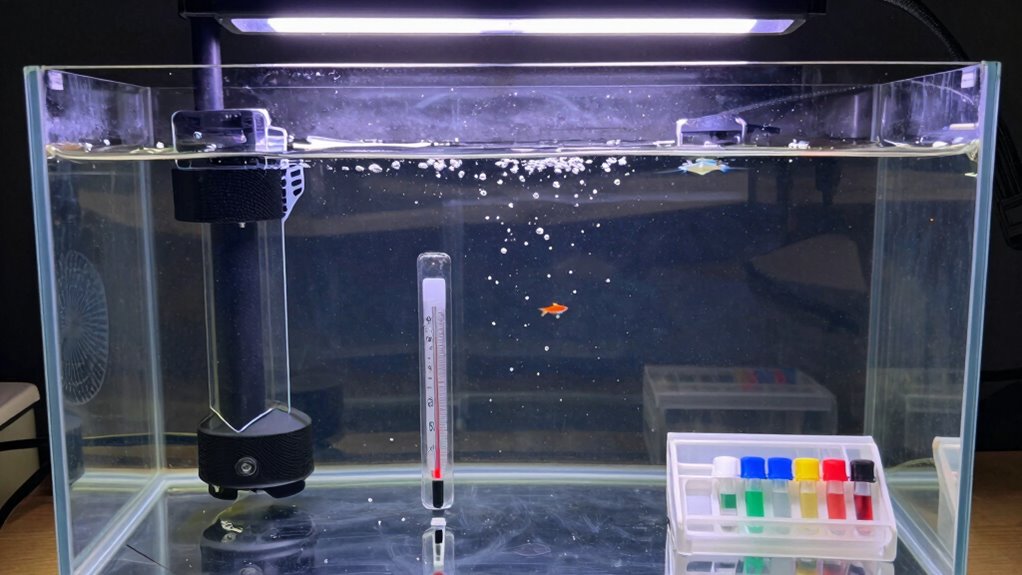
Even when you carefully follow cycling procedures, problems can still arise that disrupt the process. One common issue is unexpected ammonia spikes, which can harm your fish and stall the cycle. Regular water parameter testing helps catch these spikes early, so you can act quickly. If ammonia levels suddenly rise, check your filtration and make sure beneficial bacteria are establishing properly. Sometimes, incomplete cycling or overfeeding can cause imbalances. To fix this, perform partial water changes to dilute ammonia and improve water quality. Adding beneficial bacteria supplements can also help accelerate recovery. Keep testing water parameters frequently, and don’t ignore signs of trouble. Address problems promptly to keep your tank healthy and ensure a smooth, successful cycling process.
Maintaining a Healthy, Cycled Aquarium Over Time
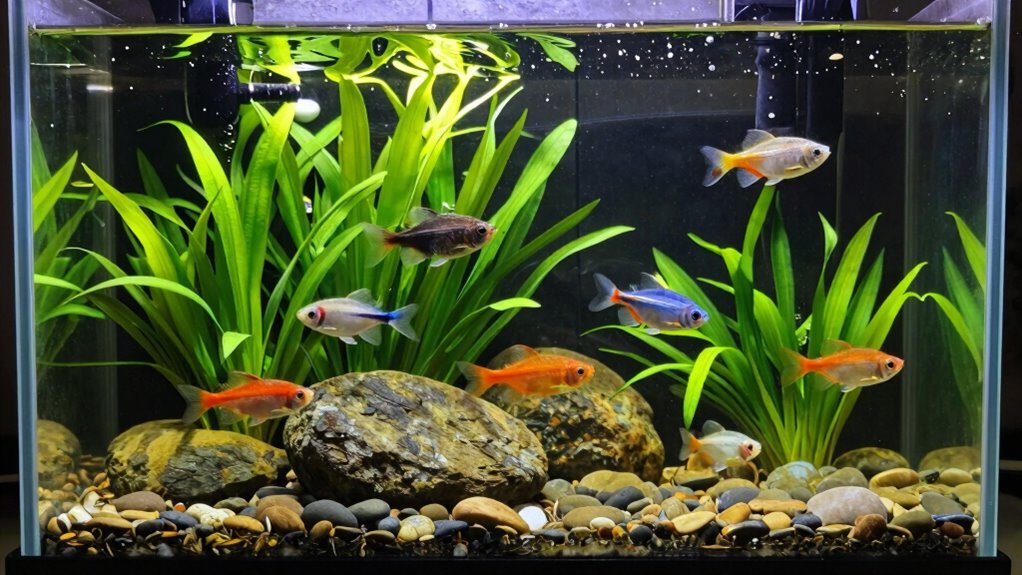
Once your aquarium has successfully cycled, maintaining water quality becomes an ongoing priority to guarantee a healthy environment for your fish. You can achieve this by supporting biological filtration and ensuring aquarium stability. Regularly test water parameters like ammonia, nitrite, and nitrate levels to catch issues early. Perform consistent partial water changes to remove toxins and maintain ideal conditions. Additionally, avoid overstocking and overfeeding, which can overwhelm biological filtration and destabilize your tank.
To keep your aquarium healthy, focus on:
- Monitoring water parameters and adjusting maintenance routines accordingly.
- Providing adequate biological filtration to sustain beneficial bacteria.
- Maintaining stable temperature and pH levels to support a balanced ecosystem.
Frequently Asked Questions
Can I Speed up the Fish Tank Cycling Process Safely?
You can speed up your fish tank cycling safely by adding beneficial bacteria to boost tank maturity and improve the chemical balance quickly. Avoid overfeeding or adding too many fish at once, which can overwhelm the cycle. Use products designed for cycling, and monitor ammonia, nitrite, and nitrate levels regularly. Patience is key, but with these steps, you’ll establish a healthy, balanced environment faster without risking your fish’s health.
What Are the Signs of a Fish Tank That Hasn’t Cycled Properly?
Your fish tank’s signs of improper cycling are like warning bells ringing loudly. You’ll notice persistent tank algae growth and water cloudiness that refuse to clear, signaling that beneficial bacteria aren’t doing their job. Additionally, you may see ammonia or nitrite levels spike during testing, which is a red flag. These issues point to an incomplete or faulty cycle, risking your fish’s health and overall tank stability.
Is It Necessary to Test Ammonia, Nitrite, and Nitrate Regularly?
Yes, testing routines for ammonia, nitrite, and nitrate are essential because maintaining proper water parameters keeps your fish healthy. Regular testing helps you catch any imbalances early, preventing stress or harm to your aquatic life. You should check these levels weekly during cycling and once a week afterward. Staying vigilant with water parameters guarantees a stable environment and minimizes the risk of tank problems.
How Do Different Fish Species Affect the Cycling Process?
Different fish species impact the cycling process mainly through species compatibility and fish load. If you choose compatible species, they won’t stress each other or produce excessive waste, helping maintain a stable cycle. Overloading your tank with too many fish increases waste, which can overwhelm beneficial bacteria and disrupt ammonia, nitrite, and nitrate levels. Carefully balance your fish load and select compatible species to support a healthy, stable cycle.
Can Cycling Be Completed Without Any Fish in the Tank?
You can definitely complete cycling without any fish by using fishless cycling methods. This approach involves adding ammonia to simulate fish waste, encouraging beneficial bacteria growth. Alternative methods like using established media or bacterial supplements also work well. Fishless cycling is safer for your future fish, avoids stress, and speeds up the process. So, yes, you don’t need fish in the tank to fully cycle it.
Conclusion
Now that you understand the nitrogen cycle, you’re ready to set up a healthy, thriving aquarium. Think of your tank as a tiny ecosystem—are you prepared to keep it balanced and safe for your fish? With patience and proper cycling, you’ll create a vibrant underwater world where your fish can flourish. So, why not take the first step today and turn your tank into a thriving, worry-free home?