
When designing a ferret cage with vertical space, it’s essential to include safe landing zones to prevent injuries and boost your ferrets’ confidence. Soft surfaces at the base of ramps and ledges help absorb impacts, encouraging safe exploration. Properly placed platforms, barriers, and non-slip ramps make climbing safer and more enjoyable. Prioritizing these safety features helps your ferrets stay healthy, happy, and active, and you’ll find there’s more to creating a perfect environment for them.
Play games included with Prime
Start a Prime free trial and play with Amazon Luna on your devices.
As an affiliate, we earn on qualifying purchases.
Key Takeaways
- Safe landings prevent injuries and encourage ferrets to explore higher levels confidently.
- Cushioned landing zones at ramp and ledge bases absorb impact and reduce fall risks.
- Proper placement of landing zones promotes natural climbing behavior and overall well-being.
- Regular maintenance of ramps and barriers ensures ongoing safety during exploration.
- Prioritizing safe landings enhances mental stimulation and physical health for ferrets.
When designing a ferret cage, it’s easy to focus on horizontal space, but neglecting the importance of safe landings for vertical movement can lead to injuries and stress. Ferrets are naturally curious and agile creatures that love to climb and explore, making vertical space essential to their well-being. However, without proper safety measures, their energetic antics can result in falls that cause injuries or discourage them from using the upper levels altogether. That’s why prioritizing climbing safety and establishing reliable landing zones should be at the forefront of your cage design.
Creating safe landing zones not only helps prevent injuries but also encourages your ferret to explore more confidently. Climbing safety involves more than just ensuring your ferret can ascend comfortably. It’s about creating an environment where every jump or climb ends with a secure, cushioned landing. Soft bedding, mats, or padded surfaces placed at the bottom of ramps and ledges help absorb impact and reduce the risk of injury. When your ferret leaps from a high perch, a well-cushioned landing zone makes the difference between a safe adventure and a trip to the vet. It also encourages your ferret to be more confident in exploring higher levels, knowing they’ll land safely. Additionally, incorporating appropriate materials that provide grip and comfort can further improve safety. Regularly checking and cleaning these landing zones also helps maintain their effectiveness and safety.
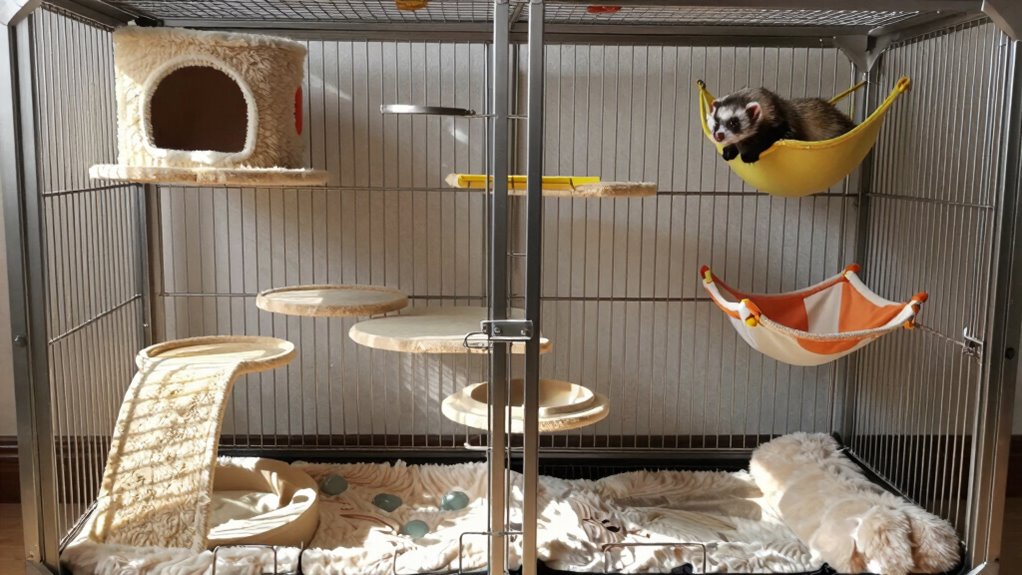
Landing zones should be thoughtfully integrated into your cage layout. For example, if you have multiple levels connected by ramps or shelves, each transition should have a designated landing area that’s low enough for your ferret to reach comfortably and safely. These zones can be simple platforms with a soft surface or even small hideouts where your ferret can pause before moving on. By creating these zones, you’re promoting natural behaviors and reducing the risk of accidental falls. Remember, ferrets are quick and sometimes unpredictable, so having secure landing zones reduces stress for both you and your pet.
Good climbing safety also involves inspecting and maintaining the cage regularly. Make sure ramps are sturdy, free of sharp edges, and non-slip to prevent slips and falls. Avoid high, unprotected ledges that lack landing zones, especially if your ferret tends to leap from great heights. Incorporating barriers or walls that prevent accidental falls, but still allow for climbing and exploration, is essential. Regularly checking the structural stability of your cage and its components ensures your ferret remains safe during their adventures. When your ferret feels safe and supported in their environment, they’ll be more willing to venture into new heights, knowing they have secure places to land. Ensuring adequate safety features are in place is key to preventing accidents and promoting a healthy, happy pet.
In the end, designing a cage that emphasizes safe landings isn’t just about preventing injuries; it’s about fostering a stimulating environment where your ferret can express natural behaviors with confidence. Prioritize climbing safety and establish landing zones, and you’ll create a space that’s both fun and safe for your adventurous little friend.
As an affiliate, we earn on qualifying purchases.
Frequently Asked Questions
How Do I Prevent My Ferret From Falling During Cage Transitions?
To prevent your ferret from falling during cage shifts, you should focus on cage safety and monitor ferret climbing. Use secure barriers and avoid gaps that could cause falls. Always supervise your ferret when they’re exploring vertical spaces, and consider adding soft landing areas or ramps for safe descent. Ensuring the cage is secure and providing safe landings helps protect your ferret from injuries during these changes.
What Materials Are Safest for Ferret Landing Platforms?
You should choose materials with high durability and non-slip surfaces for ferret landing platforms. Hardwood or thick, untreated plywood work well because they are sturdy and safe. Cover these with non-slip mats or textured rubber to prevent slipping. Avoid slippery or fragile materials like glass or thin plastic. Ensuring your ferret’s safety with durable, non-slip surfaces helps prevent falls and keeps your pet secure during vertical adventures.
How Often Should I Clean and Inspect the Landing Areas?
You should clean the landing areas weekly to prevent dirt buildup and keep your ferret healthy. Inspect the platforms daily for signs of wear, loose parts, or damage. Follow a regular cleaning schedule and use inspection tips like checking for splinters or unstable surfaces. Promptly fix any issues you find, ensuring safe, clean, and secure landings that keep your ferret happy and protected.
Can DIY Safe Landings Be Effective for Ferret Cages?
Yes, DIY safe landings can be effective for ferret cages if you prioritize DIY safety and design them with ferret agility in mind. You should use soft, non-toxic materials, guarantee the landings are sturdy, and position them at appropriate heights to prevent injuries. By tailoring the landings to your ferrets’ needs and regularly inspecting them, you create a secure environment that encourages their natural agility while keeping them safe.
What Signs Indicate My Ferret Is Uncomfortable With the Landings?
Did you know that over 60% of ferret injuries occur from unsafe landings? If your ferret avoids jumps, hesitates before landing, or shows signs of distress like trembling or vocalizing, they’re likely uncomfortable with the landings. These signs indicate compromised ferret comfort and suggest your landing safety measures may need improvement. Ensuring smooth, secure landings helps keep your ferret happy, healthy, and confident exploring vertical spaces.
Conclusion
Remember, a ferret’s cage isn’t just a playground for height—it’s a sanctuary of safety. When you create secure landings, you’re not only preventing injuries but also nurturing your ferret’s natural curiosity and agility. Think of their vertical world as a stage where every jump and climb is a dance, and safety is the silent partner guiding their every move. In caring for their landings, you’re truly elevating their happiness and well-being.
NFL season / tailgating Picks
team gear
As an affiliate, we earn on qualifying purchases.