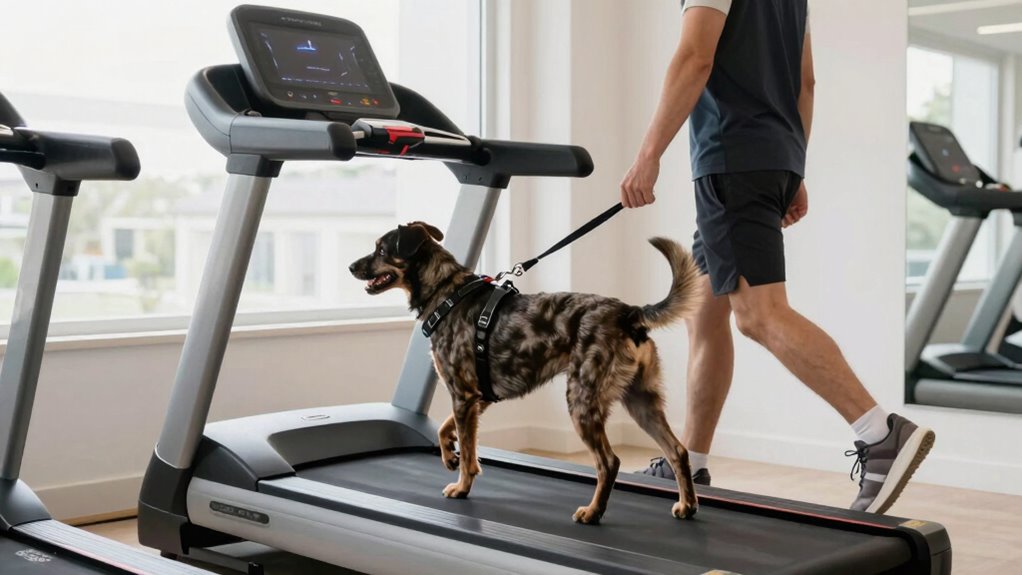

To keep your dog safe during treadmill sessions, start with slow speeds around 1-2 mph and gradually increase as your dog gains confidence. Limit sessions to 10-15 minutes and watch for signs of fatigue or stress, like panting or reluctance. Always supervise closely, using a harness for control, and stop immediately if your dog shows discomfort. Proper speed, duration, and supervision are key—continue to explore best practices for a safe, enjoyable experience.
Key Takeaways
- Start at low speeds (1-2 mph) and gradually increase as your dog becomes comfortable and confident.
- Keep treadmill sessions moderate in length (10-15 minutes), monitoring for signs of fatigue or stress.
- Supervise your dog closely during exercise, watching for stress indicators like panting, trembling, or reluctance.
- Use a properly fitted harness and ensure the treadmill has safety features such as an emergency stop mechanism.
- Regularly inspect and maintain the treadmill to ensure safety and prevent mechanical issues during use.

CIIHI Dog Treadmill for Medium Small Dogs – 265lbs Weight Capacity Pet Running Machine with 360° Rotatable Display – 2 in 1 Treadmill for Pet Fitness with Move Wheels and Remote Control
【Multifunction Display and Remote】The 360° rotatable display of the dog treadmill enables you to read speed, time, etc….
As an affiliate, we earn on qualifying purchases.
As an affiliate, we earn on qualifying purchases.
Why Treadmill Training Can Benefit Your Dog (and What to Watch Out For)
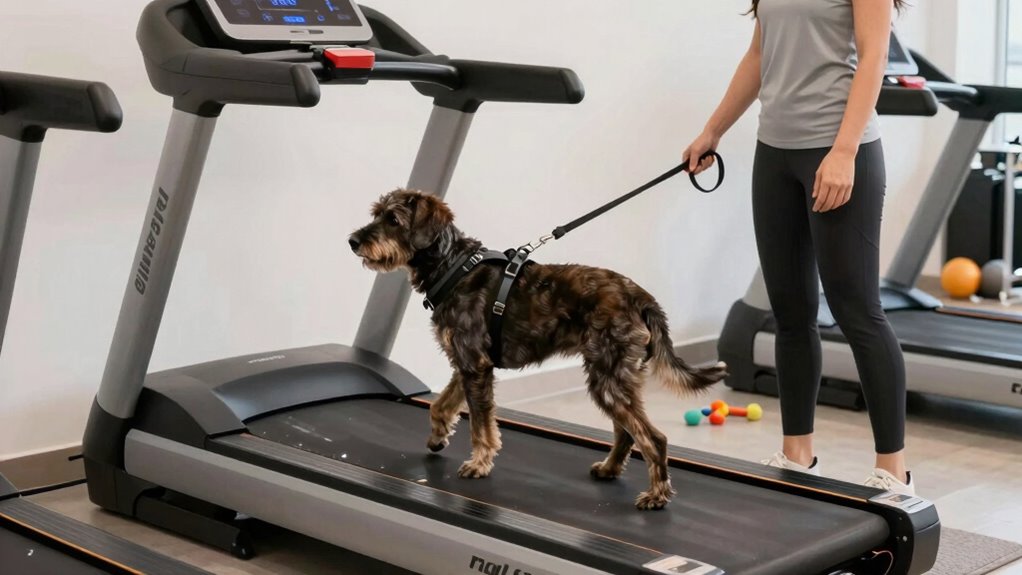
Treadmill training can be a great way to give your dog regular exercise, especially when outdoor walks aren’t possible due to weather or safety concerns. Different dog breeds have varying energy levels and physical needs, so consider breed considerations before starting treadmill workouts. For example, active breeds may thrive on treadmill exercise, while smaller or older dogs might need gentler sessions. Proper treadmill maintenance is essential to guarantee safety and durability; inspect belts, check for loose parts, and keep the surface clean. Regular maintenance helps prevent accidents and prolongs the treadmill’s lifespan. Always tailor the treadmill routine to your dog’s breed and health, and stay attentive to their comfort and safety during each session. Additionally, understanding dog exercise needs can help you create a balanced and effective treadmill routine for your furry friend. Ensuring that the treadmill’s speed and duration are appropriate for your dog’s size and fitness level is crucial to avoid overexertion. Monitoring your dog’s behavior and response during treadmill sessions can help you identify any signs of discomfort or fatigue early on. Being aware of essential oil safety is also important to ensure that any products used around your dog are safe and non-toxic. Incorporating appropriate exercise duration can optimize your dog’s health without overexertion, especially considering individual physical limits.

Auroth Tactical Dog Harness for Large Dogs No Pull Adjustable Pet Harness Reflective K9 Working Training Easy Control Pet Vest Military Service Dog Harnesses Army Yellow L
Easy Adjustment – for Ultimate Comfort.Slip into and out of our dog harness effortlessly with the help of…
As an affiliate, we earn on qualifying purchases.
As an affiliate, we earn on qualifying purchases.
How to Safely Introduce Your Dog to the Treadmill
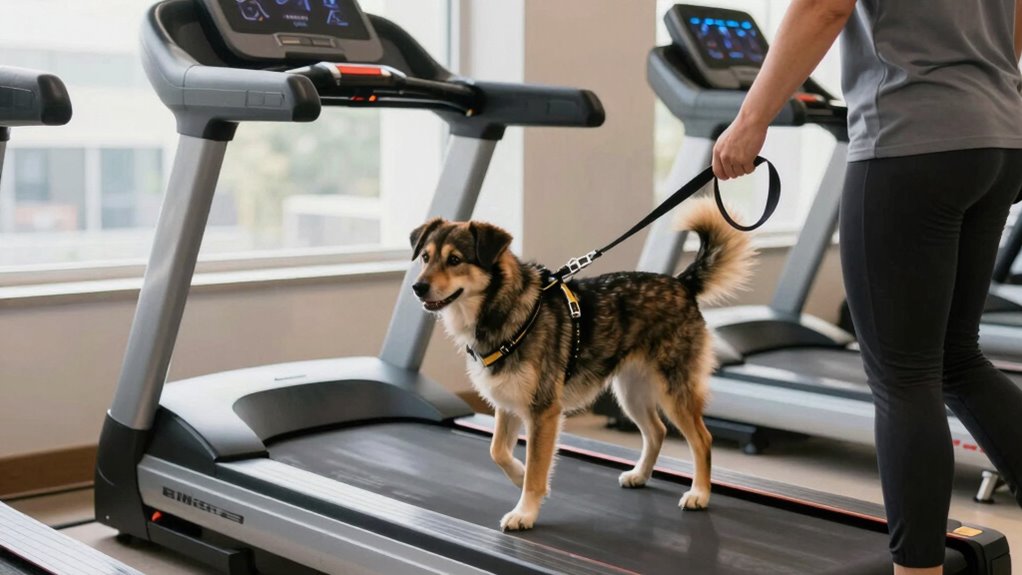
When introducing your dog to the treadmill, use positive reinforcement to create a calm and happy experience. Start with short sessions at a slow pace, and keep a close eye on your dog’s behavior throughout. This approach helps guarantee safety and builds confidence as your dog gets comfortable. Additionally, understanding Free Floating concepts can help you better interpret your dog’s comfort level and ensure a stress-free training session.
Use Positive Reinforcement
Introducing your dog to the treadmill safely begins with positive reinforcement. By rewarding calm behavior and curiosity, you encourage your dog to associate the treadmill with good experiences. Use treats, praise, and gentle petting to reinforce patience and calmness during each step of training. Recognize your dog’s behavior, and when they show interest or remain relaxed, immediately reward them. Consistent training techniques help build confidence and trust, making future sessions smoother. Avoid forcing or rushing your dog, as this can lead to fear or resistance. Instead, focus on creating a positive environment where your dog feels safe and motivated. Incorporating energy-efficient equipment can also contribute to a more sustainable training routine. Additionally, understanding dog behavior cues can help tailor the training process to your pet’s comfort level. Utilizing positive reinforcement techniques can further enhance training effectiveness and help your dog associate the treadmill with positive experiences. For example, incorporating creative storytelling for branding can make training sessions more engaging and memorable for your dog, strengthening the positive association. Being aware of dog body language can help you recognize signs of stress or discomfort early on. With patience and the right reinforcement, your dog will learn to view the treadmill as a positive part of their routine.
Start Slow and Short
To make certain your dog feels comfortable and safe, start with very short sessions and gradually increase the duration as they become more confident. Begin by introducing your dog to the treadmill at a slow speed, allowing them to explore it calmly. Use positive reinforcement, like treats and praise, to encourage curiosity and reduce hesitation. Keep initial sessions brief—just a few minutes—to prevent stress. This approach aligns with puppy training and agility exercises, helping your dog build trust gradually. Remember, patience is key. Also, observing your dog’s comfort level and adjusting the pace accordingly will ensure a positive experience. Incorporating supportive environments, such as cozy surroundings, can further ease your dog’s adaptation to the treadmill. Being aware of everyday safety principles can help you recognize signs of stress or discomfort early on. Additionally, understanding dog behavior cues can assist in ensuring your pet’s well-being during treadmill sessions. Building a positive association with the treadmill from the beginning can make future sessions smoother and more enjoyable for your dog.
Monitor Behavior Closely
Monitoring your dog’s behavior closely is essential to guarantee a safe and smooth introduction to the treadmill. As your dog starts walking, observe their reactions and body language carefully. Watch for signs of stress, such as panting, yawning, or avoiding the treadmill. Recognizing stress early helps you intervene before it escalates. Keep a calm demeanor to reassure your dog and prevent anxiety. If your dog shows discomfort or becomes overly tense, stop the session and give them a break. Consistently monitoring behavior allows you to adjust speed or duration gradually, ensuring the experience remains positive. Remember, patience is key—your attentive supervision helps your dog build confidence and safely adapt to treadmill workouts. Utilizing community feedback can also guide you in identifying the most effective training techniques.

Petbobi Dog Treadmill for Small & Medium Dogs- Quiet Indoor Pet Exercise Machine with 360° Rotatable Display, Remote Control & Wheels, Heavy-Duty 265 lbs Capacity for Fitness & Weight Management
360°Display & Smart Remote- Train from Any Angle. Track your dog’s workout from any angle with the 360°rotatable…
As an affiliate, we earn on qualifying purchases.
As an affiliate, we earn on qualifying purchases.
What Speed and Duration Are Safe for Dog Treadmill Sessions?
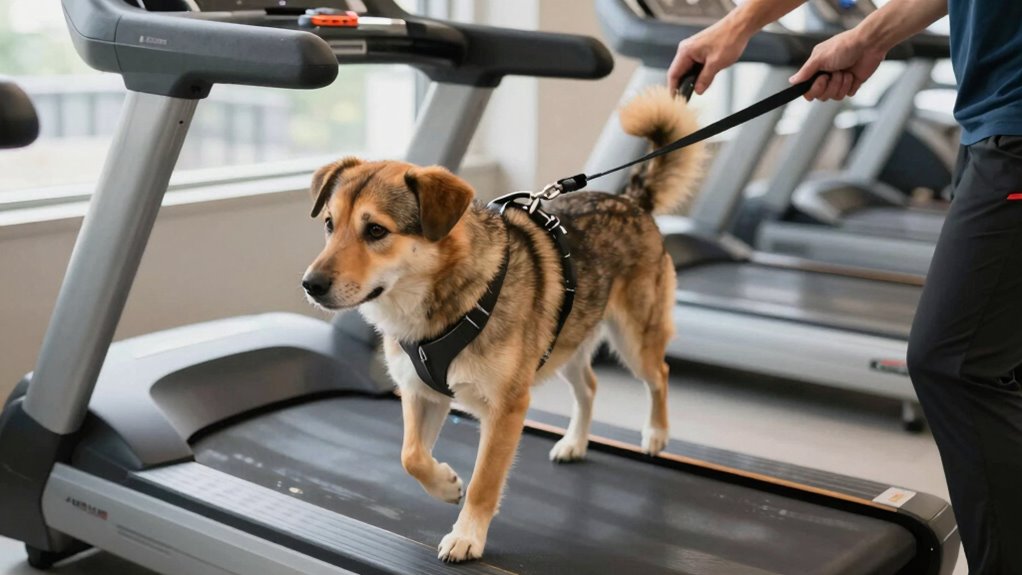
You’ll want to start with the right speed to keep your dog comfortable and safe. Keep session lengths moderate, usually around 10 to 15 minutes, and gradually increase as your dog gets accustomed to it. Monitoring your dog’s reactions helps ensure they stay safe during each workout. Additionally, choosing a properly fitted harness can help maintain control and protect your dog’s neck during treadmill sessions. Being aware of dog treadmill safety features can also help you select the most secure equipment for your pet. Ensuring the treadmill has automatic shut-off mechanisms can further enhance safety during use. Incorporating simple routines can help your dog adapt gradually and build confidence with treadmill exercises. Recognizing equipment safety standards is crucial for selecting a reliable and secure treadmill for your pet.
Appropriate Speed Levels
Choosing the right speed and duration for your dog’s treadmill sessions is essential to guarantee safety and effectiveness. Start with a low speed, around 1-2 mph, and gradually increase using proper dog treadmill calibration. This helps prevent overexertion and ensures comfort. Use speed adjustment techniques to find the most suitable pace that your dog can maintain without strain. Remember, each dog is different, so monitor their behavior closely.
- Keep the speed slow at first, then increase gradually
- Watch for signs of fatigue or discomfort
- Adjust speed based on your dog’s size, breed, and fitness level
Recommended Session Length
Starting with a manageable session length helps guarantee your dog’s safety and comfort during treadmill workouts. Begin with just 5 to 10 minutes, gradually increasing as your dog adapts. Keep an eye on their behavior and watch for signs of fatigue or discomfort. Consistent, moderate sessions support your dog’s overall health without overexertion. Proper dog nutrition is essential to fuel their activity and aid recovery. Incorporate regular grooming routines to keep your dog comfortable and prevent skin irritation from sweating or friction during exercise. Remember, each dog is different, so adjust the duration based on their age, breed, and fitness level. Short, focused sessions help build endurance safely while maintaining your dog’s enthusiasm and well-being. Additionally, air quality can influence your dog’s recovery and comfort, so ensuring a clean environment supports their overall health during these activities. Maintaining an optimal exercise routine, including proper hydration, can further promote safe and effective workouts.
CIIHI Dog Treadmill for Medium Small Dogs – 265lbs Weight Capacity Pet Running Machine with 360° Rotatable Display – 2 in 1 Treadmill for Pet Fitness with Move Wheels and Remote Control
【Multifunction Display and Remote】The 360° rotatable display of the dog treadmill enables you to read speed, time, etc….
As an affiliate, we earn on qualifying purchases.
As an affiliate, we earn on qualifying purchases.
How to Supervise and Recognize Signs of Stress or Fatigue

Monitoring your dog closely during treadmill sessions is essential to guarantee their safety and well-being. Watch for signs of discomfort or stress indicators, which can signal that your dog needs a break or the session should be adjusted. Pay attention to behaviors like excessive panting, reluctance to continue, or trembling. These are clear stress indicators or fatigue signs. If you notice your dog lagging behind, trying to step off, or showing agitation, stop the session immediately. Keeping a close eye helps prevent overexertion and reduces the risk of injury. Remember, every dog reacts differently, so stay attentive and responsive to their signals. Your vigilance ensures a safe, positive experience that encourages healthy exercise habits.
Tips for Gradually Building Your Dog’s Confidence on the Treadmill
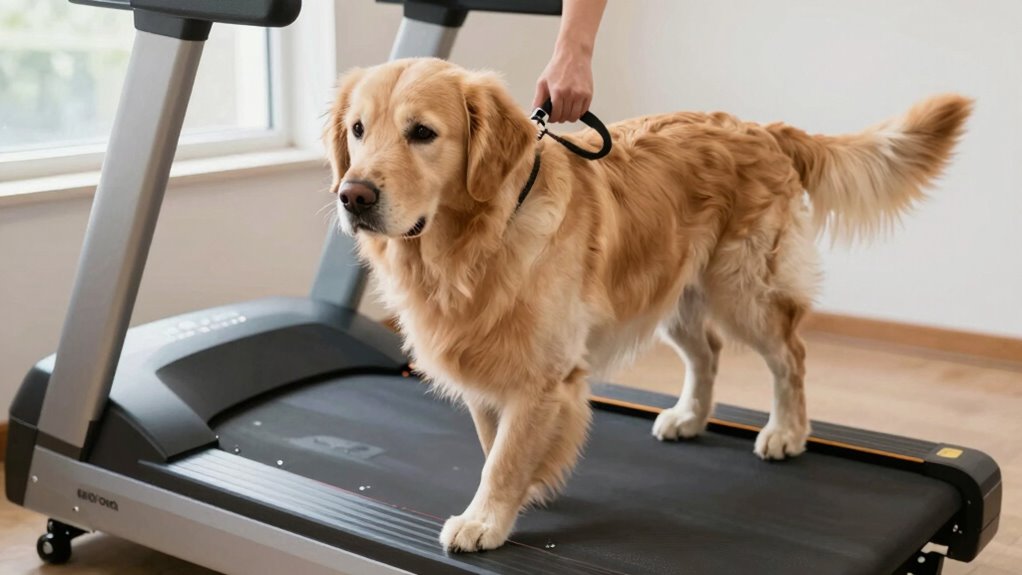
Building your dog’s confidence on the treadmill begins with small, positive steps. Start by introducing your dog to the treadmill as a safe, non-threatening space. Let them sniff and explore it at their own pace, rewarding curiosity with treats and praise. When they seem comfortable, turn the treadmill on at a very low speed, ensuring their treadmill comfort. Encourage your dog to step on it willingly, using treats to motivate and reassure them. Gradually increase the duration and speed as their dog confidence grows, always monitoring their behavior for signs of stress. Patience is key—never force your dog onto the treadmill. Consistent, gentle exposure helps build their confidence and creates a positive association with treadmill workouts.
Common Mistakes to Avoid for Safe and Effective Treadmill Training
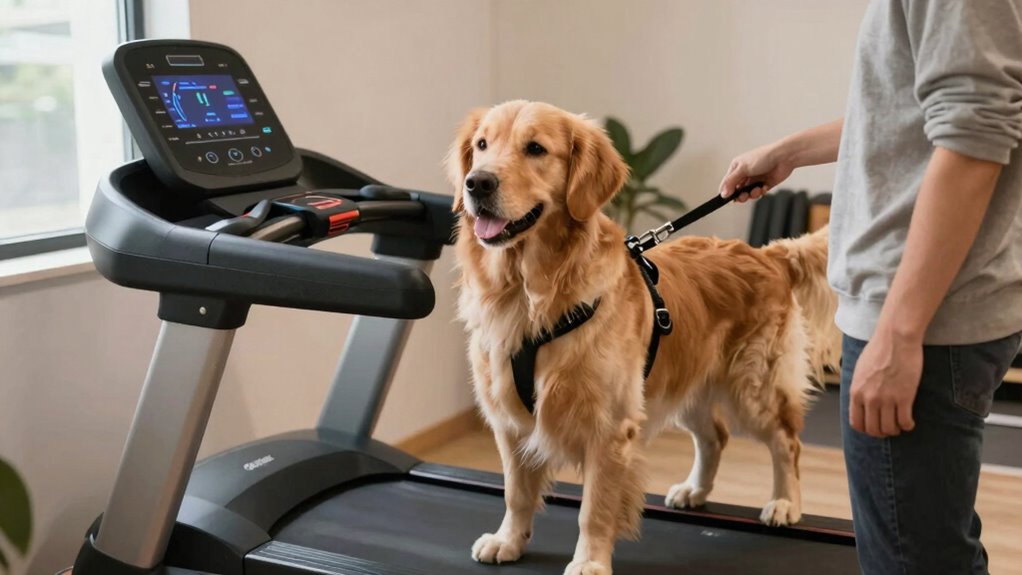
To guarantee your dog’s safety and make treadmill training effective, it’s important to avoid common mistakes that can cause stress or injury. One mistake is neglecting equipment maintenance, which can lead to malfunctions or safety hazards. Regularly check the treadmill for loose parts, worn belts, or electrical issues. Additionally, improper treadmill placement—such as placing it on uneven flooring or in noisy areas—can stress your dog or disrupt training. Always ensure the treadmill is on a stable, quiet surface. Other mistakes include rushing the process or starting at too high a speed. Remember, patience and gradual adjustments are key. Proper equipment maintenance, strategic treadmill placement, and cautious training help ensure your dog’s safety and maximize training effectiveness.
- Regularly inspect and maintain the treadmill
- Place it in a quiet, stable location
- Avoid rushing or skipping gradual progress
Frequently Asked Questions
How Often Should I Schedule Treadmill Sessions for My Dog?
You should schedule treadmill sessions for your dog 3 to 5 times a week to maintain proper exercise frequency. Keep training consistency by gradually increasing duration and speed, always monitoring your dog’s response. Regular sessions help build endurance and prevent boredom, but avoid overdoing it. Pay attention to your dog’s behavior and adjust the schedule as needed to make certain of safe, effective workouts that support their health and happiness.
Can All Dog Breeds Safely Use a Treadmill?
Not all dog breeds are equally suited for treadmill use. Small, active, and healthy breeds tend to be more compatible, while brachycephalic or elderly dogs may face challenges. Breed compatibility impacts treadmill training benefits, helping your dog stay fit and healthy. You should always consider your dog’s size, age, and physical condition before starting treadmill sessions, and consult your vet to guarantee safety and appropriateness for your specific breed.
What Are the Signs That My Dog Is Overstimulated During Treadmill Use?
If your dog shows signs of overstimulation during treadmill use, you’ll notice cues like excessive panting, drooling, or pacing. They might also become restless, whine, or try to jump off. Watch for unusual body language, like stiff muscles or wide eyes. These dog treadmill signs indicate your dog is overstimulated, so stop the session immediately, offer water, and give them a break to calm down before trying again.
Is There an Ideal Age to Start Treadmill Training With My Dog?
Think of starting treadmill training like planting a young sapling or helping a seasoned oak stay strong. For puppy training, wait until your pup is at least 8-12 weeks old, ensuring they’re physically ready. Senior dog exercise can begin gradually, considering health. Always supervise and tailor the routine to their age and stamina. This approach nurtures steady growth and lifelong wellness, just like tending a thriving tree.
What Safety Features Should I Look for in a Dog Treadmill?
You should look for safety features like a sturdy dog harness attachment to keep your dog secure and prevent falls. An emergency stop button is essential for quick halts if your dog shows signs of distress. Confirm the treadmill has a non-slip surface and side rails to prevent slipping or stepping off. These features help keep your dog safe and comfortable during workouts, giving you peace of mind.
Conclusion
Remember, treadmill training can boost your dog’s fitness and confidence, but safety is key. Start slow, watch for signs of fatigue, and never leave your pup unsupervised. Did you know that 70% of dogs show improved stamina after consistent treadmill use? By following proper speed, duration, and supervision guidelines, you’ll guarantee your dog stays safe and happy during every session. Keep patience and care at the forefront, and your furry friend will enjoy the benefits of treadmill training.