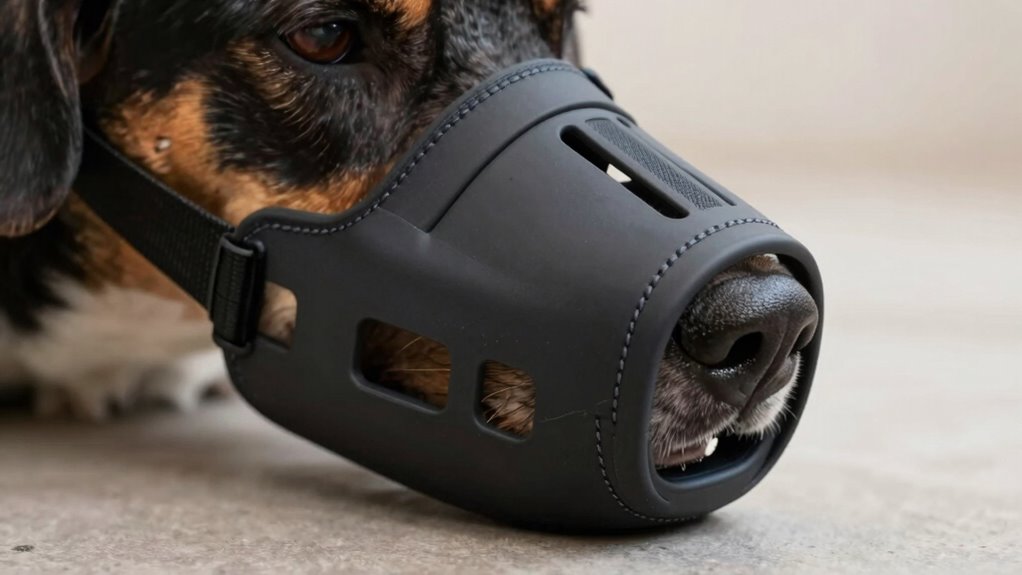

To prevent rubbing and guarantee your dog’s muzzle is bite-safe, accurately measure their snout’s girth and length, using a soft tape and following size charts. Choose materials like leather, silicone, or padded designs that improve comfort and durability. Regularly check and adjust the fit to keep it snug but not tight, allowing room for movement and airflow. Proper fit boosts trust and safety—if you want to learn how to perfect it, keep going since there’s more to know.

Get pet supplies delivered free — and shop member deals
- Fast, free delivery on millions of items
- Access to Prime Big Deal Days deals on October 6–7
- Prime Video, Amazon Music and more included
Key Takeaways
- Measure your dog’s snout accurately, ensuring the muzzle is snug but allows two fingers for comfort.
- Select a breathable, well-ventilated muzzle material to prevent heat buildup and rubbing.
- Regularly inspect and adjust the fit to prevent slipping, chafing, or pressure points.
- Use padding or soft lining to reduce rubbing and improve comfort during extended wear.
- Choose adjustable muzzles for a customizable fit that maintains safety and prevents irritation.
dog muzzle with adjustable straps
As an affiliate, we earn on qualifying purchases.
As an affiliate, we earn on qualifying purchases.
How Do I Measure My Dog for a Proper Muzzle Fit?
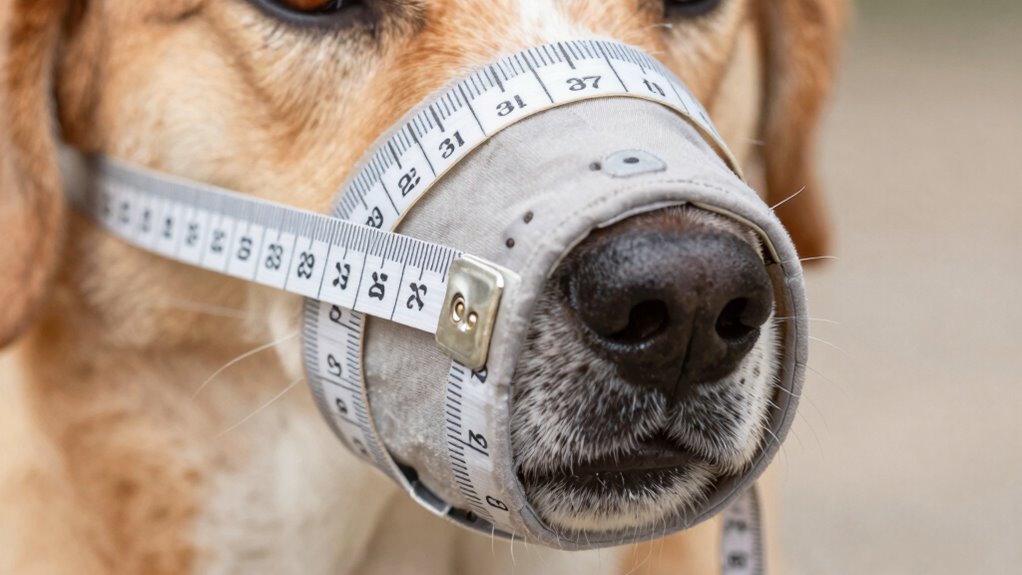
To guarantee your dog’s muzzle fits comfortably and safely, start by measuring the correct parts of their face. Accurate dog head measurements are essential for selecting the right size. Use a soft measuring tape to record the circumference around the widest part of their snout, just below the eyes. Next, measure the length from the tip of the nose to the point where the snout ends. For muzzle sizing tips, always add a little extra to these measurements to ensure comfort and room for movement. Avoid guesswork—measure multiple times for consistency. Keep your dog calm during the process, and use treats to make it easier. Properly measuring ensures a secure fit, reducing discomfort and preventing issues like rubbing or slipping. Additionally, understanding muzzle materials can help in choosing a design that is both comfortable and durable for your dog, and selecting a muzzle with adjustable straps can accommodate slight size fluctuations for a better fit. Being aware of proper measurement techniques can further improve the accuracy of your sizing process, ensuring your dog’s safety and comfort. Remember that fit and comfort are crucial for your dog’s well-being during muzzle use.
Why Is a Correct Muzzle Fit Important for Your Dog’s Safety and Comfort?

A proper muzzle fit keeps your dog able to breathe comfortably and stay safe during wear. It also helps prevent discomfort or injuries caused by a poorly fitting muzzle. When the fit is right, it builds your dog’s trust and confidence in the process. Additionally, selecting the right muzzle type based on projector technology can enhance overall safety and comfort. Ensuring a proper fit can also reduce the risk of injuries caused by rubbing or chafing during extended use. A well-fitted muzzle minimizes pressure points, making it more comfortable for your dog over time.
Ensures Proper Breathing
Have you ever wondered why a proper muzzle fit is vital for your dog’s breathing? A well-fitted muzzle ensures your dog can breathe comfortably without restriction. Proper muzzle ventilation allows fresh air to flow freely, preventing suffocation or stress during wear. If the muzzle is too tight, it can hinder dog breathing, causing discomfort and even health risks. Conversely, a loose fit might slip off or allow your dog to chew or lick, defeating its purpose. When choosing a muzzle, focus on making sure it’s snug enough to stay secure but allows your dog to breathe naturally. Good muzzle ventilation is essential for your dog’s safety, especially during extended use or in warm weather. A proper fit guarantees your dog’s airflow remains unobstructed, keeping them comfortable and safe. European cloud innovation emphasizes sustainable solutions that can also enhance safety features like proper airflow in technology devices. Additionally, selecting a muzzle with adequate ventilation can significantly improve your dog’s comfort and safety during use.
Prevents Discomfort or Injury
Since an improperly fitted muzzle can cause rubbing or chafing, it’s essential to guarantee it fits correctly to prevent discomfort or injury. A poorly fitted muzzle can lead to skin irritation, sores, or even infections, making your dog uncomfortable and stressed. When used properly, a well-fitted muzzle supports effective bark control without causing harm. It’s also important to consider dog anatomy when selecting the right size and style of muzzle to ensure proper fit. Proper fit can be enhanced with the use of smart fitting tools, which utilize technology to measure and adjust for optimal comfort. These tools help identify the correct muzzle size, reducing the risk of fit-related issues. Using fit assessment techniques can further ensure your dog’s muzzle remains comfortable during extended wear. It also aids in training techniques by preventing biting or nipping, ensuring safety during socialization or vet visits. Ensuring the right fit helps your dog feel secure and prevents unnecessary pain or distress. Proper fit minimizes movement that could cause chafing, allowing your dog to wear the muzzle comfortably for longer periods. Ultimately, a correct fit protects your dog’s health, making safety and comfort priorities during muzzle use. Expert voice actors can help communicate comfort and safety messages effectively in instructional content.
Promotes Trust and Confidence
When a muzzle fits correctly, it helps your dog feel more secure and confident during potentially stressful situations. A proper fit reduces uncertainty, allowing your dog to trust that the muzzle isn’t a threat. This media literacy can help your dog better interpret their environment and understand that the muzzle is part of a safe routine. When your dog feels safe, they’re more willing to cooperate and adapt to wearing the muzzle. This confidence can prevent anxiety, biting, or resistance. By choosing the right fit, you demonstrate that their safety and well-being are priorities, building a stronger bond of trust. A well-fitted muzzle isn’t just about safety—it’s about creating a calm, confident environment that encourages better behavior and eases stressful encounters. Ensuring proper fit also involves understanding how device safety impacts your dog’s comfort and health. Proper adjustment of the muzzle can also help prevent rubbing and chafing, which are common issues with ill-fitting devices. Additionally, a correctly fitted muzzle can improve dog behavior by reducing stress and promoting positive interactions. Adjusting the fit using proper sizing guides can help you achieve optimal comfort and security for your dog.
Which Muzzle Materials Are Best for Comfort and Durability?
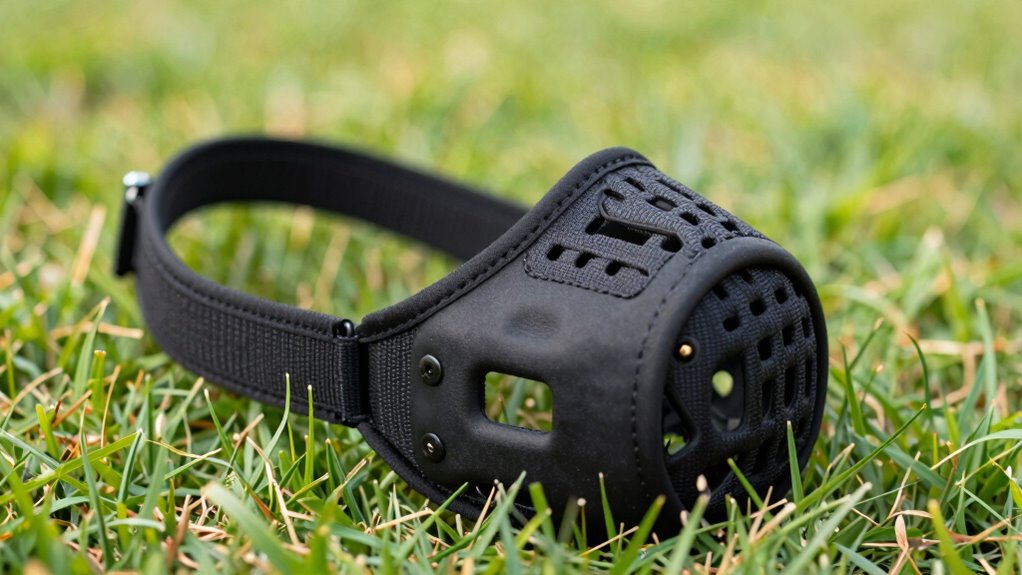
Choosing the right muzzle material is essential for balancing comfort and durability. You want a muzzle that feels comfortable for your dog while standing up to daily wear and tear. Leather is a popular option because it’s soft, flexible, and ages well, providing excellent comfort durability. Nylon or ballistic fabrics are lightweight and resistant to fraying, making them durable and comfortable for active dogs. Metal muzzles, like stainless steel, are highly durable but can be less comfortable unless padded properly. Silicone offers a soft, flexible alternative that’s gentle on the skin and easy to clean, combining comfort with decent durability. Ultimately, selecting a muzzle material depends on your dog’s activity level and skin sensitivity, ensuring it’s both bite-safe and comfortable for extended wear.
How Can I Ensure a Snug, Rubbing-Free Muzzle Fit?
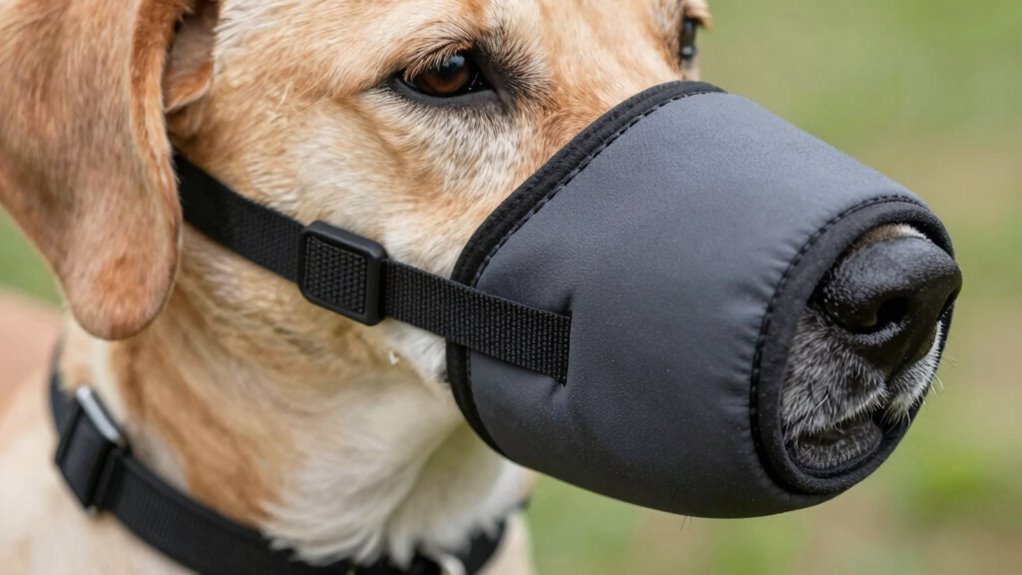
To guarantee a snug, rubbing-free muzzle fit, you need to carefully measure your dog’s head and muzzle area before selecting a size. Proper muzzle design considers your dog’s unique head shape and size, ensuring comfort and safety. Take precise measurements around the widest part of the muzzle and the length from nose to the point where the muzzle meets the collar. A well-fitting muzzle minimizes movement and prevents rubbing that could cause discomfort or injury. Pay attention to your dog’s behavior—if they scratch or paw at the muzzle, it might be too tight or poorly designed. Choosing a muzzle that fits snugly without restricting breathing or causing pressure points ensures your dog remains comfortable and calm during wear. Additionally, selecting a well-ventilated design can improve airflow and reduce heat buildup, increasing your dog’s comfort during extended use. Ensuring a proper fit not only enhances safety but also helps prevent anxiety and stress in your dog. Properly fitted muzzles can also help in preventing injuries caused by accidental biting or scratching, making the experience safer for both your dog and those around them. Regularly checking the fit during use can further prevent discomfort or injury.
How Do I Check and Adjust the Muzzle Fit Over Time?
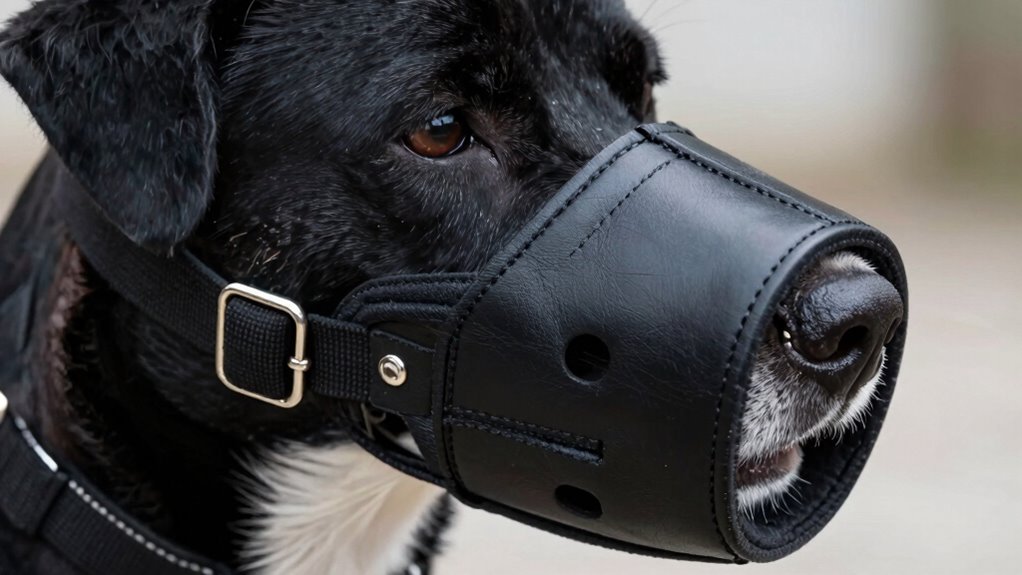
Regularly checking the fit of your dog’s muzzle guarantees it remains comfortable and effective. As your dog grows or gains weight, the muzzle may become too loose or tight, impacting its performance during dog training and walks. To check the fit, observe how the muzzle sits—should be snug but not restrictive—and ensure you can fit two fingers between the muzzle and your dog’s face. Adjustments might involve tightening straps or replacing the muzzle if it no longer fits properly. Keep a close eye during leash pulling, as increased tension can shift the fit. Regular checks help prevent rubbing and discomfort, ensuring your dog stays safe and comfortable while you work on training or walks. Proper fit is essential to prevent injuries and ensure your dog’s safety and comfort. Additionally, understanding muzzle fit can help you select the most appropriate style for your dog’s unique needs. Consistent adjustments maintain an effective, bite-safe fit over time. Regular inspections can also help identify early signs of discomfort or irritation, preventing more serious issues later.
What Common Mistakes Lead to Rubbing and How Can I Avoid Them?
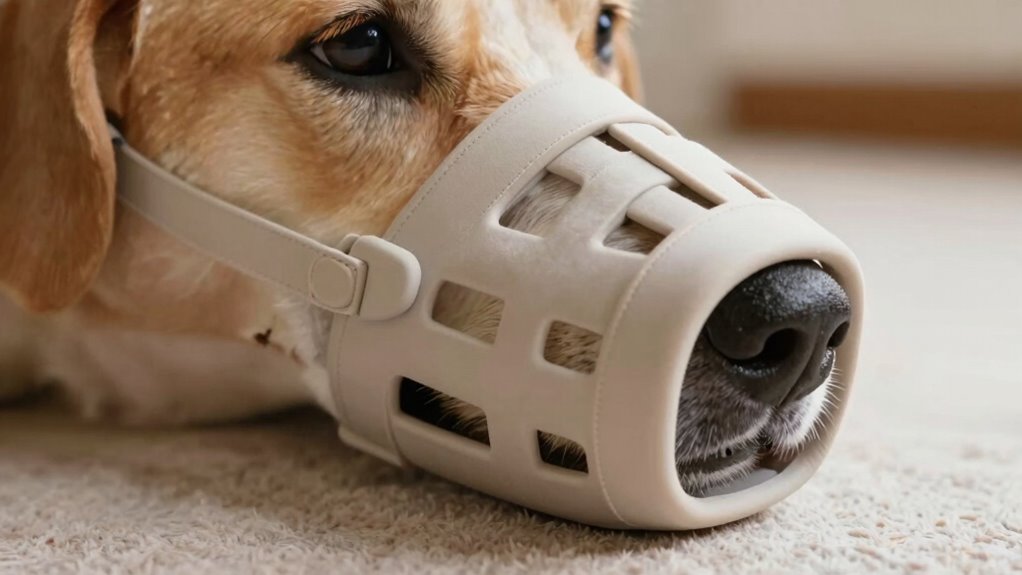
Choosing the wrong size for your muzzle can cause rubbing and discomfort. Failing to check and adjust the fit regularly allows issues to develop over time. To prevent this, make sure you select the proper size and stay attentive to any signs of wear or movement.
Improper Size Selection
A common mistake that leads to muzzle rubbing is selecting a size that’s either too tight or too loose. When the muzzle doesn’t fit properly, it can cause discomfort, prompting your dog to paw or scratch at it, which may worsen rubbing. Poor sizing also affects your dog’s behavior, making them anxious or resistant. To avoid this, measure your dog carefully and follow the manufacturer’s sizing chart. Remember, a muzzle that’s too tight can restrict breathing or cause sores, while one that’s too loose can slip off or cause chafing. If your dog’s behavior makes it hard to find the perfect fit, consider muzzle alternatives designed for comfort and control. Proper sizing is key to preventing rubbing and ensuring your dog feels safe and secure.
Neglecting Regular Adjustments
Neglecting to modify your dog’s muzzle as it changes size or behavior can quickly lead to rubbing and discomfort. The type of muzzle material influences how often you need to check and adjust the fit; softer materials may require more frequent adjustments, while rigid ones hold their shape longer. Failure to do so can cause pressure points, sores, or chafing, especially if the muzzle becomes loose or tight over time. Make it a habit to regularly inspect and tighten or loosen the straps to maintain a proper fit. Adjustments should be based on your dog’s activity level, growth, and any changes in behavior. Staying attentive to these factors helps ensure the muzzle remains bite-safe and comfortable, preventing rubbing issues before they start.
What Should I Do If the Muzzle Still Doesn’t Fit Properly?
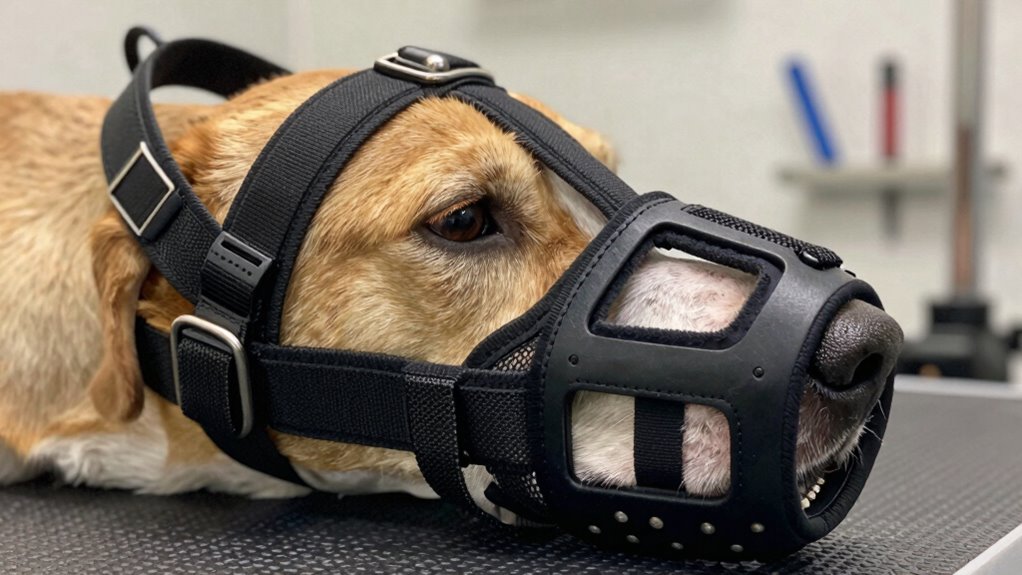
If the muzzle still doesn’t fit properly despite your efforts, consider customizing it for a better fit. Muzzle customization can address unique dog behavior and guarantee comfort and safety. You might try padding the inside or adjusting straps to reduce rubbing and pressure points. Some muzzles are designed with adjustable features, so explore those options first. If a standard muzzle still doesn’t work, consulting a professional or a canine behaviorist can help you find a tailored solution. Proper fit is essential for your dog’s comfort and safety, so don’t hesitate to seek expert advice or invest in a custom-made muzzle if necessary. Remember, a well-fitted muzzle minimizes discomfort and prevents your dog from trying to remove it, making training and vet visits safer and less stressful.
Frequently Asked Questions
How Often Should I Replace My Dog’s Muzzle for Optimal Fit?
You should replace your dog’s muzzle when it no longer fits properly or shows signs of wear, which can compromise safety and comfort. Regularly clean the muzzle to prevent dirt buildup, and perform fit adjustments as your dog grows or changes. If the muzzle becomes cracked, broken, or causes rubbing despite adjustments, it’s time for a replacement to guarantee it remains bite-safe and comfortable for your dog.
Can a Muzzle Be Safely Used During Training Sessions?
Absolutely, you can use a muzzle during training—just don’t turn it into a chew toy or fashion statement. Safety precautions are key, like ensuring a proper fit and never leaving your dog unattended. Incorporate effective training techniques alongside the muzzle to reinforce good behavior. Remember, a muzzle isn’t a magic fix; it’s a tool that, when used responsibly, keeps everyone safe and sound during training sessions.
What Signs Indicate My Dog Is Uncomfortable With the Muzzle?
If your dog shows behavior cues like pawing at the muzzle, trying to remove it, excessive licking, or lip licking, they’re likely uncomfortable. Watch for comfort signals such as yawning, avoiding eye contact, or turning their head away. These signs indicate your dog may be stressed or uneasy with the muzzle. Always monitor their reactions closely, and make certain the fit is secure yet comfortable to prevent discomfort.
Are There Specific Muzzle Styles Suitable for Different Dog Breeds?
Think of choosing a muzzle as tailoring a suit to your dog’s unique shape. Breed-specific muzzle options exist to fit different dog breeds snugly and comfortably. Larger breeds may require more robust designs, while smaller breeds need lighter, less restrictive styles. Dog breed considerations help you select styles that accommodate your dog’s jaw structure and behavior, ensuring safety without sacrificing comfort. This personalized approach keeps your pup happy and secure.
How Can I Introduce a Muzzle to a Fearful or Aggressive Dog?
To introduce a muzzle to a fearful or aggressive dog, start gradually with positive reinforcement. Use treats and praise to create positive dog behavior around the muzzle. Let your dog sniff and explore it first, then gently put it on for short periods, increasing duration as they become comfortable. Always prioritize muzzle safety by ensuring it fits well and doesn’t cause rubbing or discomfort, helping your dog feel secure and safe.
Conclusion
Getting the perfect muzzle fit isn’t just about comfort—it’s about preventing endless pain, relentless rubbing, and potential injuries that could ruin your dog’s happiness forever. When you measure carefully, choose the right material, and adjust diligently, you’re protecting your furry friend from discomfort and harm. Don’t let a poor fit turn your dog’s life into a constant battle of irritation. Act now, get it right, and give your pup the safety and comfort they deserve—because they’re counting on you.
Fall Picks
fall essentials
As an affiliate, we earn on qualifying purchases.