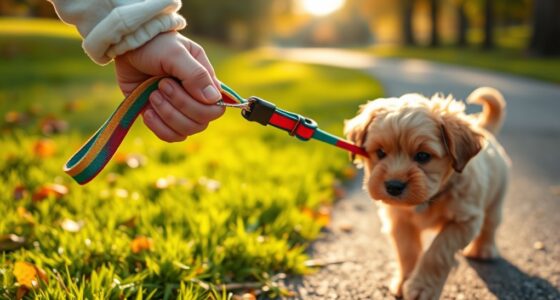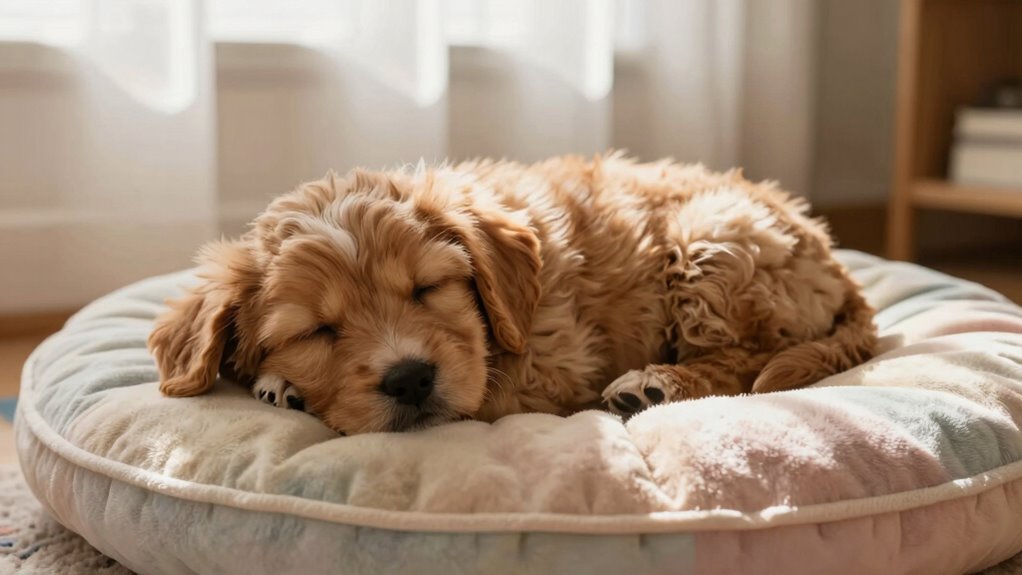

After visitors leave, your puppy needs quiet time to recover from sensory overload. Loud noises, new voices, and many movements can overwhelm their developing brain. Giving them a calm, safe space helps them process these new experiences and reduces stress. Quiet time also prevents fear or anxiety from developing around visitors or noisy environments. If you want to learn more about how to support your puppy’s well-being during this time, keep exploring the best approaches.

Get pet supplies delivered free with Prime
- Fast, free delivery on millions of items
- Prime Video, Amazon Music and more included
- Member-only deals all year
Key Takeaways
- Quiet time helps puppies process and recover from overwhelming sensory input from visitors.
- It reduces the risk of noise sensitivity and fear-based behaviors developing.
- Provides a calming environment to help puppies regain emotional balance after socialization.
- Supports stress reduction and prevents overstimulation-related behavioral issues.
- Reinforces routine and security, promoting overall well-being and comfort.
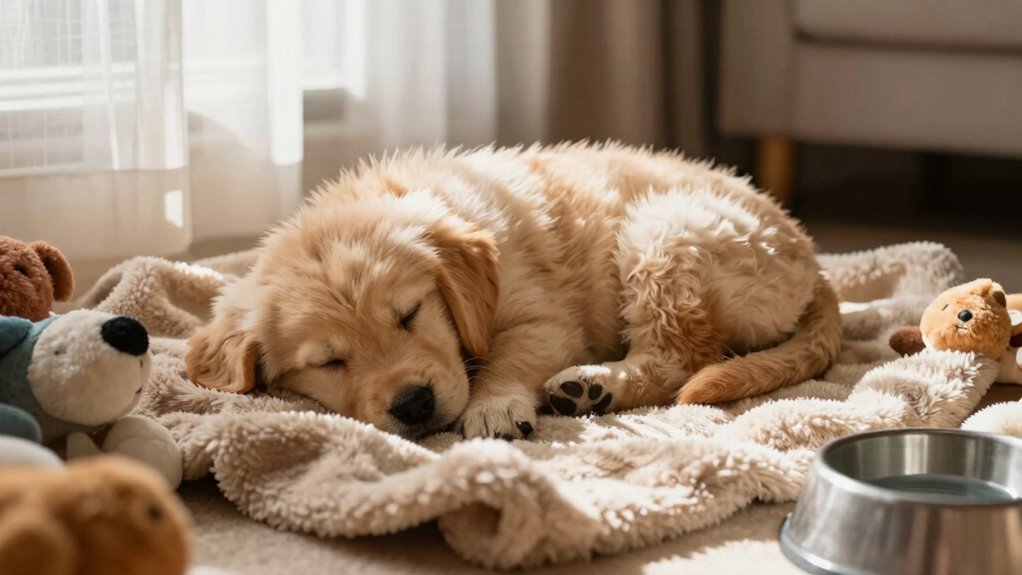
Have you ever wondered why your energetic puppy seems so tired after a play session? It’s usually because your puppy is experiencing a lot of new stimuli, which can be overwhelming. This is especially true during puppy socialization, when your pup is introduced to new people, sounds, and environments. While socialization is essential for helping your puppy grow into a well-adjusted dog, it also exposes them to a variety of noises and interactions that can be stressful. Your puppy might get excited, anxious, or overstimulated, and that’s why quiet time afterward becomes so important. It allows your puppy to process everything they’ve experienced and helps them recover from the sensory overload.
During socialization, your puppy is learning how to navigate the world, but not all puppies handle this process with the same ease. Some are more noise sensitive than others, meaning loud sounds or sudden noises can scare or stress them out more easily. When visitors come over, your puppy is likely absorbing all the new voices, footsteps, and movements. If you don’t give your puppy a break, they can become overwhelmed, which might lead to fear or anxiety around new people or environments. Quiet time helps your puppy calm down and regain their composure, reducing the risk of developing noise sensitivity or fear-based behaviors later on. Recognizing the importance of sensory processing in puppies can help you create a more supportive environment during their socialization period. It’s essential to recognize that your puppy’s energy isn’t just about playfulness; it’s also a sign of their brain working hard to process all these new experiences. After visitors leave, setting aside a peaceful space where your puppy can relax is key. This quiet time doesn’t mean isolating them completely but giving them a safe environment where they can retreat and decompress. Providing a designated calm space allows your puppy to recover more effectively and helps foster a sense of security. Creating an environment that supports healthy sensory regulation can also reduce stress and promote overall well-being. Additionally, ensuring that the environment is consistent and predictable can help prevent overstimulation, as puppies thrive on routine and familiarity. Recognizing that sensory overload can lead to behavioral issues emphasizes the importance of managing your puppy’s environment during socialization. During this period, they can chew on a toy, rest in their bed, or simply lay quietly without any stimulation. This helps prevent overstimulation, which can lead to behavioral issues down the line.
As an affiliate, we earn on qualifying purchases.
Frequently Asked Questions
How Long Should Quiet Time Last After Visitors Leave?
You should give your puppy about 15 to 30 minutes of quiet time after visitors leave to help them recover from socialization and reset. During this period, you reinforce visitor boundaries and prevent overstimulation. This quiet time allows your puppy to process new experiences, reduces stress, and encourages calm behavior. Remember, consistent short breaks help your puppy develop confidence and good socialization habits over time.
Can Lack of Quiet Time Cause Long-Term Behavioral Issues?
Yes, skipping quiet time can cause long-term behavioral issues. Without proper rest, your puppy might develop socialization concerns or anxiety, especially around new people or environments. Quiet periods help prevent anxiety by allowing your pup to process experiences calmly. If you overlook this need, it could lead to heightened stress, fear, or even aggression later. Ensuring ample quiet time is essential for healthy emotional development and smooth social interactions.
What Signs Indicate a Puppy Needs Quiet Time?
You’ll notice your puppy needs quiet time when their energy levels spike or they seem overwhelmed after visitor impact. Signs include restlessness, excessive barking, yawning, or seeking solitude. If your puppy appears anxious or reluctant to engage, it’s a clear cue they need a break. Giving them a calm, quiet environment helps them recover from stimulation, preventing stress and promoting healthy behavior long-term.
Is Quiet Time Necessary for All Puppy Breeds?
You might be surprised, but quiet time benefits all puppy breeds, regardless of their social nature. Studies show that puppies need about 5-10 minutes of rest per month of age each day. While some breeds are more sensitive to stimulation, breed sensitivities influence how much quiet time they require after visitors. Prioritizing rest helps with puppy socialization, reduces stress, and ensures healthier development across all breeds.
How Can I Help My Puppy Relax During Quiet Time?
You can help your puppy relax during quiet time by creating a calm environment with soft bedding and minimal noise. Use gentle voice tones and offer comforting toys or treats to encourage puppy relaxation. If visitor stress is a concern, make sure your puppy has a safe space to retreat to. Consistent quiet periods help your puppy feel secure, reducing anxiety and promoting healthy behavior after busy social interactions.
Conclusion
Remember, giving your puppy gentle moments of calm isn’t just about rest; it’s about nurturing their confidence and trust. When you create a peaceful space after visitors, you’re helping them feel safe and secure, like a cozy hideaway in a busy world. So, embrace these quiet times—they’re not just rest, but a quiet little hug for your puppy’s growing heart. In those peaceful pauses, your bond grows stronger, and your puppy blossoms beautifully.
Fall Picks
fall essentials
As an affiliate, we earn on qualifying purchases.