Proper crate bar spacing is key to preventing head and paw injuries. You want bars close enough to keep your pet’s head and paws inside while allowing good ventilation. Too wide gaps can trap or injure your pet, especially small or curious ones. Measure your pet and compare it to recommended gaps based on size. Ensuring the right spacing enhances safety and comfort—continue to find out how to choose the best crate for your pet’s needs.
Key Takeaways
- Proper crate bar spacing prevents pets from getting their head or paws stuck, reducing injury risk.
- Measure your pet’s width to select the appropriate bar gaps, ensuring safety and comfort.
- Recommended spacing varies by pet size: 1/2 – 3/4 inches for small pets, up to 1-1.5 inches for large dogs.
- Regularly inspect and adjust crate bars to maintain secure, properly spaced gaps as your pet grows or shifts.
- Choosing sturdy, rust-resistant bars with correct spacing enhances pet safety and prevents injuries.
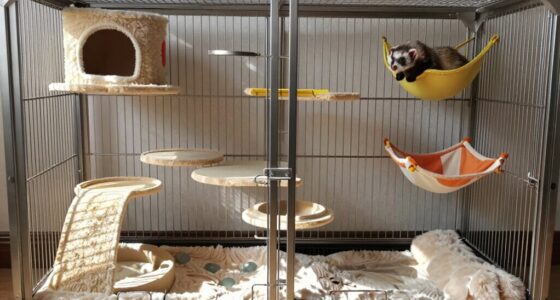
pet crate with adjustable bar spacing
As an affiliate, we earn on qualifying purchases.
As an affiliate, we earn on qualifying purchases.
Why Crate Bar Spacing Matters for Your Pet’s Safety

Proper crate bar spacing is essential because it directly affects your pet’s safety. The crate bar design determines whether your pet can get its head, paws, or limbs trapped, leading to injuries or distress. Narrow gaps prevent paws or heads from slipping through, reducing the risk of cuts, bruises, or broken bones. Conversely, bars spaced too far apart create hazards, especially for small or curious pets. Ensuring the right crate bar spacing is a simple yet crucial step in safeguarding your pet. When choosing a crate, prioritize designs that offer secure spacing tailored to your pet’s size. This proactive approach helps prevent accidents and ensures your pet remains safe and comfortable inside their crate. Proper crate bar spacing standards are a key element of pet safety, emphasizing the importance of safe and reliable design in crate construction. Additionally, considering landscaping options can enhance your pet’s environment, promoting their wellbeing and safety. Recognizing pet-specific safety needs can further guide you in selecting the best crate for your furry friend. Paying attention to material durability can also contribute to long-term safety and security for your pet.
What Are the Recommended Crate Bar Gaps for Different Pets?

Choosing the right crate bar gaps depends on your pet’s size and species, as different animals require different safety measures. For ideal dog safety, the crate design should prevent paws or heads from slipping through. Here’s a quick guide:
| Pet Type | Recommended Gap (Inches) | Notes |
|---|---|---|
| Small Dog | 1/2 – 3/4 | Prevents head entrapment |
| Medium Dog | 3/4 – 1 | Ensures paws stay inside |
| Large Dog | 1 – 1 1/2 | Maintains safety without confinement |
| Puppies | 1/2 | Adjust as they grow |
| Cats | 1/2 – 3/4 | Keeps paws and heads safe |
Proper crate design with appropriate bar gaps enhances safety and reduces injury risks. Consistently monitoring and adjusting the crate setup can further improve safety measures and ensure your pet’s well-being. Ensuring crate ventilation is adequate also contributes to your pet’s safety inside the enclosure. Additionally, understanding standard safety guidelines helps in selecting the appropriate crate features.
How to Measure Your Pet to Find the Right Crate Size and Bar Spacing

To find the right crate size and bar spacing, start by measuring your pet’s height from the ground to the top of their head or ears while standing. Then, compare your measurements to standard bar spacing guidelines to make certain of safety and comfort. Don’t forget to take into account your pet’s activity level, as more active pets may need extra space to move around comfortably. Additionally, considering water-based activities can help ensure your pet’s crate setup supports their overall well-being and safety. Ensuring proper ventilation and easy access for your pet during training or playtime can also contribute to a safe environment. Remember that understanding plant parts and their properties can be beneficial when selecting materials or accessories for your pet’s crate to promote health and safety. Being aware of pet safety standards can further help you choose the most appropriate and secure crate setup. Proper crate sizing also involves being mindful of battery lifecycle considerations to prevent unnecessary replacements and ensure durability.
Measure Pet Height Properly
Ever wondered how to accurately measure your pet’s height to find the perfect crate size? Start by having your pet stand on a flat, sturdy surface. Use a measuring tape to record the pet height from the ground to the top of their head or ears when standing naturally. Make certain your pet is alert and standing straight, not slouching or stretching. For crate dimensions, you want a crate that allows your pet to stand comfortably without hitting the top and turn around easily. Proper measurement guarantees the crate isn’t too cramped or too spacious, which can affect safety and comfort. Accurate pet height helps you select a crate size that provides enough room without excess space that could lead to injuries or discomfort. Additionally, understanding safe installation practices ensures your crate remains secure and stable during use. It’s also helpful to consider crate bar spacing to prevent head and paw injuries, especially for active or small pets.
Check Bar Spacing Standards
Before selecting a crate, it’s essential to check the bar spacing to guarantee your pet’s safety and comfort. Proper spacing ensures your pet can’t squeeze through or get paw injuries. Measure your pet’s width and compare it to the crate’s bar spacing, considering the crate design and metal materials used. Look for crates with bars close enough to prevent injuries but with enough ventilation. Understanding crate design helps you choose the safest option for your pet. Additionally, consider the pet’s size and breed to ensure the crate provides ample space without compromising safety. Confirm the bar spacing matches your pet’s width with a ruler or tape measure. Ensure the metal materials are sturdy and rust-resistant. Check that the crate design offers secure, evenly spaced bars. Avoid crates with gaps that are too wide or bars that are too far apart. Proper crate ventilation is also crucial to prevent overheating and ensure air circulation for your pet’s health. To maximize safety, always verify that the bar spacing standards align with your pet’s specific measurements and needs.
Consider Pet Activity Level
Choosing the right crate size isn’t just about your pet’s current size—it also depends on how active they are. Pet activity level influences how much space your pet needs to move comfortably without risking injury. Highly active pets may jump or climb more, so you’ll want a crate that provides enough room for movement and safe bar spacing to prevent head or paw injuries. Less active pets might require a smaller crate with tighter bar spacing to guarantee safety. Observe your pet’s behavior when they’re moving around—do they stretch, jump, or paw at the bars? Use this insight to select a crate size that accommodates their activity level, ensuring they can move freely without risking injury or discomfort. Additionally, understanding animal behavior patterns can help you better interpret your pet’s activity and adjust crate size accordingly, and understanding crypto market trends can help you identify the best times to buy or sell pet accessories and crates online. Recognizing safe crate dimensions enables you to choose a size that balances comfort and security for your pet, especially considering their natural movement tendencies.
Signs Your Crate Bar Spacing Is Unsafe for Your Pet

If your pet tries to squeeze through or get stuck between the crate bars, it’s a clear sign that the spacing is unsafe. You should also watch for other indicators, such as difficulty fitting their kibble size or bedding material comfortably inside. Excessive gaps can cause head or paw injuries, especially if your pet is playful or curious. Additionally, if your pet shows signs of frustration or tries to chew the bars, it might be due to feeling confined or unsafe. Look out for accidental scratches or bruises from the bars, which suggest the spacing is too wide. Regularly checking for proper crate spacing helps ensure the safety and comfort of your pet, preventing injuries and maintaining a secure environment. Maintaining appropriate crate dimensions is essential for your pet’s health and well-being.
Tips for Choosing a Safe and Secure Pet Crate

Selecting a safe and secure pet crate involves paying close attention to its construction and features. Verify the crate has sturdy bars that won’t pinch or injure your pet during crate training, promoting comfort and safety. Check that the bar spacing is appropriate to prevent head or paw injuries, especially for small or active dogs. Look for a well-ventilated design to support your pet’s health by providing fresh air and reducing stress. The crate should be durable and easy to clean, helping maintain hygiene and overall pet well-being. Additionally, choose a size that allows your pet to stand, turn around, and lie down comfortably. A secure, well-constructed crate encourages positive crate training experiences and safeguards your pet’s health and safety.
Risks of Wide or Narrow Crate Bar Gaps

Wide or narrow crate bar gaps can pose serious safety risks for your pet. If the gaps are too wide, your pet’s head, paw, or collar could get stuck, leading to injuries or escape attempts. Conversely, overly narrow gaps might cause discomfort or restrict movement, affecting crate safety.
Bar gap hazards include:
- Pet getting trapped or injured by wide gaps
- Increased risk of paw or head entrapment
- Potential for broken teeth or broken nails
- Reduced comfort and increased stress
Ensuring the correct bar spacing helps prevent these hazards, making your crate safer. Proper crate safety isn’t just about the crate itself but also about choosing the right bar gap size to protect your pet from harm.
How to Adjust or Replace Crate Bars for Better Safety

To enhance your pet’s safety, you can adjust or replace crate bars to guarantee proper spacing and security. Crate customization involves inspecting the bars and making sure they’re neither too wide nor too narrow. Use bar adjustment techniques, like repositioning or tightening bars, to achieve the ideal gap. If the bars are damaged or don’t fit properly, replacing them is the safest option. Measure the width between bars carefully and choose replacement bars that meet safety standards. Secure the bars firmly, avoiding loose fittings that could trap or injure your pet. Regularly check the crate for any signs of wear or shifting, and perform adjustments as needed. Proper crate customization ensures your pet remains safe and comfortable during confinement.
Common Mistakes Pet Owners Make With Crate Bar Spacing

One common mistake pet owners make with crate bar spacing is assuming that a standard size fits all breeds, which can lead to unsafe conditions. If the bars are too wide, your dog might get their head or paws stuck, risking injury. Conversely, bars that are too close can restrict airflow and cause discomfort. To guarantee pet safety, avoid these errors:
Avoid crate bar spacing that’s too wide or too narrow to keep your dog safe and comfortable.
- Using a dog crate with bar spacing too wide for your dog’s size
- Not checking if your pet can slip through or get stuck
- Overlooking the importance of adjusting bar spacing for growing puppies
- Ignoring manufacturer guidelines for recommended bar spacing for your breed
Choosing the correct crate bar spacing is essential for preventing injuries and maintaining pet safety. Always measure your dog and select a crate that fits their size perfectly.
How Proper Ventilation and Comfort Depend on Bar Spacing

Proper bar spacing not only keeps your pet safe but also influences airflow and overall comfort inside the crate. When bars are spaced appropriately, ventilation effectiveness improves, preventing stuffiness and ensuring fresh air circulates freely. Poor spacing can restrict airflow, leading to overheating and discomfort for your pet. Besides functionality, bar spacing also affects crate aesthetics; a well-designed layout looks tidy and inviting. You want your pet to feel secure yet comfortable, and proper spacing strikes that balance. When bars are too close, the crate may appear crowded, but too wide makes it less safe. Finding the right spacing enhances both ventilation and appearance, making your pet’s environment healthier and more inviting. Proper bar spacing is key to fostering comfort and safety inside the crate.
Expert Tips for Ensuring Safe Crate Bar Spacing

Ensuring safe crate bar spacing requires careful attention and measurement. To prevent head and paw injuries, always double-check the gaps before introducing your pet. Focus on toy safety by removing small or loose items that could get caught. Regular crate cleaning helps spot any bent or damaged bars that might compromise safety. When measuring, use a ruler or tape measure to ensure gaps are no wider than 2-3 inches. Keep in mind that your pet’s size and activity level influence ideal spacing. Properly spaced bars provide ventilation while reducing injury risks. Remember to periodically inspect the crate for wear and tear. Consistent maintenance and attention to detail help keep your pet safe and comfortable.
Frequently Asked Questions
Can Crate Bar Spacing Affect My Pet’s Temperature Regulation?
Yes, crate bar spacing can impact your pet’s temperature regulation. If the spacing is too wide, ventilation concerns may arise, making it harder for fresh air to circulate. Conversely, narrow spacing can affect insulation considerations, trapping heat and causing your pet to overheat. To keep your pet comfortable and safe, choose a crate with appropriate bar spacing that balances airflow and insulation, especially in extreme temperatures.
Are There Specific Materials That Influence Crate Bar Safety?
Imagine the gentle touch of smooth, rounded edges that make your pet feel safe. Material considerations like stainless steel or powder-coated metals often influence crate bar safety, as they resist rust and sharpness. Design variations, such as thicker bars or reinforced joints, also enhance security. By choosing sturdy, pet-friendly materials and thoughtful designs, you guarantee your furry friend’s comfort and safety without compromise.
How Does Crate Bar Spacing Impact Pet Confinement Duration?
You should consider crate bar spacing carefully, as it directly impacts how long you can safely confine your pet. Proper spacing enhances crate durability and ensures your pet’s comfort during extended periods. If the bars are too wide, your pet might injure their head or paws, making confinement stressful and unsafe. Adjusting bar spacing helps maintain a secure, comfortable environment, allowing for longer, safer confinement without jeopardizing your pet’s safety or well-being.
Is There a Difference in Bar Spacing for Puppies Versus Adult Pets?
Yes, there’s a difference in bar spacing for puppies versus adult pets. For puppy safety, choose crates with narrower bar spacing to prevent paw or head injuries as they grow and explore. Adult pets can handle slightly wider spacing, but always consider their size and activity level. Proper bar spacing guarantees safety, minimizes injury risks, and accommodates your pet’s development, making crate confinement comfortable and secure for both puppies and adults.
Can Improper Crate Bar Spacing Cause Long-Term Behavioral Issues?
Improper crate bar spacing can definitely cause long-term behavioral issues. If the bars are too wide, your pet might feel unsafe, leading to increased stress and anxiety. This stress can hinder healthy behavioral development and cause destructive or fearful behaviors. Ensuring proper bar spacing helps your pet feel secure, promoting stress reduction and positive behavioral growth over time. Proper crate design supports their emotional well-being and reduces future behavioral problems.
Conclusion
Remember, your pet’s safety is the foundation of their trust and happiness. Proper crate bar spacing is like the sturdy frame of a house—without it, everything risks collapsing. By choosing the right gaps, you’re building a sanctuary where safety and comfort intertwine, shielding your furry friend from harm. When you prioritize this detail, you’re not just preventing injuries—you’re creating a symbol of care and protection that lasts a lifetime.