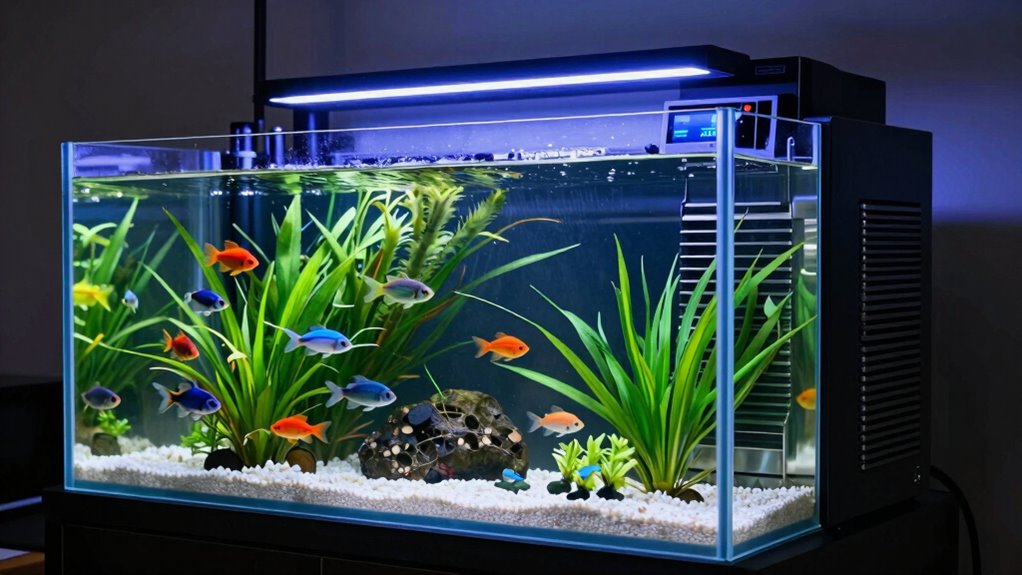

If you keep delicate or temperature-sensitive species, a chiller can be essential to maintain stable conditions and prevent stress, disease, or death. In warm environments or during hot months, a chiller helps prevent overheating that could harm your tank inhabitants. Whether you need one depends on your local climate and your aquarium setup. Keep in mind, the right choice can make a big difference, and there’s more to evaluate if you want to protect your aquatic ecosystem effectively.

Get pet supplies delivered free with Prime
- Fast, free delivery on millions of items
- Prime Video, Amazon Music and more included
- Member-only deals all year
Key Takeaways
- Chillers are essential in warm climates or during hot seasons to prevent overheating and stress in sensitive aquatic species.
- They are crucial for coral reef tanks to maintain stable temperatures and avoid bleaching or coral death.
- Consider your local climate and aquarium inhabitants’ temperature needs before investing in a chiller.
- Alternative cooling methods may suffice in cooler environments or with less temperature-sensitive setups.
- Proper temperature control ensures the health, longevity, and vitality of all aquarium inhabitants.
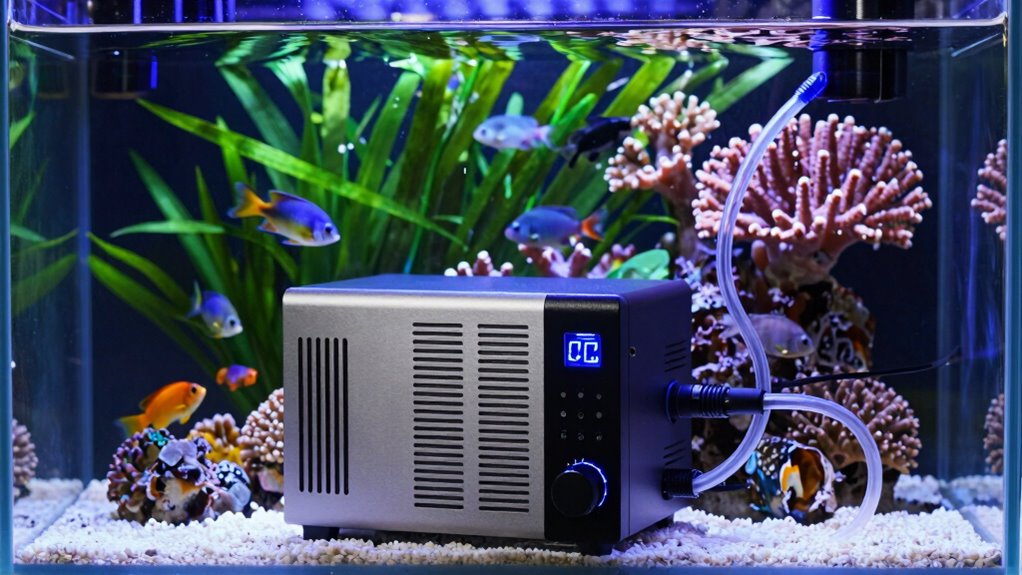
Maintaining the right temperature is essential for the health of your aquarium’s inhabitants, especially when ambient temperatures rise or you’re keeping sensitive species. Whether you have a coral reef setup or a freshwater tank, temperature stability directly influences the well-being of your aquatic life. Sudden temperature fluctuations can stress fish, corals, and plants, making them more vulnerable to disease and reducing their lifespan. If you’re in a warmer climate or experiencing heatwaves, an aquarium chiller might be just what you need to keep things steady. For coral reef aquariums, maintaining a consistent temperature—usually between 75-80°F—is critical, as corals are particularly sensitive to temperature swings. Similarly, a freshwater tank housing tropical fish also benefits from a stable environment, preventing stress and potential health issues.
If you’re debating whether an aquarium chiller is necessary, consider your local climate and the specific needs of your setup. In colder regions or during winter, a chiller might be unnecessary, but in warmer months or hotter climates, it becomes a valuable tool. For reef tanks, where delicate corals depend on precise temperature ranges, an aquarium chiller helps prevent overheating caused by high room temperatures or powerful lighting systems. Without proper cooling, corals can bleach or die, and fish may become lethargic or stressed. In freshwater tanks, especially those with temperature-sensitive species like discus or certain tetras, a chiller helps maintain ideal conditions, avoiding stress-induced illnesses. Additionally, understanding the temperature requirements of your specific species can help you determine if a chiller is a necessary investment. Proper temperature regulation, whether through a chiller or alternative methods, is vital for the long-term health of your aquatic inhabitants. A thorough understanding of your tank’s environmental needs can help you decide whether a chiller is a worthwhile investment. Ultimately, if temperature fluctuations threaten the health of your aquatic inhabitants, a chiller is a worthy investment to keep your aquarium thriving.
As an affiliate, we earn on qualifying purchases.
Frequently Asked Questions
How Do I Choose the Right Size Chiller for My Tank?
To choose the right size chiller, consider your tank’s volume and avoid over- or under-cooling. Check the chiller capacity, ensuring it matches your tank size—usually rated in BTUs or watts. Proper tank placement is key; place the chiller in a cool, ventilated area to maximize efficiency. Measure your water temperature regularly to adjust chiller settings and maintain stable, healthy conditions for your aquatic life.
Are Aquarium Chillers Energy-Efficient?
Are aquarium chillers energy-efficient? They can be, thanks to modern cooling technology that minimizes energy consumption while maintaining stable water temperatures. However, efficiency varies depending on the model and size. If you’re concerned about energy use, look for chillers with high energy efficiency ratings and features like adjustable thermostats. Properly maintained chillers also run more efficiently, so regular upkeep helps reduce energy costs over time.
Can I Use a Refrigeration Unit as a Chiller?
Yes, you can use a refrigeration unit as a chiller, but you need to check its refrigeration compatibility first. Not all units are designed for aquarium cooling, so verify it can handle continuous operation and maintain stable temperatures. While refrigeration units can offer good cooling efficiency, they might be overpowered or inefficient for small tanks. Proper installation and monitoring are essential to prevent temperature swings and ensure your aquarium’s safety.
How Loud Are Typical Aquarium Chillers?
Typical aquarium chillers produce moderate noise levels, but they’re generally quieter than an air conditioner or refrigerator. You’ll notice a humming or buzzing sound, which is comparable to a refrigerator’s sound. The noise is usually steady and not disruptive if placed away from your main living space. To minimize disturbance, position the chiller in a cabinet or a less frequented area, and consider models designed with sound reduction features.
What Maintenance Is Required for Aquarium Chillers?
A stitch in time saves nine, so regular maintenance keeps your chiller running smoothly. You’ll need to check for leaks, clean the coils, and monitor performance regularly. Troubleshooting issues early prevents costly repairs. Comparing costs helps you decide if repairs are worth it versus replacing your chiller. Routine upkeep guarantees efficiency, saving money in the long run. Keep an eye on temperature fluctuations and perform preventive maintenance to extend your chillers’ lifespan.
Conclusion
Just like a thermostat keeps your home’s comfort just right, an aquarium chiller guarantees your aquatic world stays perfect. If your tank faces fluctuating temperatures or houses sensitive species, a chiller acts as a loyal guardian, preventing heatwaves from turning your underwater paradise into a tropical sauna. Remember, maintaining the right temperature isn’t just a detail—it’s the foundation of a healthy, thriving aquarium. Without it, your aquatic garden risks wilting under the heat.
Halloween Picks
halloween
As an affiliate, we earn on qualifying purchases.