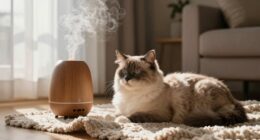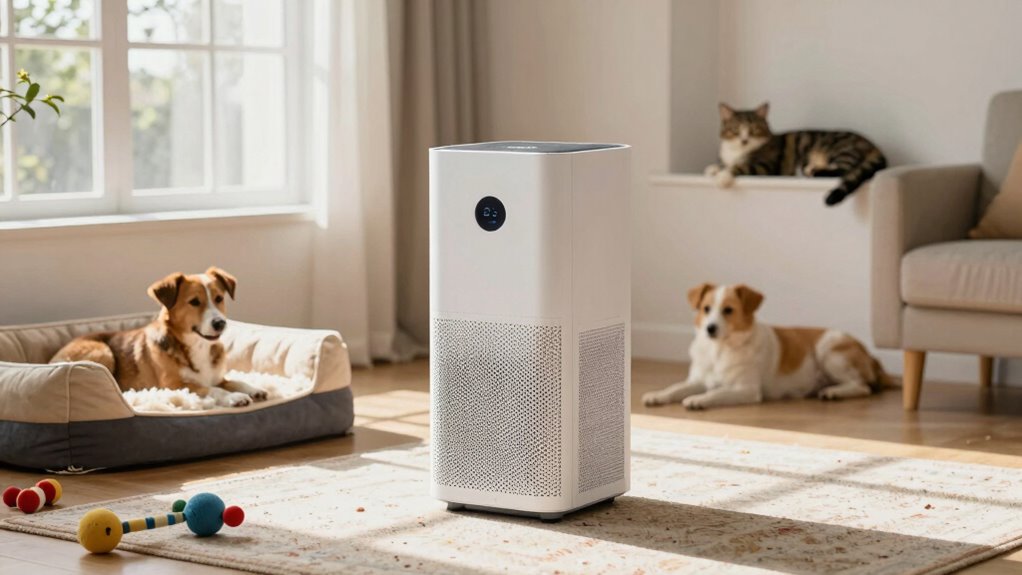

When choosing an air purifier for your pet home, matching the unit’s size to your room’s size is key. An undersized purifier won’t effectively manage pet dander and odors, while an oversized one can waste energy and create noise. Proper sizing guarantees the device works at its full potential, keeps air clean, and saves you money long-term. If you want to understand how to pick the right capacity, keep exploring—you’ll find helpful tips ahead.

Get pet supplies delivered free — and shop member deals
- Fast, free delivery on millions of items
- Access to Prime Big Deal Days deals on October 6–7
- Prime Video, Amazon Music and more included
Key Takeaways
- Proper room size matching ensures the air purifier effectively removes pet dander and odors, regardless of marketing claims.
- An appropriately sized purifier improves air circulation and allergen capture, leading to a healthier home environment.
- Oversized or undersized units waste energy, increase costs, and may not improve air quality as expected.
- CADR ratings should align with room size for optimal pet allergy and odor control.
- Selecting a purifier based on room size maximizes performance, efficiency, and long-term cost savings.
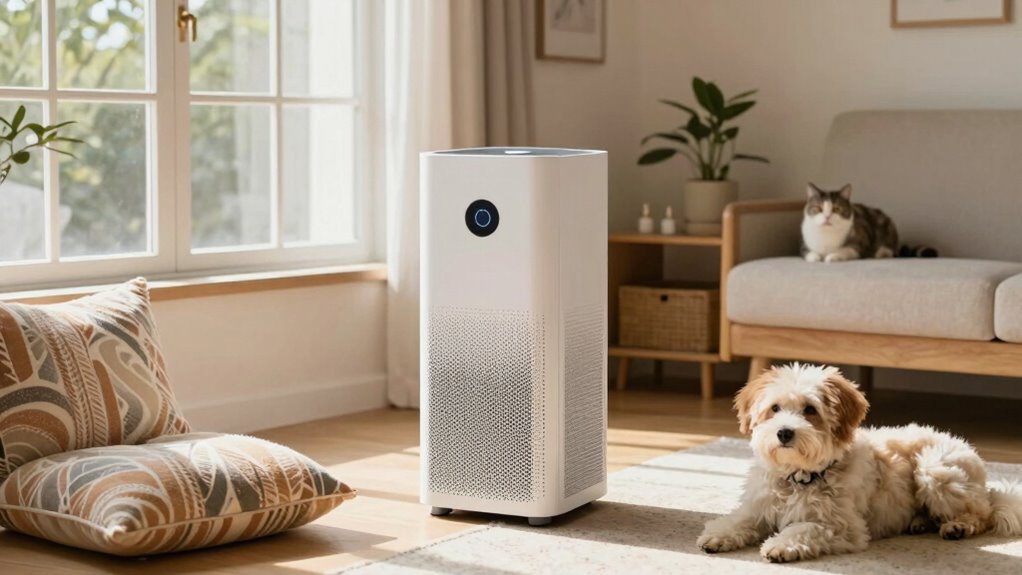
If you have pets at home, you know how their fur, dander, and odors can quickly fill the air with unwanted particles. An air purifier can help, but choosing the right one isn’t just about brand names or flashy marketing. Room size matters more than you might think. A small purifier might seem appealing, but if it’s not suitable for your space, it won’t effectively tackle pet allergies or eliminate odors. You need to match the purifier’s capacity to the room’s square footage to maximize pet allergy management and odor elimination techniques. When an air purifier is too small, it just won’t circulate enough air to clear out pet dander and odors efficiently. Conversely, a unit that’s too large might be an unnecessary expense and can even create noise issues, disrupting your daily life. Understanding the importance of room size helps you focus on the purifier’s clean air delivery rate (CADR). The higher the CADR, the more effective the device is at filtering out pet allergens and odors in a given space. For pet owners, especially those with allergy sensitivities, this means investing in a model that can handle your specific room dimensions. Proper sizing ensures your purifier works at its full potential, reducing pet dander and dander-related allergens that trigger allergy symptoms. It also enhances odor elimination, leaving your home smelling fresher and more inviting. When you select an appropriately sized air purifier, you’re actively managing pet allergies more effectively and maintaining a healthier indoor environment.
Another key point is that room size influences how often you need to run your purifier. Larger rooms require longer or more frequent runs to keep air quality high, so choose a unit that matches your routine. This is particularly important if you’re battling persistent pet odors or allergy symptoms. Small, underpowered purifiers may seem convenient but often fall short of delivering the clean air you need. Oversized units, while powerful, can be energy inefficient and lead to unnecessary costs. Additionally, choosing a purifier based on room size and capacity ensures optimal performance and energy efficiency, saving you money in the long run. Being aware of air circulation and how it impacts effectiveness can help you make smarter decisions for your home environment. By focusing on your room’s size, you ensure your investment provides maximum benefit without waste.
In the end, understanding room size’s impact helps you make smarter decisions about pet allergy management and odor elimination techniques. It’s not just about marketing claims or fancy features; it’s about choosing a purifier that truly fits your space. When you match the purifier’s capacity to your room, you create a cleaner, healthier environment for both you and your pets. This focused approach guarantees your home stays fresh and allergy-friendly, making your pet-loving lifestyle more enjoyable and less disruptive.
As an affiliate, we earn on qualifying purchases.
Frequently Asked Questions
How Often Should I Replace the Filters in My Pet Air Purifier?
You should replace your pet air purifier filters every 6 to 12 months, depending on usage and filter lifespan. Regular maintenance tips include checking the filters monthly, cleaning or replacing them when they look dirty or after a high pollen season. Keep in mind that overused filters can reduce efficiency, so staying on top of filter replacements guarantees your purifier keeps the air clean and fresh for your pets and family.
Are There Specific Air Purifiers Designed for Homes With Multiple Pets?
Yes, there are air purifiers designed specifically for homes with multiple pets. You might worry they’re too bulky or expensive, but many models feature pet-specific filtration and multi-pet coverage, making them effective without taking up too much space. Look for purifiers with high CADR ratings and true HEPA filters. These guarantee you efficiently remove pet dander, hair, and odors, keeping your home fresh and allergen-free.
Can an Air Purifier Completely Eliminate Pet Odors?
An air purifier can’t completely eliminate pet odors, but it can markedly reduce them through odor absorption and enhanced air filtration efficiency. You should choose a purifier with activated carbon filters for odor control and HEPA filters for capturing pet dander. Regular maintenance and proper placement also boost effectiveness, helping your home smell fresher despite your pets’ presence.
Do Air Purifiers Reduce Pet Allergy Symptoms Effectively?
Pet allergy symptoms can feel like a relentless storm, but an air purifier targeting pet dander can bring you much-needed allergy relief. It actively traps tiny particles that trigger allergies, markedly reducing symptoms. While it might not eliminate every allergen, it creates a cleaner air environment, easing your discomfort. For effective allergy relief, choose an air purifier suitable for your room size, ensuring it captures even the smallest pet dander particles.
How Does Room Humidity Affect Air Purifier Performance?
Higher humidity levels can reduce your air purifier’s efficiency by causing mold and bacteria growth, which the purifier may not effectively filter. Conversely, very low humidity can dry out your air and make allergies worse. Maintaining ideal humidity levels, around 40-50%, helps your air purifier work better and keeps your pet home healthier. Regularly monitor humidity to guarantee your device performs at its best and improves indoor air quality.
Conclusion
Just as a lighthouse guides ships safely through foggy waters, choosing the right-sized air purifier steers your pet home away from lingering odors and airborne allergens. Remember, bigger isn’t always better—it’s about matching room size to purifier capacity. When you prioritize room size, you’re not just buying an appliance; you’re creating a haven where your pets breathe freely, much like a clear, open sky after a storm—calm, fresh, and inviting.
Halloween Picks
halloween
As an affiliate, we earn on qualifying purchases.